Swollen feet after a long flight? You’re not alone. Foot swelling during air travel affects millions of passengers every year—especially on flights over four hours. While usually harmless, that tight, puffy feeling in your ankles and feet can be uncomfortable and sometimes signal a more serious issue like deep vein thrombosis (DVT). The good news: with the right strategies, you can prevent and reduce foot swelling before, during, and after your flight. In this guide, you’ll learn science-backed tips—from compression socks to in-seat exercises—and discover when swelling is just a nuisance versus when it’s a medical red flag.
Choose the Right Seat and Position for Better Circulation

Your seat choice and posture play a major role in how much your feet swell during a flight.
Pick an Aisle Seat for Easier Mobility
An aisle seat gives you unobstructed access to stand and walk without disturbing your neighbors. This increases your chances of getting up every hour, which is crucial for maintaining blood flow. If you’re flying for more than six hours or are prone to swelling, consider upgrading to extra legroom—like an exit row or premium economy seat. More space means less restriction on your legs and better circulation.
Keep Legs Uncrossed and Feet Flat
Crossing your legs compresses blood vessels behind the knees, slowing down circulation and increasing fluid buildup. Instead, keep your feet flat on the floor or slightly elevated. Sit with your knees bent at a 90-degree angle and avoid pressing your calves against the seat in front of you. This position reduces pressure on your veins and keeps blood flowing smoothly.
Elevate Feet When Possible
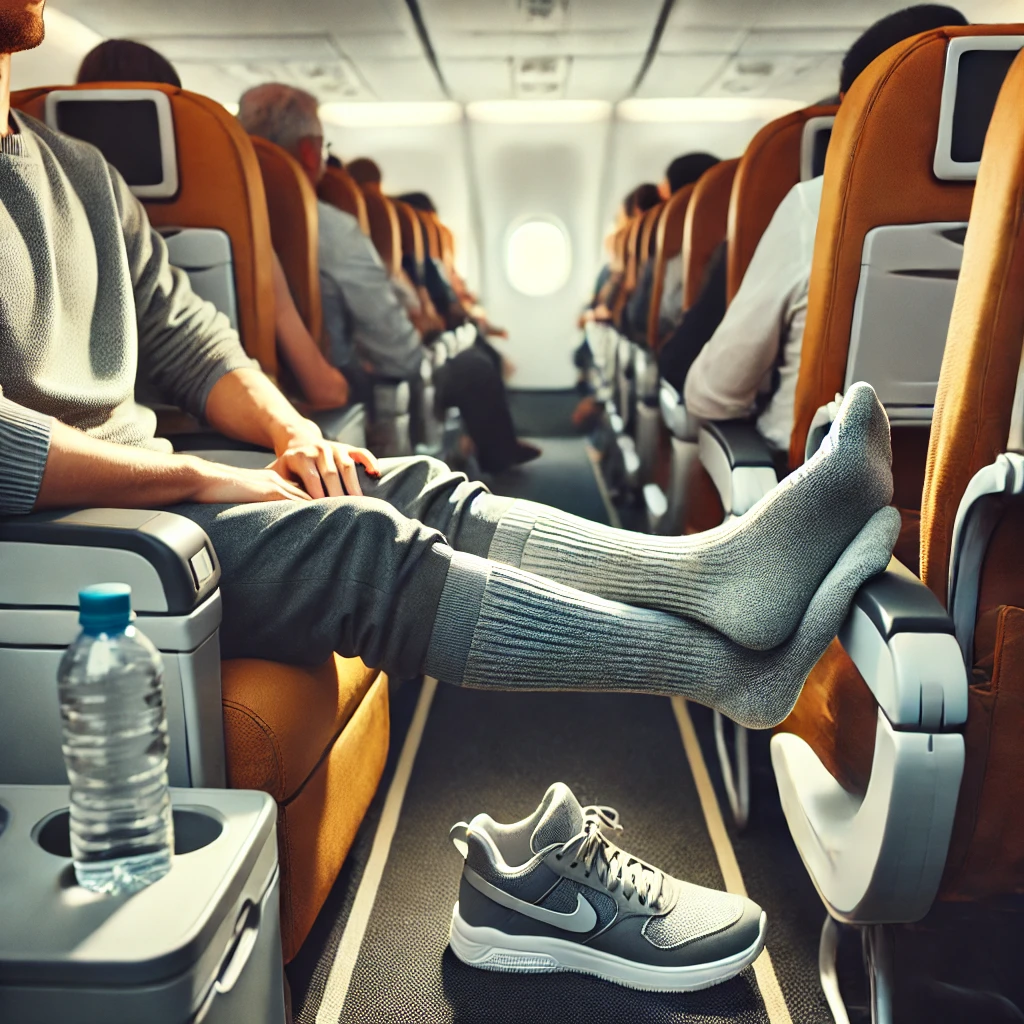
If space allows, prop your feet up using a small travel pillow or your carry-on bag placed under the seat. Even a slight elevation helps gravity pull fluid back toward your heart. If you have an empty seat nearby, take advantage of it by stretching your legs across—your circulation (and comfort) will improve significantly.
Wear Compression Socks the Right Way to Prevent Swelling

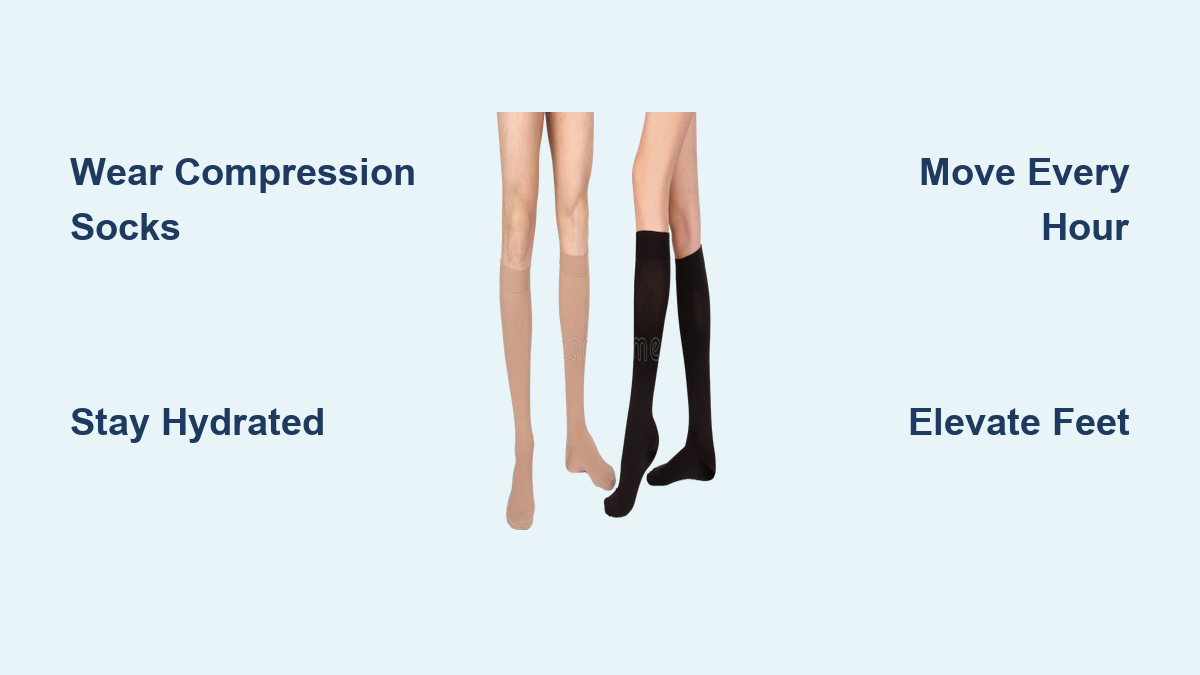
Compression socks are one of the most effective tools for reducing foot swelling during air travel—but only if used correctly.
Use 15–30 mm Hg Graduated Compression
Choose graduated compression socks that apply the strongest pressure at the ankle and gradually decrease up the calf. For most travelers, 15–20 mm Hg is ideal. Those with higher risk factors—such as pregnancy, obesity, or a history of blood clots—may benefit from 20–30 mm Hg, but should consult a doctor first. These socks work by gently squeezing the legs, improving venous return and reducing fluid leakage into tissues.
Put Them On Before You Board
Compression socks are most effective when worn before fluid starts pooling in your lower legs. Put them on at home or before arriving at the airport. If you wait until your feet are already swollen, they’ll be harder to put on and less effective. Seamless, breathable styles offer maximum comfort during long flights.
Avoid Compression If You Have Peripheral Artery Disease
If you have peripheral artery disease (PAD), severe diabetic neuropathy, or open leg sores, compression socks can restrict blood flow and cause harm. Always check with your healthcare provider if you’re unsure whether compression is safe for you.
Stay Hydrated, Not Dehydrated
What you drink before and during your flight directly impacts your risk of swelling.
Drink Water Before and During Your Flight
Start hydrating 24 hours before departure. Aim for 2.7 liters (11.5 cups) daily for women and 3.7 liters (15.5 cups) for men. On the plane, sip water regularly—don’t wait until you’re thirsty. Bring a refillable water bottle and fill it after passing through security. Proper hydration thins the blood and supports healthy circulation, reducing fluid retention.
Skip Alcohol and Caffeine
Alcohol and coffee are dehydrating, which tricks your body into retaining more water to compensate—ironically making swelling worse. They also dilate blood vessels temporarily, allowing more fluid to leak into surrounding tissues. Avoid both during long flights to keep swelling at bay.
Eat Low-Sodium, Hydrating Snacks
Airline meals and snacks like pretzels, chips, and boxed dinners are often loaded with sodium. Salt pulls water into your tissues, increasing edema. Pack your own food: bananas, apples, almonds, yogurt, or pre-made salads without dressing. These choices are low in sodium and high in potassium and magnesium—nutrients that help balance fluids.
Do In-Seat Exercises Every Hour to Activate Circulation
Movement is the #1 way to fight swelling. Even small motions activate the calf muscle pump, which pushes blood and fluid back toward your heart.
Rotate Ankles in Circles
Every 30 minutes, rotate each ankle 10 times clockwise, then 10 times counterclockwise. This simple motion improves circulation and prevents stiffness in your joints and muscles.
Perform Toe Raises and Flexes
Lift your toes toward the ceiling, hold for 2 seconds, then point them down. Repeat 20 times. Add side-to-side toe movements for extra range of motion. This exercise engages the muscles that support healthy blood flow.
Pump Your Calves While Seated
Press your heels into the floor while lifting your toes (dorsiflexion), then press your toes down while lifting your heels (plantarflexion). Do 20 reps every hour. This mimics walking and keeps your calf muscles active.
Try Seated Leg Lifts
Straighten one leg until it’s parallel to the floor. Hold for 5 seconds, then slowly lower. Repeat 10 times per leg. This engages your thigh and calf muscles without needing extra space.
Wear Supportive, Adjustable Footwear
Your shoes can either help or hurt swelling—choose wisely.
Opt for Wide, Cushioned Shoes
Wear shoes with a wide toe box, arch support, and cushioned sole. Slip-on sneakers, loafers, or walking shoes work best. Avoid tight, high-heeled, or narrow footwear that restricts swelling feet.
Loosen Laces or Choose Elastic Styles
Once seated, loosen your shoelaces or switch to elastic-lace or slip-on styles that allow room for expansion. Feet can swell up to a full shoe size during long flights.
Avoid Sodium and Heavy Meals
What you eat plays a bigger role than most travelers realize.
Limit Salty Airport and In-Flight Food
A single airline meal can contain over 1,500 mg of sodium—more than half the daily recommended limit. Choose low-sodium options if available, or bring your own meals.
Choose Magnesium-Rich Foods
Magnesium helps regulate fluid balance. If you’re prone to swelling, eat foods like spinach, almonds, brown rice, avocados, and bananas before and after your flight.
Post-Flight Swelling Relief Strategies

Even with precautions, some puffiness may occur. Here’s how to reverse it fast.
Walk Within Minutes of Landing
Take a 5–10 minute walk as soon as you deplane. Movement jumpstarts circulation and helps drain pooled fluid. If transferring, walk the terminal instead of taking shuttles.
Elevate Legs Above Heart Level
Lie down and prop your legs on pillows or against a wall. Try Viparita Karani (Legs-Up-the-Wall Pose): lie on your back with legs extended vertically for 2–3 minutes. This reverses gravity’s effect and speeds fluid return.
Caution: Avoid this if you have high blood pressure, glaucoma, or heart, kidney, or liver disease.
Massage Swollen Areas Upward
Use firm, upward strokes from ankles to knees to encourage fluid drainage toward the heart. Self-massage works, or ask a travel companion for help.
Apply Cold Compresses
Use a cold pack or damp towel on swollen ankles for 10–15 minutes. Cold reduces inflammation and numbs discomfort. Repeat every few hours as needed.
Know When to Seek Medical Help
Most swelling fades within 1–2 days. But some symptoms demand immediate attention.
Watch for Signs of DVT
Deep vein thrombosis can mimic swelling but is dangerous. Seek emergency care if you notice:
– Swelling in one leg only
– Calf or thigh pain or tenderness
– Warm, red, or discolored skin
– Sudden, severe swelling
Don’t Ignore Pulmonary Embolism Symptoms
A blood clot can travel to the lungs. If you experience:
– Shortness of breath
– Chest pain when breathing
– Coughing up blood
– Rapid heartbeat
Call emergency services immediately. These symptoms can appear up to 2 weeks after a flight.
See a Doctor for Persistent Swelling
If puffiness lasts more than 3 days despite rest and elevation, consult a healthcare provider. Underlying issues like heart, kidney, liver, or venous insufficiency may be contributing.
Special Considerations for High-Risk Travelers
Some people need extra precautions due to health conditions.
Pregnant Flyers: Take Extra Precautions
Pregnancy increases blood volume and puts pressure on pelvic veins. To stay safe:
– Wear 20–30 mm Hg compression socks
– Stay hydrated
– Move every 30 minutes
– Get clearance from your OB-GYN before flying, especially in the third trimester
Post-Surgery or High Clot Risk? Consult Your Doctor
If you’ve had recent surgery, cancer, or a history of blood clots:
– Talk to your doctor before flying
– You may need prescription blood thinners
– Use compression garments as directed
Frequent Flyers: Protect Long-Term Vein Health
If you travel often, chronic swelling can lead to venous insufficiency or lymphatic damage. Adopt daily habits:
– Wear compression socks regularly
– Stay active and hydrated
– Schedule vein checkups if legs feel heavy or achy
Work With Healthcare Professionals
You don’t have to manage swelling alone. Experts can help.
Visit a Podiatrist for Footwear and Compression Advice
A podiatrist can:
– Fit you for medical-grade compression stockings
– Recommend supportive shoes or custom orthotics
– Evaluate for foot conditions worsened by swelling
Consult a Vein Specialist for Chronic Issues
If swelling happens often, see a phlebologist (vein specialist). They can:
– Perform venous ultrasound
– Diagnose chronic venous insufficiency
– Offer treatments like laser therapy or sclerotherapy
See a Lymphedema Therapist if Swelling Persists
Early intervention prevents long-term damage. Lymphedema therapists teach:
– Proper compression use
– Manual drainage techniques
– Lifestyle changes to reverse fluid buildup
Final Note: Foot swelling during air travel is common—but not inevitable. By wearing compression socks, staying hydrated, moving regularly, and choosing the right seat and shoes, you can keep your feet comfortable and safe. Most importantly, know the warning signs of DVT and act fast if something feels wrong. With these strategies, you can land feeling fresh, not puffy.