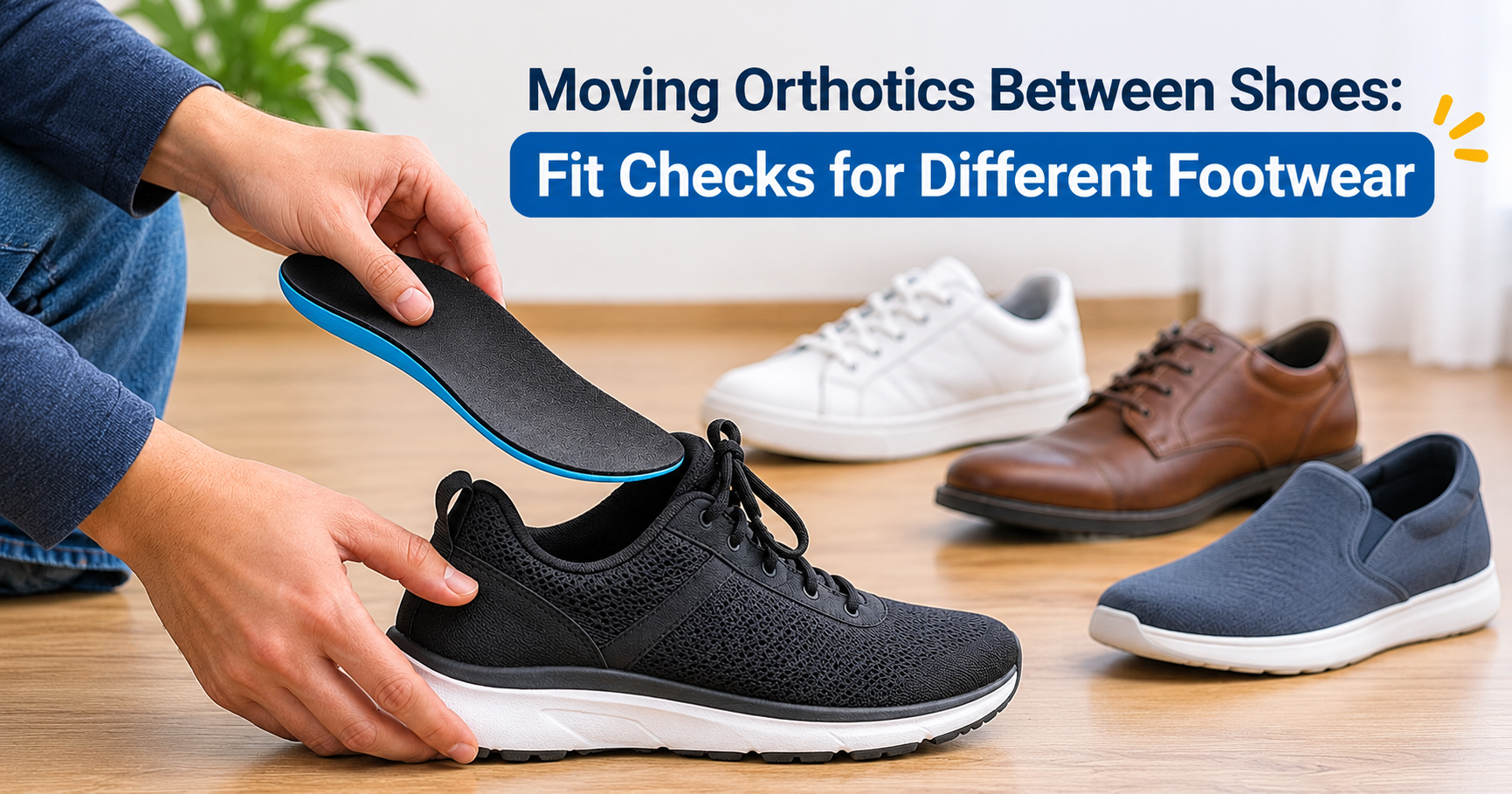
You find an orthotic that finally takes the pressure off your arches, and it feels great in your running shoes. Then you slide it into your work boots or dress shoes and everything goes wrong. Your heel lifts out, your toes feel crowded, or the insert will not lie flat. This is a very common problem, and the cause is simple: an orthotic that works well in one shoe can fail in another.
Shoes are built differently. They have different depths, heel shapes, insole designs and amounts of internal space. This guide explains how orthotics work with each major shoe type, how to choose the right style, how to test the fit, and how to avoid the mistakes that waste money and cause discomfort.
Quick answer
- Athletic shoes, hiking boots and work boots usually have the most room, so full-length orthotics fit best.
- Dress shoes, loafers, flats and heels are shallow, so choose slim 3/4-length inserts or forefoot pads.
- Always remove the factory insole and test the fit with the socks you normally wear.
- Break new orthotics in gradually over about two weeks.
Why Shoe Type Matters for Orthotics
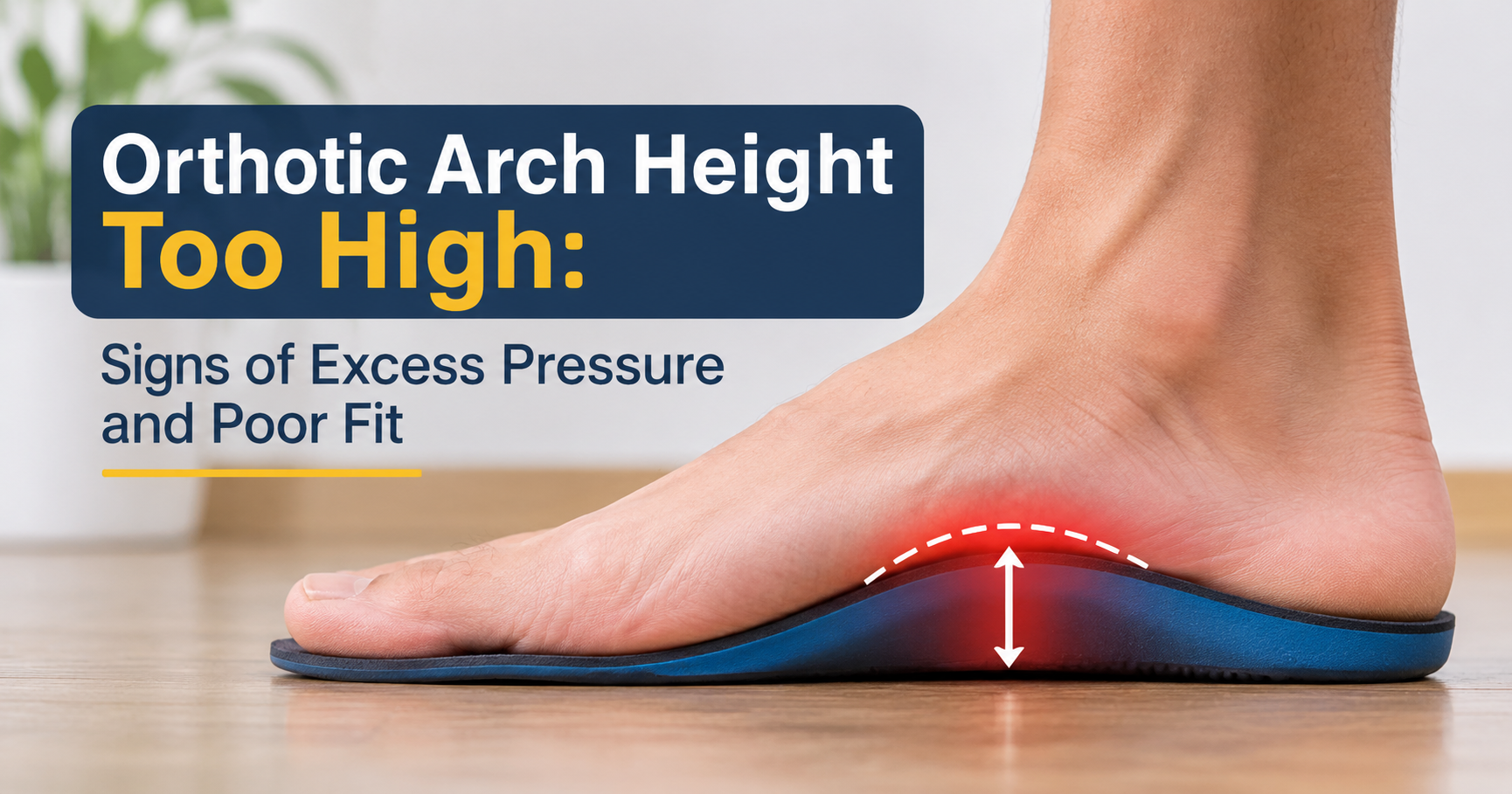
An orthotic changes how your foot sits inside the shoe. It adds height under the arch, shapes the heel and can alter how pressure is spread across the sole. A shoe that cannot hold that extra volume will push your foot upward and forward, which leads to rubbing, blisters, numb toes or a feeling that the shoe is too small.
Five features decide whether an orthotic will work in a given shoe: the depth of the toe box, whether the insole is removable, the stiffness and shape of the heel counter, the overall internal volume and the way the shoe laces or fastens. Understanding these points makes it much easier to shop for both shoes and inserts.
The Main Types of Orthotics
Before matching an orthotic to a shoe, it helps to know the basic styles. Each one covers a different part of the foot and takes up a different amount of space.
- Full-length orthotics run from heel to toe and replace the shoe’s insole. They give the most coverage and work best in roomy shoes.
- 3/4-length orthotics stop at the ball of the foot. They leave toe space free, which makes them useful in shoes with a narrow front.
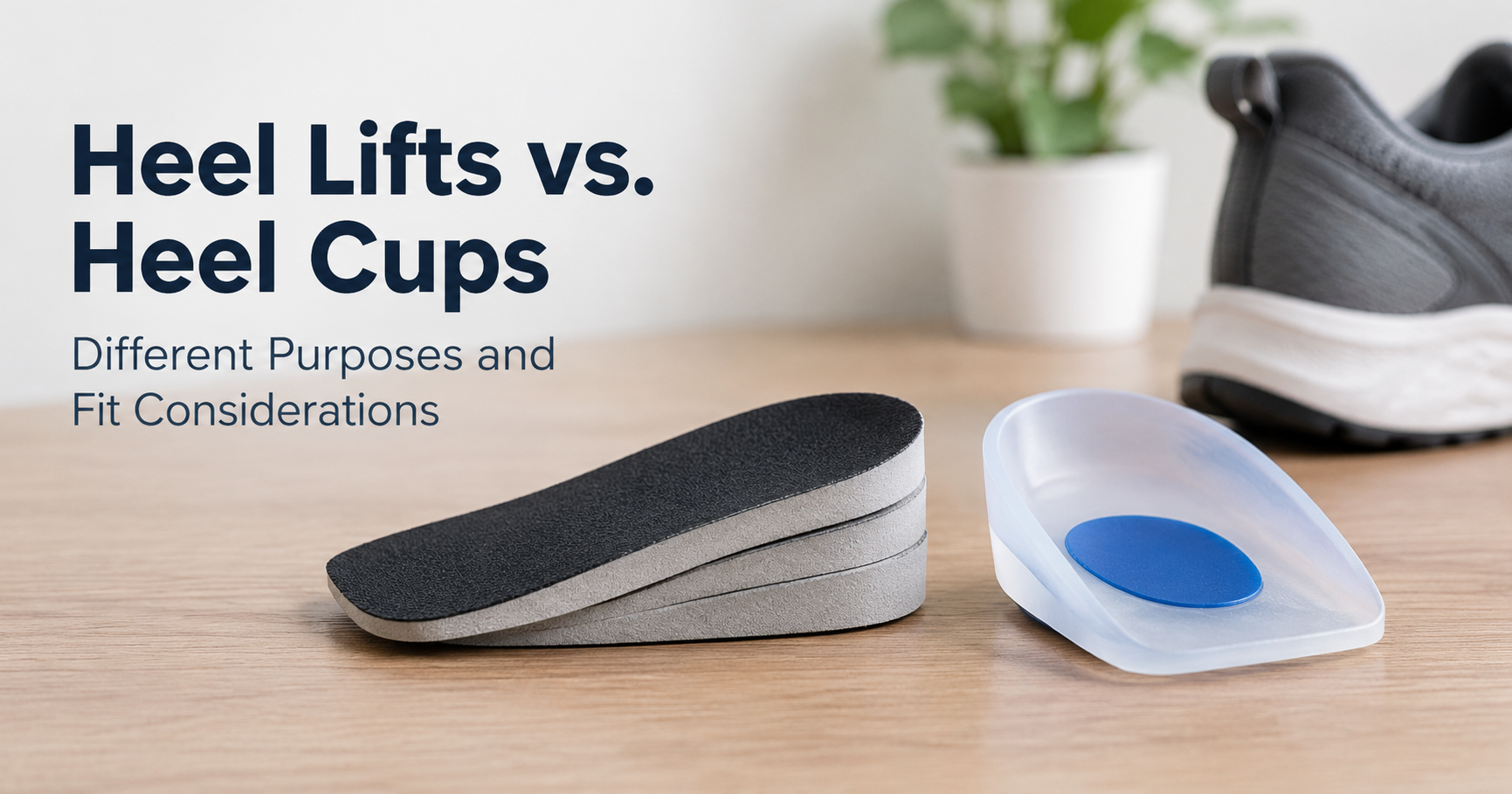
- Heel cups and heel wedges support and cushion only the back of the foot. They are thin and helpful for people with heel pain or shoes that feel loose.
- Forefoot or metatarsal pads sit under the ball of the foot to reduce pressure in that area, and they fit into very shallow shoes.
Orthotics also vary in firmness. Rigid devices control motion most, semi-rigid devices balance support with comfort, and soft or accommodative devices focus on cushioning. Firm devices need more depth, so soft or semi-rigid options are often easier to place in shallow shoes.
Orthotics for Each Shoe Type
1. Running and Training Shoes
Running shoes are usually the easiest place to start. They tend to have a deep footbed, a structured heel and a removable insole. Full-length orthotics typically fit well here, and this is the shoe category most orthotics are designed around.
Be careful with shoes that are already built to correct your foot motion. Stability shoes, for example, have their own built-in support, and adding a strong arch insert on top can give you too much correction. If you use orthotics regularly, a neutral shoe with a roomy interior is often the easier match.
- Remove the factory insole before inserting the orthotic.
- Make sure the heel does not slip when you walk or jog.
- Replace the orthotic and the shoe on a regular schedule, because worn cushioning changes how both perform.
2. Casual and Walking Sneakers
Everyday sneakers are very similar to athletic shoes, but they often have thinner insoles that are glued in place. If the insole is not removable, choose a thin orthotic or a 3/4-length style so the foot does not sit too high.
Check the tongue area and the top of the foot after lacing. If the laces feel too tight at the instep, loosen them or use a lower-profile insert.
3. Work and Safety Boots
People who stand on hard floors all day often need support the most, and work boots offer plenty of room in the heel and arch. Full-length orthotics with a firm shell and a deep heel cup are a popular choice.
The main challenge is the toe. Steel and composite toe caps cannot stretch, so there is a fixed amount of height available. A thick orthotic can push the toes up against the cap. Always try the boots on with the orthotic inside, wearing your usual work socks, and walk around for several minutes.
- Choose a firm, durable orthotic that will not flatten under heavy loads.
- Allow your toes to move freely, even with the cap in place.
- Look for moisture-wicking top covers, since boots get hot.
4. Hiking Boots and Trail Shoes
Hiking footwear usually has a stiff midsole and a deep, supportive heel, so it works well with full-length orthotics. The key is stability, because uneven ground and downhill sections push the foot around inside the boot.
Thick hiking socks take up space, so test the fit with the socks you plan to use on the trail. A well-fitted orthotic can reduce foot fatigue, but one that is too tall can cause blisters on long walks.
5. Court Shoes and Sports Cleats
Tennis, basketball and soccer shoes are designed for quick side-to-side movement, so a good fit matters for stability. Many of these shoes have a low profile, and cleats often have a thin, fixed insole.
Look for low-profile orthotics that hold the heel firmly in place. A bulky insert can lift the foot and reduce the feeling of control. Many athletes choose a thin full-length insert or a heel and arch device that stays close to the sole.
6. Dress Shoes and Loafers
Dress shoes are the hardest category. They are shallow, narrow at the front and often have a slim, glued-in insole. A full-length rigid orthotic rarely fits. A better choice is a slim 3/4-length insert or a heel cup that supports the arch and heel without crowding the toes.
Laced oxfords and derbies usually give you more room than slip-on loafers, because you can adjust the fit over the instep. If you wear dress shoes often, consider shoes with a removable insole and a slightly deeper heel.
7. Sandals and Flip-Flops
Open footwear is a problem for most orthotics because there is nothing to hold the insert in place. A standard orthotic will slide around, bend or fall out. The simplest solution is to buy sandals that already have a contoured, supportive footbed. Some have removable footbeds, and a foot specialist can sometimes make a device for a particular sandal.
Whatever you choose, look for a deep heel cup, a firm midsole and straps that keep the foot from sliding.
8. Heels and Ballet Flats
High heels move your weight toward the front of the foot, and flats offer little cushioning or space. Neither style leaves room for a standard orthotic. Forefoot pads, small gel cushions and thin heel grips are better options, because they add comfort without lifting the foot out of the shoe.
If you must wear heels, a lower, wider heel and a shoe with a deeper toe box reduce stress on the foot.
Quick Comparison Table
Use this table as a starting point when you are matching an orthotic to a pair of shoes.
| Shoe type | Orthotic style that usually fits | Key tip |
|---|---|---|
| Running and training shoes | Full-length, semi-rigid with a contoured arch | Remove the factory insole first; most have deep footbeds. |
| Casual and walking sneakers | Full-length or 3/4-length | Check the heel stays snug after the swap. |
| Work and safety boots | Full-length, firm, with a deep heel cup | Test with your work socks on; steel or composite toe caps limit height. |
| Hiking boots | Full-length, firm and durable | Choose a thinner profile if you wear thick socks. |
| Court shoes and cleats | Thin, low-profile 3/4 or full-length | Lateral stability matters, so avoid tall, bulky inserts. |
| Dress shoes and loafers | Slim 3/4-length or a heel cup | Look for leather or microfiber tops that slide in easily. |
| Sandals and flip-flops | Footwear with built-in arch support, or a sandal-specific orthotic | Most open footwear cannot hold a standard insert. |
| Heels and ballet flats | Forefoot cushioning or a small low-profile pad | Avoid full-length rigid inserts in shallow shoes. |
How to Test the Fit Before You Commit
A short fit test can save you from buying the wrong insert or the wrong shoe. Follow these steps whenever you try a new pairing.
- Remove the factory insole. Compare its shape and thickness with the orthotic. The orthotic should be about the same size.
- Place the orthotic flat. It should sit evenly with no curling edges and no gaps at the heel.
- Wear your usual socks. Sock thickness changes the fit more than most people expect.
- Check the heel. Walk around. If your heel slips out, the shoe may be too shallow or too loose.
- Check the toes. You should be able to wiggle them. Numbness or tightness is a warning sign.
- Walk for several minutes. Include turns and stairs if possible, and pay attention to any rubbing or pressure points.
How to Break In New Orthotics
Even a perfect fit needs time. Your feet and legs must adapt to the new position, and this can cause mild awareness in the arches, calves or hips. Increase wear time gradually instead of using them all day right away.
Important: mild soreness is normal at the start, but sharp pain, numbness, burning or pain that gets worse over several days is not. Stop using the orthotics and speak with a podiatrist or another qualified health professional.
Common Mistakes to Avoid
- Leaving the factory insole in. This reduces space and raises the foot too high.
- Choosing by shoe size alone. Volume and depth matter as much as length.
- Wearing the same insert in every shoe. A device that suits sneakers may not suit dress shoes.
- Skipping the break-in period. Wearing new inserts all day at once is a common cause of soreness.
- Using worn-out orthotics. A flattened arch or cracked cover no longer does its job.
- Trimming without guidance. If an insert needs cutting, use the shoe’s original insole as a template and trim a little at a time.
When to See a Professional
Over-the-counter orthotics are a reasonable choice for mild, general discomfort. However, you should speak with a podiatrist, physiotherapist or doctor if you have persistent heel pain, pain that spreads to the knees or back, diabetes or poor circulation, numbness in the feet, a significant foot deformity, or discomfort that does not improve after a few weeks. A professional can check your gait, identify the cause of the problem and recommend whether a custom device is worthwhile.
Caring for Your Orthotics
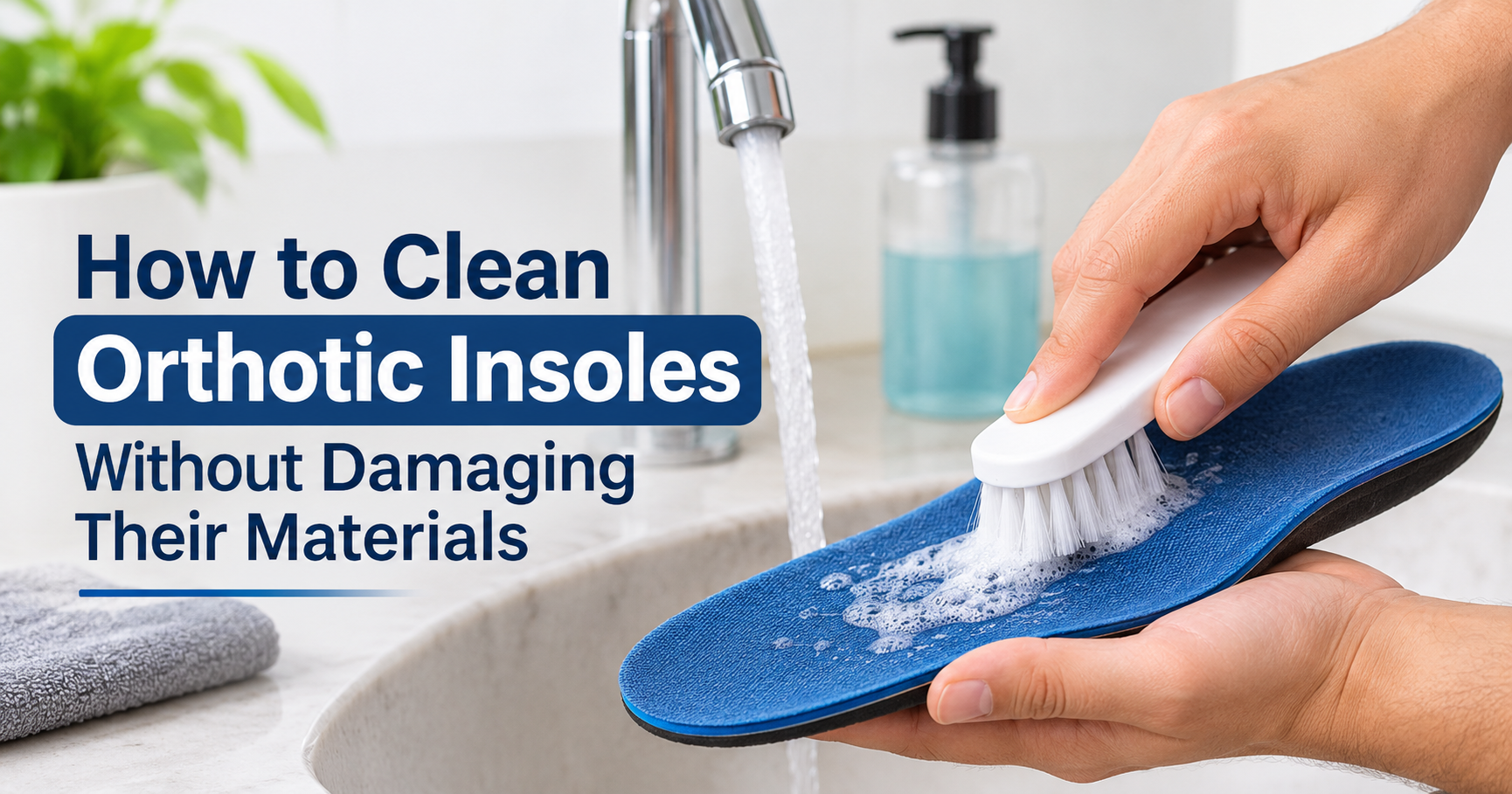
Good care helps orthotics last longer and keeps shoes fresh. Wipe the top cover with a damp cloth and mild soap, then let it air dry away from direct heat. Avoid soaking them or placing them in a dryer, because heat can warp the shape. Rotate your shoes so that each pair has time to dry out, and check the inserts regularly for cracks, flattening or loose edges.
Frequently Asked Questions
Can I use the same orthotics in all my shoes?
Sometimes, but not always. A slim 3/4-length insert can move between several pairs of closed shoes, but a thick full-length orthotic that suits a sneaker will not fit a dress shoe. Many people keep one pair for everyday sneakers and another slimmer pair for dress shoes.
Should I take out the shoe’s original insole?
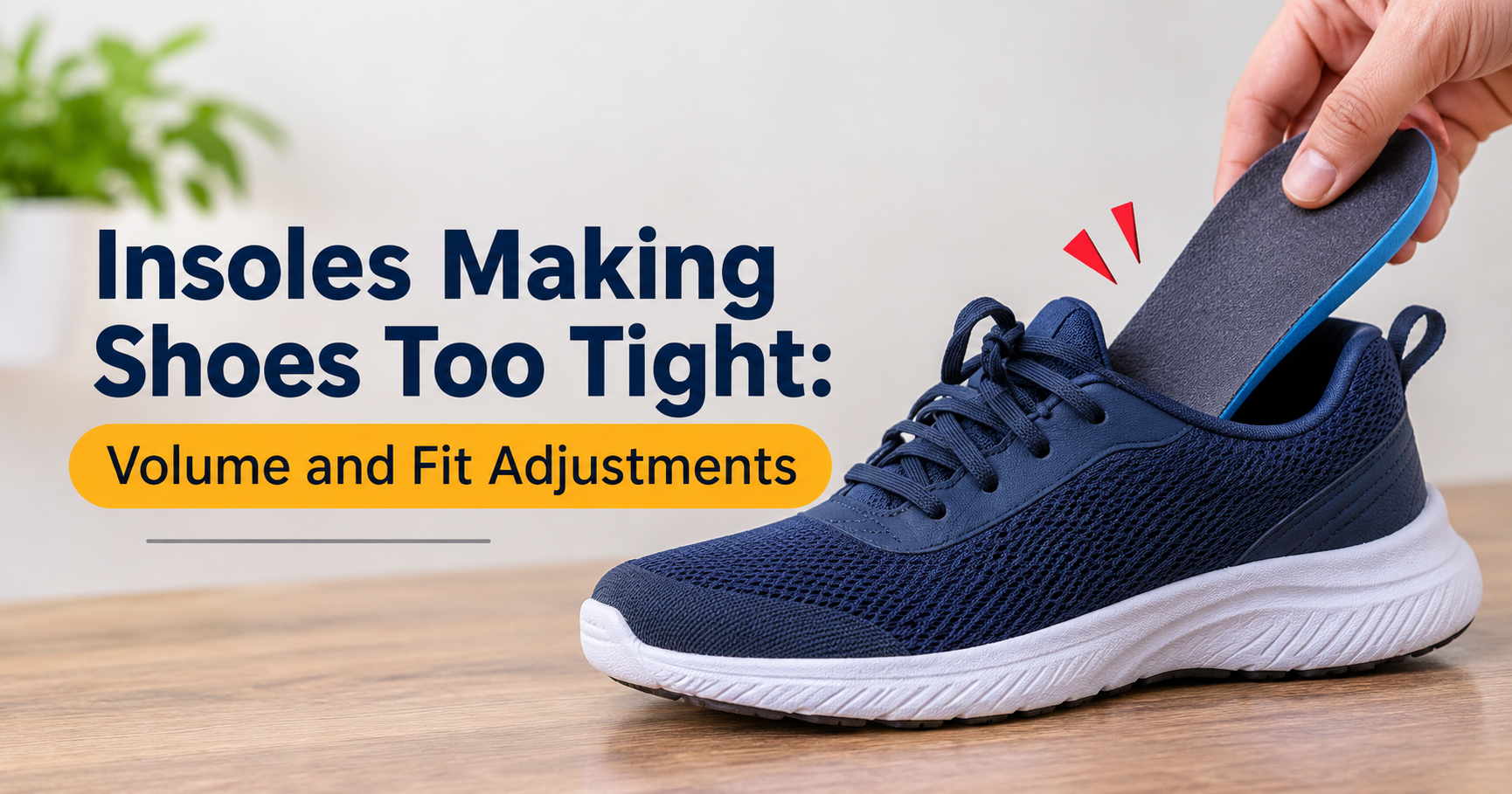
In most cases, yes. Stacking an orthotic on top of a factory insole raises your foot, tightens the shoe and can push your heel out. Pull the factory insole out and compare the two. If the removable insole is not there, the orthotic may need to be thinner.
Do I need to buy bigger shoes for orthotics?
You do not always need a bigger length, but you often need more volume. Many people do better with shoes that have a deeper toe box and a removable insole, rather than simply going up a size. Always try shoes on with the orthotic and the socks you plan to wear.
How long do orthotic inserts last?
It depends on the material, your body weight and how much you walk. Over-the-counter inserts commonly need replacing every six to twelve months, while custom devices may last longer. Replace them sooner if the arch flattens, the top cover cracks or the support feels different.
Are custom orthotics better than store-bought ones?
Not automatically. Custom devices are made from a scan or mold of your foot and prescribed for a specific problem, so they can be a better match for complex needs. Many people with mild, general discomfort do well with a good over-the-counter insert. A foot specialist can tell you which route makes sense.
Can orthotics be worn in sandals or flip-flops?
Standard orthotics usually cannot. Some brands make sandals with contoured footbeds, and some clinicians can make a device built for a specific sandal. Check how it attaches and whether it stays secure while you walk.
Final Thoughts
The best orthotic is the one that fits both your foot and your shoe. Roomy footwear such as running shoes, hiking boots and work boots usually accepts full-length inserts, while dress shoes, flats and heels need slimmer or smaller options. Remove the factory insole, test the fit with your usual socks, break the inserts in slowly and replace them when they wear out. If something still feels wrong, a foot health professional can guide you to the right solution for your feet and the shoes you wear most.
This article is for general information only and is not medical advice. Speak with a qualified healthcare professional about foot pain or any medical condition.