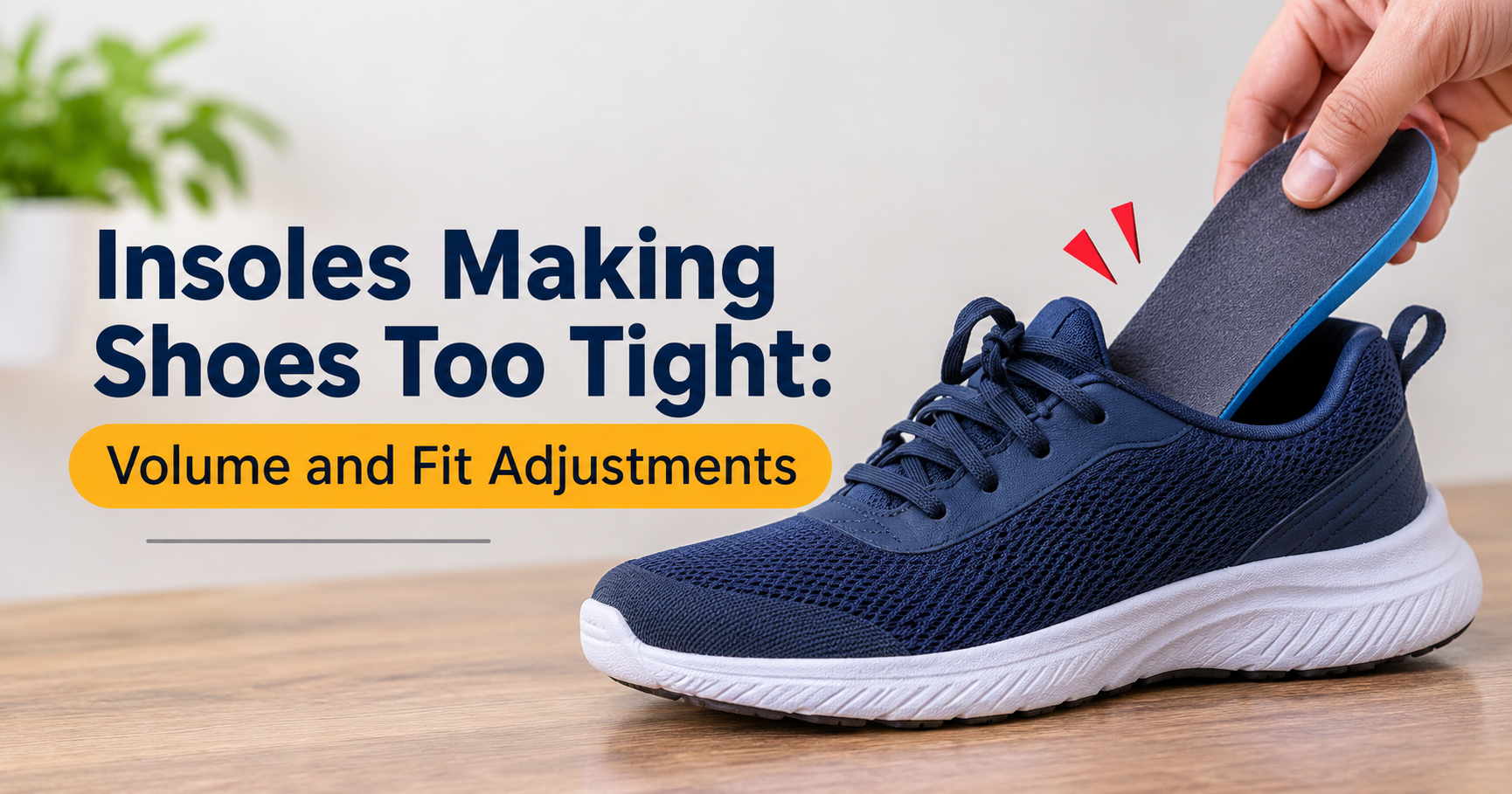
You bought a new pair of insoles to make your shoes more comfortable, but the moment you slip them in, your toes feel crushed, your instep feels pinched, or the shoe simply refuses to close the way it used to. If that sounds familiar, you are not alone. Insoles making shoes too tight is one of the most common fit complaints, and in most cases it has a simple explanation and a simple fix.
In this guide you will learn why insoles change the fit of a shoe, how to check whether your shoes still have enough room, and the practical steps that can make your shoes comfortable again without throwing away either the shoes or the insoles.
Why Insoles Make Shoes Feel Tight
A shoe is built around a fixed amount of internal space, often called its volume. Every millimetre you add at the bottom of that space is a millimetre taken away from somewhere else. Because your foot sits on top of the insole, the foot rises, and the top of your foot, your toes and your heel all get closer to the shoe upper.
1. The insole is simply too thick
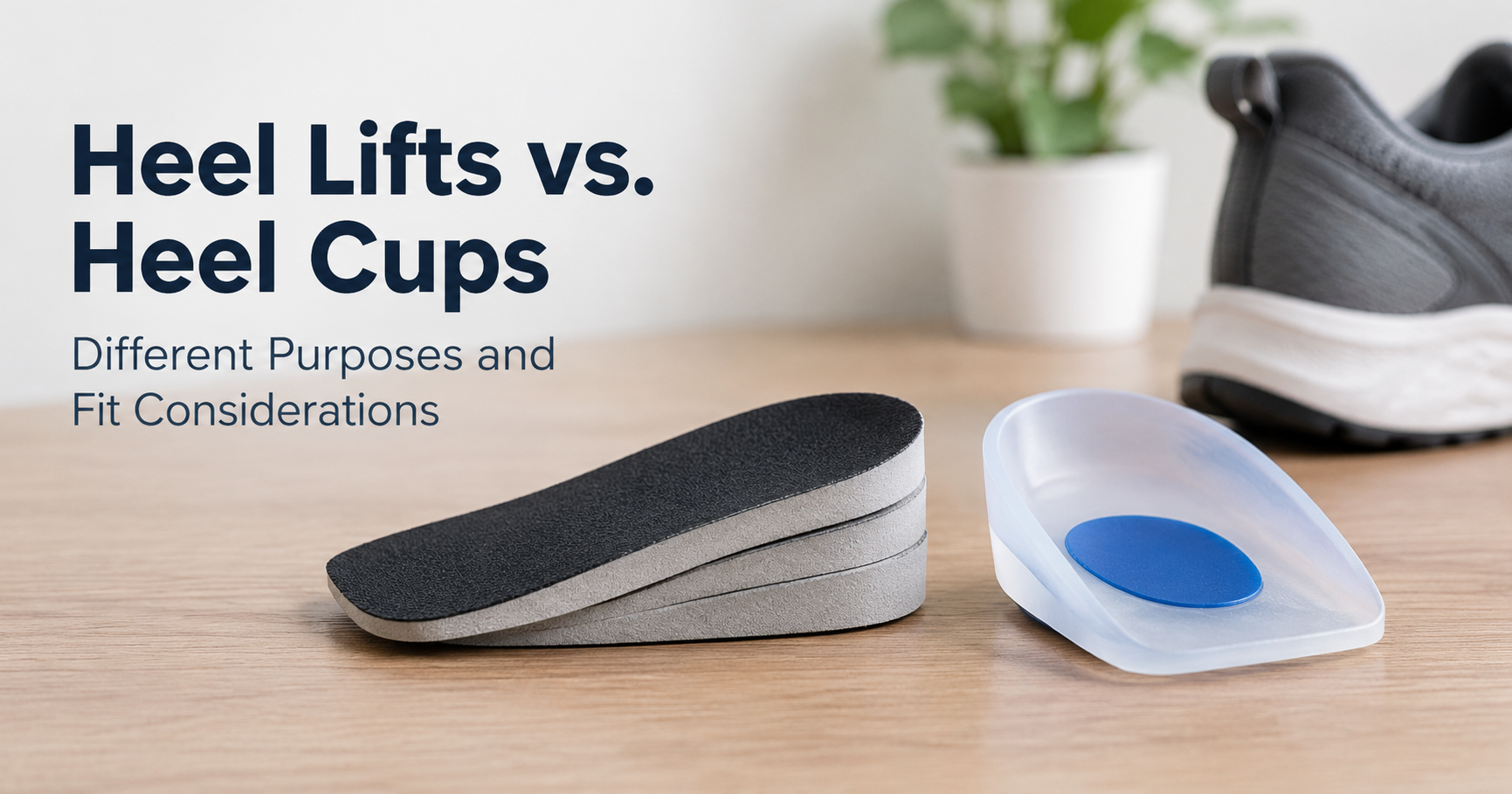
Insoles vary a lot in thickness. A thin, low-profile insole may add only a couple of millimetres, while a cushioned or gel insole can add several times that. Dress shoes, loafers and slim sneakers are designed with very little spare volume, so even a few extra millimetres can be noticeable.
2. You stacked the new insole on top of the old one
Most shoes come with a thin removable sockliner. If you place a new insole on top of it, you are doubling up. Removing the original insole first often solves the problem on its own, because the new insole then replaces it instead of adding to it.
3. A deep heel cup or high arch support pushes the foot forward
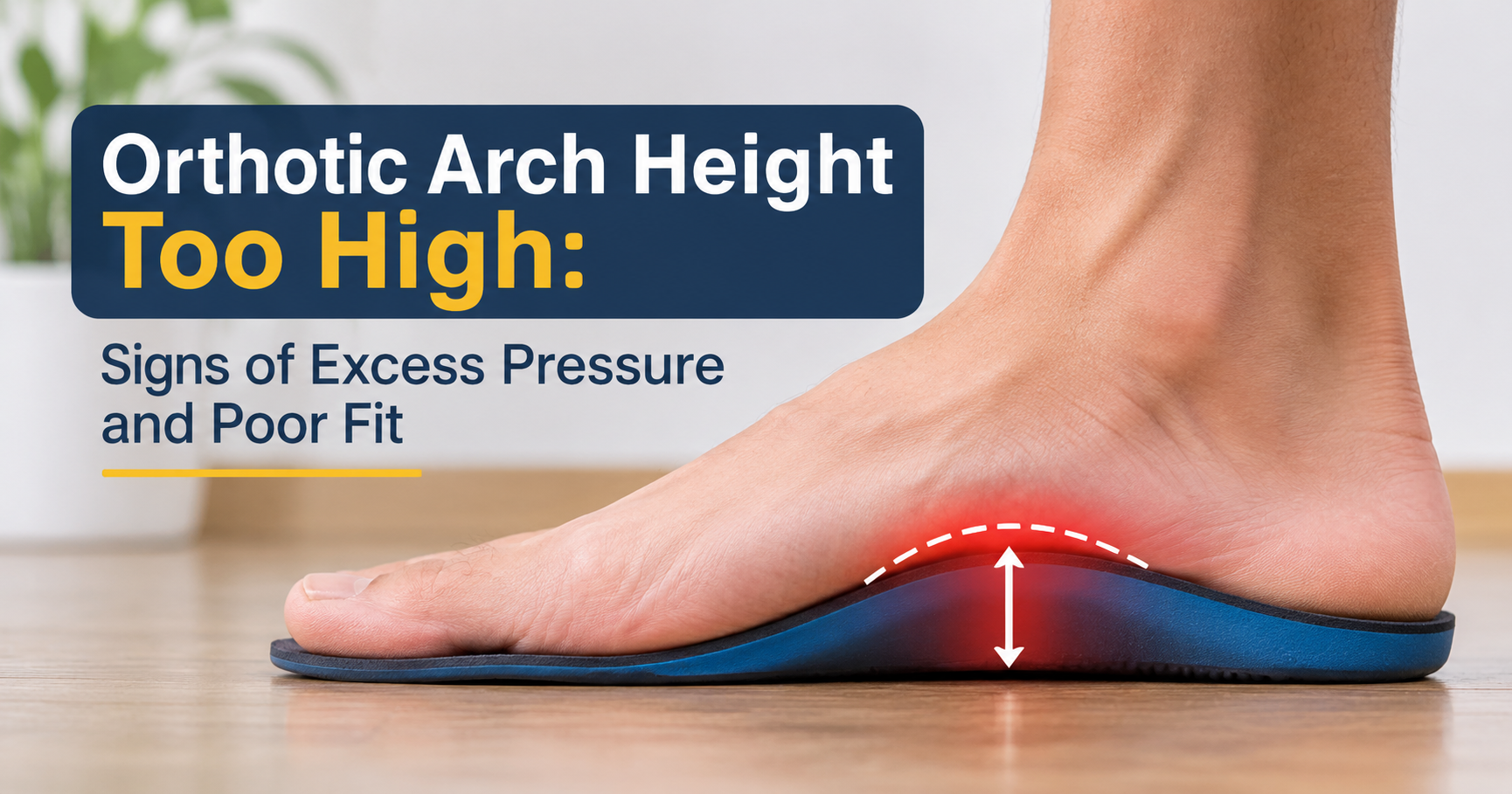
Supportive insoles are shaped on purpose. A raised arch and a deep heel cup can change how your foot sits in the shoe. If the arch support is higher than your foot is used to, or the heel cup lifts the heel, the foot can shift forward and your toes end up pressing against the front of the shoe.
4. The shoe has a shallow toe box or a low upper
Some shoe styles simply do not have much depth. Pointed-toe shoes, narrow athletic racing shoes and fashion sneakers may feel fine on their own but become tight once an insole is added. The same insole may feel perfectly comfortable in a roomier shoe.
5. Your feet are larger at certain times of the day
Feet naturally swell a little during the day, especially after walking, standing, heat or long flights. If you tried the insoles in the morning, the fit can feel very different by the evening. A shoe that is borderline in the morning can feel clearly too tight later on.
6. The shoe was already a snug size
If your shoes were a little small to begin with, the insole may just be what reveals it. A shoe that fits with no room to spare has no tolerance for any extra thickness.
Signs Your Insoles Are Making Your Shoes Too Tight
Watch for these common signals after you put the insoles in and walk around for a few minutes:
- Toes touching the front or the top of the shoe, or curling or feeling squeezed
- Pressure or pinching across the top of the foot (the instep)
- Heel feeling lifted or sliding because you laced the shoe tighter to compensate
- New rubbing, redness or blisters on toes, the top of the foot or the back of the heel
- Tingling, burning or numbness in the toes or forefoot
- Laces or straps that need to be loosened all the way to be comfortable
Mild pressure while the insole is brand new can be normal, but sharp pain, numbness or tingling is not something to ignore. Take the insoles out if you notice these.
How to Check Whether There Is Enough Room
Before you change anything, check the fit properly. Do it with both shoes, with the insole in place, while you are standing, and ideally later in the day when your feet are at their largest.
- Check toe length. You should have roughly a thumb’s width (about 1 cm) between your longest toe and the end of the shoe. Your longest toe is not always the big toe.
- Wiggle your toes. They should move freely and lie flat. If they cannot spread or they curl, the toe box is too tight.
- Check the width. The shoe should hold your foot gently across the ball of the foot without squeezing it. A bulge of flesh over the sides of the sole suggests the shoe is too narrow.
- Check the top of the foot. You should be able to close the laces or straps comfortably without the tongue pressing hard or the eyelets pulling together.
- Check the heel. The heel should feel secure, with only a little movement. If you need to over-tighten to stop slipping, the insole may be raising your foot too high.
- Walk for several minutes. Fit can feel different once your foot flexes and the shoe moves with you.
How to Fix Insoles That Make Shoes Too Tight
Try these steps in order, starting with the easiest and least expensive.
Step 1: Remove the original insole
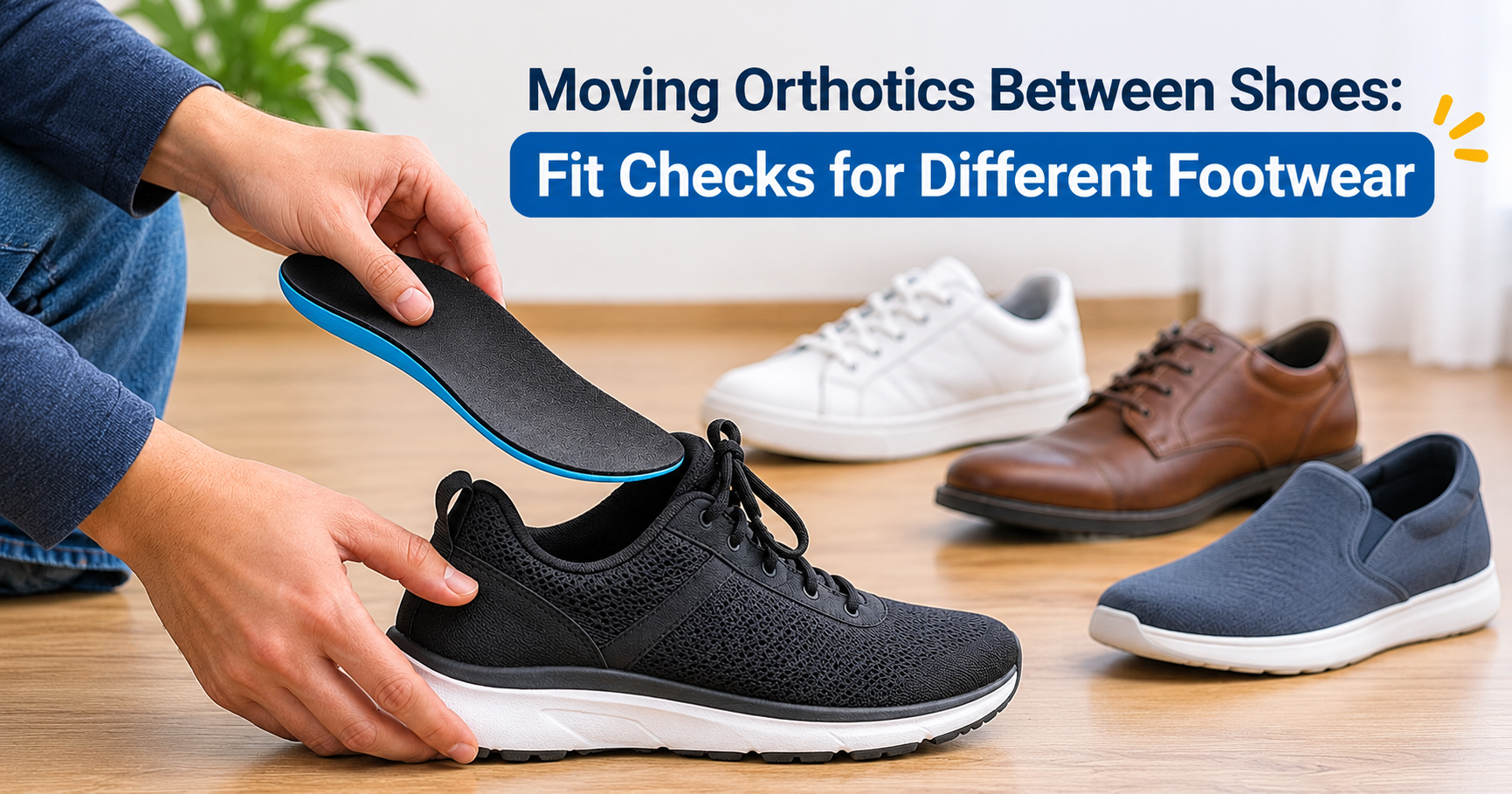
If the shoe has a removable factory insole, take it out before using your new one. This is the single most effective fix, because it gives back the thickness the old insole occupied. Do not stack two insoles in a shoe that has no spare room.
Step 2: Compare the thickness
Hold the original insole next to the new one and compare how thick they are, especially at the heel and under the arch. If the new one is much thicker, it will take up a lot more space than your shoe was designed for.
Step 3: Choose a low-profile or three-quarter-length insole
When you shop for insoles, look for options designed for tight-fitting shoes. Useful features include:
- Low-profile or slim design that adds minimal thickness
- Three-quarter length insoles that stop before the toes, leaving the forefoot free
- Flat or shallow heel cup instead of a deep, aggressive one
- Moderate arch height that matches your foot rather than lifting it too much
- Firm, thin materials such as dense foam or composite shells rather than very thick gel or soft foam that squashes unpredictably
Step 4: Trim the insole to fit
Many insoles can be trimmed. Use the shoe’s original insole as a template: trace its outline on the new insole and cut a little at a time, keeping slightly outside the line. Test it in the shoe after each small cut. Always check the manufacturer’s guidance first, because some orthotic insoles, particularly those prescribed by a professional, should not be trimmed.
Step 5: Adjust your lacing
The way you lace a shoe changes how much pressure it puts on the top of your foot. Try these approaches:
- Loosen the laces over the instep and re-tighten gently.
- Skip an eyelet where you feel the most pressure, so the laces do not squeeze that spot.
- Use a window (box) lacing pattern to create a gap above a tender area.
- Use the extra top eyelet if your shoe has one, for a snug heel without squeezing the front.
Step 6: Try a different pair of shoes or go up a size
If the shoe is simply too shallow for the insole, a better match may be a different shoe. When you are shopping for shoes to use with insoles:
- Wear or bring the insoles with you and try the shoes with them inside
- Choose shoes with a removable insole, a roomy toe box and an adjustable closure such as laces or straps
- Look at extra-depth or wide-width options if you regularly use thick or supportive insoles
- Try a half size up only if the length is genuinely the problem, and check that the heel still feels secure
- Shop later in the day, when your feet are at their largest
Quick Comparison: Common Solutions
| Solution | Best for | Things to keep in mind |
|---|---|---|
| Remove the factory insole | Any shoe with a removable sockliner | Free and fast; always try this first |
| Low-profile insole | Dress shoes, loafers, slim sneakers | Less cushioning than thick insoles |
| Three-quarter-length insole | Cramped toe boxes | Supports heel and arch but not the forefoot |
| Trim to fit | Insoles slightly too long or wide | Cut gradually; do not trim insoles that should not be altered |
| Change lacing | Pressure across the top of the foot | Helps instep pressure, not toe-length problems |
| Extra-depth or wider shoes | Regular use of thick or supportive insoles | Try on with insoles inside |
Common Mistakes to Avoid
- Stacking insoles without removing the original one
- Buying an insole by arch type alone without checking how thick it is
- Over-tightening the laces to stop heel slip, which then squeezes the top of the foot
- Waiting for the shoes to “stretch” when you feel sharp pressure or numbness
- Trying on shoes without the insoles and discovering the problem only after buying
- Trimming too much at once, which cannot be undone
How Long Should a New Insole Take to Feel Comfortable?
A new insole often feels different from what your feet are used to, particularly if it adds arch support. A gradual break-in over a few days, starting with short wear periods, is usually recommended. That adjustment period is about the feel of the support. It should not involve cramped toes, pinched skin or pain. If the shoe is physically too tight, more wear will not fix the lack of space.
When to See a Foot Specialist
Consider speaking with a podiatrist or another qualified foot-care professional if:
- You have persistent pain, numbness or tingling in the feet or toes
- You develop blisters, corns, calluses or skin changes from pressure
- You have bunions, hammertoes or other foot deformities that make fitting shoes difficult
- You have diabetes or poor circulation, where pressure from tight shoes can be serious
- You use prescribed or custom orthotics and your shoes no longer fit them
A professional can check your feet, assess whether you need support at all, and recommend shoes and insoles that suit your foot shape.
Frequently Asked Questions
Why do my shoes feel tight after adding insoles?
Because the insole takes up space. It raises your foot inside the shoe, reducing room in the toe box and over the instep. Stacking on top of the original insole, a thick or high-arched design and a shoe with little spare volume all make this more noticeable.
Should I take the original insole out first?
If it is removable, yes. Replacing the factory insole with your new one usually gives a much better fit than stacking them.
Can I cut my insoles to make them fit?
Many insoles can be trimmed, but not all. Use the original insole as a template, cut a little at a time and follow the manufacturer’s instructions. Do not alter insoles that were prescribed to you without asking the professional who provided them.
Should I buy a bigger shoe size to fit insoles?
Not automatically. First try removing the factory insole and choosing a thinner insole. If length is genuinely the issue, a half size up may help, but check that your heel remains secure. Shoes with extra depth or a roomier toe box are often a better solution than a longer size.
Do insoles stretch out and loosen up over time?
Some materials compress slightly with use, which can add a little room. But you should not rely on this. If the shoe is painfully tight or you feel numbness, stop using that combination.
Are thin insoles as supportive as thick ones?
Thin insoles generally provide less cushioning. However, a well-designed slim insole with a firm structure can still offer useful support in shoes that cannot hold something thicker. The right option depends on your feet and the shoe.
Final Thoughts
Insoles are meant to make your feet feel better, not to make your shoes feel like a vice. When insoles make shoes too tight, the problem is almost always about space: the insole is too thick, it was stacked on another one, or the shoe lacks the depth to hold it. By removing the factory insole, choosing a low-profile or three-quarter-length model, trimming carefully, adjusting your lacing and choosing shoes with a roomy toe box, you can usually get the support you wanted without losing comfort.
Always test your shoes with the insoles in, stand and walk in them, and trust what your feet tell you. If you feel pain, numbness or tingling, take the insoles out and seek advice from a foot-care professional.
This article is for general information only and is not medical advice. If you have foot pain or a medical condition, speak with a qualified healthcare professional.