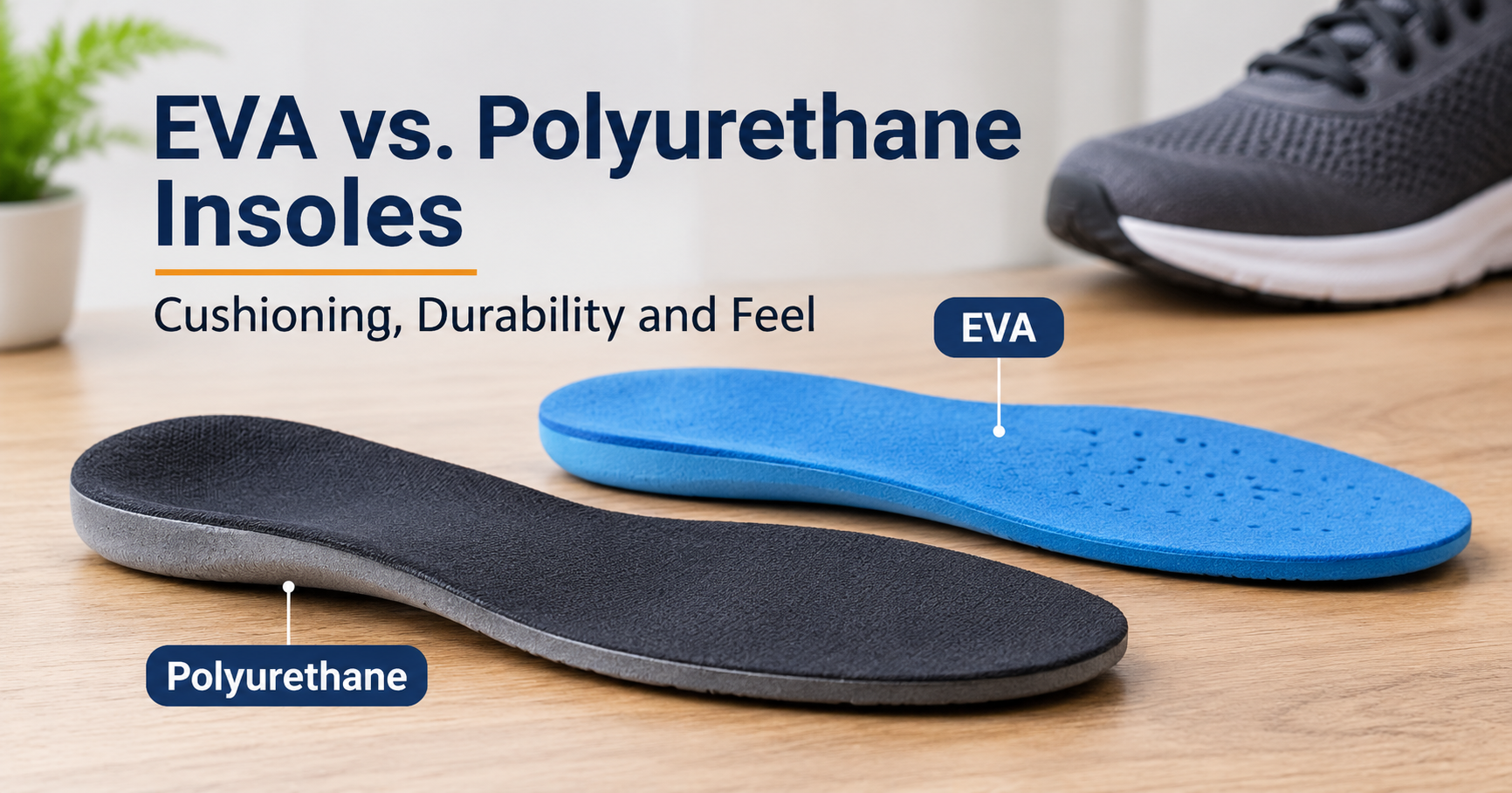
Walk into any shoe store or browse any online insole listing and you will see the same two materials again and again: EVA and polyurethane (PU). Both are foams. Both promise comfort. Yet they feel different underfoot, wear out at different speeds and suit different people and activities.
This guide explains what each material is, how they compare on cushioning, durability, weight, support and price, and how to decide which one fits your feet, your shoes and your daily routine.
Quick Answer: EVA or Polyurethane?
- Choose EVA if you want a lightweight, affordable, easy-to-fit insole for everyday walking, casual shoes or slim footwear, and you do not mind replacing it more often.
- Choose polyurethane if you spend long hours on your feet, need stronger shock absorption, are heavier, or want an insole that keeps its shape for longer.
The rest of this article explains why, so you can make a confident decision rather than a guess.
What Is an EVA Insole?
EVA stands for ethylene-vinyl acetate, a flexible, rubber-like plastic that is expanded into a lightweight foam. It is the most common midsole and insole material in the footwear industry, found in everything from running shoe midsoles to sandals and over-the-counter cushioned inserts.
EVA foam is made of tiny sealed air pockets (a closed-cell structure). Manufacturers can make it very soft or quite firm by changing the density, which is why you will find EVA in both plush comfort insoles and rigid arch-support shells.
Main Advantages of EVA
- Very light: adds almost no weight to the shoe.
- Affordable: generally cheaper to produce, so EVA insoles are usually the budget-friendly choice.
- Easy to shape: many EVA insoles can be heat-molded or trimmed to fit.
- Wide firmness range: from soft cushioning to firm structural support.
- Water-resistant: closed cells do not soak up moisture the way open-cell foams can.
Main Drawbacks of EVA
- Compresses over time: the air cells gradually collapse under repeated pressure, so the foam can feel flat sooner.
- Less rebound: it absorbs impact reasonably well but returns less spring than a good PU foam.
- Can bottom out for heavier users: softer, thin EVA may lose its cushioning quickly under higher body weight.
What Is a Polyurethane Insole?
Polyurethane is a versatile polymer used in everything from furniture cushions to athletic footwear. In insoles, PU foam is typically denser and more resilient than EVA. It compresses under load and then springs back, which is why many premium, work-grade and orthopedic-style insoles use it.
PU insoles come in several forms. Some are firm and springy, while others are viscoelastic (often marketed as memory foam), which molds slowly to the foot and recovers slowly after pressure is removed.
Main Advantages of Polyurethane
- Excellent shock absorption: well suited to hard floors and repetitive impact.
- Better shape retention: usually keeps its cushioning and thickness longer than EVA.
- Good rebound: the springy feel can reduce the “flat” sensation by the end of a long day.
- Supports heavier users: dense formulations resist bottoming out.
Main Drawbacks of Polyurethane
- Heavier: noticeable in lightweight running or dress shoes.
- Higher price: better durability usually comes with a higher cost.
- Bulkier for the cushioning provided: can feel tight in slim or low-volume shoes.
- Can age in humid conditions: some PU formulations may degrade, crumble or yellow after long exposure to heat and moisture, especially if stored poorly.

EVA vs Polyurethane Insoles: Head-to-Head Comparison
| Feature | EVA | Polyurethane (PU) |
|---|---|---|
| Weight | Very light | Heavier |
| Price | Usually lower | Usually higher |
| Shock absorption | Moderate to good | Good to excellent |
| Rebound / energy return | Moderate | Good |
| Durability | Shorter lifespan; compresses sooner | Longer lifespan; holds shape better |
| Heat-moldability | Common and easy | Less common |
| Best for heavier users | Only in dense, firm grades | Generally better |
| Fit in slim shoes | Easier | Can feel bulky |

Cushioning and Shock Absorption
Cushioning is the main reason people buy insoles, but “soft” and “protective” are not the same thing. A very soft foam feels great in the first minute but can compress fully under body weight, leaving little protection.
Polyurethane generally manages impact better because it is denser and resists compression while still giving a springy feel. That makes it a popular choice for people who stand on concrete, walk on tile or work long shifts.
EVA can still deliver comfortable cushioning, especially in moderate-activity situations. Dual-density EVA designs, with a soft top layer over a firmer base, are a good way to get both comfort and structure at a lower cost.
Durability and How Long Each Lasts
All foam insoles wear out. The real question is how quickly. EVA tends to flatten and lose its rebound sooner, often within several months to around a year of daily use. Polyurethane commonly lasts longer, though the exact lifespan depends on the formulation, your body weight, how many hours you wear them and how much you walk or run.
A better habit than counting months is to watch for warning signs: visible creasing, thin spots under the heel or forefoot, loss of springiness when you press with a thumb, or the return of aches you had before using insoles.

Arch Support and Foot Alignment
Material alone does not decide support. The shape of the insole (arch height, heel cup depth) and the firmness of the foam matter just as much.
- Firm EVA is widely used for structured arch supports and semi-rigid shells because it holds a defined shape and stays light.
- Firm PU provides support with more bounce, which some people find more comfortable for long periods of standing.
- Soft versions of either add comfort but provide little correction on their own.
If you have a specific condition such as plantar fasciitis, flat feet, high arches or diabetes, speak with a podiatrist or physical therapist before relying on over-the-counter insoles. They can tell you what level of support and which material is appropriate for your situation.
Weight, Fit and Shoe Type
An insole that works perfectly in one shoe can ruin the fit of another. EVA’s lighter weight and thinner profiles make it easier to use in dress shoes, flats, cycling shoes and snug athletic footwear. Polyurethane often needs a little more room because it is denser and may be thicker.
Before buying, remove the shoe’s existing insole and compare thickness. If the new insole makes your heel slip out or presses your toes against the top of the shoe, it is the wrong choice regardless of the material.
Moisture, Odor and Hygiene
EVA’s closed-cell structure resists absorbing sweat, which helps it dry relatively quickly. Some PU foams, especially open-cell memory types, can hold more moisture and warmth. In either case, a breathable top cover, such as a moisture-wicking fabric, makes a bigger difference to odor than the foam itself.
To keep any insole fresh, take it out of your shoe at night, let it air-dry away from direct heat and wipe it with a mild soap solution when needed. Avoid machine washing and tumble drying, which can warp the foam.
Which Is Better for Your Situation?

Everyday Walking and Casual Shoes
For light daily use, EVA is usually enough. It is affordable, comfortable and easy to replace when it flattens.
Standing All Day on Hard Floors
Retail, healthcare, hospitality and warehouse workers often benefit from polyurethane’s stronger shock absorption and shape retention.
Running and High-Impact Sports
Impact forces are repeated thousands of times per session. A resilient PU insole can handle this better, although a high-quality dense EVA can work well for lighter runners who prefer a low-weight setup.
Dress Shoes and Slim Footwear
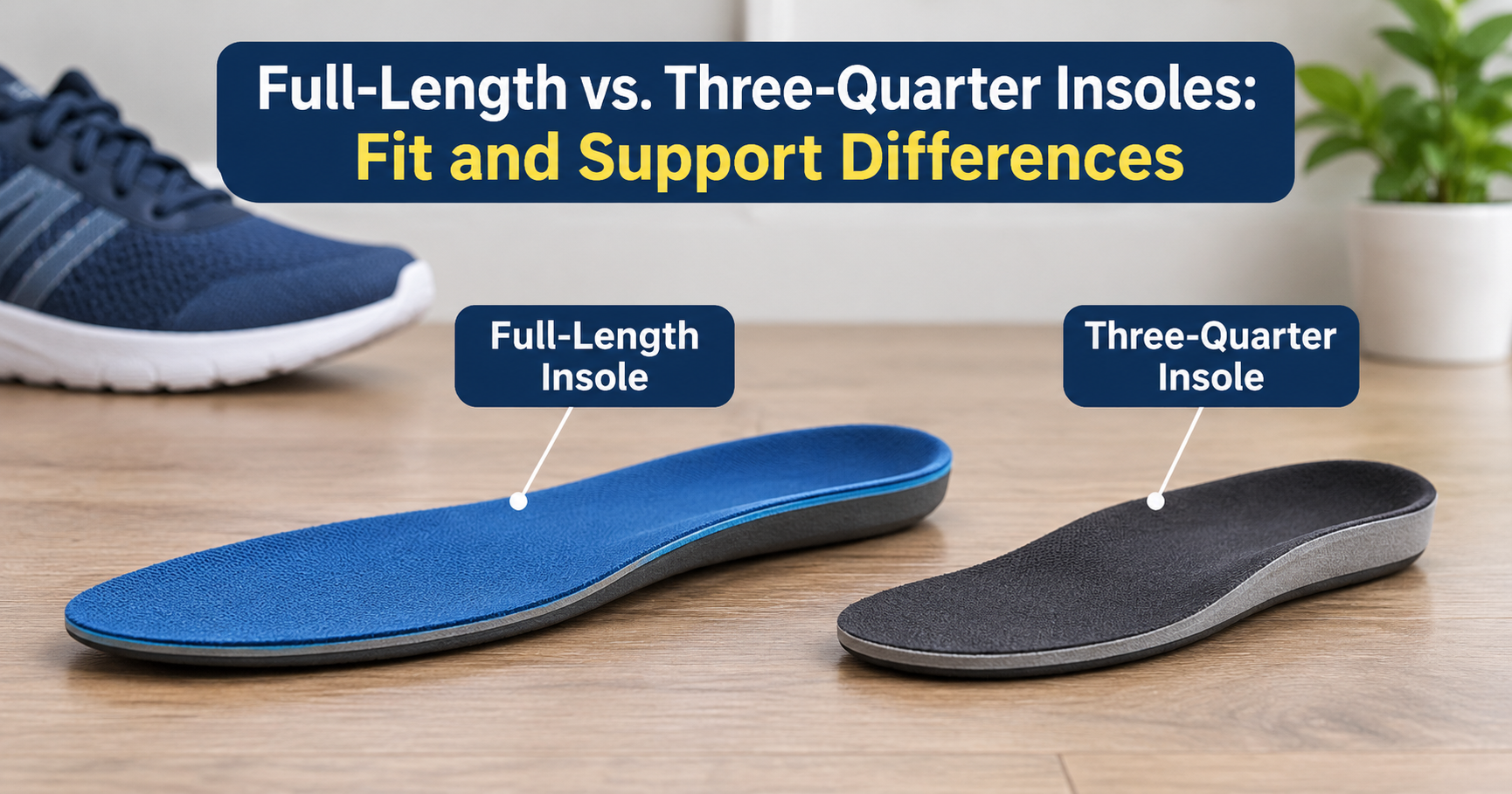
Thin EVA insoles or three-quarter-length designs are the practical option because they add support without crowding the foot.
Heavier Body Weight
More body weight compresses foam faster. Dense polyurethane, or a high-density firm EVA, is generally the better match.
Tight Budgets and Frequent Replacement
If you prefer to replace insoles regularly, or want to test whether insoles help before investing more, EVA is a low-risk starting point.
How to Choose a Good Insole (Whatever the Material)
- Match the insole to your shoe type. Running shoe, work boot and dress shoe each have different space.
- Check density, not just softness. Press the foam and see how quickly it springs back.
- Look at the full design. Heel cup, arch contour and top cover affect comfort as much as the foam.
- Break them in gradually. Wear new insoles for one to two hours on the first day and extend the time over a week.
- Replace when worn. A flattened insole stops doing its job even if it still looks fine.
Common Myths About EVA and Polyurethane Insoles
“Softer always means more comfortable.”
Not necessarily. Extremely soft foam can collapse under load. The best insole balances softness with enough density to keep supporting your foot.
“Polyurethane is always better than EVA.”
It depends on use. PU wins on durability and shock absorption, but EVA wins on lightness, price and fit in slim shoes. A well-made EVA insole can outperform a poor-quality PU one.
“Insoles fix every foot problem.”
Insoles can reduce discomfort for many people, but they are not a cure-all. Persistent pain, swelling, numbness or changes in foot shape deserve professional evaluation.
Frequently Asked Questions
Is EVA or polyurethane better for plantar fasciitis?
Either can work if the insole offers good arch support and a deep heel cup. Many people with heel pain prefer a firm, supportive design with some cushioning, and polyurethane’s durability can be an advantage under daily load. Because plantar fasciitis has several possible causes, a clinician’s guidance is worth seeking.
Which insole material lasts longer?
Polyurethane usually lasts longer than EVA when used under the same conditions, because it resists compression better. Heavy use, high body weight and heat all shorten the life of both materials.
Are polyurethane insoles heavier than EVA?
Yes. PU is denser, so an insole of the same size will generally weigh more than an EVA one.
Can I trim EVA and polyurethane insoles to fit my shoes?
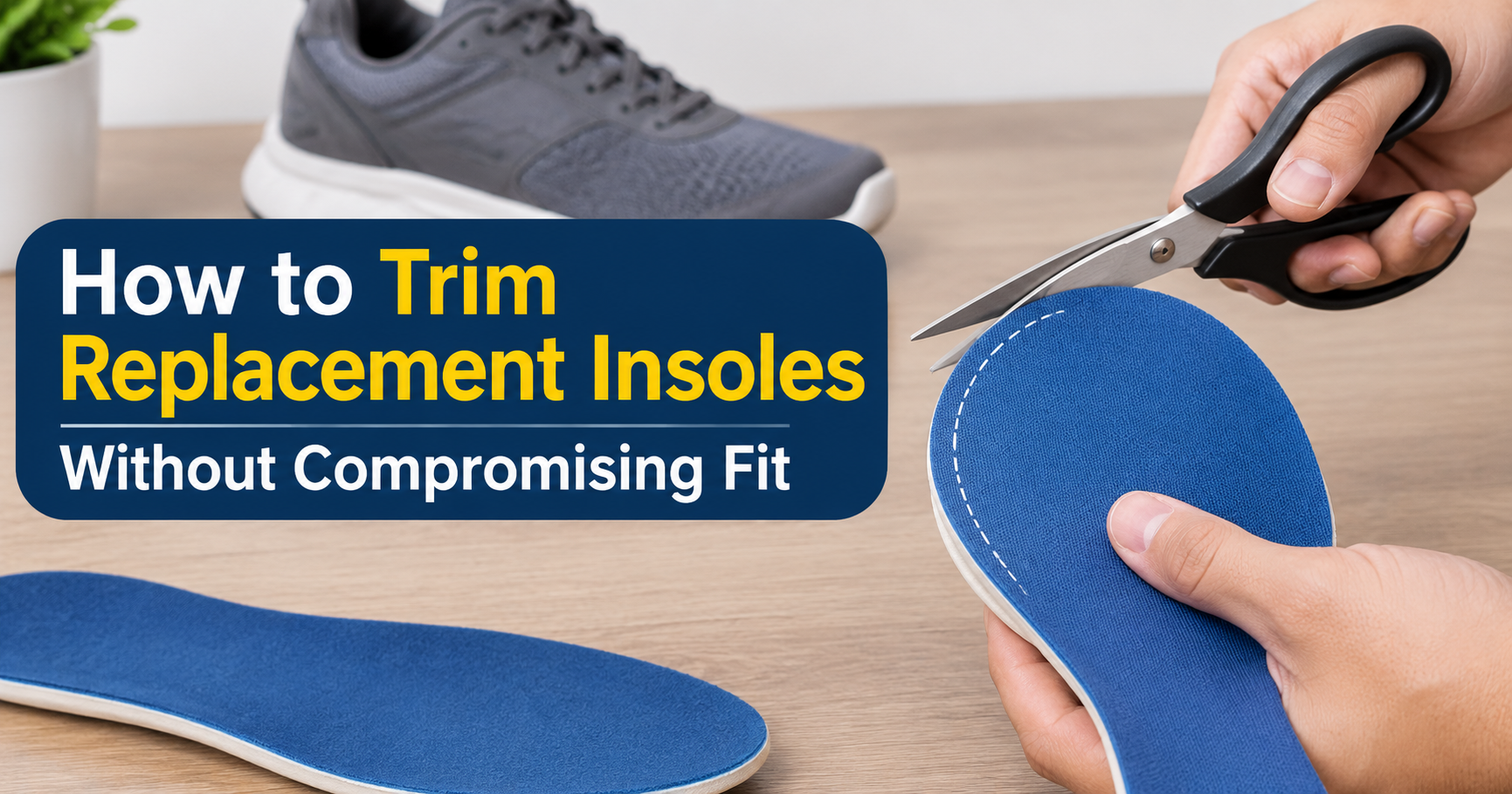
Most full-length insoles can be trimmed with sharp scissors, using the shoe’s original insole as a template. Cut small amounts at a time and test the fit often. Some structured insoles have trim lines marked on the underside.
Are EVA insoles good for running?
Yes, especially lightweight, higher-density EVA. Many running shoe midsoles are built from EVA-based foams. Heavier runners or those running on hard surfaces may prefer polyurethane for added durability.
How often should I replace my insoles?
Replace them when you notice flattening, cracks, thin spots or returning discomfort, rather than relying on a fixed date. Many people replace EVA insoles more often than PU ones.
Do insoles change how my shoes fit?
They can. A thicker insole reduces the volume inside the shoe, so you may need a different size or a removable factory insole to be taken out first.
Final Thoughts
EVA and polyurethane are both good insole materials, and neither is the best at everything. EVA offers a lightweight, budget-friendly and easily shaped option that suits everyday wear and slim shoes. Polyurethane brings denser cushioning, better rebound and longer-lasting performance for people who demand more from their insoles.
Start with how you use your feet: how long you stand, how much impact you create, which shoes you wear and how much you weigh. Then choose the material, and the design, that matches. When in doubt, or when pain is involved, a podiatrist can help you choose with confidence.
This article is for general information only and is not a substitute for professional medical advice, diagnosis or treatment.