

How to Select the Right Size of Toe Separators: The Complete Fit Guide

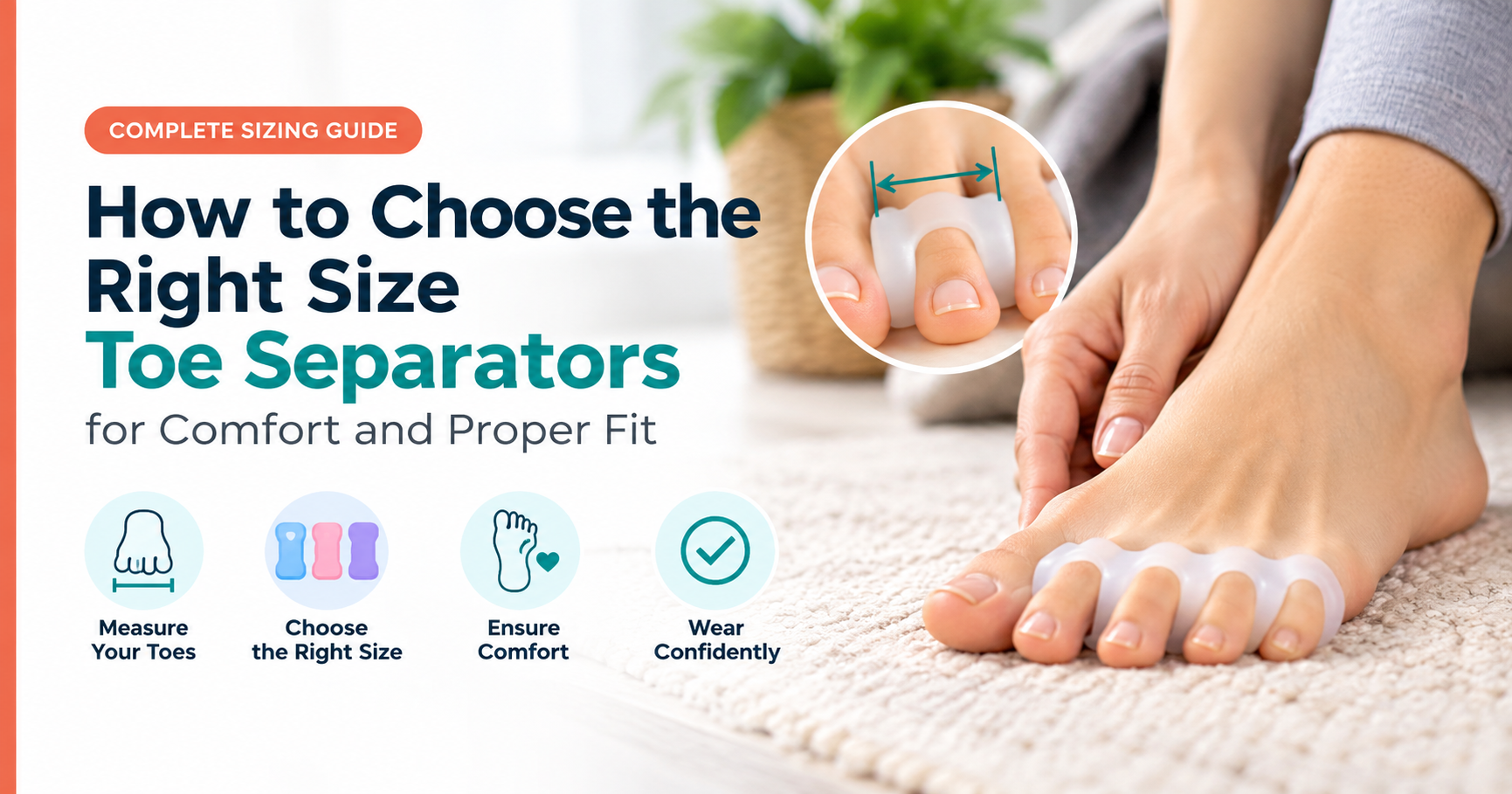
Toe separators look simple, but choosing the wrong size is the most common reason people give up on them after a single use. A pair that is too small barely does anything. A pair that is too large pushes your toes apart too aggressively and leaves you sore. The good news is that finding the right size is easy once you know what to measure and what to look for.
In this guide you will learn what toe separators are, why size matters so much, how to measure your feet at home, how to read a size chart, and how to match the right size to your daily activities. By the end, you will be able to choose a pair with confidence.
What Are Toe Separators?
Toe separators, also called toe spacers or toe stretchers, are small devices made from soft gel, silicone, foam or fabric. They sit between your toes and gently hold them in a more natural, spread position. People use them for several everyday reasons:
- Relaxing feet after long hours of standing or walking
- Keeping toes apart during a pedicure so polish does not smudge
- Supporting natural toe alignment after wearing narrow shoes
- Stretching the toes after running, hiking or gym sessions
- Adding comfort during yoga, Pilates and barefoot-style training
Why the Right Size Matters
The purpose of a toe separator is gentle spacing. If the size is wrong, the product cannot do its job and may even cause discomfort. Here is what usually happens:
- Too small: The separator slips out, bunches up, or does not create any noticeable space. Your toes still feel squeezed.
- Too large: The separator forces your toes wide apart. This can cause pinching at the base of the toes, cramping in the arch and general soreness.
- Right size: Your toes feel relaxed, the separator stays in place and you can wear it comfortably for the recommended time.
Know the Main Types Before You Choose a Size
Sizing depends partly on the design, so it helps to know the common types first.
Single Loop or Ring Spacers
These fit around one or two toes, most often the big toe and second toe. They are popular for people who mainly want to address the space between those two toes. Sizing is based mostly on the width of the toe gap.
Four-Toe and Five-Toe Gel Spacers
These cover several toes at once and usually come as a one-piece set. They are common for relaxation, recovery and pedicures. They are usually sized small, medium and large, or by shoe size range.
Sock-Style or Fabric Separators
These are toe socks with built-in dividers. They are sized like regular socks, so your shoe size is the main guide.
Foam Pedicure Separators
These soft foam pieces are mostly one-size and meant for short-term use during nail care. They are compressible, so exact sizing matters less.
How to Measure Your Feet for Toe Separators

You do not need special tools. A flexible tape measure or a small ruler is enough. For the most accurate result, measure in the evening, because feet naturally swell slightly during the day.
Step 1: Measure Your Foot Length
Stand on a sheet of paper, mark the tip of your longest toe and the back of your heel, then measure the distance. Compare it with the size chart of the product. Always measure both feet, because many people have one foot slightly larger than the other. Use the larger foot as your guide.
Step 2: Measure the Ball-of-Foot Width
The ball of the foot is the widest part, just behind the toes. Measure straight across. A wider forefoot usually needs a larger separator, because the toes naturally sit further apart.
Step 3: Check Your Toe Gaps
Look at the natural space between your toes when you stand relaxed. If there is very little room, start with a smaller or thinner separator. If you have a visible gap, especially between the big toe and second toe, a medium size usually works better. Keep in mind that toe separators should add gentle spacing, not extreme spreading.
Step 4: Consider Your Toe Thickness
Thicker toes need a wider channel on the separator. Slim toes need a snug but soft fit. If the product has individual toe loops, make sure each loop can open comfortably around your toe without squeezing it.
General Toe Separator Size Chart
Every brand sizes its products a little differently, so always check the manufacturer’s chart first. The table below shows a typical guideline that many products follow.
| Size | Typical Shoe Size Range (US) | Best For |
|---|---|---|
| Small | Women’s 4 to 7 / Kids’ larger sizes | Narrow feet, slim toes, first-time users |
| Medium | Women’s 7 to 10 / Men’s 6 to 8 | Average width feet, everyday comfort |
| Large | Men’s 8 to 12 | Wider feet, thicker toes, athletic use |
| Extra Large | Men’s 12 and above | Very wide feet and larger frames |
Tip: If you fall between two sizes, choose the smaller one if you are new to toe separators. Your toes need time to adjust, and you can move up a size later.
How to Tell If the Size Is Right

After putting on your toe separators, stand or sit for a few minutes and check for these signs.
Signs of the Right Fit
- The separators stay in place without sliding out
- Your toes feel gently spread, not stretched
- There is no pinching, numbness or sharp pressure
- You feel relaxed after a few minutes
Signs the Size Is Too Small
- The separators slip or fall out easily
- Your toes still touch each other
- The gel bunches up or folds
Signs the Size Is Too Large
- Your toes feel forced apart or tense
- You feel pressure at the base of the toes
- Your arch or foot muscles begin to ache
- Your skin looks red where the separator rests
If you notice numbness, tingling or pain, remove the separators right away and try a smaller size or a softer material.
Choosing the Right Size for Your Activity
For Everyday Relaxation
A medium size in soft gel is usually the best starting point. Choose a flexible design that adapts to your toes while you rest at home.
For Running and Sports Recovery
Athletes often have wider forefeet from training. A well-fitting medium or large size in a firm but soft silicone works well after workouts. Use them while resting, not while running, unless the product is designed for that purpose.
For Yoga and Pilates
Choose a thinner, flexible separator that does not restrict movement. Sock-style separators sized by shoe size are often the most comfortable option.
For Pedicures
Foam separators are the easiest choice. Because they compress, exact size is less important. Pick a size that keeps the toes apart without forcing them.
For Wide Feet or Wide Toe Gaps
Go one size up from the standard range, but check that the material is soft enough. A large separator in a hard material can feel uncomfortable even if the size looks right.
Material and Thickness: Do They Affect Sizing?
Yes. Two products labelled medium can feel very different depending on the material.
- Soft gel: Flexible and forgiving. It adapts to your toe shape, so slightly different sizes can still feel comfortable.
- Medical-grade silicone: Durable and easy to clean. It holds its shape well, so accurate sizing is more important.
- Foam: Very soft and lightweight. It is ideal for short use, but it can compress quickly.
- Fabric: Breathable and sized like socks. It gives mild spacing and is good for all-day wear.
Thicker separators create more space, so if you are a beginner, select a thinner design. You can move to a thicker one as your feet adapt.
Common Sizing Mistakes to Avoid
- Going by shoe size alone: Two people with the same shoe size can have very different toe gaps and forefoot widths.
- Choosing the largest size for maximum stretch: More spreading is not better. Gentle spacing is the goal.
- Ignoring the size chart: Brands vary, so a medium from one maker may feel like a small from another.
- Wearing them for too long on the first day: Even the correct size needs a short adjustment period.
- Measuring only one foot: Compare both and size for the larger one.
How to Get Used to Your Toe Separators
Even with the perfect size, your toes may need time to adapt, especially if you have worn narrow shoes for years. Follow this simple routine:
- Start with 10 to 15 minutes while sitting.
- Increase gradually over the next few days as your comfort improves.
- Use them at home, not inside tight shoes, unless the product is designed for it.
- Take them off if you feel discomfort that does not fade.
Cleaning and Care Tips
Clean gel and silicone separators with mild soap and lukewarm water, then let them air dry fully before storing. Avoid harsh chemicals and direct sunlight, which can damage the material. Replace them if they crack, tear or lose their softness, because a damaged separator will not fit properly.
When to Talk to a Professional
Toe separators are meant for comfort and general foot care. If you have persistent foot pain, bunions, diabetes, circulation problems, numbness or any foot condition, speak with a podiatrist or healthcare professional before using them. A specialist can recommend the best option and size for your situation.
Frequently Asked Questions
Should I choose toe separators by shoe size?
Shoe size is a useful starting point, but it should not be the only factor. Also consider the width of your forefoot, the natural gap between your toes and the product’s own size chart.
What if I am between two sizes?
Choose the smaller size first, especially if you are a beginner. A smaller size is gentler and less likely to cause soreness.
Can toe separators be too big?
Yes. Oversized separators can overstretch the toes and cause pain. The right size gives gentle spacing, not forced spreading.
How long should I wear them?
Beginners should start with 10 to 15 minutes and slowly build up. Many users wear them for 20 to 30 minutes at a time, but follow the instructions that come with your product.
Do men and women need different sizes?
The needs depend on foot size and toe width rather than gender. Use the size chart and your own measurements rather than the product’s label.
Can I wear toe separators with shoes?
Some designs are made for use inside roomy shoes, but most are intended for rest, stretching and recovery. Check the product description and make sure your shoes have enough space.
Final Thoughts
Selecting the right size of toe separators comes down to a few simple steps: measure your foot length and forefoot width, check the natural gaps between your toes, compare your numbers with the size chart, and pick a material that suits your activity. When in doubt, begin with a smaller, softer pair and build up as your toes adapt.
The right fit should feel gentle, stable and comfortable. Take your time, listen to your feet, and you will enjoy the full benefit of your toe separators.