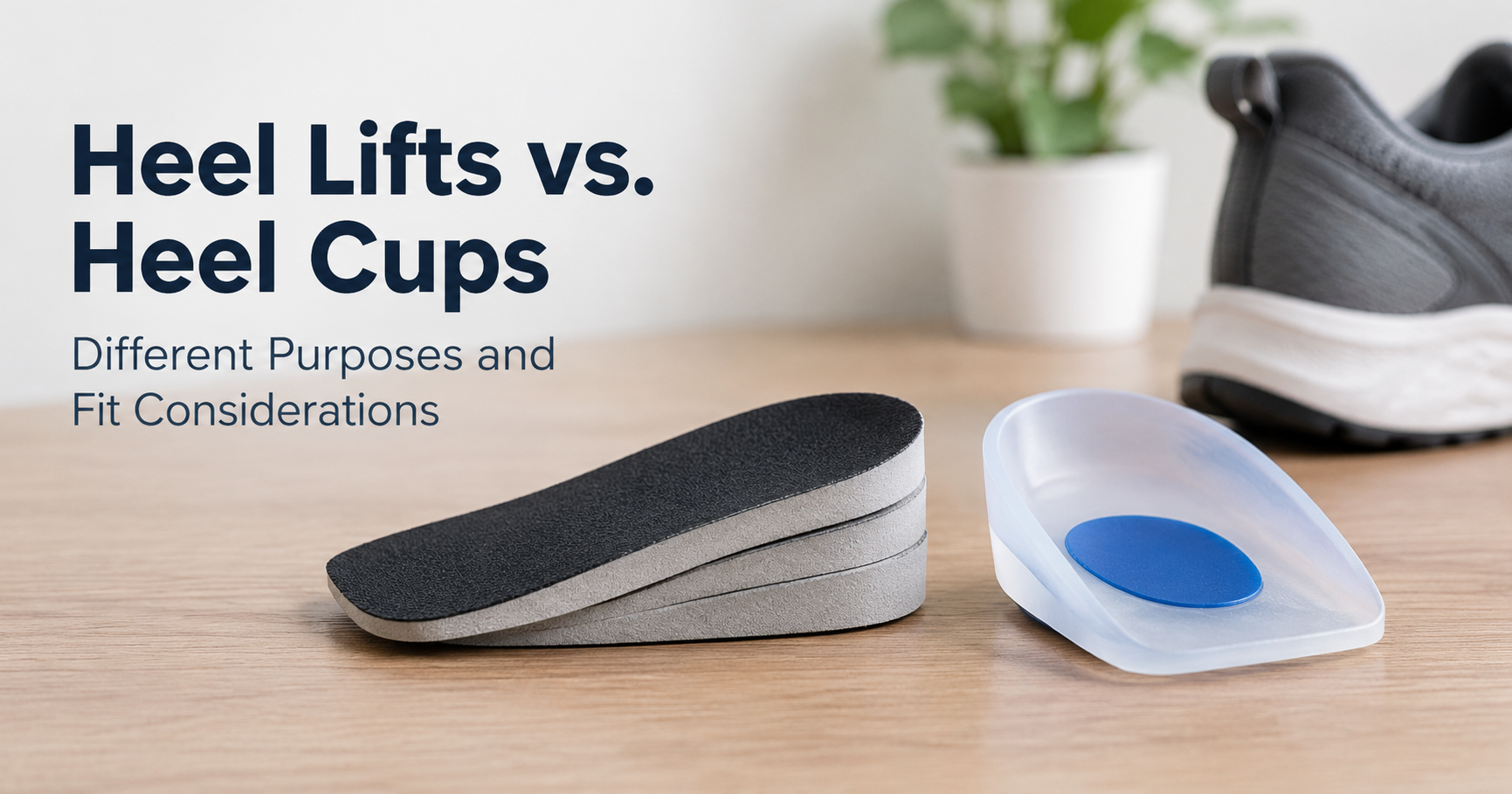
Walk into the foot care aisle, or scroll through any online store, and you will find two products that look almost alike: heel lifts and heel cups. Both are small. Both slide into the back of your shoe. Both promise to make your feet feel better. Yet they do very different jobs, and picking the wrong one can leave you with the same pain, or even a new one.
This guide explains heel lift vs heel cup in plain language. You will learn what each one is, how it works, who tends to benefit, where each one falls short, and how to choose with confidence. By the end, you will know which one fits your situation and how to use it properly.
What Is a Heel Lift?
A heel lift is a wedge-shaped insert that sits under the heel inside your shoe. It is thicker at the back and tapers toward the arch, so it lifts the heel by a small amount, usually between a quarter inch and half an inch. Some are made from soft foam, others from cork, felt, rubber, or firm gel. Firmer materials hold their height longer, while softer ones feel more comfortable at first but may compress.
The goal is simple: change the position of the ankle. When the heel sits higher, the ankle is held in a slightly more pointed position. That reduces how far the calf muscle and Achilles tendon must stretch with every step.
Who Commonly Uses Heel Lifts?
- People with Achilles tendon discomfort: Raising the heel lowers tension on the tendon, which is why lifts are a common short-term comfort aid.
- People with tight calf muscles: When the calf is tight, the ankle cannot bend upward easily. A lift reduces the amount of bend needed.
- People with limited ankle flexibility: A small lift can make walking and standing feel smoother.
- People with a small leg length difference: A lift in the shoe of the shorter leg can help even out the height.
- People who feel their heel slips or their foot sits too low in a shoe: A lift can improve how the foot sits in the shoe, as long as there is enough room.
Limits of Heel Lifts
A heel lift does not cushion the heel in the way a cup does, and it does not strengthen or stretch anything. It also takes up space. In a tight shoe, it can push the foot forward, squeeze the toes, and make the heel slip out. If you use a lift for a long time without addressing tight calves, the muscle may adapt to the raised position, so many people pair lifts with gentle stretching advised by a professional.
What Is a Heel Cup?
A heel cup is a shaped insert with raised side walls that wrap around the back and sides of the heel. Think of it as a small bowl for your heel. It is usually made of silicone, soft gel, or foam, and it sits on top of the insole or inside the heel area of the shoe.
Your heel has a natural fat pad under the heel bone that acts as built-in shock absorption. Over time, or with hard surfaces and high impact, that pad can spread outward and thin out. A heel cup helps keep the pad compact and centered under the bone, so impact is absorbed where it should be.
Who Commonly Uses Heel Cups?
- People with heel pain under the foot: Extra cushioning can make each step feel softer, which is why cups are a popular first step for plantar fasciitis-type heel soreness.
- People who stand or walk on hard floors: Factory, retail, hospital, and kitchen workers often use cups for day-long comfort.
- Runners and active people: Added heel cushioning helps absorb repeated impact.
- Active children with heel soreness: Heel cups are sometimes suggested for growing kids with heel pain, though a pediatric professional should guide this.
- People with thin heel padding: Older adults often lose some natural cushioning and may feel more comfort with a cup.
Limits of Heel Cups
A heel cup will not change your heel height, so it will not relieve a tight Achilles in the same way a lift can. It also will not correct a leg length difference. A cup that is too shallow or too soft may flatten and stop helping, while one that is too stiff can feel like a hard edge against the heel. If the cup is too wide, it can slide inside the shoe, so the fit matters as much as the material.
Heel Lift vs Heel Cup: Side-by-Side Comparison
| Feature | Heel Lift | Heel Cup |
|---|---|---|
| Main purpose | Raises the heel and changes ankle angle | Cradles and cushions the heel |
| Heel height change | Yes, usually 1/4 to 1/2 inch (about 6 to 12 mm) | Little or none |
| Best known for | Tight Achilles, tight calves, small leg length differences | Heel pain, thin heel padding, shock absorption |
| Typical materials | Foam, cork, felt, rubber, firm gel | Silicone, soft gel, EVA foam |
| Where it sits | Under the heel, flat on the insole | Under and around the heel, with raised side walls |
| Shoe space needed | Needs extra heel and instep room | Needs a little depth and a stable heel counter |
| Used on | One or both shoes, depending on the reason | Usually both shoes |
| Main drawback | Can push the foot forward and tighten the fit | Does not fix tightness or leg length problems |
The big takeaway is that these two products are not direct substitutes. A heel lift changes how your foot is positioned. A heel cup changes how your heel feels and absorbs impact. Choosing between them starts with understanding your symptoms.
How to Choose Between a Heel Lift and a Heel Cup
Use these questions as a starting point:
- Where does it hurt? Pain under the heel when you step is often a cushioning issue (heel cup). Pain or tightness at the back of the heel and up the lower calf often points to Achilles strain (heel lift).
- Do your calves feel very tight? If stretching is hard and your ankle feels stiff, a lift may feel better.
- Does the pain feel bruised, like walking on a stone? A cup is often the better first choice.
- Do you have one leg that seems shorter? A lift may be worth discussing with a professional.
- How much room is in your shoes? Both options need space. A lift needs height room, and a cup needs depth room.
What to Look for When Buying
Buying a Heel Lift
- Height options: Choose a set with several heights, or start with a low one around a quarter inch.
- Firm yet comfortable material: Dense foam, cork, or firm gel holds up better than very soft foam.
- Tapered shape: A gradual taper feels smoother under the arch.
- Non-slip surface: A grippy bottom stops the lift from sliding forward.
- Removable layers: Peel-away layers let you adjust the height step by step.
Buying a Heel Cup
- Cup depth and wall height: Deeper walls hold the heel pad better, but they need more shoe room.
- Material feel: Medium-firm silicone or gel offers cushioning with support. Very soft products can flatten quickly.
- Size match: Choose a size close to your heel width so the cup does not shift.
- Breathable cover: A fabric top helps reduce sweat and rubbing.
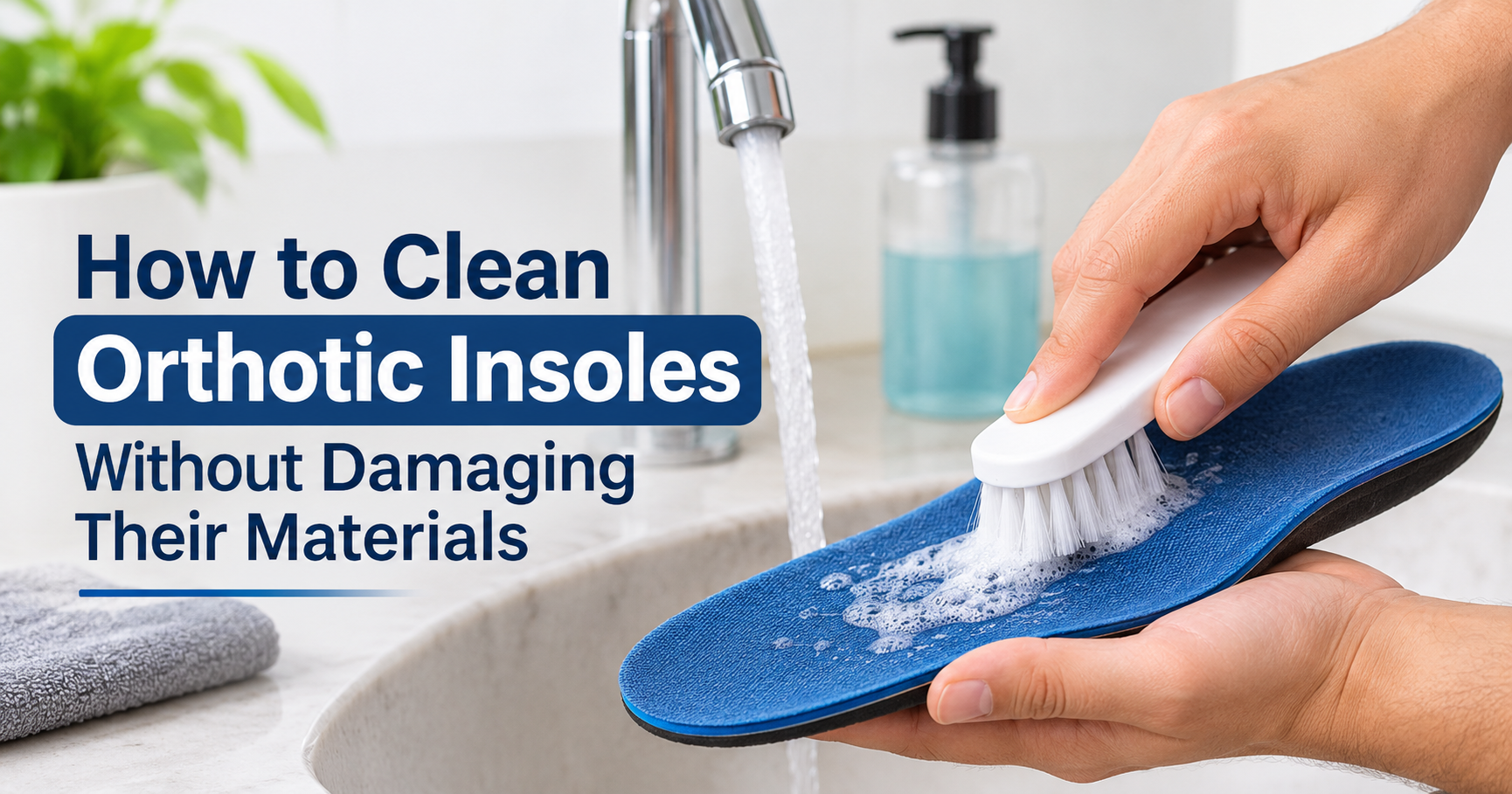
- Easy cleaning: Silicone and gel wipe clean, which keeps odor down.
How to Use Them Properly
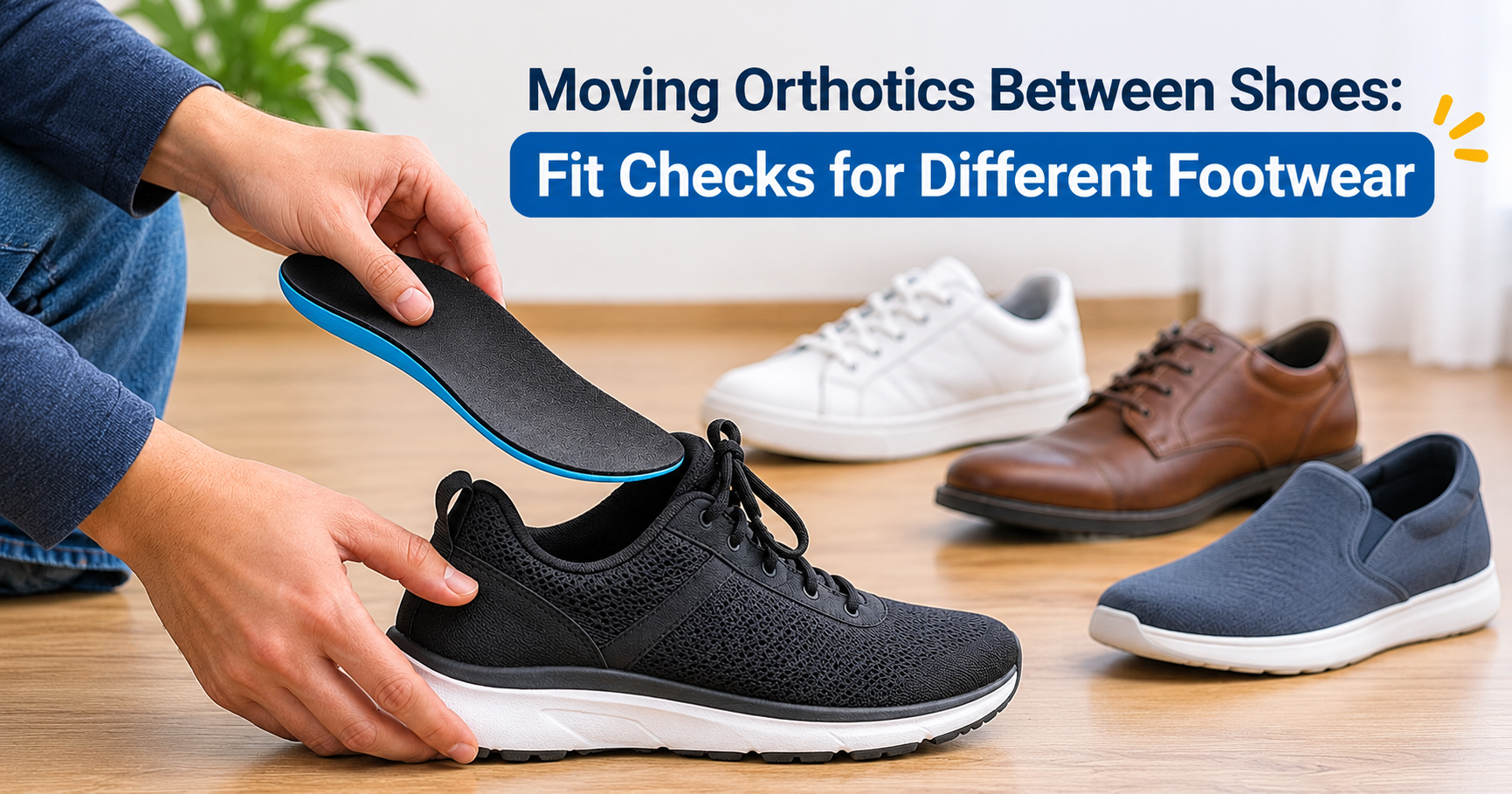
- Remove the shoe’s insole if possible. This creates more room and helps the insert sit flat.
- Place the insert at the very back of the heel area. It should rest flush against the heel counter without folding.
- Check the fit by standing up. Your heel should not slip, and your toes should not feel pushed forward.
- Start slowly. Wear the insert for one to two hours a day, then extend the time over a week or two.
- Use matching heights on both feet unless advised otherwise. A lift on one foot only should be for a confirmed leg length difference.
- Watch how your body responds. Mild adjustment is normal, but new pain in the knees, hips, or back means you should stop and review.
Can You Use a Heel Lift and Heel Cup Together?
In some cases, yes. A person with both Achilles tightness and a tender heel pad may benefit from a low lift topped with a thin cup. But the combination adds bulk. It only works in shoes with a removable insole, a roomy heel area, and a firm heel counter. If your heel starts to slip or your toes feel crowded, switch back to one insert. Simpler setups are usually more comfortable.
Common Mistakes to Avoid
- Choosing by popularity instead of symptoms. The best-selling product is not always the right one for your heel.
- Using a lift that is too high. A big jump in height can strain other areas. Smaller changes are usually easier to adapt to.
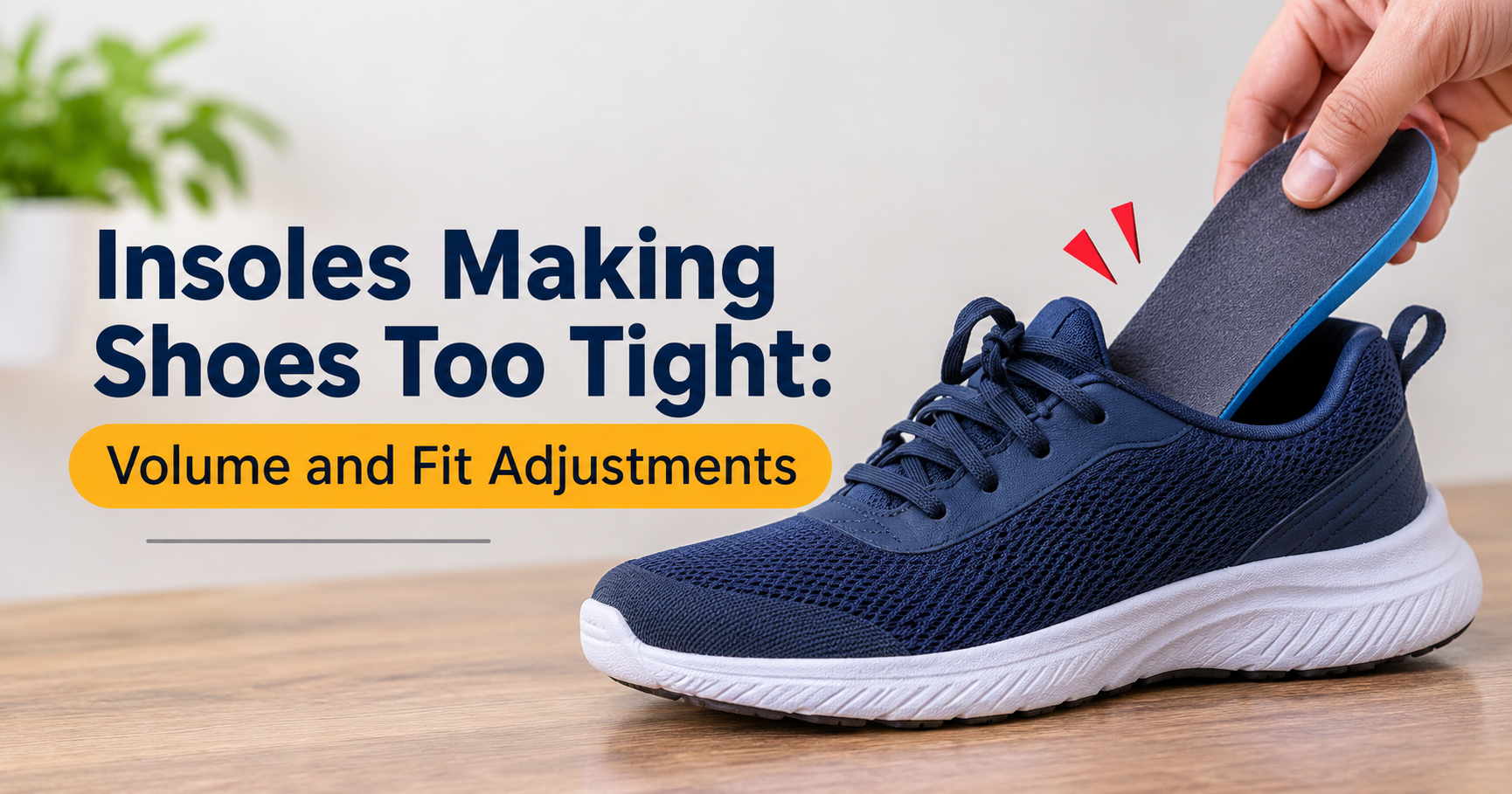
- Forcing inserts into tight shoes. If the shoe feels cramped, the insert will not help.
- Ignoring wear. Flattened or cracked inserts stop doing their job.
- Skipping stretching and strengthening. Inserts support the foot, but movement habits and flexibility also matter.
- Expecting instant results. Give your body a couple of weeks to adjust, unless you feel worse.
When to See a Professional
Inserts are a simple, low-risk way to improve comfort, but they are not a replacement for medical advice. Talk with a doctor, podiatrist, or physical therapist if:
- Heel pain lasts more than a few weeks despite using supports.
- The pain is severe, or you cannot put weight on the foot.
- You notice swelling, redness, warmth, or numbness.
- You have diabetes or reduced feeling in your feet.
- You suspect one leg is shorter than the other.
- Your child complains of regular heel pain after activity.
Frequently Asked Questions
Is a heel lift the same as a heel cup?
No. A heel lift raises the heel to change the angle of the ankle, while a heel cup cradles and cushions the heel without adding much height. They solve different problems, even though both sit in the back of the shoe.
Which is better for heel pain?
For pain right under the heel that feels bruised or sharp with each step, a heel cup is usually the first thing people try because it adds cushioning and keeps the heel pad centered. If the pain is higher up near the Achilles tendon, a heel lift is often the more suitable option.
Which is better for Achilles tendon pain?
A heel lift is more commonly used here. By raising the heel slightly, it reduces how far the Achilles tendon is stretched during each step. Many people use it as a short-term comfort measure while the tendon settles.
Can I wear a heel lift and a heel cup together?
Sometimes, but only if the shoe is roomy enough. Stacking both can make the heel slip out or crowd the toes. A removable insole and a deeper heel counter make it easier. If it feels tight, use only one.
Do heel lifts fix leg length differences?
They can help even out a small difference, and they are widely used for that reason. The correct height depends on the measured difference, so a clinician should confirm it before you use a thick lift every day.
How long should I wear them each day?
Start with a few hours and increase slowly over one to two weeks. If your feet, knees, or hips feel worse, take them out and review the fit or ask a professional.
Will they fit in any shoe?
No. Dress shoes, flats, and tight sneakers often have no spare room. Look for shoes with a removable insole, a firm heel counter, and a slightly deeper heel area.
How do I know when to replace them?
Replace them when the material feels flat, cracked, or no longer springs back, or when the heel starts to slide. Most last from a few months to a year depending on how active you are.
Final Thoughts
When it comes to heel lift vs heel cup, the right choice depends on what your heel needs. If your problem is tightness at the Achilles or calf, or a small difference in leg length, a heel lift is usually the better match. If your problem is soreness, bruised feeling, or lack of cushioning under the heel, a heel cup is generally the better match. Pick one that fits your shoe, start slowly, and pay attention to how your body responds.
Small changes in the heel can make a big difference in how your whole foot feels. Take the time to choose carefully, and your feet will thank you at the end of the day.
Disclaimer: This article is for general information only and is not medical advice. Please consult a qualified healthcare professional for diagnosis and treatment of foot, heel, or leg problems.