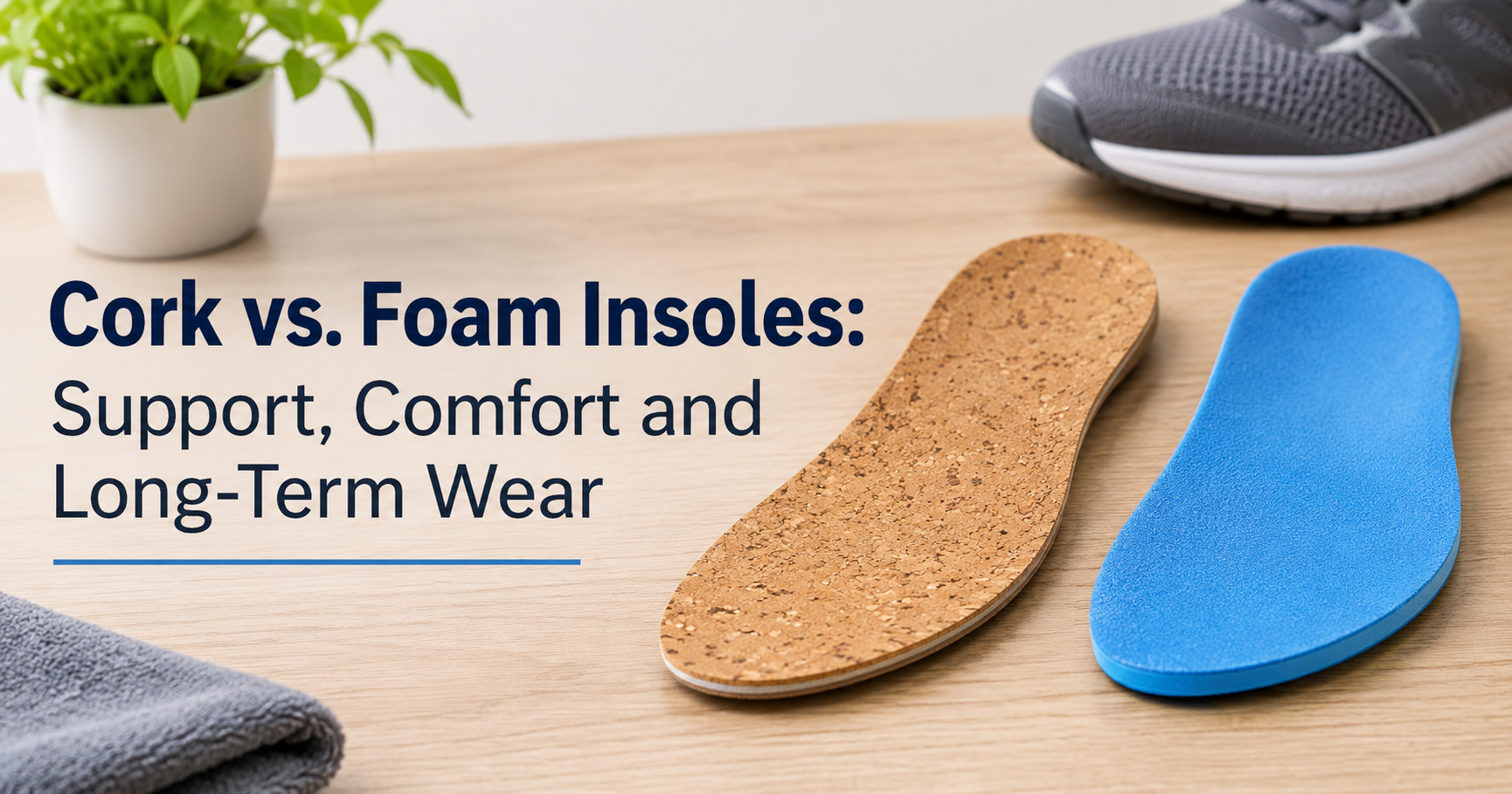
If you have ever walked into a shoe store or searched online for a replacement insole, you have probably noticed that two materials dominate the conversation: cork and foam. Both promise comfort. Both claim to protect your feet. Yet they feel completely different underfoot, behave differently over time, and suit different kinds of people.
Choosing the wrong one can mean sore arches, tired legs, or an insole that flattens out within a few weeks. Choosing the right one can make everyday walking, standing and exercise noticeably easier. This guide explains how cork and foam insoles are made, how they perform, where each one shines, and how to decide which one fits your feet and your lifestyle.
Choose cork when you want firm, structured support that gradually molds to your foot and resists odor. Choose foam when you want immediate cushioning, shock absorption and a light, flexible feel. Many people with heel or arch pain do best with a firmer base, while many people who stand on hard floors or run prefer a softer, springier layer.
Table of Contents
- What Are Cork Insoles?
- What Are Foam Insoles?
- How the Two Are Built
- Cork vs Foam: Head-to-Head Comparison
- Support and Arch Structure
- Cushioning and Shock Absorption
- Durability and Shape Retention
- Moisture, Breathability and Odor
- Which Foot Problems Suit Which Material?
- Choosing by Activity and Footwear
- Break-In Period and Care Tips
- When to Replace Your Insoles
- Frequently Asked Questions
- Final Verdict
What Are Cork Insoles?
Cork insoles are made from the bark of the cork oak tree. The bark is harvested without cutting down the tree, ground into granules, and bonded together with natural latex or similar binders. The result is a lightweight, firm and slightly springy material that has been used in footwear for decades, most famously in contoured footbed sandals.
Cork has a few characteristics that make it unusual among insole materials. It is naturally resistant to moisture and many microbes, it is thermally insulating, and it responds to body heat and pressure. Over several weeks of wear, a quality cork footbed gradually shapes itself to the contours of your foot, which is why many people describe it as feeling “custom” after a break-in period.
Cork insoles are usually sold either as full-length inserts with a cork base and fabric cover, or as cork layers laminated over a supportive shell. Some designs add a small amount of EVA or rubber underneath to improve flexibility and grip inside the shoe.
What Are Foam Insoles?
“Foam” is actually a family of materials rather than a single one. The most common types are:
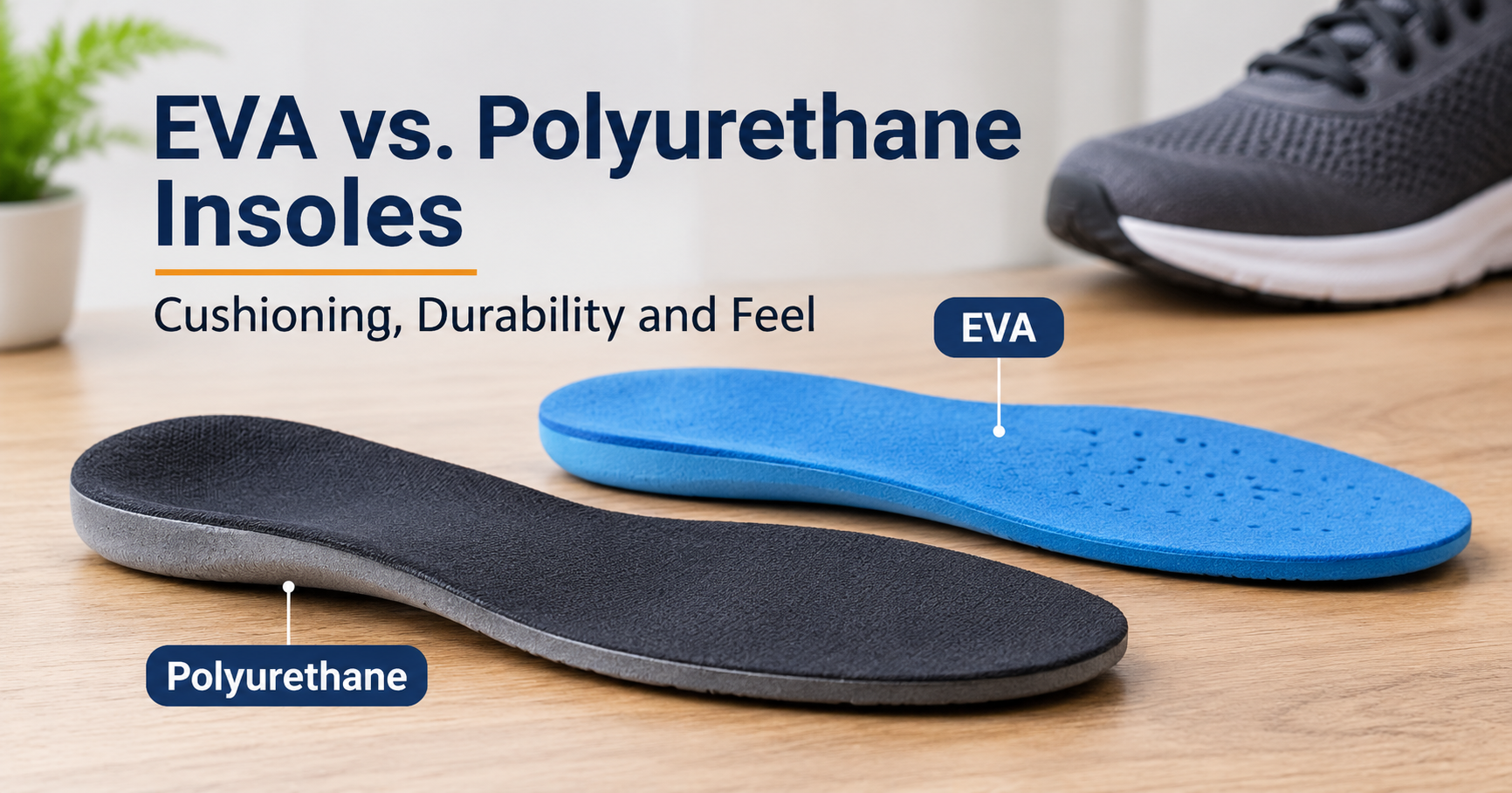
- EVA (ethylene-vinyl acetate) foam: light, flexible and affordable. It offers moderate cushioning and is common in sports shoes.
- Polyurethane (PU) foam: denser and more durable than basic EVA, with better rebound and longer-lasting cushioning.
- Memory foam (viscoelastic foam): soft and slow to rebound. It conforms to the foot and spreads pressure, but it can feel warm and may compress over time.
- Gel-infused or dual-density foams: combine a soft top layer with a firmer base for a balance of comfort and structure.
Because foam can be engineered in many densities, foam insoles range from very soft comfort pads to firm orthotic-style supports. That variety is both their strength and their source of confusion: two foam insoles can feel completely different from each other.
How the Two Are Built
Understanding construction helps explain performance. Most cork insoles use a dense cork-and-latex core that provides a stable platform, with a thin fabric cover on top. Most foam insoles use a softer, more compressible core with a fabric cover and sometimes a firmer base or heel cup for stability.

Cork vs Foam: Head-to-Head Comparison
The table below summarizes how the two materials typically compare. Individual products vary, so treat this as a general guide rather than a rule.
| Feature | Cork Insoles | Foam Insoles |
|---|---|---|
| Feel underfoot | Firm, structured, slightly springy | Soft to medium, cushioned |
| Arch support | Strong, contoured, holds shape | Varies; basic types offer little |
| Shock absorption | Moderate | High, especially PU and memory foam |
| Comfort out of the box | Needs a break-in period | Comfortable immediately |
| Shape retention | Good; molds and keeps the mold | Can compress and flatten over time |
| Moisture and odor | Naturally resistant, breathable | Can trap heat; depends on cover |
| Weight | Light to medium | Very light |
| Flexibility | Lower; stiffer through the midfoot | Higher; bends easily with the shoe |
| Typical lifespan | Often 9 to 18 months with regular use | Often 3 to 12 months, depending on foam type |
| Eco-friendliness | Renewable natural material | Petroleum-based in most cases |

Support and Arch Structure
Support is where cork tends to stand out. Because cork is dense and holds its form, a contoured cork footbed can cradle the arch and heel in a stable position. That stability reduces excess motion of the foot and can help distribute load more evenly across the sole. The firmness also means the insole does not collapse under body weight the way a very soft foam can.
Foam can provide arch support too, but the quality depends entirely on the density and design. A thin, soft foam insert with a slightly raised arch may feel pleasant for a short walk but give little real structural support. A high-density foam with a semi-rigid base or heel cup, on the other hand, can rival cork for stability while keeping a lighter, more cushioned top surface.
If your main goal is structural support, look for contoured shape, a deep heel cup and a firm base, regardless of whether the material is cork or foam.
Cushioning and Shock Absorption
Every step you take sends an impact force through your heel and forefoot. Foam is generally better at absorbing that impact. Materials like PU and memory foam compress under load and then return to shape, softening the shock before it travels up through the ankle, knee and hip.
Cork absorbs shock too, but in a different way. It is firmer, so it feels less “plush.” Many people find that cork gives a stable, supported feeling rather than a soft, sinking one. For walking and light activity this is usually plenty. For long periods on hard surfaces, or for running and jumping, the extra give of foam is often more comfortable.
A softer insole is not always a better one. Very soft foam can feel wonderful for the first hour and then allow the foot to sink and shift, which may leave the arch unsupported by the end of the day. Balance matters.
Durability and Shape Retention
Foam insoles compress with repeated use. The cells in the foam gradually lose their ability to spring back, a process often called “packing out.” Basic EVA foam may start to flatten within a few months of daily wear, while higher-density PU lasts noticeably longer. Memory foam can feel great early on but may lose its supportive character as it breaks down.
Cork tends to hold its shape for longer. Once it has molded to your foot, the contour stays relatively stable. The trade-off is that cork can become brittle or crack if it is bent sharply, kept very dry for long periods, or poorly bonded. Quality construction makes a significant difference with cork.
In practical terms, if you want one insole that keeps its form for a year or more, cork or a high-density PU foam is the safer bet. If you replace insoles frequently or want an affordable, disposable-style option, basic foam is perfectly reasonable.
Moisture, Breathability and Odor
Feet can produce a surprising amount of sweat during a normal day. The insole sits in a warm, enclosed space, so its ability to manage moisture directly affects comfort and odor.
Cork is naturally water-resistant and has a structure that resists the growth of many odor-causing microbes. It does not soak up moisture like a sponge, and many people notice their shoes smell fresher when using cork. Foam, particularly closed-cell foam and memory foam, can trap heat and moisture against the foot. A moisture-wicking top fabric, perforations or an antimicrobial treatment can help, but the base material remains less breathable than cork.
If you sweat heavily or wear closed shoes for many hours, this is a strong point in favor of cork or a well-ventilated foam design.
Which Foot Problems Suit Which Material?
Insoles are not a cure for medical conditions, and anyone with persistent or severe pain should see a podiatrist or physician. That said, general patterns can help you choose.
Plantar Fasciitis and Heel Pain
Plantar fasciitis involves irritation of the thick band of tissue along the bottom of the foot. People with this problem often benefit from a combination of arch support and heel cushioning. Firm, contoured cork can support the arch and reduce strain on the band, while a foam heel layer can soften impact. Some of the best designs combine both: a supportive base with a cushioned heel.
Flat Feet and Low Arches
Flat or low-arched feet usually need structure. A soft foam insole that compresses fully under weight may not offer enough lift. A firm contoured insole, whether cork or high-density foam, tends to work better.
High Arches
High-arched feet often have less natural shock absorption and more pressure under the heel and ball of the foot. Cushioning foam, paired with moderate arch contact, is often more comfortable than a very hard surface.
Heel Spurs, Metatarsalgia and Sensitive Feet
Painful, bony or pressure-sensitive areas usually respond better to cushioning that spreads and absorbs force. Foam, gel-enhanced foam or a cork base with a soft top layer can all work, depending on how much support the rest of the foot needs.
Excessive Sweating or Odor
Cork is the natural frontrunner here, thanks to its moisture resistance and breathability.
Choosing by Activity and Footwear
- Everyday walking and casual shoes: either material works. Cork suits people who like a supportive, structured feel; foam suits those who want soft comfort.
- Standing all day (retail, healthcare, factory work): a firm base with a cushioned top, or a quality PU foam, helps reduce fatigue on hard floors.
- Running and high-impact sports: foam is generally preferred for shock absorption and low weight. Make sure the insole does not make the shoe too tight.
- Hiking and long walks: a supportive cork or dual-density insole keeps the foot stable over uneven ground, while a little cushioning limits fatigue.
- Dress shoes and loafers: thin, low-profile cork or slim foam inserts fit better. Bulky insoles can push the heel out of the shoe.
- Sandals and open footwear: cork is the classic choice for footbeds because it handles warmth and moisture well and looks natural.
- Work boots: a durable, moderately firm insole with good heel support tends to last longer than soft foam in heavy-duty conditions.

How to Choose the Right Insole: A Step-by-Step Approach
- Identify your main goal. Is it support, cushioning, moisture control or all three? Rank them in order of importance.
- Know your arch type. A simple wet footprint test can show whether your arch is low, medium or high, which guides how much structure you need.
- Consider your shoes. Remove the existing insole and compare sizes. Check that the new insole will not crowd your toes or lift your heel out of the shoe.
- Match the material to your activity. Use the guide above to decide between firm support and soft cushioning.
- Check the construction. Look for a defined heel cup, a smooth top cover, and a base that does not feel hollow or brittle.
- Try it for a few days. Wear the insoles for short periods first and build up gradually.
Break-In Period and Care Tips
New insoles, especially cork, often feel different from what your feet are used to. A sensible break-in routine reduces the chance of soreness or blisters:
- Wear them for one to two hours on the first day, then increase the time over one to two weeks.
- Pay attention to any new pain. Mild adjustment soreness is common; sharp or persistent pain is a sign to stop and reassess.
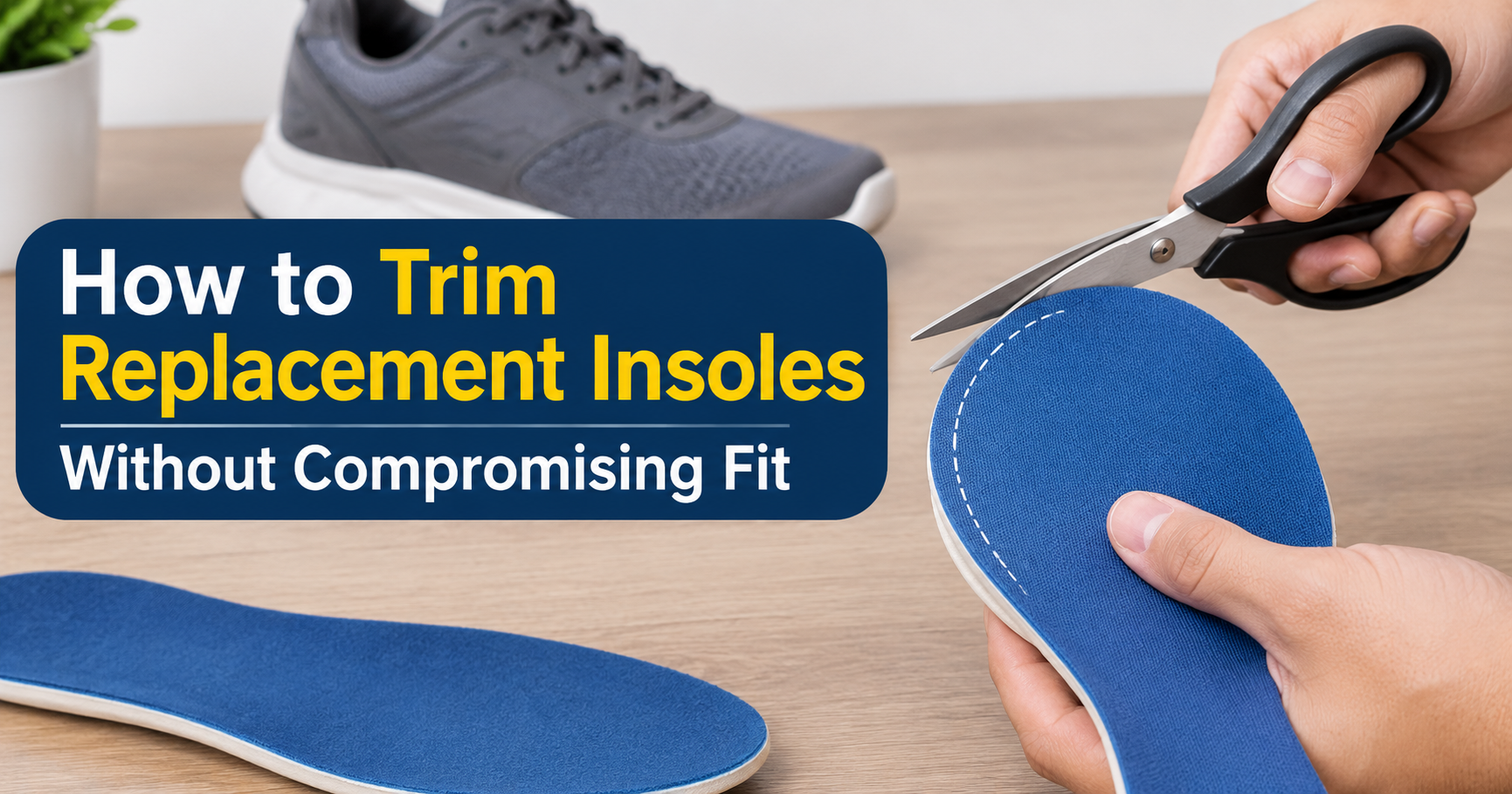
- Trim to size carefully using the original insole as a template, cutting a little at a time.
- Air your insoles out each night by removing them from your shoes, which helps both cork and foam stay fresher.
- Clean cork with a damp cloth and mild soap, and let it dry naturally. Avoid soaking it or placing it near strong heat.
- Hand-wash foam with mild soap and lukewarm water, press out moisture gently and air dry away from direct sun.
- Rotate between two pairs if you wear the same shoes every day. This gives each pair time to dry and recover.
When to Replace Your Insoles
Even good insoles wear out. Consider replacing yours if you notice any of the following:
- The surface has visible creases, cracks or flattened areas, particularly under the heel and ball of the foot.
- The arch no longer feels lifted or supportive.
- The cover is tearing, peeling or has lost its grip.
- An odor persists even after cleaning.
- Your original foot discomfort has returned.
As a rough guide, heavy daily use may mean replacing foam every few months and cork every year or so. Lighter use stretches these timelines.
Common Mistakes to Avoid
- Choosing by softness alone. The softest insole is not always the most supportive or healthiest for your feet.
- Stacking insoles. Placing a new insole on top of an old one can make shoes too tight and change how your foot sits.
- Ignoring shoe fit. An insole that is too thick can cause rubbing, pressure and blisters.
- Expecting instant perfection with cork. It usually needs a short adaptation period.
- Using worn-out insoles for too long. Compressed insoles offer little benefit and can let old problems return.
- Self-treating persistent pain. Pain that lasts for weeks deserves professional evaluation.
Can You Combine Cork and Foam?
Yes, and many well-designed insoles already do. A common construction pairs a firm cork or rigid base for stability with a layer of PU or memory foam on top for comfort. This hybrid approach gives a supportive platform with a softer surface and can be an excellent compromise if you cannot decide. When shopping, look for descriptions such as “cork base with foam top layer” or “dual-density” construction.
Frequently Asked Questions
Are cork insoles better than foam insoles?
Neither is universally better. Cork is typically better for firm support, shape retention and odor control. Foam is typically better for instant cushioning, shock absorption and light weight. The better choice depends on your foot type, activity and preferences.
Are cork insoles good for plantar fasciitis?
Many people with plantar fasciitis find the firm, contoured support of cork helpful, particularly when it includes a cushioned heel area. Results vary from person to person, and persistent heel pain should be checked by a healthcare professional.
Do cork insoles really mold to your feet?
Quality cork insoles respond to body heat, moisture and pressure over a period of days to weeks and gradually take on the shape of your foot. The effect is more subtle than a custom orthotic, but it can noticeably improve fit.
Which lasts longer, cork or foam?
In general, cork and high-density PU foam last longer than basic EVA or memory foam. Actual lifespan depends on body weight, activity level, shoe type and product quality.
Are foam insoles good for running?
Often yes. Foam provides the cushioning and light weight many runners prefer. Look for a resilient foam that rebounds well rather than a very soft pad that collapses.
Do cork insoles smell less?
Cork naturally resists moisture and many odor-causing microbes, so many users report fresher shoes. Good hygiene, clean socks and rotating shoes still matter.
Can I use cork or foam insoles with orthotics?
Typically you would use one or the other, since stacking can crowd the shoe and alter fit. If you have prescribed orthotics, ask your podiatrist before adding or replacing any insole.
Are cork insoles uncomfortable at first?
They can feel firm and slightly stiff for the first several days. A gradual break-in usually resolves this, and the contour improves as the cork adapts.
Which is better for standing all day?
A supportive insole with some cushioning is generally best. This could be a cork footbed with a soft top layer or a dense PU foam with a stable base.
Are cork insoles eco-friendly?
Cork is a renewable material harvested from the bark without felling the tree, which makes it an appealing choice for environmentally conscious buyers. Binders, covers and bases can still affect the overall footprint of a particular product.
Final Verdict: Cork or Foam?
The cork versus foam question has no single winner, because it is really a question about what your feet need.
Pick cork if you value stable arch support, a footbed that molds and holds its shape, natural moisture and odor resistance, and long-term durability. It is a strong choice for flat feet, heel pain with arch strain, sandals and anyone who prefers a firm, structured feel.
Pick foam if you want immediate cushioning, strong shock absorption, lighter weight and flexibility. It is a strong choice for running, standing on hard floors, sensitive heels and shoes where a thin, soft insert is needed.
If you remain undecided, a hybrid insole with a supportive base and a cushioned top offers the best of both materials. Whichever you choose, introduce new insoles gradually, make sure they fit your shoes properly, and replace them once they stop doing their job.