Understanding the Relationship Between Flat Feet and Back Pain
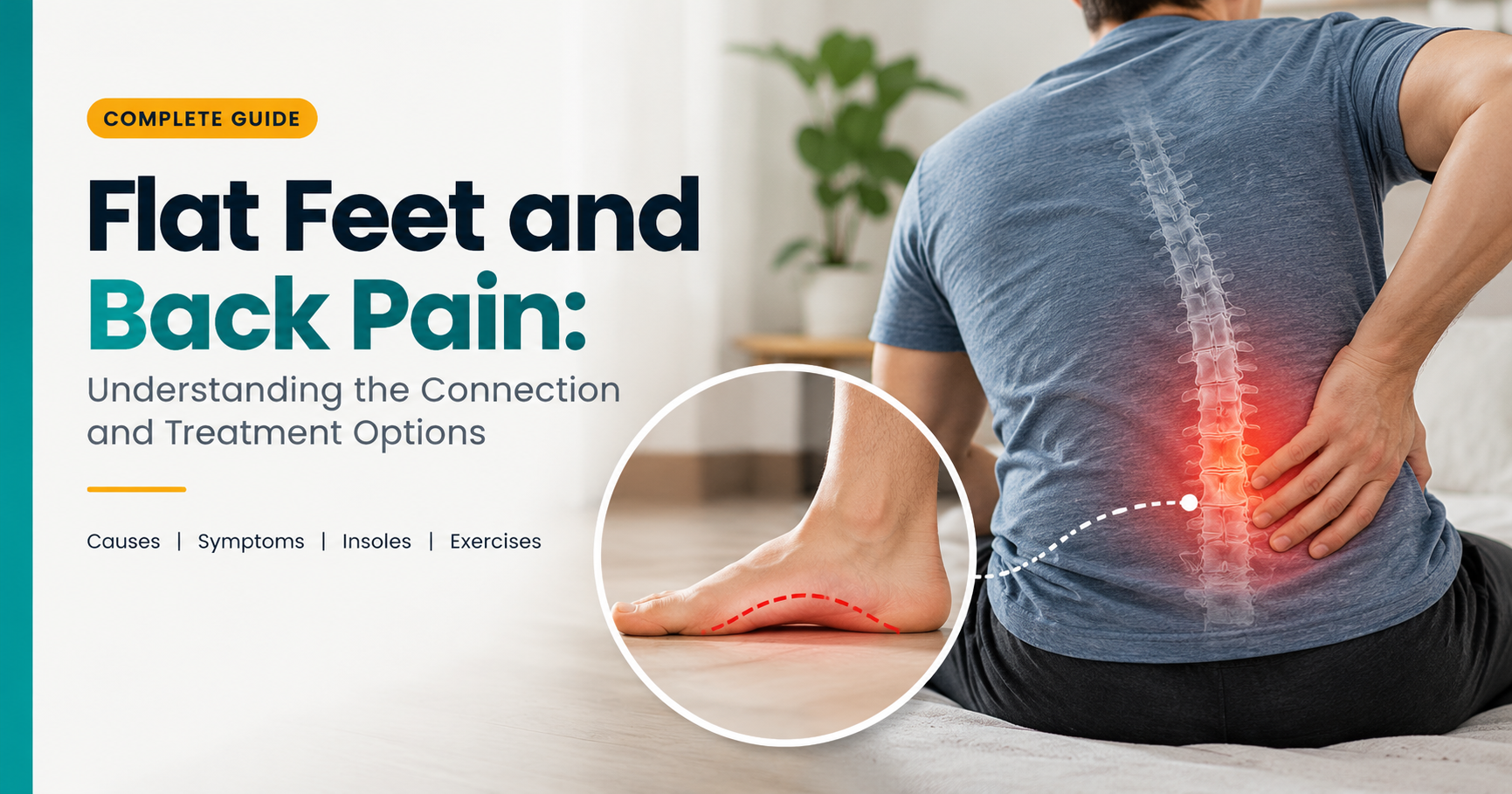
If your lower back aches after a long day on your feet, the cause may not be in your back at all. Your feet are the foundation of your body, and when that foundation changes shape, the effects can travel upward through your ankles, knees, hips and spine. One of the most common foot conditions linked to this chain reaction is flat feet, also called fallen arches or pes planus.
In this guide, you will learn what flat feet are, how they may contribute to back pain, what the research actually says, how to check your own arch at home, and which practical steps can help you feel better. This article is for general education and does not replace advice from a qualified healthcare professional.
Table of Contents
- What Are Flat Feet?
- How Flat Feet Can Lead to Back Pain
- What Does the Research Say?
- Signs Your Back Pain May Be Linked to Your Feet
- How to Check Your Arch at Home
- Other Common Causes of Lower Back Pain
- Ways to Reduce Flat Foot Related Back Pain
- How to Choose Supportive Insoles and Shoes
- When to See a Professional
- Frequently Asked Questions
- Final Thoughts
What Are Flat Feet?
A healthy foot has a natural curve along its inner side, known as the medial longitudinal arch. This arch works like a spring. It absorbs shock when your foot lands, stores energy as you roll forward, and helps keep your foot stable as you push off. With flat feet, this arch is low or has collapsed, so most or all of the sole touches the ground when you stand.
Common Types of Flat Feet
- Flexible flat feet: The most common type. The arch appears when you sit or stand on tiptoes but disappears when you put your full weight on the foot. It often begins in childhood and is usually painless.
- Rigid flat feet: The arch is missing both with and without weight on the foot, and the foot may feel stiff. This type is less common and is more likely to cause pain.
- Adult acquired flat feet: The arch gradually collapses in adulthood, often because the tendon that supports the arch weakens over time. Injury, weight gain, age and some medical conditions can contribute.
Many people with flat feet never experience any problems. Trouble tends to show up when the foot cannot manage the loads placed on it, for example during long hours of standing, running, heavy lifting or after weight gain.
How Flat Feet Can Lead to Back Pain
The body works as a connected system, often called the kinetic chain. A change at one joint can alter how the joints above it move and bear load. When your arch collapses, the foot usually rolls inward more than normal, a movement known as overpronation. This inward roll can set off a series of small changes up the leg.
Step by Step: The Chain Reaction
- The arch flattens. With less spring in the foot, shock is absorbed less efficiently with every step.
- The ankle rolls inward. The heel bone tilts toward the midline, which changes how your weight is distributed across the foot.
- The shin and knee rotate. The lower leg twists inward, which can change how the knee tracks and how the thigh bone sits in the hip.
- The pelvis shifts. The hips may tilt forward or drop slightly to one side. This can increase the curve in the lower spine or create an uneven load from left to right.
- The lower back compensates. Muscles around the spine have to work harder to keep you upright and balanced. Over weeks or months, this extra effort can lead to tightness, fatigue and aching.
Another factor is shock absorption. A stiff or collapsed arch cannot cushion impact as well, so more force may travel through the joints and into the spine each time your foot strikes the ground. This is especially noticeable on hard surfaces such as concrete, tile or pavement.
What Does the Research Say?
It is important to be honest about the evidence. Several studies have found that people with flat feet or excessive pronation are more likely to report lower back, hip or knee pain than people with typical arches. Some small trials have also found that foot orthoses (supportive insoles) can reduce lower back pain in certain groups, especially people who stand for long periods or who have clear signs of overpronation.
However, researchers have not proven that flat feet directly cause back pain. Many people with flat feet have healthy backs, and many people with back pain have normal arches. Back pain is complex and usually has more than one contributing factor, including muscle strength, posture, body weight, activity level, footwear, sleep and stress. Think of flat feet as one possible piece of the puzzle rather than a guaranteed cause.
Signs Your Back Pain May Be Linked to Your Feet
The following patterns may suggest that your feet are contributing to your discomfort. Having one or two of them does not confirm a link, but together they are worth paying attention to.
- Lower back pain that gets worse after standing, walking or running for long periods
- Relief when you sit down, lie down or take off your shoes
- Aching in the arch, heel, ankle, shin or knee along with back discomfort
- Shoes that wear down more on the inner edge of the sole
- Ankles that lean inward when you view your feet from behind
- Foot fatigue or cramps by the end of the day
- Pain that is more noticeable on one side if one foot is flatter than the other
How to Check Your Arch at Home
You can get a rough idea of your arch type with the simple wet footprint test. It is not a medical diagnosis, but it is a helpful starting point.
- Wet the bottom of your foot with water.
- Step onto a flat piece of dark paper, a paper bag or a dry tile surface.
- Stand naturally for a few seconds, then step off and look at the print.
If you see almost the entire sole with little or no curve on the inner side, you may have flat feet. If the middle of your foot barely shows, you may have a high arch, which can also cause back and leg discomfort for different reasons. You can also try the tiptoe test: if your arch appears when you rise onto your toes, you most likely have flexible flat feet.
Other Common Causes of Lower Back Pain
Before blaming your feet, remember that most lower back pain has other, more common causes. These include:
- Muscle or ligament strain from lifting, twisting or sudden movements
- Long hours of sitting with poor posture
- Weak core and hip muscles
- Excess body weight placing extra load on the spine
- Disc problems or age related changes in the spine
- Leg length differences
- Poor sleeping position or an unsupportive mattress
Because several factors often overlap, the best results usually come from addressing the feet, the muscles and daily habits together.
Ways to Reduce Flat Foot Related Back Pain
1. Use Arch Support Insoles
Supportive insoles are often the first and simplest step. They lift the arch, help limit excessive inward rolling and spread pressure more evenly across the sole. Many people start with a quality over the counter insole. If your pain persists or your foot has a more complex shape, a podiatrist can recommend custom orthotics made from a mold or scan of your foot.
2. Wear Supportive Footwear
Choose shoes with a firm heel counter, good midsole cushioning, a stable base and enough room for your toes. Shoes that bend in the middle like a piece of paper offer little support. Replace worn shoes regularly, since cushioning and structure break down well before the upper looks old.
3. Strengthen the Feet and Hips
Strong muscles help hold the arch and keep the pelvis steady. Try these gentle exercises, starting with a few repetitions and building up slowly:
- Short foot exercise: While seated or standing, draw the ball of the foot toward the heel without curling the toes, so the arch lifts slightly. Hold for 5 seconds and repeat 10 times.
- Calf raises: Rise onto your toes slowly, pause, and lower with control. Do 2 sets of 10 to 15.
- Towel scrunches: Place a small towel on the floor and pull it toward you using only your toes.
- Glute bridges: Lie on your back with knees bent, lift your hips, and hold for a few seconds. This strengthens the muscles that support the pelvis and lower back.
- Single leg balance: Stand on one leg for 30 seconds while keeping the arch lifted and the knee pointing straight ahead.
4. Stretch Tight Muscles
Tight calves can increase stress on the arch, and tight hip flexors and hamstrings can pull on the pelvis. Gentle calf, hamstring and hip flexor stretches, held for 30 seconds each, may help reduce strain through the chain.
5. Manage Body Weight and Activity
Extra body weight increases the load on both the arches and the spine. Even modest weight loss can reduce pressure. Low impact activities such as swimming, cycling and walking on softer surfaces are often easier to tolerate than running on hard ground.
6. Take Breaks and Vary Your Surface
If your job involves standing for hours, consider an anti fatigue mat, shift your weight regularly and take short walking breaks. Avoid going barefoot on hard floors for long periods if it increases your symptoms.
7. Consider Physical Therapy
A physical therapist can assess how your feet, hips and spine move together and design an exercise plan for your needs. This is especially useful if pain has lasted more than a few weeks.
How to Choose Supportive Insoles and Shoes
With so many options available, it helps to know what to look for. Use this checklist when comparing products:
| Feature | What to Look For | Why It Matters |
|---|---|---|
| Arch height | Medium to firm arch that matches your foot | Too high can feel painful, too low gives little support |
| Heel cup | Deep, firm cup that cradles the heel | Helps keep the heel from rolling inward |
| Cushioning | Balanced foam or gel under the heel and forefoot | Reduces impact traveling up the body |
| Material durability | Dense foam, EVA or reinforced layers that hold their shape | Soft insoles flatten quickly and lose support |
| Shoe fit | Removable factory insole and room for a toe box that is not cramped | Lets you swap in an insole without making the shoe too tight |
| Intended use | Choose insoles made for walking, running, work boots or dress shoes | Different activities need different thickness and flexibility |
Give your body time to adjust. Wear new insoles for one to two hours a day at first and increase gradually over one to two weeks. Mild soreness in the arch during this period is common, but sharp or worsening pain is a signal to stop and seek advice.
When to See a Professional
Home care helps many people, but some symptoms need proper evaluation. See a doctor, podiatrist or physical therapist if you notice any of the following:
- Back pain that lasts longer than a few weeks or keeps getting worse
- Pain that spreads into the legs, or numbness and tingling in the feet or legs
- Swelling, redness or severe pain along the inner ankle or arch
- A foot that has recently changed shape or become flatter
- Difficulty walking or standing
Seek urgent medical care if back pain follows a significant injury, or comes with fever, unexplained weight loss, weakness in the legs, or loss of bladder or bowel control.
Frequently Asked Questions
Can flat feet really cause lower back pain?
They can contribute to it in some people. Flat feet may change how the leg and pelvis move, which can increase stress on the lower back. However, they are rarely the only cause, so a complete assessment is best.
Will arch support insoles fix my back pain?
Insoles may reduce pain for people whose symptoms are linked to foot mechanics, but they are not a cure for every type of back pain. They work best when combined with exercise, good footwear and healthy daily habits.
Are flat feet a serious condition?
Usually not. Many people live comfortably with flat feet their entire lives. It becomes a concern when it causes pain, when the arch changes suddenly in adulthood, or when it affects your ability to walk or exercise.
Can flat feet be corrected permanently?
Flexible flat feet in adults generally cannot be fully reversed with exercise alone, but strengthening, supportive footwear and insoles can improve comfort and function. Surgery is reserved for severe or rigid cases that do not respond to conservative care.
Is walking barefoot good or bad for flat feet?
It depends on the person and the surface. Short periods of barefoot walking on soft ground may help strengthen foot muscles for some people, while walking barefoot on hard floors for long periods can increase discomfort in others. Listen to your body.
How long does it take to notice improvement?
Some people feel relief within a couple of weeks of using insoles and doing regular exercises, while others need six to twelve weeks. Consistency matters more than intensity.
Final Thoughts
Flat feet and back pain are often connected through the way your body absorbs force and keeps its balance. When the arch no longer does its job, the ankles, knees, hips and lower back may have to compensate. While the science does not prove that flat feet directly cause back pain, there is good reason to look at your feet if your back keeps hurting without a clear cause.
The good news is that the most helpful steps are practical and low risk: supportive insoles, well fitted shoes, foot and hip strengthening, regular stretching and smart daily habits. Start with simple changes, track how your body responds, and do not hesitate to get professional guidance if pain continues. Taking care of your foundation may be one of the most effective things you can do for your back.
Disclaimer: This article is for informational purposes only and is not a substitute for professional medical advice, diagnosis or treatment. Always consult a qualified healthcare provider about your symptoms and before starting any new exercise or treatment.