

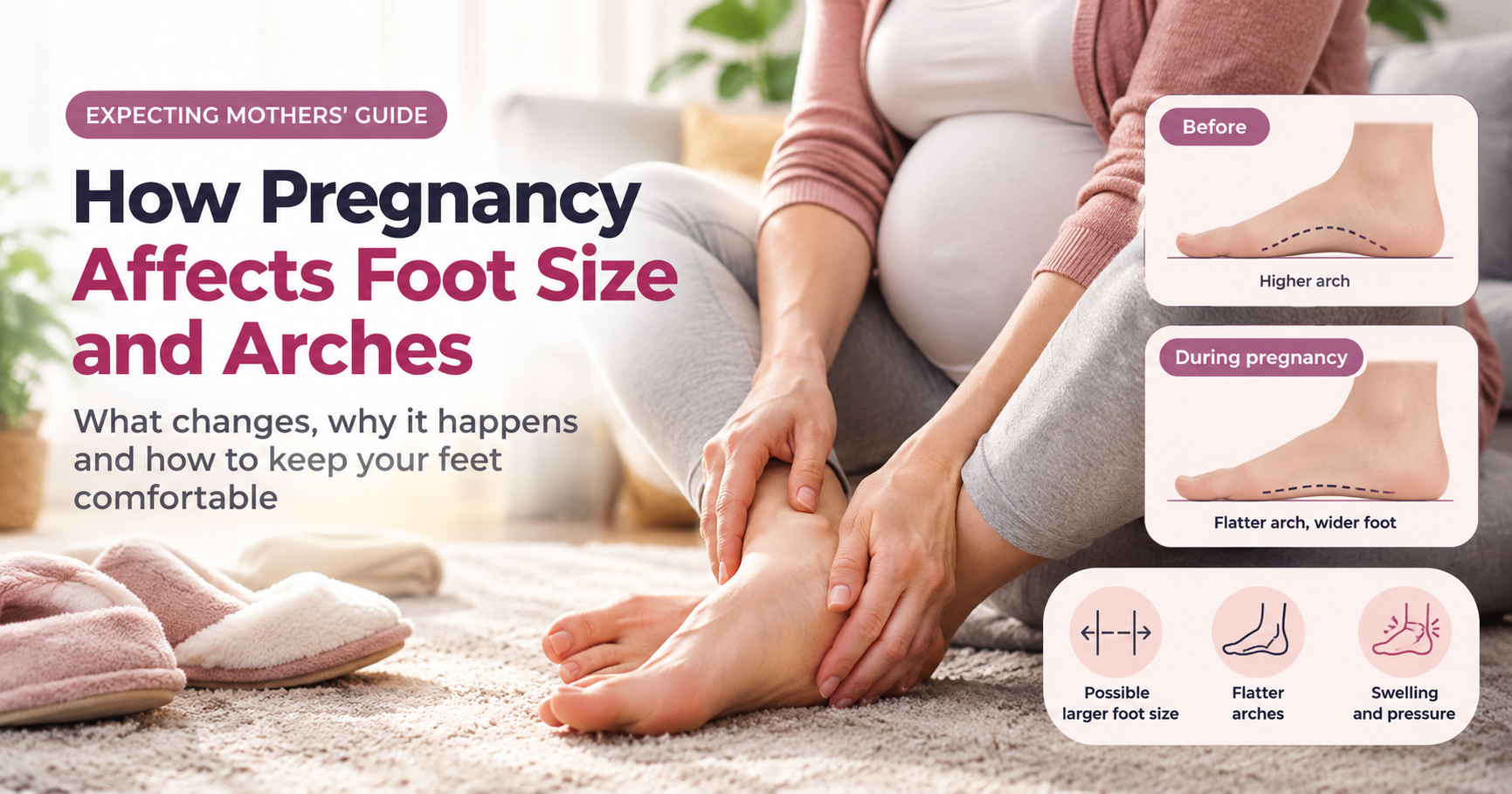
Understanding How Pregnancy Affects Foot Size and Arches

Many expectant mothers are surprised to discover that their favorite shoes suddenly feel tight, their feet look wider, or their arches ache by the end of the day. These changes are not imagined. Pregnancy affects the body from head to toe, and the feet, which carry you through every stage, are among the areas that change the most.
In this guide, you will learn how pregnancy affects foot size and arches, why it happens, whether the changes are temporary or lasting, and what you can do to keep your feet comfortable and supported before, during and after pregnancy.
Table of Contents
- Why Do Feet Change During Pregnancy?
- How Pregnancy Affects Foot Size
- How Pregnancy Affects Your Arches
- Foot Changes Trimester by Trimester
- Swelling vs. Permanent Size Change
- Common Foot Problems During Pregnancy
- How to Choose Shoes During Pregnancy
- Arch Support and Insoles: What to Look For
- Everyday Habits That Ease Foot Discomfort
- Simple Foot Exercises and Stretches
- Warning Signs: When to Call Your Care Provider
- Postpartum Feet: What to Expect
- Frequently Asked Questions
- Final Thoughts
Why Do Feet Change During Pregnancy?
Several overlapping factors reshape your feet while you are pregnant:

- The hormone relaxin: Your body produces relaxin to soften ligaments and joints, mainly in the pelvis, so the body can prepare for childbirth. This effect is not limited to the pelvis. The ligaments in your feet can loosen too, allowing the bones of the foot to spread and shift.
- Weight gain: Healthy weight gain is a normal and necessary part of pregnancy, but the extra load increases the force going through your arches with every step.
- Fluid retention: Blood volume rises significantly during pregnancy, and the body holds more fluid. Gravity pulls much of it into the feet and ankles, especially later in the day.
- A shifting center of gravity: As your belly grows, your posture and the way you walk adapt, which changes how pressure is distributed across your feet.
- Overpronation: Many women find their feet roll inward more as they walk, which flattens the arch under load.
- Slower circulation: The growing uterus can press on large veins in the pelvis, making it harder for blood to return from the legs.
How Pregnancy Affects Foot Size
Foot size can increase during pregnancy in two different ways, and it helps to understand the difference.
- Temporary swelling (edema): Fluid collects in the foot and ankle, making feet look puffy and feel tight. It tends to be worse in the evening, in warm weather and after long periods of standing or sitting.
- Structural lengthening and widening: As ligaments relax and the arch lowers, the foot can become longer and broader. Some studies of pregnant women have measured small but real increases in foot length and a drop in arch height, and some women find their shoe size increases by about half a size to a full size.
Not every woman experiences this to the same degree. Genetics, the number of previous pregnancies, body weight and the type of footwear worn all play a part. Many women notice changes most clearly in a first pregnancy.
How Pregnancy Affects Your Arches
The arches of your feet work like springs, absorbing shock and distributing body weight. During pregnancy, that spring system comes under more strain:
- Looser ligaments mean less passive support for the arch.
- Added weight presses the arch downward.
- Inward rolling of the foot (overpronation) lets the arch collapse more with each step.
The result can be a lower or flatter arch, sometimes described as “fallen arches”. This may be accompanied by aching in the arch, heel pain, tired feet, discomfort in the knees, hips or lower back, and a feeling that regular shoes no longer fit properly.
If you already had flat feet before pregnancy, you may notice discomfort sooner. If you had high arches, you might feel the change as a loss of the support you used to have.
Foot Changes Trimester by Trimester

| Stage | What You May Notice | What Helps |
|---|---|---|
| First trimester | Hormone levels rise, mild foot fatigue, little visible change | Supportive everyday shoes and regular movement |
| Second trimester | Relaxin effect increases, arches may begin to lower, early evening swelling | Arch-supporting insoles, roomier shoes, elevation after work |
| Third trimester | Swelling often peaks; arches carry the most load; feet may feel longer and wider | Shoes with adjustable closures, rest breaks, ask about compression |
| Postpartum | Swelling settles in days to weeks; arch and shoe size may stay changed | Re-measure feet, keep supportive footwear, gentle strengthening |
Swelling vs. Permanent Size Change
Swelling usually fades in the weeks after delivery as extra fluid leaves the body. Structural changes, however, may be more lasting. Some women find their feet stay slightly longer or wider, or their arches stay lower, even after pregnancy. This is common and is not a sign that anything is wrong, but it does mean it is worth having your feet measured again once things settle, rather than assuming your old size still fits.
Common Foot Problems During Pregnancy
- Swollen feet and ankles: Very common, especially late in pregnancy and in hot weather.
- Arch and heel pain: Often linked to a lowered arch and strain on the connective tissue under the foot (plantar fascia).
- Leg and foot cramps: Especially at night, linked to circulation and muscle fatigue.
- Varicose veins: Visible, sometimes aching veins in the legs and feet due to higher pressure in the veins.
- Ingrown toenails: Tight shoes and swollen toes can make nails more prone to growing into the skin.
- Difficulty reaching your feet: Caring for your toenails becomes harder as the belly grows.
How to Choose Shoes During Pregnancy
Good footwear is one of the most effective ways to protect your feet. Look for these features:
- Fit that allows for change: Choose shoes with a roomy toe box and a little extra length, since feet can lengthen and swell.
- Adjustable closures: Laces, straps and hook-and-loop fasteners let you adapt the fit as your feet change during the day.
- Firm heel counter and midsole: A supportive structure helps control inward rolling and cushions the arch.
- Low, stable heels: A small, wide heel supports the arch better than flat, thin-soled shoes or high heels, which add strain and fall risk as balance changes.
- Cushioned, shock-absorbing soles: These reduce the impact on your heels and joints.
- Breathable materials: Mesh and soft leather help prevent overheating and moisture buildup.
- Non-slip outsoles: Your sense of balance changes as your belly grows, so grip matters.
Shopping tip: Try on shoes later in the day, when feet are at their largest, and measure both feet, because one may be larger than the other. Wear the socks or insoles you plan to use.
Arch Support and Insoles: What to Look For
If your arches ache or feel flatter, a supportive insole can help distribute pressure more evenly. When comparing options, consider:
- Contoured arch support: It should match the shape of your arch without feeling like a hard lump.
- Deep heel cup: This helps stabilize the heel and limit excess inward rolling.
- Cushioning with firmness: Soft foam alone may feel nice but offers little support, so look for a balance.
- Proper fit in your shoes: Removable shoe liners make room for an insole.
- Trim-to-fit or size-specific design: The insole should not bunch up or slide.
If pain is persistent, a podiatrist or physical therapist can assess your feet and suggest custom or off-the-shelf options suited to your needs.
Everyday Habits That Ease Foot Discomfort
- Elevate your feet: Rest them above heart level for 15 to 20 minutes a few times a day.
- Keep moving: Gentle walking promotes circulation. Avoid standing or sitting in one position for long stretches.
- Sleep on your side: Many providers suggest left-side sleeping in later pregnancy, which can improve circulation.
- Stay hydrated: Drinking enough water can help your body manage fluid balance.
- Avoid tight socks and bands: Elastic that digs into the ankle or calf can restrict circulation.
- Consider compression wear: Maternity-appropriate compression socks may help swelling and leg heaviness. Ask your care provider first.
- Wear supportive footwear indoors: Walking barefoot on hard floors can increase strain on the arches.
- Treat yourself to a foot soak or massage: A gentle foot rub can be soothing. Check with your provider before using essential oils or any pressure points.
Simple Foot Exercises and Stretches
With your provider’s approval, these gentle moves can help keep feet flexible and strong:
- Ankle circles: Sitting with your foot lifted, circle the ankle slowly 10 times in each direction.
- Toe curls and spreads: Curl your toes down, then spread them wide. Repeat 10 times.
- Towel scrunches: Place a small towel on the floor and pull it toward you with your toes.
- Calf stretch: Stand facing a wall with one foot back and your heel on the floor, and lean forward gently for 20 to 30 seconds.
- Foot roll: Roll the arch of your foot over a small ball for a minute or two, using light pressure.
- Heel raises: Holding a stable support, rise onto your toes and lower slowly 10 times.
Stop if anything causes pain, dizziness or cramping, and never stretch into pain.
Warning Signs: When to Call Your Care Provider
Some foot swelling is normal, but certain symptoms need prompt attention.

- Sudden or severe swelling of the face or hands, or sudden swelling together with rapid weight gain
- A severe headache that will not go away, blurred vision, or seeing spots, especially after 20 weeks of pregnancy. These can be signs of a condition called preeclampsia and need urgent assessment.
- Swelling, pain, warmth or redness in one leg only, particularly in the calf, which can signal a blood clot
- Chest pain or shortness of breath (seek emergency care)
- Persistent foot or heel pain that limits walking
- Signs of infection around a toenail, such as redness, pus or increasing pain
When in doubt, contact your midwife, obstetrician or healthcare provider rather than waiting.
Postpartum Feet: What to Expect
After delivery, extra fluid typically leaves the body over days to a few weeks, and swelling slowly settles. Relaxin levels fall, but ligaments may take some time to firm up, and some women find their arches remain lower. It is common to find that shoes from before pregnancy fit differently.
- Re-measure your feet a few weeks after delivery and again after several months.
- Keep wearing supportive shoes, especially while carrying and caring for your baby.
- Continue gentle foot and calf exercises, and ask about strengthening once your provider says it is safe.
- If arch or heel pain lingers, see a podiatrist or physical therapist.
Frequently Asked Questions
Do feet really grow during pregnancy?
Yes, for many women. Swelling can make feet temporarily larger, and loosening ligaments plus a lower arch can make the foot structurally longer and broader. The amount varies between women and between pregnancies.
Do feet go back to normal after pregnancy?
Swelling usually goes away within days to weeks. Structural changes in arch height and foot length may be partly or fully lasting for some women, so it is worth measuring your feet again after delivery.
Can pregnancy cause flat feet?
Pregnancy can lower the arches and cause a flatter-looking foot due to relaxin, extra weight and changes in posture. Some women notice this mostly while standing and see the arch partly return when sitting.
When should I buy larger shoes?
Buy when your current shoes feel tight, rub or leave marks. Many women find it practical to get one comfortable, adjustable pair in a slightly larger size in the second or third trimester rather than waiting until swelling is severe.
Are compression socks safe in pregnancy?
Many women find them helpful for swelling and heavy legs, but you should check with your care provider first, especially if you have swelling in one leg, high blood pressure or other medical conditions.
Is it okay to wear flat shoes while pregnant?
Very flat, thin-soled shoes with no support can strain the arches. A supportive, cushioned shoe with a low, stable heel is usually more comfortable than either high heels or completely flat footwear.
Does foot swelling mean something is wrong?
Mild swelling in both feet is common and usually harmless. Sudden, severe, or one-sided swelling, especially with headaches, vision changes or pain, needs medical attention.
Final Thoughts
Changes in foot size and arch shape are a normal part of many pregnancies. Relaxin, weight gain, fluid retention and altered posture all work together to change how your feet look, feel and fit. The good news is that supportive shoes, a well-fitted insole, regular movement, elevation and gentle exercises can make a real difference in comfort.
Listen to your body, re-measure your feet as they change, and speak to your care provider if you notice sudden swelling, one-sided leg pain, or symptoms such as severe headaches or vision changes. Looking after your feet is a simple way to support your comfort and mobility through every stage of pregnancy and beyond.
Disclaimer: This article is for general informational purposes only and is not a substitute for professional medical advice, diagnosis or treatment. Always consult your doctor, midwife or other qualified healthcare provider about your specific situation.