

Heel pain has a way of taking over your day. Every step lands a little harder than it should, and by evening you are counting the minutes until you can sit down. Heel cups are one of the simplest, cheapest ways to take pressure off that sore spot, but the first decision is a confusing one: gel or foam?
Both options cushion the heel, but they do it in very different ways, and the wrong choice can leave you with a cup that flattens in a month or one that barely helps. This guide explains how each material works, where each one shines, and how to match the right cup to your feet, your shoes, and your daily routine.
What Is a Heel Cup and What Does It Do?
A heel cup is a small, contoured insert that sits under the back of your foot. Its raised sides hug the heel, which keeps the natural fat pad under the bone from spreading sideways when you step. That fat pad is your built-in shock absorber, and when it spreads or thins out with age, weight, or hard surfaces, impact travels straight into the heel bone and the tissue attached to it.
A good heel cup does three jobs at once: it absorbs shock, it centers the heel to improve alignment, and it reduces strain on the plantar fascia and Achilles tendon. How well it does each job depends largely on the material.
Gel Heel Cups: Pros and Cons
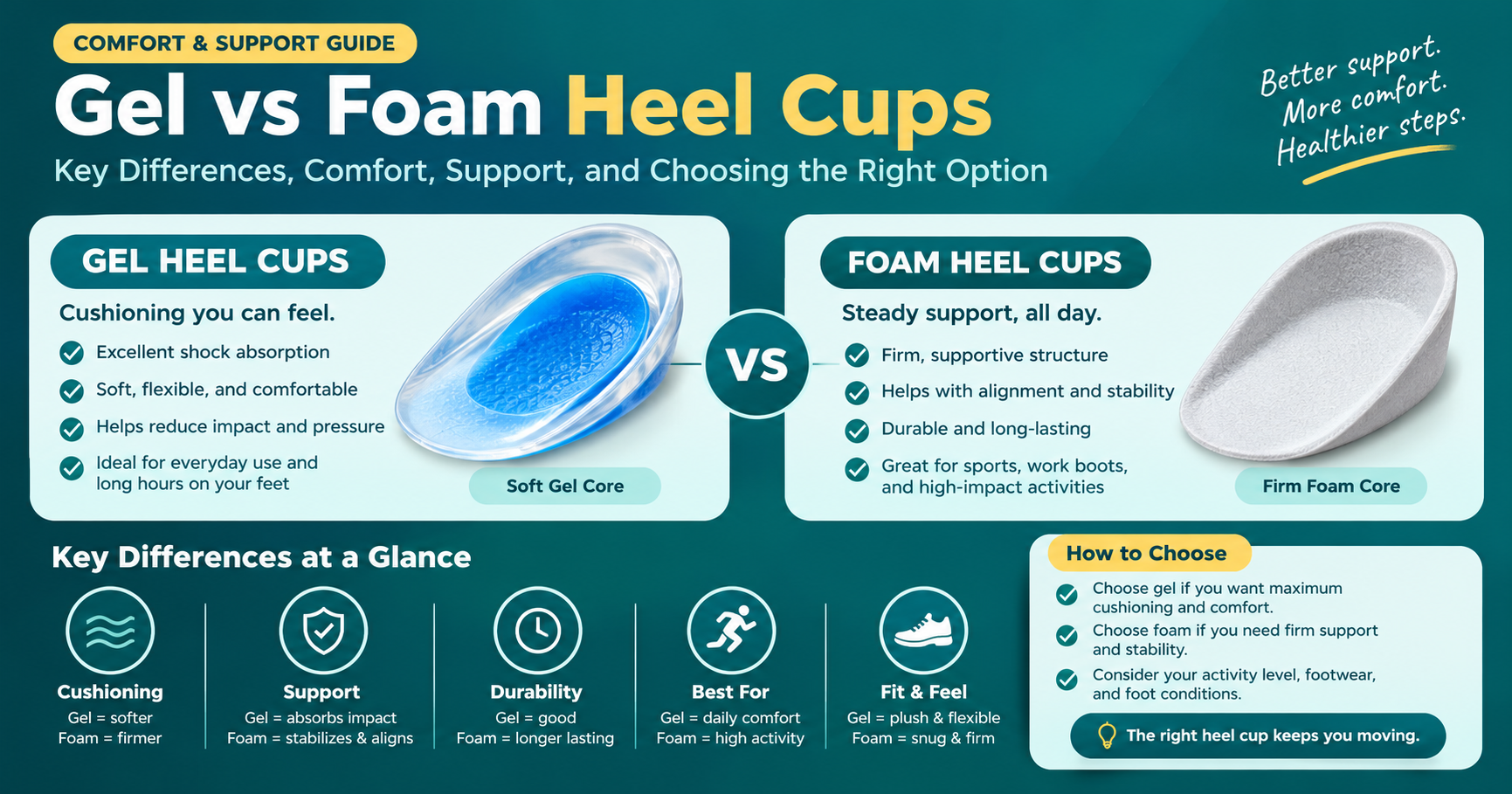
Gel heel cups are usually made from medical-grade silicone or a polymer gel. The material is dense and slightly fluid, so it deforms under the heel and then slowly returns to shape. That behavior spreads the force of each step across a wider area and dampens the sharp spike of impact.
Advantages
- Superior shock absorption: Gel handles hard, unforgiving surfaces like concrete, tile, and warehouse floors better than most foams.
- Durability: Quality silicone resists compression for months, so the cushioning stays consistent.
- Easy cleaning: A smooth surface can be wiped or rinsed and dried quickly.
- Targeted relief: Many designs include a thicker center pad or pressure-relief zone right under the sorest spot.
Drawbacks
- Heavier: You will notice the extra weight, especially in lightweight running shoes.
- Heat retention: Gel does not breathe, so feet can feel warmer and sweatier.
- Bulkier: Thicker gel can crowd the heel inside snug shoes.
- Can feel slippery: Some gel surfaces slide against socks unless they have a textured top.
Foam Heel Cups: Pros and Cons
Foam heel cups are typically made from polyurethane, EVA, or memory foam. Millions of tiny air cells compress and rebound with each step, which gives a soft, springy feel. Memory foam molds to the heel shape over time, while firmer EVA offers more structure.
Advantages
- Lightweight: Barely noticeable inside the shoe, which suits long walks and athletic footwear.
- Breathable: Open cells let air and moisture move, keeping feet cooler.
- Flexible and low profile: Foam fits into dress shoes, flats, and sneakers more easily.
- Budget friendly: Foam cups are generally cheaper to replace.
Drawbacks
- Compresses faster: Cheap foam can flatten within weeks of daily use.
- Less impact protection: It can bottom out on hard floors and for heavier wearers.
- Absorbs sweat and odor: Harder to clean fully, and it may need replacing sooner.
Gel vs Foam Heel Cups: Side-by-Side Comparison
| Feature | Gel | Foam |
|---|---|---|
| Shock absorption | Excellent | Good |
| Feel | Dense, cushioned | Soft, springy |
| Weight | Heavier | Very light |
| Breathability | Low | High |
| Lifespan | Longer | Shorter |
| Cleaning | Easy | Harder |
| Best for | Standing, hard floors, heel spurs | Running, tight shoes, daily wear |
Which One Is Better for Your Situation?
- Plantar fasciitis: Gel is usually preferred for its deeper cushioning, especially if mornings are the worst. A firm, deep foam cup with arch support can also work well.
- Heel spurs: Choose gel with a cut-out or extra-soft center to offload the sore point.
- Standing or walking all day: Gel for hard floors; high-density foam if you also want breathability.
- Running and sports: Foam is lighter and responds faster, and it fits snug athletic shoes.
- Achilles tendon discomfort: Some people benefit from a slightly raised heel; a firmer foam or gel wedge can help, but get advice first.
- Heel pain in children (Sever’s disease): Soft, flexible cups are common, but have a professional confirm the cause first.
- Older adults with thinning heel pads: Gel replaces lost natural padding effectively.
- Sensitive or diabetic feet: Ask a podiatrist before using any insert.
7 Things to Check Before You Buy
- Size: Match the cup to your shoe size range. An oversized cup bunches up; a small one fails to cradle the heel.
- Depth and wall height: Deeper walls give more centering and support, but need roomy shoes.
- Thickness: Thicker cushions more, but can lift your heel out of the shoe. Start moderate.
- Material quality: Look for medical-grade silicone or high-density polyurethane, not thin, springy filler.
- Top surface: A fabric or textured cover prevents slipping and reduces sweat.
- Shoe type: Closed-back shoes work best. Open-back sandals need slimmer, adhesive designs.
- Cleaning and care: Washable, wipe-clean materials last longer and stay hygienic.
How to Wear and Care for Heel Cups
Remove the shoe’s original insole if space is tight, then press the cup firmly into the back of the shoe so the heel sits in the center. Break them in gradually, wearing them for a few hours at first. Rinse gel cups with mild soap and water and let them air dry; foam cups should be spot cleaned and aired out between wears. Replace gel cups when they look cracked or permanently flattened, and foam cups when they no longer spring back, which is often every two to four months with daily use.
Common Mistakes to Avoid
- Buying the thickest cup, assuming more padding is always better.
- Ignoring shoe fit, which leads to blisters and heel slip.
- Wearing worn-out cups long past their useful life.
- Treating heel cups as a cure when stretching, supportive footwear, and rest are also needed.
- Ignoring pain that lasts more than a couple of weeks.
Frequently Asked Questions
Are gel heel cups better than foam?
Gel gives stronger shock absorption and lasts longer, while foam is lighter and more breathable. Neither is better for everyone; it depends on your activity, shoes, and pain pattern.
Can I use heel cups in every pair of shoes?
Not always. They need enough heel room. Shoes with deep heel counters and removable insoles work best, while very tight dress shoes may not fit them.
How long do heel cups last?
Quality gel cups often last six months or more with regular use. Foam cups usually need replacing sooner, depending on weight and activity.
Can heel cups help plantar fasciitis?
They can reduce impact and discomfort for many people, especially alongside stretching and good footwear. They are not a guaranteed cure.
Should I wear them in both shoes?
Usually yes, to keep both heels level, unless a professional advises otherwise.
Do heel cups cause any side effects?
Some people feel pressure or tightness at first. If pain increases, skin irritation develops, or numbness appears, stop using them and seek advice.
Final Verdict
If your priority is protection from hard, repeated impact, gel is the stronger choice and tends to last longer. If you value a light, cool, flexible fit for active days or snug shoes, foam is the smarter pick. Many people keep a gel pair for work shoes and a foam pair for sneakers, which is a perfectly practical solution.
Whichever you choose, get the size right, break the cups in slowly, and replace them when the cushioning gives out. Small details like these make the difference between instant relief and wasted money.
Disclaimer: This article is for general information and does not replace professional medical advice. If you have persistent heel pain, swelling, numbness, or a condition such as diabetes, please consult a podiatrist or doctor.