

Disclosure: this article is for education. Some products mentioned by category may earn the site a commission, at no extra cost to you.
Every step you take places two to three times your body weight through your feet. Yet the foot does not collapse under that load. The reason is a clever piece of built-in engineering called the windlass mechanism. Understanding the windlass mechanism and foot arches helps you make sense of flat feet, high arches, heel pain, plantar fasciitis and even why some shoes feel great while others hurt.
Key Takeaways
- The windlass mechanism tightens the plantar fascia when your big toe bends upward, raising the arch and stiffening the foot.
- A stiff foot at push-off lets you walk and run efficiently.
- Weak arches, tight calves and a stiff big toe joint can all disrupt the mechanism.
- Simple exercises, good footwear and supportive insoles can restore function for many people.
What Are the Arches of the Foot?
Your foot is not flat and rigid like a board. It is a flexible structure built from 26 bones, 33 joints and more than 100 muscles, tendons and ligaments. These parts form three arches that work together like a spring-loaded bridge.
1. Medial Longitudinal Arch
This is the arch most people picture. It runs along the inner edge of the foot from the heel to the base of the big toe and is the main shock absorber of the foot.
2. Lateral Longitudinal Arch
Running along the outer edge, this arch is lower and stiffer. It gives stability when you stand and walk.
3. Transverse Arch
This arch runs side to side across the middle of the foot. It helps distribute pressure across the ball of the foot and supports grip.
The Plantar Fascia: The Foot’s Support Cable
The plantar fascia is a thick, fibrous band of tissue that runs from the underside of the heel bone (calcaneus) to the base of each toe. Think of it as the tie rod of a bridge. It holds the heel and the ball of the foot together so the arch does not flatten out under load.
It is also a major source of heel pain when overloaded, which is why the plantar fascia and the windlass mechanism are discussed together so often.
What Is the Windlass Mechanism?
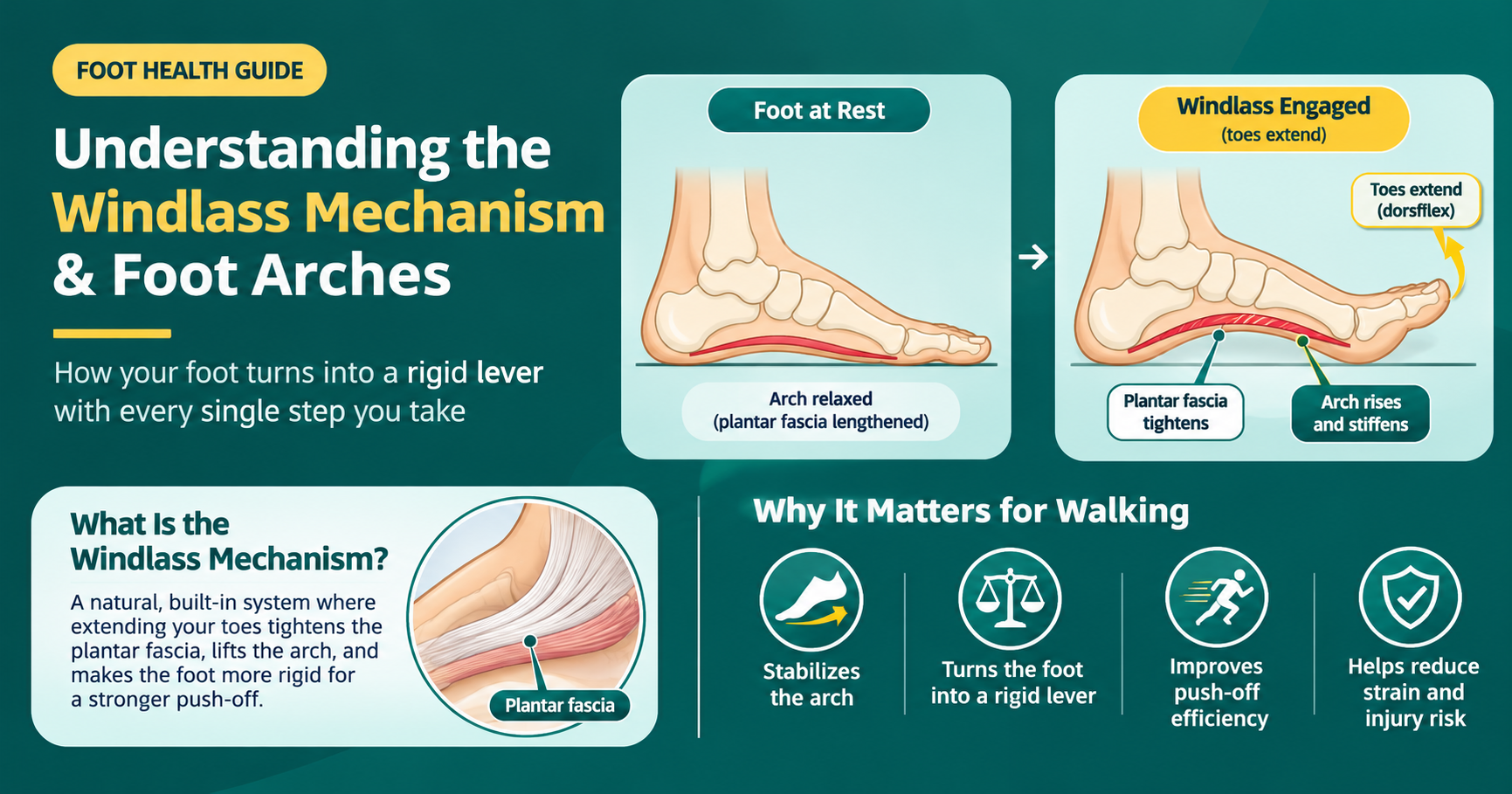
A windlass is a simple machine, such as the winch on a boat, that winds a rope around a drum to pull something tight. In the foot, the plantar fascia is the rope and the head of the first metatarsal (the ball of the big toe) acts as the drum.
Here is what happens, step by step:
- The heel lifts. As you walk or run, your body moves forward over the planted foot and the heel rises.
- The big toe extends. The toes bend upward at the metatarsophalangeal (MTP) joint.
- The fascia winds around the joint. Because the fascia attaches to the base of the toes, bending them pulls it tight across the ball of the foot.
- The heel and forefoot are drawn together. The distance between them shortens, so the arch rises.
- The foot becomes a rigid lever. A stiff foot transfers force efficiently to the ground for push-off.
This process was first described by anatomist J.H. Hicks in 1954, and it remains a cornerstone of modern foot biomechanics. The beauty of it is that it is passive: the arch is raised by tension and geometry rather than by muscle effort alone.
Why the Windlass Mechanism Matters
- Efficient push-off: a stiff foot turns muscle force from your calves into forward motion.
- Shock absorption: at heel strike the foot stays flexible, then stiffens as it moves toward toe-off.
- Arch support without effort: the arch maintains itself during the second half of each step.
- Load sharing: tension is spread across the fascia rather than concentrated in one spot.
Types of Foot Arches
Arch height varies naturally from person to person, and the windlass mechanism responds differently in each type.
Low Arch (Flat Feet)
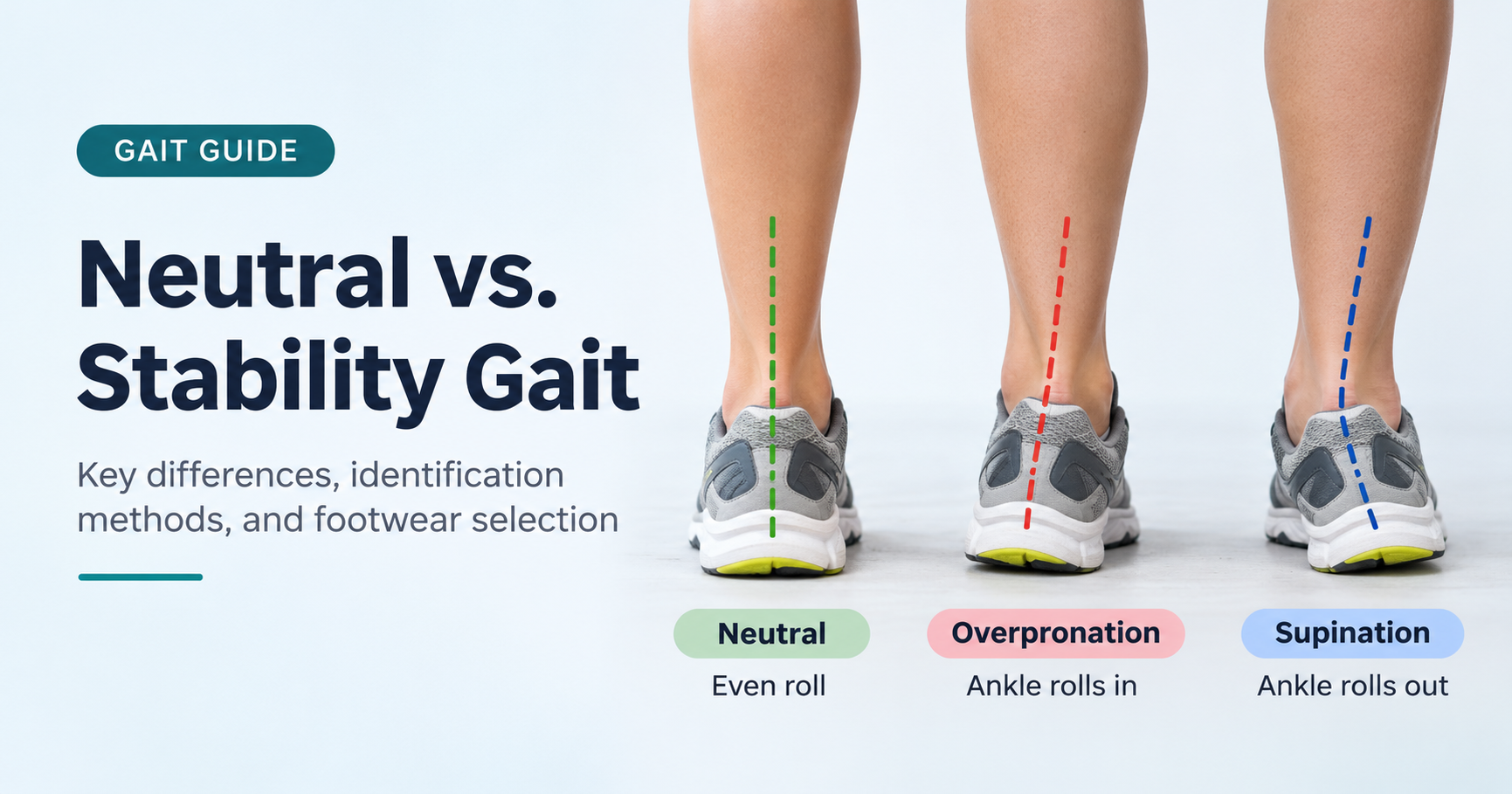
The arch sits close to the ground. Many flat feet are flexible, meaning the arch appears when you sit or stand on tiptoes. Flat feet often show excess pronation, where the ankle rolls inward, and the windlass mechanism may be less efficient.
Normal Arch
A moderate arch gives a balanced mix of flexibility and stiffness. The windlass mechanism usually works smoothly.
High Arch (Cavus Foot)
The arch is pronounced and the foot is often rigid. It absorbs shock poorly and can overload the heel and the ball of the foot.
What Goes Wrong: Common Problems
Plantar Fasciitis
Repeated overload irritates the fascia where it attaches to the heel. The classic sign is sharp heel pain with the first steps in the morning. A tight Achilles tendon and calf muscles increase tension on the fascia, and a stiff big toe joint stops the windlass from working normally.
Hallux Rigidus
Arthritis in the big toe joint limits upward bending. If the toe cannot extend, the windlass cannot engage, and the foot stays floppy at push-off.
Adult Acquired Flatfoot
Weakness of the posterior tibial tendon causes the arch to slowly collapse. The foot may lose its ability to stiffen, and pain on the inner ankle is common.
Overpronation and Fatigue
Weak intrinsic foot muscles force the fascia to do all the work. Over a long day of standing or a long run, this leads to aching, tired feet.
Common Risk Factors
- Standing or walking on hard surfaces for long hours
- Sudden increases in running distance or intensity
- Excess body weight
- Tight calves and a limited ankle range of motion
- Worn-out or unsupportive shoes
- Very flat or very high arches
- Age, especially between 40 and 60
How to Test Your Windlass Mechanism at Home
A simple screening called the Jack’s test shows how well your windlass works.
- Stand barefoot with your weight evenly on both feet.
- Have a helper lift your big toe upward, or lift it yourself while seated with the foot loaded.
- Watch the inner arch. A healthy foot shows the arch rising as the toe bends.
If the arch does not rise, or if the test reproduces your heel pain, consider a professional assessment from a podiatrist or physiotherapist.
Exercises to Support Your Arches
Short Foot Exercise
Sit with your foot flat. Without curling the toes, draw the ball of the foot toward the heel so the arch lifts. Hold for five seconds and repeat ten times.
Calf Stretch
Stand facing a wall, one foot behind with the heel down and the knee straight. Lean forward until you feel a stretch. Hold for 30 seconds, three times per side.
Plantar Fascia Stretch
Sit and cross the affected foot over the opposite knee. Pull the toes back toward the shin until you feel a stretch along the arch. Hold for 15 to 30 seconds and repeat three times.
Towel Curls
Place a small towel on a smooth floor and use only your toes to scrunch it toward you. Do three sets of ten.
Calf Raises with Big Toe Extension
Rise onto the balls of your feet slowly, keeping weight over the big toe, and lower under control. This trains the windlass mechanism in a natural movement pattern. Do three sets of ten to twelve.
Footwear and Support Options
Gear cannot replace good movement, but the right choices reduce strain while you recover.
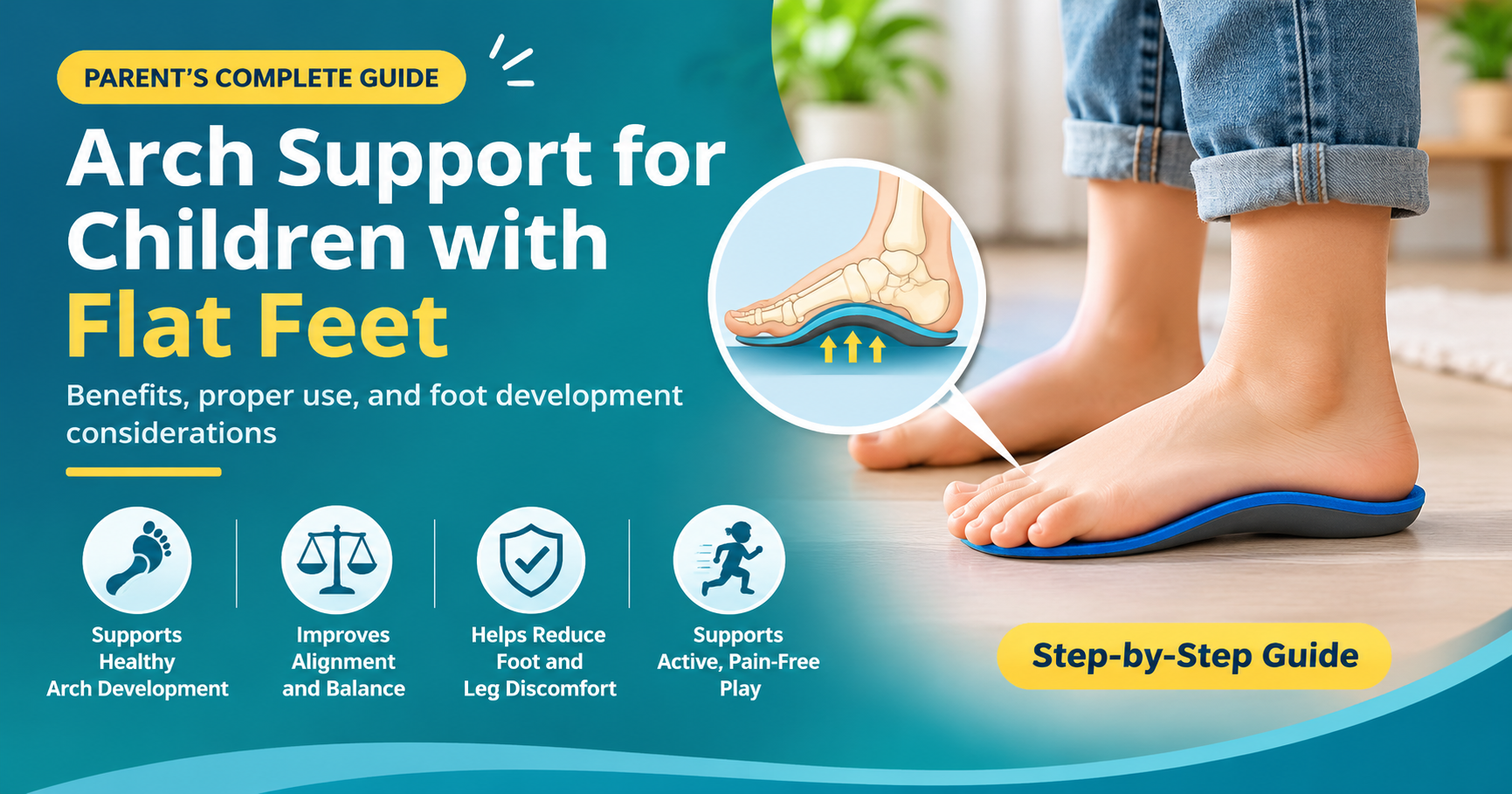
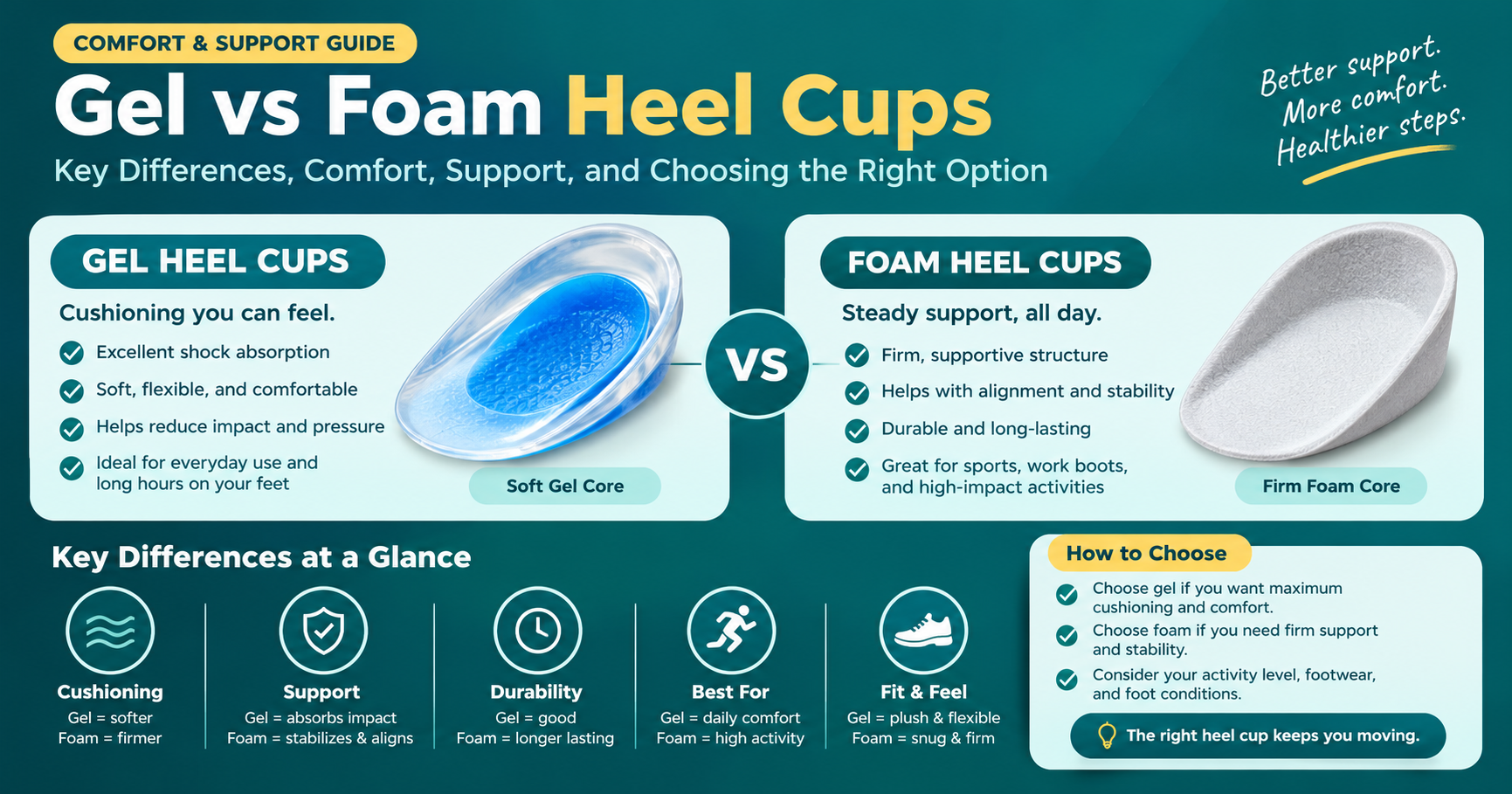
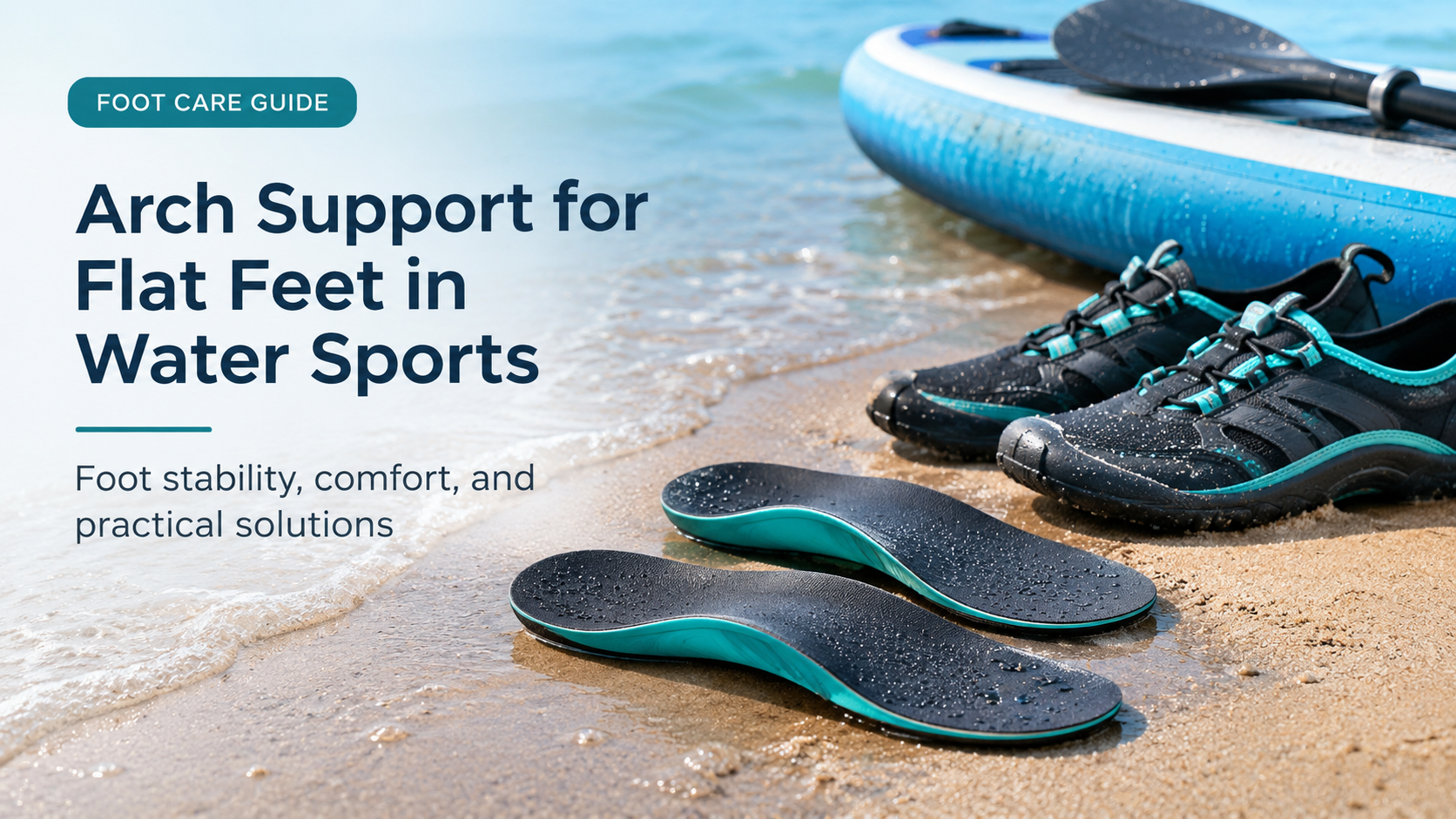
- Arch support insoles: look for a firm yet cushioned profile that matches your arch height. Flat feet usually need stronger medial support, while high arches benefit from cushioning and a full-contact shape.
- Supportive running or walking shoes: choose a shoe with a stable heel counter, a slight forefoot rocker and enough toe box width.
- Night splints: these hold the foot gently stretched during sleep and are popular for morning heel pain.
- Massage balls and rollers: useful for releasing tension in the arch and calves.
- Resistance bands: help strengthen the foot and ankle muscles.
- Compression arch sleeves: provide light support and warmth for tired feet.
When shopping, check the return policy, since fit is highly individual. Replace shoes every 500 to 800 kilometers (300 to 500 miles) of running, or sooner if the midsole is compressed.
When to See a Professional
- Pain lasts more than a few weeks despite rest and stretching
- You notice swelling, redness or numbness
- One arch suddenly looks flatter than the other
- You have diabetes or circulation problems and develop foot pain
- Pain wakes you at night
A podiatrist can examine your gait, recommend custom orthotics and rule out stress fractures, nerve problems or tendon injuries.
Frequently Asked Questions
What is the windlass mechanism in simple terms?
It is the foot’s natural tightening system. When your toes bend upward as you push off, the plantar fascia is pulled tight, raising the arch and making the foot stiff.
Is the windlass mechanism related to plantar fasciitis?
Yes. The plantar fascia is the tissue at the center of the mechanism. Overload, tight calves or a stiff big toe can make it work harder and become painful.
Can flat feet be fixed?
Flexible flat feet usually do not need to be “fixed” if they are pain-free. Strengthening, proper footwear and orthotics can help if symptoms develop.
Do arch supports weaken the foot?
Not when used sensibly. Supports reduce stress while you build strength, and many people combine them with foot exercises.
How long does recovery take?
Many people improve within weeks to a few months with consistent stretching, strengthening and load management. Persistent cases need professional guidance.
Which exercise is best for the windlass mechanism?
Short foot exercises and slow calf raises with attention to big toe extension are among the most practical choices.
Final Thoughts
The windlass mechanism is one of the most elegant systems in the human body, turning a flexible foot into a rigid lever exactly when you need it. By caring for your arches with regular strengthening, flexible calves, a mobile big toe and well-fitted footwear, you protect the system that carries you through every step of the day.
Medical disclaimer: this article is for general information and does not replace professional medical advice, diagnosis or treatment. Consult a qualified healthcare provider about any foot pain or condition.