Arch Support Guide: What You Need and How to Choose the Right One
Sore heels, tired arches, or shoes that never feel quite right? This arch support guide helps you find your arch type in two minutes, match it to the right kind of support, and avoid the mistakes that make foot pain worse.
Arch support guide: the quick answer
- Not everyone needs arch support. It helps most if you have foot, heel or arch pain, or spend long hours on your feet.
- Your arch type (flat, normal or high) decides which kind of support feels right.
- Semi-rigid inserts suit most people. High arches usually prefer more cushioning.
- Break new support in slowly over about two weeks. Pain that lasts is a reason to see a professional.
What arch support actually does
The arch is the curved structure along the inside of your foot, built from bones, ligaments and tendons. It works like a spring: it absorbs impact when your foot lands, spreads your body weight across the foot, and helps you push off with each step.
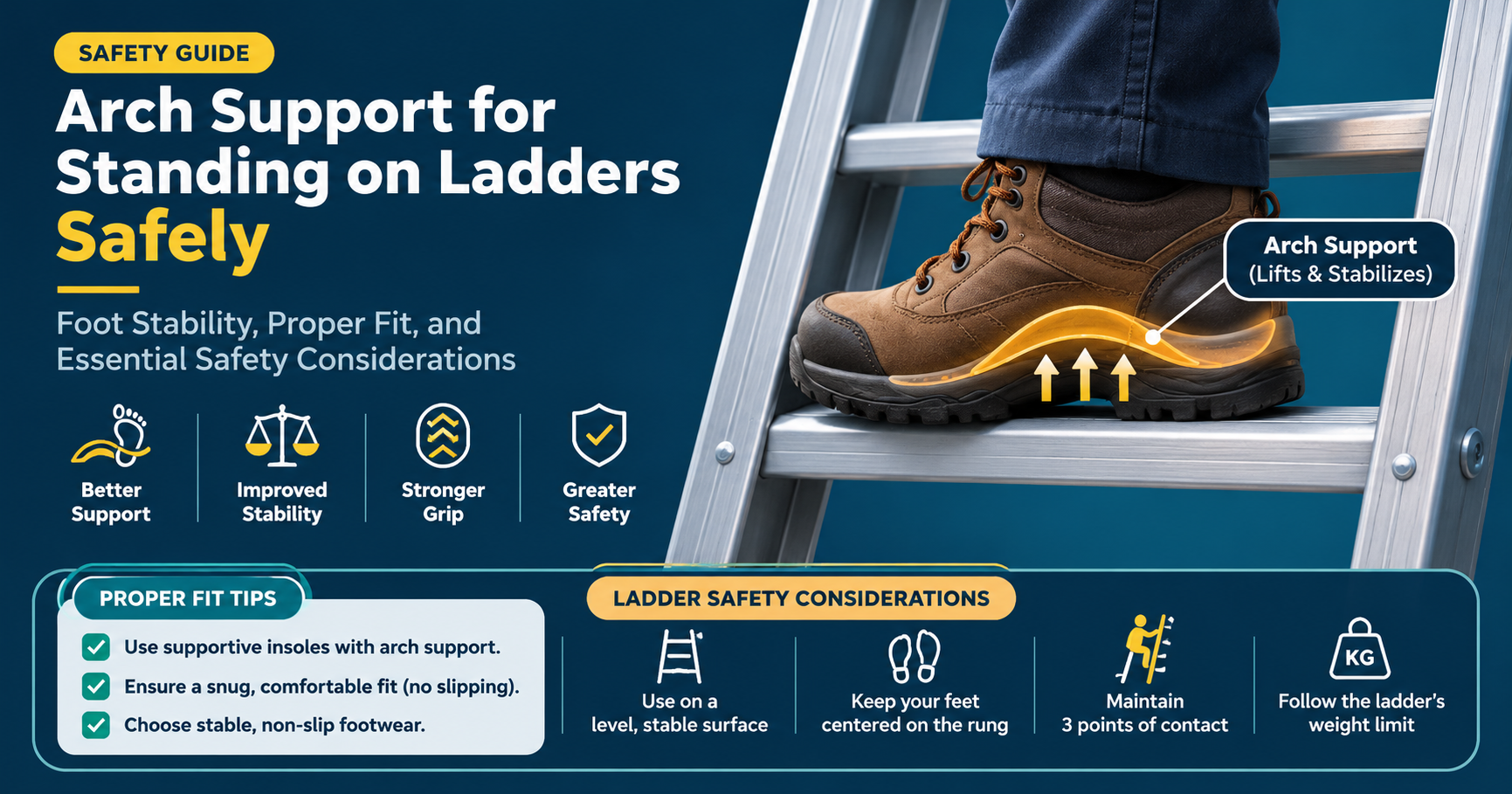
Arch support (insoles, orthotics, or shoes with a contoured footbed) gives that structure extra help. It holds the foot in a more balanced position and shares the load, so the tissues in your arch and heel work a little less.
It does not change the shape of your foot. It changes how pressure is spread while you are wearing it. The rest of this arch support guide shows you how to tell whether you need it and what to buy.
Signs you may benefit from arch support
- Heel pain that is worst with the first steps in the morning
- An ache along the arch after standing or walking for a long time
- Feet that feel tired or heavy by the end of a shift
- Shoes that wear down unevenly, especially on the inner heel
- Ankles that roll inward when you walk or run
- Tired knees, hips or lower back after long days on your feet
- A footprint that looks almost completely flat (see the test below)
Comfortable and pain-free? You probably do not need inserts. Having flat or high arches is not a problem by itself. Support is for symptoms, not for foot shape alone.
Arch support guide: find your arch type with the wet test
This takes two minutes and needs only water and a sheet of dark paper (a paper bag works well).
- Wet your footDip your foot in a shallow tray of water, or wet the sole under a tap.
- Step on paperStand naturally on dark paper or a paper bag with your weight evenly spread.
- Step off and lookCheck the print you left behind. Repeat for the other foot, as arches can differ.
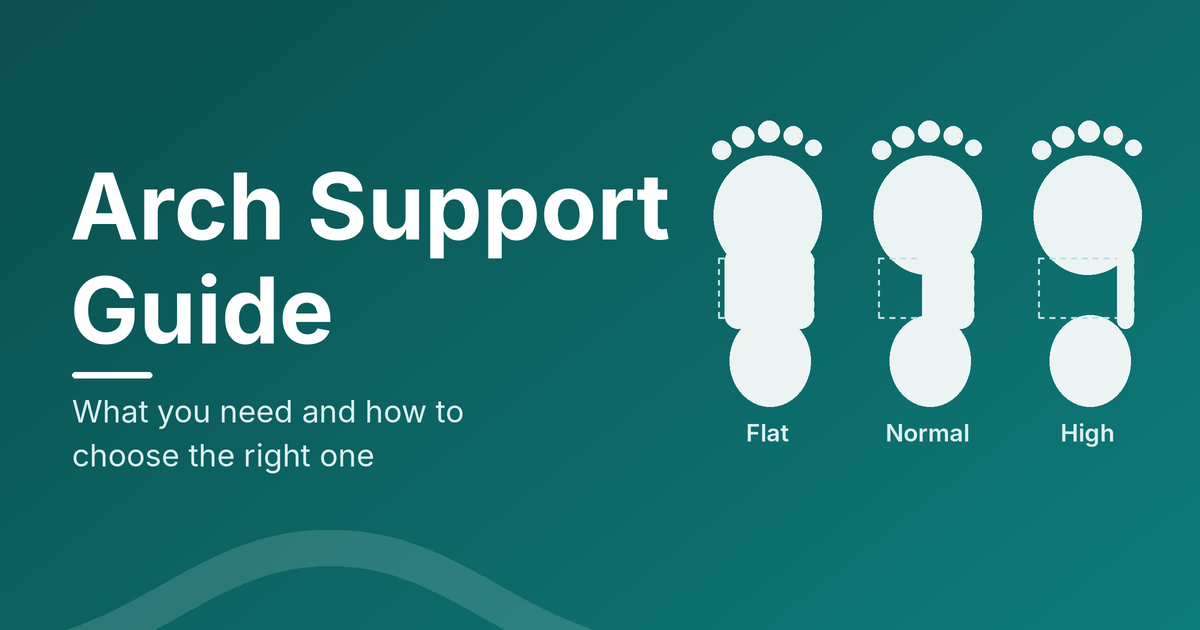
- CompareMatch your print to the illustration and table below.
| Arch type | Footprint looks like | How it often feels | Support to look for |
|---|---|---|---|
| Flat (low) | Most of the sole is filled in, with little or no curve on the inside. | Feet tire quickly. Ankles may roll inward (overpronation). Aching inner heel or arch. | Semi-rigid contoured insert with a firm heel cup. Stability shoes. |
| Normal (neutral) | A clear curve, with about half of the midfoot visible. | Usually balanced. Discomfort mostly comes from long hours or unsuitable shoes. | Light to medium contoured support or a comfort insole. Neutral shoes. |
| High | Heel and ball are joined by a thin strip, or not joined at all. | Weight lands on the outer edge. Ball-of-foot and heel pain. Stiff, less shock-absorbing feet. | Cushioned insert with moderate arch height and a heel cup. Avoid very hard, tall arches. |
The wet test is a rough guide, not a diagnosis. Many children have flexible flat feet that are a normal stage of development. Check with a pediatrician or podiatrist before giving a child inserts.
Types of arch support, compared
A good insert has three working zones: a heel cup that steadies the heel, a contoured arch that carries load, and a forefoot area that stays flexible and cushioned.
| Type | Best for | Feel | Typical US price* | Lasts about |
|---|---|---|---|---|
| Soft or cushioned insoles | High arches, light standing, extra comfort | Plush, flexible | $15 to $40 | 6 to 12 months |
| Semi-rigid insoles | Most people, flat or neutral feet, walking, work shifts | Firm but flexible | $25 to $60 | 6 to 12 months |
| Rigid insoles | Added stability, often when advised by a clinician | Hard, structured | $40 to $100 | About 1 year |
| Custom orthotics | Persistent pain, structural problems, clinician-prescribed needs | Molded to your foot | $200 to $800+ | 2 to 5 years |
| Heel cups or 3/4-length inserts | Heel pain, dress shoes, tight-fitting shoes | Targeted, low profile | $10 to $30 | 6 to 12 months |
| Arch sleeves or taping | Short-term relief when you cannot change shoes | Snug, elastic | $10 to $25 | Weeks |
*Typical ranges only. Prices and lifespan vary by brand, materials and how much you walk or stand.
Softer is not the same as more supportive. A squishy foam insole can feel great in the store and still let your arch collapse. Look for a firm core with a cushioned top layer.
Best support by activity
This part of the arch support guide matches the right kind of support to what you do all day.
| If you spend your time… | Look for |
|---|---|
| Standing all day (retail, nursing, kitchens) | Semi-rigid arch, cushioned heel, roomy toe box, and an insole you can replace. |
| Walking and travelling | Lightweight, contoured insert that does not push your foot up in the shoe. |
| Running | Thin profile matched to your arch type. Replace it when you replace your shoes. |
| Hiking or wearing boots | Firm support with a deep heel cup for stability on uneven ground. |
| Dress shoes | Slim 3/4-length insert or heel cup that fits without crowding the toes. |
| Gym and lifting | A firm, stable base. Very soft soles can make heavy lifts feel unsteady. |
Arch support guide: how to choose in 5 steps
- Know your archDo the wet test and note any pain spots.
- Match the firmnessFlat feet: firmer. High arches: more cushion. Neutral: medium.
- Check the fitThe insert should lie flat and not squeeze your toes or lift your heel out of the shoe.
- Inspect the buildLook for a firm core, a deep heel cup and a breathable top cover.
- Allow break-in timeGive your feet about two weeks to adapt before you judge it.
Shoe checks you can do in the store
Your break-in schedule
New support changes how your foot loads, so muscles and tendons need time to adjust. Mild awareness of the insert is normal at first.
| When | Wear time | Progress |
|---|---|---|
| Days 1 to 2 | 1 to 2 hours | |
| Days 3 to 4 | 3 to 4 hours | |
| Days 5 to 7 | 5 to 6 hours | |
| Week 2 onward | Full day |
Stop and reassess if you get sharp pain, numbness, blisters or pain that is getting worse. The insert may be the wrong height or firmness for you.
Foot exercises that work alongside support
Inserts help most when your foot muscles are also doing their job. Try these a few times a week and stop if anything hurts.
Towel scrunches
Sit with a small towel flat under your foot. Curl your toes to pull the towel toward you. Do 3 sets of 10 to 15 per foot.
Short-foot exercise
Sit with your foot flat. Draw the ball of your foot toward your heel to lift the arch, without curling your toes. Hold for 5 seconds and repeat 10 times.
Calf stretch
Place your hands on a wall, step one foot back with the heel down and knee straight, and lean forward. Hold for 30 seconds, 3 times per leg. Tight calves often add strain to the arch and heel.
Arch ball roll
Sit and roll a tennis or lacrosse ball under your arch with gentle pressure for 1 to 2 minutes per foot. Keep the pressure comfortable, never painful.
Mistakes to avoid
When to see a professional
Get checked by a doctor or podiatrist if you have:
- Pain that lasts more than 2 weeks despite proper footwear and rest
- Swelling, redness, warmth, numbness or tingling in the foot
- Sudden, sharp pain after an injury
- Diabetes or reduced foot sensation (always check before using inserts)
- Pain that wakes you at night
- A child with ongoing foot pain or a limp
Frequently asked questions
Do I need arch support if I have flat feet but no pain?
Not necessarily. Many people have flat feet and never have problems. Support is worth trying if you get pain, fatigue or uneven shoe wear.
Can arch support make pain worse?
Yes, if the height or firmness is wrong for your foot, or if you start wearing it for too long too soon. Reduce wear time or try a different level of support.
How long until I feel a difference?
It varies. Many people need one to two weeks just to adapt. If you see no improvement after several weeks, consult a professional.
How often should I replace inserts?
Over-the-counter inserts typically last 6 to 12 months. Replace them sooner if you are on your feet all day, or when they look cracked, flattened or worn.
Are supportive shoes enough, or do I need inserts?
Start with shoes that fit well and have a firm heel and stable midsole. Add an insert if you still have symptoms or want more tailored support.
Can I use the same inserts in every pair of shoes?
Often yes, if each pair has room and a removable insole. Shoes with very different shapes or depths may need their own pair.
Over-the-counter or custom orthotics?
Most people start with a quality over-the-counter insert. Custom orthotics make sense for persistent pain, structural issues, or when a clinician recommends them.
Are arch supports safe for kids?
Many children have flexible flat feet that are normal. Ask a pediatrician or podiatrist before using inserts.
Final thoughts
The right support depends on your arch type, what you do all day and how gradually you adjust. Use this arch support guide as a starting point, and let comfort, not foot shape alone, be your test. If pain continues, a podiatrist can examine your feet in person.
Trusted resources
- NHS overview of flat feet: what flat feet are and when to see a doctor
- Mayo Clinic on plantar fasciitis: a common cause of heel pain
- AAOS OrthoInfo on plantar fasciitis and bone spurs: causes and treatment options
Ready to find support that fits?
Use this arch support guide to match your arch type, choose the right firmness, and give your feet two weeks to adjust.
Disclaimer: This arch support guide is for general education and is not medical advice. It does not diagnose or treat any condition. If you have pain, a medical condition or any doubt, speak with a doctor or podiatrist before using inserts or starting exercises.