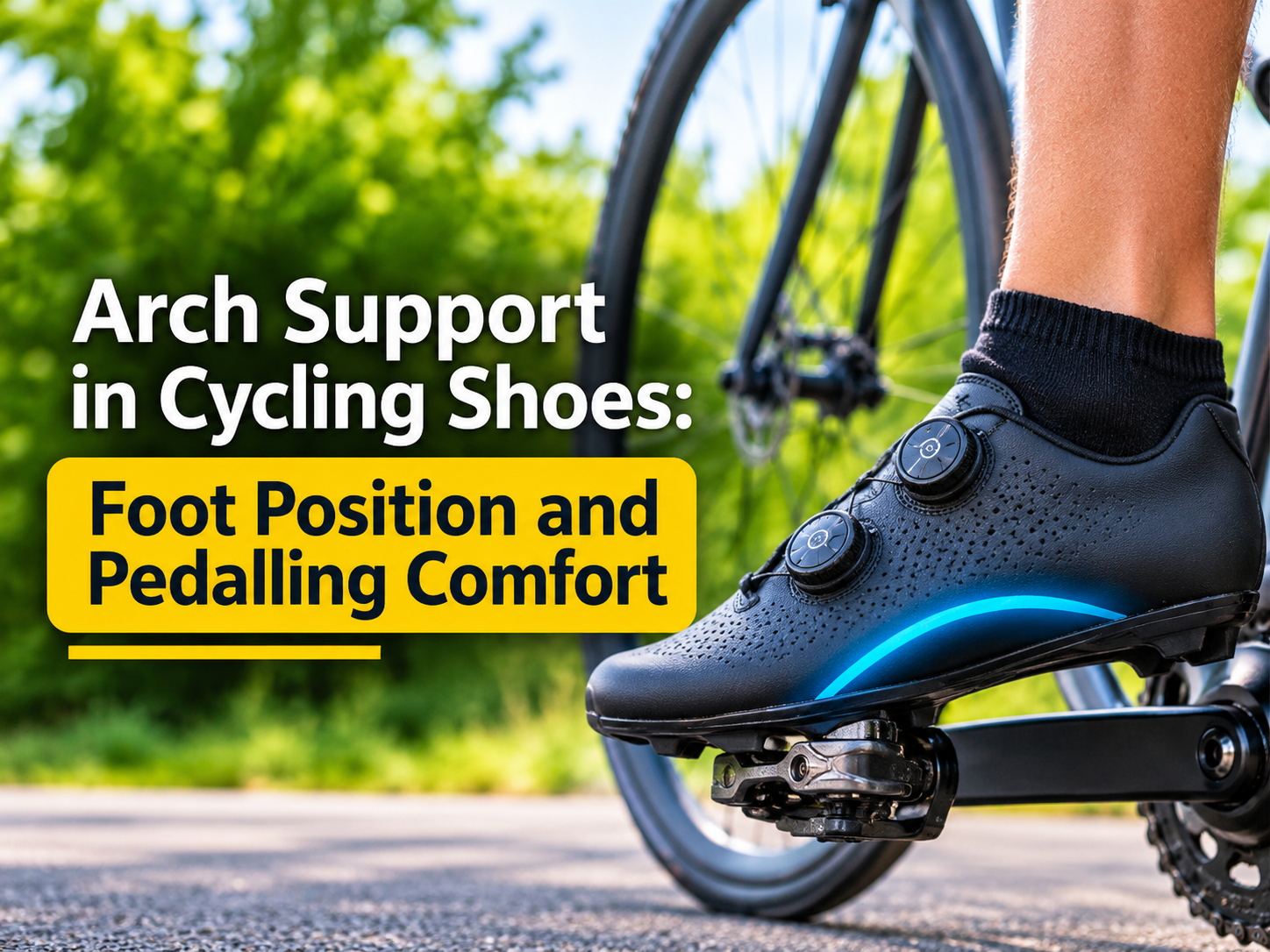
If your feet ache, burn or go numb after an hour in the saddle, the problem may not be your fitness, your bike or your pedals. It may be what is happening under the arch of your foot. Cycling shoes are built to transfer power efficiently, which means stiff soles, a narrow footbed and very little natural cushioning. For many riders, the insole that comes in the box does almost nothing to support the foot. That is where arch support for cycling shoes can make a real difference.
This guide explains how your foot works on the pedal, how to work out your arch type, which kinds of arch support exist, how to choose and fit them, and how to know when it is time to ask a professional for help. Read it from start to finish and you will be able to make a confident, informed choice.
Key Takeaways
- Cycling shoes have stiff soles and thin footbeds, so the insole is what shapes how your arch is supported.
- Your arch type (low, neutral or high) should guide the type and height of support you choose.
- Support that is too high or too firm can cause as many problems as no support at all.
- Fit matters: the shoe must still close comfortably and leave room for your toes after the insole goes in.
- Persistent pain, numbness or swelling deserves a professional assessment rather than a trial-and-error approach.
Why Arch Support Matters When You Cycle
Cycling is a repetitive activity. At a steady pace of around 80 to 90 revolutions per minute, each foot pushes down on the pedal thousands of times over a single ride. Almost all of that force travels through a small area of the foot, mainly the ball of the foot where the cleat is mounted. The rest of the foot has to stay stable and in good alignment so the force is delivered smoothly.
The arch plays a supporting role in that process. It acts as a flexible bridge between the heel and the forefoot. When the arch is not supported well, the foot can collapse inward, spread out under load or shift around inside the shoe. Riders often describe the result as arch fatigue, hot spots under the ball of the foot, a burning feeling in the toes, or a general sense that the foot is “tired” long before the legs are.

What Good Arch Support Can Do
- Share the load. By filling the gap between the arch and the sole, support spreads pressure over a larger area instead of leaving it concentrated at the forefoot and heel.
- Improve stability. A supported foot is less likely to roll inward or slide around, which helps it stay centred over the pedal.
- Reduce fatigue. When the muscles of the foot do not have to work as hard to hold the arch, many riders find they stay comfortable for longer.
- Make the shoe feel better made. A good footbed makes the shoe feel like it fits your foot instead of just containing it.
Understanding Your Foot Arch Type
Before buying anything, you need to know what your arch looks like. Arches are generally grouped into three types: low (often called flat feet), neutral (medium) and high. None of them is automatically a problem. The point is to match the support to the shape of your foot rather than choosing a product because it is popular.

A Simple At-Home Wet Footprint Test
- Wet the sole of your bare foot lightly with water.
- Step firmly onto a dry piece of dark paper or a flat paper bag, as if you were standing normally.
- Step off and look at the print. A wide, full print with little or no curve on the inner side suggests a low arch. A print with a clear but moderate curve suggests a neutral arch. A print showing mainly the heel and ball, joined by a thin band, suggests a high arch.
This test is a starting point, not a diagnosis. The arch can look different when you stand and when your foot is loaded on a pedal. If you are unsure, a podiatrist, physiotherapist or experienced bike fitter can assess it in a few minutes.
| Arch Type | What It Looks Like | Common Cycling Complaints | Support Approach |
|---|---|---|---|
| Low arch (flat) | Wide footprint, inner edge close to the ground | Arch ache, inward rolling of the foot, tired feet on long rides | Firm, stable support with a deep heel cup |
| Neutral arch | Moderate curve on the inner side | Occasional fatigue or hot spots on longer rides | Medium-height support with some flexibility |
| High arch | Narrow midfoot band, high inner curve | Pressure at the ball and heel, numb or burning toes | Cushioned support that fills the arch gap without pushing too hard |
How Cycling Shoes Are Different From Everyday Shoes
Walking shoes and running shoes are designed to flex and cushion. Cycling shoes are designed to do the opposite. The sole is stiff, often made from nylon, composite or carbon fibre, so that energy from your legs goes into the pedal rather than into bending the shoe. The footbed is usually thin and flat, and the upper is shaped to hold the foot snugly.
This design is excellent for power transfer, but it has side effects. Because the sole does not flex or cushion, any mismatch between the shape of your foot and the shape of the footbed becomes more noticeable. A stiff sole with a flat insole under a high arch leaves an empty gap, and the foot has nothing to rest on except the heel and the ball. A stiff sole under a low arch can allow the foot to collapse inward with every pedal stroke.
That is why many riders find that replacing the stock insole is one of the simplest and most effective upgrades they can make to a pair of cycling shoes.
Signs You May Benefit From Arch Support
Not every rider needs additional support. However, the following signs suggest your feet might benefit from it:
- An aching or cramping feeling in the arch during or after rides.
- Burning, tingling or numbness in the toes or the ball of the foot.
- Hot spots, which are areas of focused heat or pressure that appear as the ride goes on.
- A foot that seems to roll inward or slide around inside the shoe.
- Pain in the heel or the inner side of the foot after longer rides.
- Feet that feel noticeably more tired than your legs.
- Discomfort that improves when you stand barefoot on a firm, supportive surface or when you try a better footbed.
Keep in mind that these symptoms can also be caused by shoes that are too small or too large, shoes that are tightened too much, cleats set in the wrong position, or an underlying medical issue. Arch support is one possible solution, not the only one.
Types of Arch Support for Cycling Shoes
Arch support products differ in firmness, shape, material and how much they adjust to your foot. Here are the main categories you will come across.
| Type | Best For | Advantages | Things to Watch |
|---|---|---|---|
| Off-the-shelf cycling insoles | Riders who want a ready-made upgrade over the stock footbed | Designed for thin, stiff cycling shoes; often come in different arch height options | May not match unusual foot shapes; sizing must be checked |
| Semi-rigid insoles | Neutral to low arches, longer rides | Good balance of support and comfort; hold their shape | Take a short time to get used to |
| Firm or rigid insoles | Low arches or riders who want maximum stability | Strong structural support, deep heel cups | Can feel harsh if the support is too high or too firm |
| Cushioned insoles | High arches, sensitive feet, rough road surfaces | Soften pressure points and fill the arch gap | Thick cushioning may reduce shoe volume and affect fit |
| Heat-moldable insoles | Riders who want an insole shaped to their own foot | Can be shaped to your arch using heat and your own foot pressure | Follow the manufacturer instructions carefully to avoid overheating or poor shaping |
| Custom orthotics | Persistent pain, unusual foot structure, professional recommendation | Made from a measurement or mould of your own foot | Higher cost; need a qualified practitioner and a shoe that has enough room |
Arch Height: Low, Medium or High?
Most insoles come in different arch heights. The right one depends on your arch and your comfort. As a general guide:
- Low-profile support suits high arches and riders who are sensitive to pressure, because it offers a gentle lift without pushing hard into the foot.
- Medium support suits most neutral arches and is a sensible starting point if you are not sure.
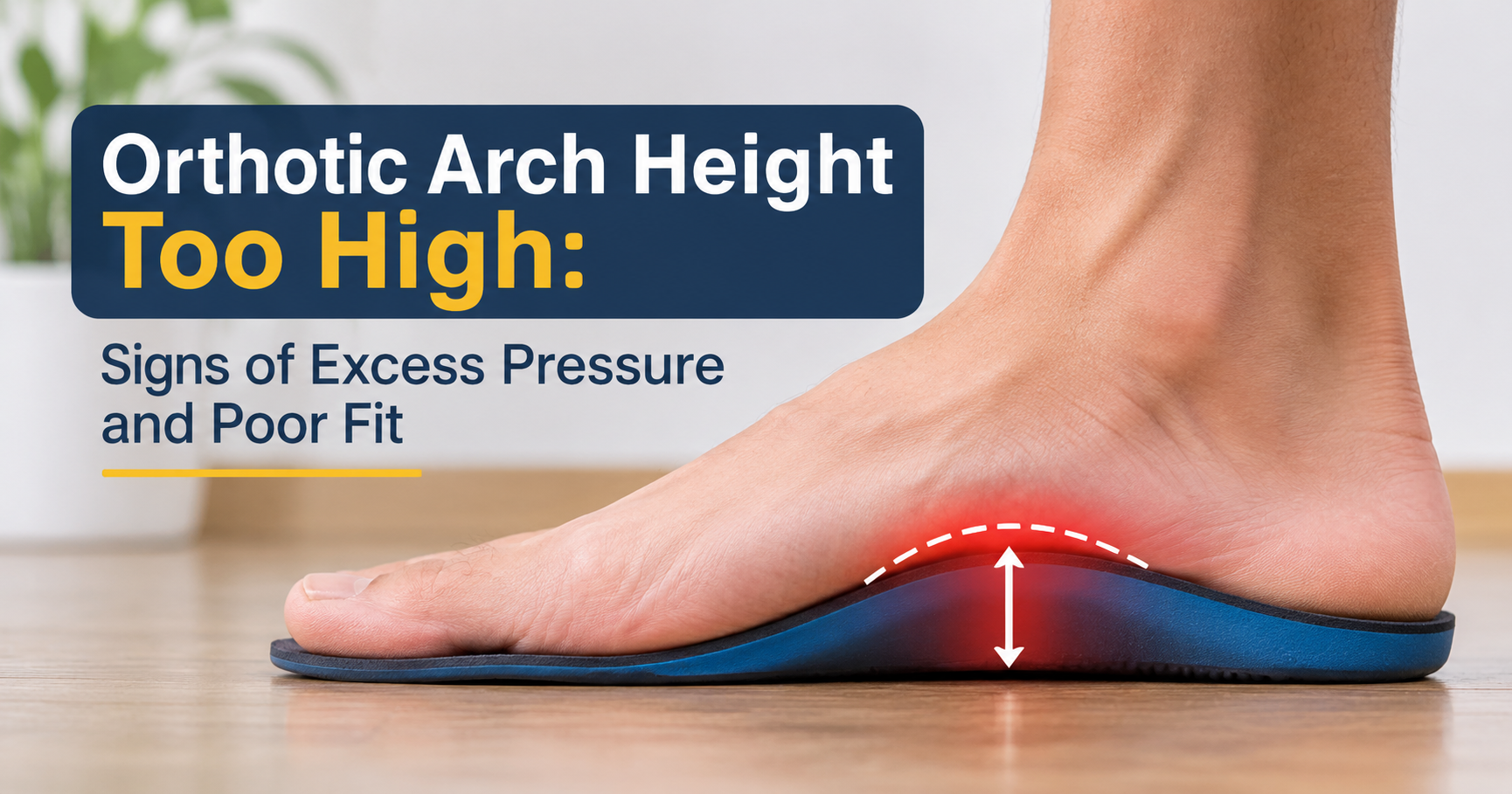
- High support suits low arches that need strong stability, but it can be uncomfortable if the arch is not low enough to need it.
A very common mistake is assuming that higher support is always better. Support should feel like a gentle, even contact along the arch. If it feels like a hard lump pushing into your foot, it is probably too high or too firm for you.
How to Choose the Right Arch Support: A Step-by-Step Approach

Step 1: Identify Your Arch Type
Use the wet footprint test described above, or ask a professional to assess your feet. Write down whether your arch is low, neutral or high so that you can compare it against product descriptions.
Step 2: Match the Support Height and Firmness
Choose a product that matches your arch. Low arches generally need firmer and more structured support, high arches usually need cushioning and a gentler lift, and neutral arches do well with medium support. If you are between sizes or categories, begin with the gentler option and move up if you need more.
Step 3: Check the Fit Inside the Shoe
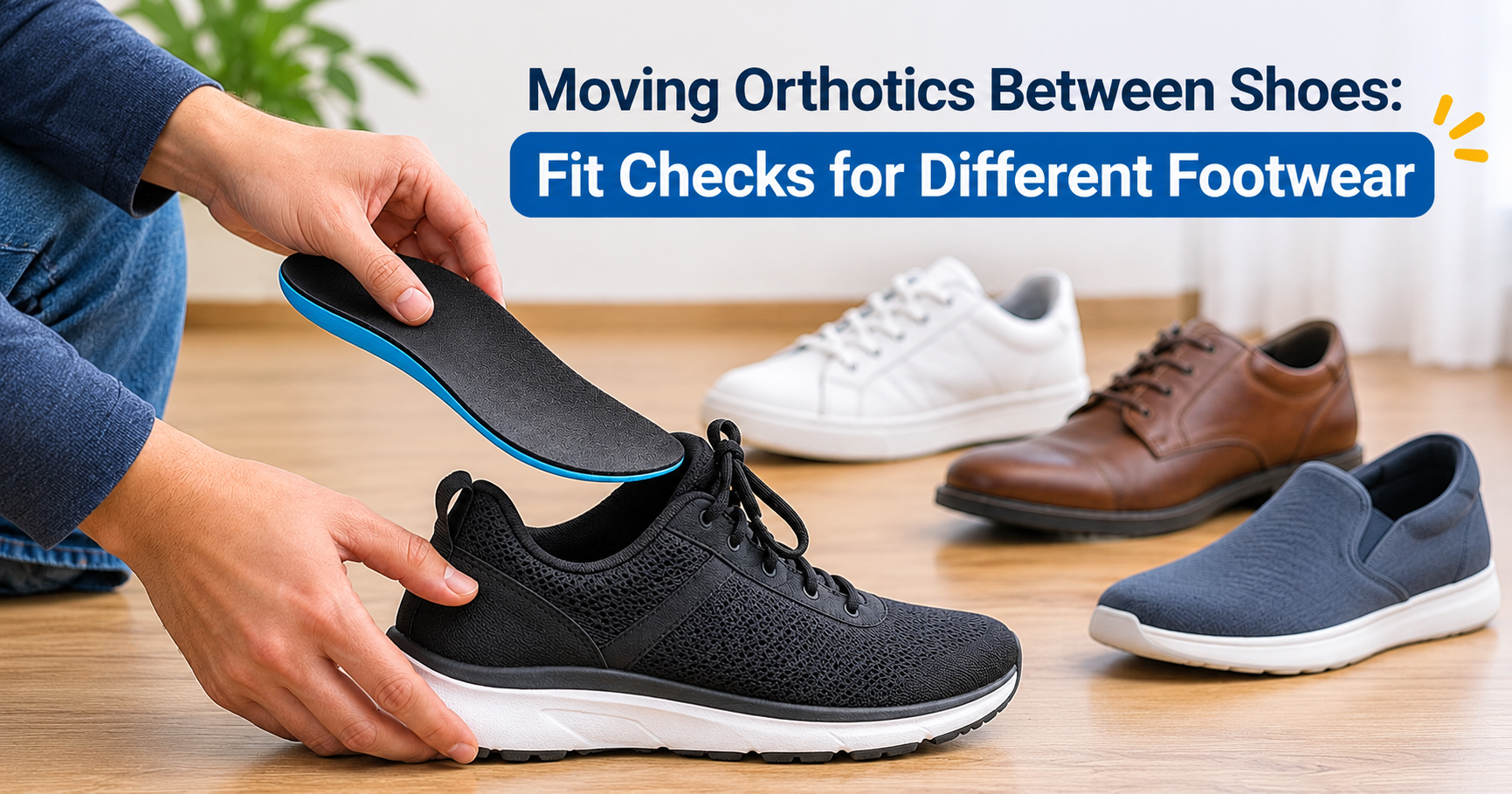
Take out the original insole and compare it to the new one. Many cycling insoles are designed to be trimmed to fit, so use the original as a template and trim carefully along the outline, cutting a little at a time. Then put the new insole in and check the following:
- The shoe still closes comfortably without extra tension on the straps, dials or laces.
- Your heel sits securely and does not lift or slide.
- Your toes still have room to spread and are not pressed against the front of the shoe.
- The insole lies flat and does not bunch up or move around.
Step 4: Test With Short Rides First
Give your feet time to adapt. A sensible approach is to wear the new insoles for short rides or indoor sessions before using them on a long ride or an event. Increase the length gradually over a couple of weeks. Slight awareness of the new support in the first few rides is normal. Sharp pain, numbness or a feeling that the shoe is too tight is not.
Step 5: Adjust or Seek Advice
If the support feels uncomfortable after a reasonable adjustment period, try a different height or firmness, or check whether the shoe volume is the issue. If problems persist, speak to a professional rather than continuing to experiment.
Other Factors That Work Together With Arch Support
Arch support does not work in isolation. These related factors can strongly influence how your feet feel on the bike.
Shoe Size and Volume
A shoe that is too tight leaves no space for an insole to work, and a shoe that is too loose lets the foot move around no matter how good the support is. Cycling shoes should hold the foot firmly without squeezing it. Check the fit with your riding socks on, and remember that feet can swell slightly during long rides in warm weather.
Cleat Position
The position of the cleat affects how force travels through the foot. Cleats that are set too far forward or back, or that are rotated poorly, can create pressure points and strain regardless of arch support. If you change your insoles and still experience forefoot pain, it is worth having your cleat position checked as part of a bike fit.
Foot Alignment
Some riders benefit from small wedges or shims placed under the insole or the cleat to help align the foot, knee and hip. This is a specialised adjustment and is best done with a qualified bike fitter, who can observe how your foot, knee and hip move as you pedal.
Socks and Strap Tension
Thick socks, overtightened straps or a poorly adjusted closure system can squeeze the foot and mimic the symptoms of poor arch support. Try loosening the closure slightly across the midfoot and forefoot before deciding that the insole is at fault.
Common Mistakes to Avoid
- Choosing the highest arch support by default. More is not better. The right support is the one that matches your foot.
- Wearing new insoles for the first time on a long ride. Give your feet a gradual adjustment period.
- Stacking an insole on top of the stock one. This can reduce the volume in the shoe and make it too tight. Remove the original first, unless the product instructions say otherwise.
- Ignoring shoe fit. Insoles cannot fix a shoe that is the wrong size or shape.
- Treating persistent pain as normal. Pain that does not settle should be checked rather than ridden through.
- Forgetting about hygiene. Insoles absorb sweat. Let them air out after rides and clean them according to the maker’s instructions.
Caring for and Replacing Your Insoles
Insoles wear out. Over time the foam compresses, the shape flattens and the surface can crack or become unpleasant. To get the most from them:
- Remove them from the shoes after riding so both can dry thoroughly.
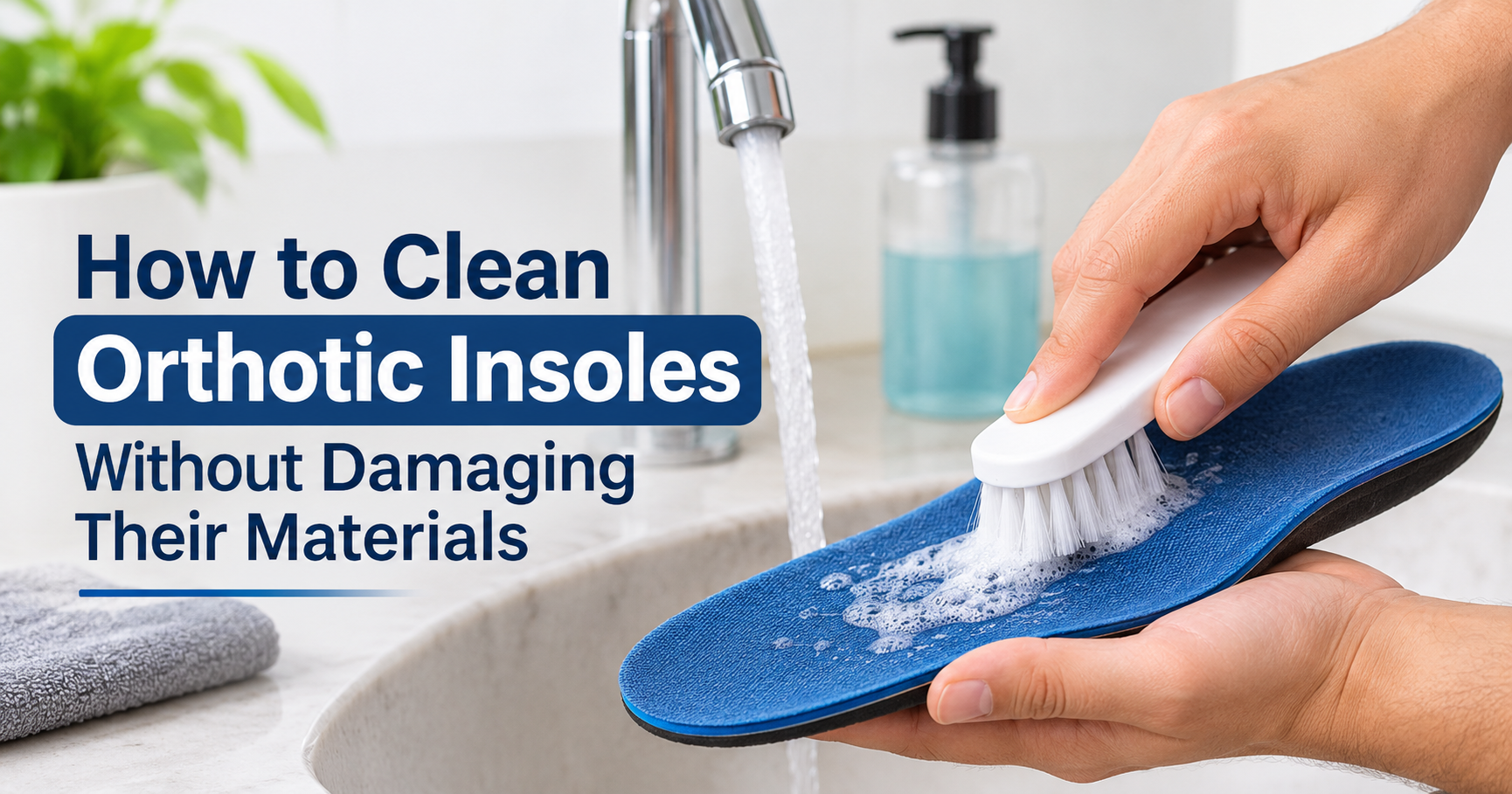
- Clean them gently with mild soap and water if the instructions allow, and let them air dry away from direct heat.
- Check them regularly for flattening, cracking, peeling or lingering odour.
- Replace them when the support feels reduced, when the shape has visibly changed, or when your old symptoms start to return.
When to See a Professional
Over-the-counter arch support is a reasonable first step for many riders, but some situations call for a professional opinion. Consider seeing a podiatrist, physiotherapist, sports medicine clinician or qualified bike fitter if you experience any of the following:
- Pain that continues for more than a few weeks or keeps getting worse.
- Numbness or tingling that does not go away after you take your shoes off.
- Swelling, redness or heat in the foot or ankle.
- Pain in the knee, hip or lower back that seems linked to foot position.
- A history of foot injury, diabetes, circulation or nerve problems.
- A foot structure that is very different between the left and right sides.
A professional can assess your foot, look at how you move, and recommend whether standard insoles, adjustments to your bike fit or custom orthotics are most likely to help.
Frequently Asked Questions
Do all cyclists need arch support?
No. Some riders are comfortable with the original insole. Arch support is most useful for riders who experience arch fatigue, forefoot pressure, instability or discomfort on longer rides.
Can I use running shoe insoles in my cycling shoes?
You can, but it is not always a good idea. Running insoles are often thicker and more heavily cushioned, which can take up too much space in a slim cycling shoe and change how the foot sits on the pedal. Insoles made for cycling shoes are generally a better fit.
How long does it take to get used to arch support?
It varies from rider to rider. Many people adapt within a few rides, while others need a couple of weeks of gradual use. If discomfort increases rather than easing, stop and reassess the height, firmness and fit.
Will arch support improve my power output?
Arch support is mainly about comfort, stability and foot health. A more comfortable and stable foot may help you ride longer and feel better on the bike, but it should not be seen as a guaranteed way of increasing power.
Should I choose heat-moldable or custom insoles?
Heat-moldable insoles are a good middle ground for riders who want something shaped to their foot without the cost of a fully custom product. Custom orthotics make sense when you have persistent problems, an unusual foot structure or a professional recommendation.
Can poor arch support cause knee pain while cycling?
Foot position can influence how the knee tracks during pedalling, so in some riders poor foot support may contribute to knee discomfort. However, knee pain has many possible causes, including saddle height, cleat position and training load, so it is worth getting it checked if it persists.
Final Thoughts
Your feet are one of the three main contact points between you and the bike, and they deliver all the power you produce. A cycling shoe with the right arch support can help them do that job comfortably, ride after ride. The best approach is straightforward: understand your arch type, choose support that matches it, check the fit carefully, introduce it gradually and pay attention to how your feet respond.
If you take your time and avoid the common mistakes, you will give yourself the best chance of enjoying longer, more comfortable rides. And if problems continue, remember that expert advice is always a better option than guesswork.