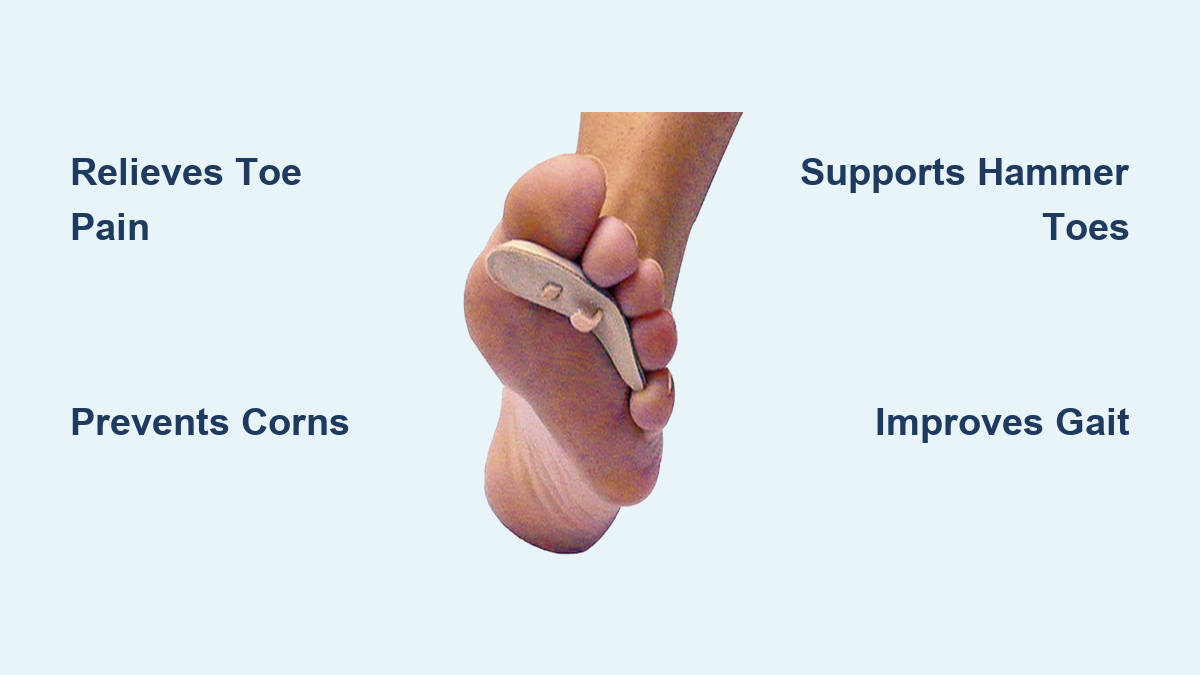
If you’re struggling with toes that curl, bend, or overlap—especially when walking or wearing shoes—a toe crest pad could be the simple, non-invasive solution you’ve been overlooking. Designed specifically for people with hammer toes, claw toes, or mallet toes, this small but effective foot device lifts and cushions the underside of the toes to relieve pressure, prevent painful corns, and improve comfort with every step. Unlike rigid splints or surgical interventions, toe crest pads offer immediate relief while letting you stay active in your regular footwear.
Commonly recommended by podiatrists, these pads are especially valuable for individuals with diabetes, arthritis, or poor circulation, where even minor foot pressure can lead to serious complications like ulcers. Whether you’re managing chronic toe pain or trying to prevent skin breakdown, understanding what a toe crest pad is and how to use it properly can significantly improve your foot health and overall mobility.
How Toe Crest Pads Relieve Pressure and Improve Foot Function
The Science Behind the Support
A toe crest pad works by being placed just behind the ball of the foot (metatarsal head), under the base of the bent toes. It creates a soft, supportive “crest” that gently lifts the middle or tip joints of the toes upward. This simple lift stops the toe tip from pressing into the sole of your shoe, which is often the root cause of pain, calluses, and even open sores.
By repositioning the toe into a more natural alignment:
– Pressure on the distal (tip) and middle joints is dramatically reduced
– Friction between toes or against shoes is minimized
– Joint strain during walking is eased
This makes each step less painful and helps protect sensitive skin from repeated trauma—especially crucial for those with limited sensation or healing ability.
Key Features That Make It Effective
Modern toe crest pads are engineered for comfort, stability, and long-term use:
– Adjustable loops: One or more silicone or fabric loops slide securely over the second or third toe to keep the pad in place.
– Low-profile design: Fits discreetly inside dress shoes, athletic sneakers, or sandals without adding bulk.
– Trim-to-fit option: Some models (like the 2.5″ x 0.75″ gel pads) can be trimmed for a custom fit.
– Reusable and washable: Most are made from medical-grade gel or silicone and can be cleaned with mild soap and air-dried.
These features allow for all-day wear, whether you’re standing at work, exercising, or just relaxing at home.
Common Uses: Why People Rely on Toe Crest Pads
Managing Toe Deformities Without Surgery
Toe crest pads are primarily used to relieve symptoms of common toe conditions:
– Hammer toes: Bent at the middle joint
– Claw toes: Curled downward at both middle and tip joints
– Mallet toes: Bent only at the tip joint
– Overlapping toes: One toe crosses over another due to muscle imbalance
While they don’t permanently correct the deformity, crest pads reduce pain and improve function by supporting the toe in a better position. They’re especially helpful when tight shoes, arthritis, or biomechanical issues cause or worsen these conditions.
Preventing Corns, Calluses, and Skin Breakdown
One of the biggest benefits is skin protection. When bent toes press into shoes or rub against each other, thickened skin (calluses) or painful corns form—often on the tips or between toes.
By lifting the toe off the shoe sole, the pad:
– Eliminates direct pressure on corn-prone areas
– Reduces friction between adjacent toes
– Helps heal existing lesions by offloading stress
This is vital for preventing kissing corns (corns on two touching toes) and Lister’s corns (deep, painful corns on the toe tip), which can become infected if left untreated.
Reducing Forefoot Pain and Improving Gait
Walking shouldn’t hurt—but for many with toe deformities, every step brings sharp or aching pain in the front of the foot. Abnormal pressure distribution strains joints and soft tissues.
Crest pads help by:
– Cushioning the metatarsal area
– Minimizing joint strain during push-off
– Promoting a smoother, more natural gait
They’re also useful after minor injuries like bruised toenails or runner’s nail, where reducing pressure speeds healing and prevents further damage.
Types of Toe Crest Pads: Choosing the Right One

Gel Toe Crest Pads – Most Popular for Daily Use
Made from medical-grade silicone, these are the go-to choice for durability and comfort:
– Latex-free and reusable
– Mold to your foot shape over time
– Ideal for sensitive skin and long-term wear
– Available in single-loop or multi-loop designs
Brands like Dr. Frederick’s Original Hammer Toe Gels and MyFootShop.com Gel Crest Pad (SKU: M853) offer strong support and stay in place with snug socks. These are best for everyday use and people with moderate to severe symptoms.
Felt-Covered Pads – Budget-Friendly and Breathable
These use soft felt with an adjustable loop and provide moderate cushioning:
– Absorbent and breathable
– Best for light activity or temporary relief
– Often used in clinics or during flare-ups
– Lower cost than gel versions
While less durable, they’re effective for early-stage issues or short-term comfort.
Homemade Versions – Customizable for High-Risk Patients
In clinical settings, especially for diabetics, rolled gauze covered in moleskin is often used as a custom crest pad:
– Fully customizable fit
– Applied dorsally with padding under the toes
– Used to offload pressure from ulcer-prone areas
Supported by studies, this method is widely used in wound prevention programs and offers a low-cost, effective alternative.
Clinical Proof: Why Doctors Recommend Crest Pads

Proven Results in Diabetic and High-Risk Patients
A 2015 pilot study by Melo M et al. (J Vasc Nurs) tested crest pads in patients with lesser-toe deformities and skin lesions:
– Intervention: Moleskin-covered gauze pads applied under toes
– Outcomes: Significant improvement in calluses, hemorrhagic lesions, and ulcers
– Statistical significance:
– First follow-up: P < .0001
– Second follow-up: P = .0002
The study concluded that crest pads are a simple, low-cost, and highly effective tool for preventing foot complications—especially in diabetic patients at risk of amputation.
Critical for Diabetics and Neuropathy Patients
People with diabetes or peripheral neuropathy often lose foot sensation. Without pain feedback, small irritations can turn into deep ulcers.
Crest pads help by:
– Reducing mechanical stress on vulnerable areas
– Preventing callus buildup that leads to breakdown
– Acting as part of a proactive foot care routine
When combined with daily foot checks and proper shoes, they become a lifesaving preventive measure.
How to Use a Toe Crest Pad Correctly
Step-by-Step Application Guide
- Position the pad: Place it under the toes, just behind the ball of the foot, ensuring the cushion supports the base of the bent toes.
- Secure the loop: Slide the loop over the second or third toe—whichever stabilizes the pad best.
- Check fit: Walk a few steps to confirm it stays in place and doesn’t shift.
- Wear with socks: Use snug (not tight) socks to keep the pad secure inside shoes.
- Remove daily: Take it out for at least 4 hours each day to inspect the skin and allow airflow.
Duration and Replacement Tips
- For pain relief: Wear during activity or prolonged standing
- For chronic conditions: Use daily, especially with orthotics
- For diabetics: Limit continuous wear; inspect skin twice daily
Replace the pad if it shows tearing, loss of cushioning, or discoloration.
Who Should Use a Toe Crest Pad?
Ideal Candidates
You may benefit if you have:
– Mild to moderate hammer, claw, or mallet toes
– Pain or calluses on toe tips
– Discomfort from overlapping toes
– Arthritis-related joint stiffness
– A desire to avoid surgery
They’re used by office workers, athletes, and seniors alike.
Special Considerations
Diabetics and Neuropathy
Use with caution if you have:
– Reduced sensation
– Poor circulation
– History of ulcers
Always consult your doctor, inspect your feet daily, and stop use if redness, numbness, or swelling occurs.
Post-Surgical Recovery
After toe surgery, crest pads can:
– Support healing
– Prevent recurrence
– Be paired with toe spacers or correctors
Talk to your podiatrist before use.
Product Options: What’s Available and What to Choose

| Product | Material | Key Features | Best For |
|---|---|---|---|
| Dr. Frederick’s Original Hammer Toe Gels | Soft gel | Reusable, latex-free, one-size | Daily comfort, toe overlap |
| MyFootShop.com Gel Crest Pad (SKU: M853) | Medical silicone | Trim-to-fit, right/left specific | Multiple deformities, sensitive skin |
| Bird & Cronin Toe Crest Pad (SKU: 4845 8152–8164) | Silicone | HCPCS Code L3649*, 3 per pack | Insurance-covered use |
| Generic Felt-Covered Pad ($12.99) | Felt + loop | Low-cost, breathable | Short-term or budget relief |
Important: Crest pads are not bunion pads—those are for the big toe (hallux valgus).
Limitations and Safety Warnings
Not a Permanent Fix
Crest pads do not straighten toes permanently. They are symptom relievers, not cures. For lasting improvement:
– Do toe-strengthening exercises
– Wear wide-toe-box shoes
– Use custom orthotics
– See a podiatrist regularly
When to Avoid Use
Do not use if:
– Skin is broken, infected, or inflamed
– You feel numbness or tingling
– Redness or discoloration develops
– Pain worsens
Discontinue and consult a doctor if any of these occur.
Insurance and Billing Info
- HCPCS Code L3649 is used for reimbursement
- Coverage depends on medical necessity
- Always verify with your provider
FAQs: Quick Answers to Common Questions
Do hammer toe pads work?
Yes. They cushion, lift, and protect—providing real pain relief and preventing corns.
Can I straighten hammer toes without surgery?
Not fully, but consistent use of pads, spacers, and proper shoes may delay or avoid surgery.
What are toe crest pads used for?
To relieve pressure on bent or overlapping lesser toes (second to fifth), preventing pain and ulcers.
What is the big toe pad called?
A bunion pad—designed for the big toe, not lesser toes.
Can I use a crest pad with neuropathy?
Only under medical supervision. Daily foot checks are essential.
Can one pad treat multiple toes?
Most are for one toe. Use multi-loop or multiple pads for several affected toes.
Final Note: Toe crest pads are a proven, affordable, and non-invasive solution for managing toe pain and preventing complications. Supported by clinical evidence and widely used in podiatry, they offer immediate relief and long-term protection—especially for high-risk individuals. For best results, pair them with proper footwear, foot exercises, and professional care.