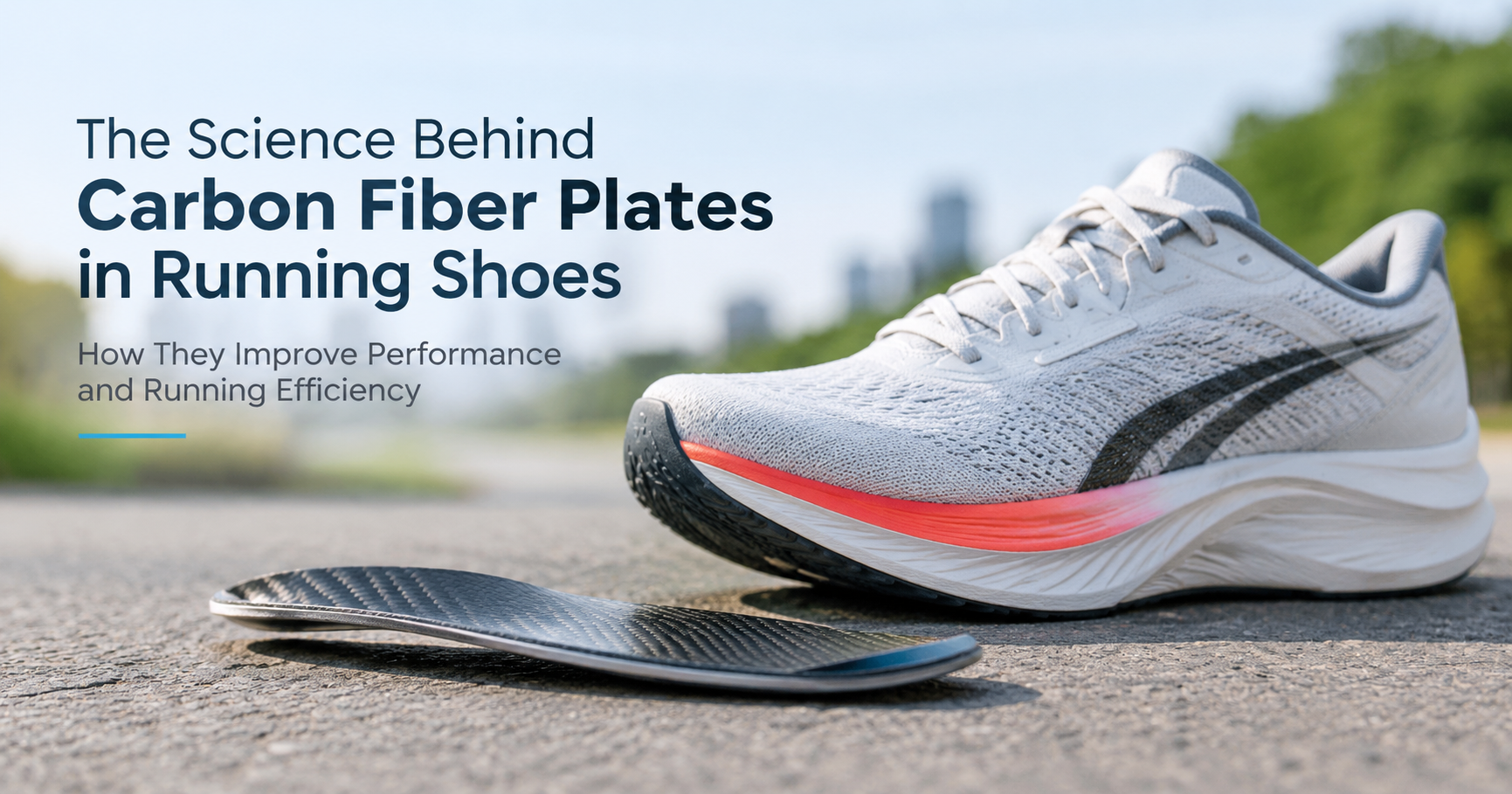

Since 2017, one component has changed distance running more than any other: the carbon fiber plate hidden inside the midsole of “super shoes.” Marathon records have fallen, personal bests have piled up at every level, and runners everywhere are asking the same question: is the plate really the secret, or is it just clever marketing?
The honest answer is more interesting than a simple yes or no. In this guide we break down the science of carbon fiber plates in running shoes: how they work, what the research actually says, who benefits most, the downsides nobody mentions on the product page, and how to choose the right pair for your goals and budget.
Key Takeaways
- Carbon plated super shoes improve running economy by roughly 2% to 4% on average in lab studies, with big differences between individuals.
- The plate is not magic on its own. The soft, high-return PEBA foam and the rocker shape do a large share of the work.
- The plate acts as a stiff lever that reduces energy lost at the toe joint and stabilizes the soft foam stack.
- Benefits tend to be larger at faster paces and vary from runner to runner. Some people see little or no gain.
- Plated shoes cost more, wear out faster, and change how your lower leg is loaded, so introduce them gradually.
What Is a Carbon Fiber Plate in a Running Shoe?
A carbon fiber plate is a thin, stiff, lightweight sheet made of woven carbon fibers bonded with resin. It is embedded between layers of foam in the midsole, roughly between your foot and the ground. Depending on the brand, it may be a full-length plate, a split or forked plate that opens up at the front, or a spoon-shaped plate that curves upward at the toe.
Carbon fiber is used because of its unusual combination of properties: it is very light, extremely stiff in the direction of its fibers, and it springs back after bending. Engineers can tune how stiff or flexible a plate feels by changing the fiber layout, thickness and shape.
A Short History: How Super Shoes Took Over
Carbon plates were not invented for running. Early versions appeared in sprint spikes and in some track and field footwear decades ago. The big turning point came in the mid-2010s, when major brands began combining plates with a new generation of ultra-light foams. Prototype shoes were tested during elite marathon projects, and soon after, a retail model with a curved carbon plate and a thick, bouncy foam hit the market.
In 2018, a widely cited lab study from the University of Colorado and collaborators measured that elite-level runners used about 4% less energy at marathon pace in one of these shoes compared with a traditional racing flat. That finding explained why times were dropping so fast, and it triggered a global race among shoe brands to build their own plated, foam-heavy designs.
In response, the sport’s governing body introduced equipment rules. Today, for road events, a shoe may not exceed a sole thickness of 40 mm and may contain no more than one rigid plate or blade. Shoes must also be commercially available to the public, which is why many elite shoes can be bought by everyday runners.
The Science: How a Carbon Plate Helps You Run

1. Longitudinal Bending Stiffness and the “Lever” Effect
Every time you push off, the joints at the base of your toes (the metatarsophalangeal joints) bend. That bending absorbs energy, and the energy is lost as heat rather than helping you move forward. A stiff plate resists that bending, so less energy leaks out at the forefoot. In theory, this lets the muscles of the foot and ankle do less work for the same speed.
Plate stiffness also changes the effective lever arm of your foot. A stiffer shoe moves the point of force closer to the toe, which can change how the calf and ankle generate power during toe-off. Researchers have found that these effects are real, but small, and they interact with each runner’s own form.
2. Foam: The Real Engine
Here is the part many ads skip: much of the benefit comes from the foam, not the plate. Modern super shoes use a soft foam based on PEBA (polyether block amide), which returns a high share of the energy you put into it. Traditional EVA foam returns noticeably less. Foam that is both soft and resilient lets you compress it with each step and get a large part of that energy back.
The problem is that very soft, tall foam can feel wobbly and unstable. That is where the plate earns its place: it keeps the soft stack from collapsing sideways or folding in the middle, and it helps guide the foot through each stride.

3. Rocker Geometry
Most plated shoes are not flat. The sole curves upward at the toe like the bottom of a rocking chair. This “rocker” helps the foot roll forward after landing and shortens the time spent bending the toes. Combined with a stiff plate, the rocker supports a smooth, quick transition from landing to toe-off.
4. The Combined System: Why a Plate Alone Is Not Enough
Studies that compared super shoes with the plate removed or altered have produced a notable result: cutting out the plate does not erase the benefit. This suggests that the foam and geometry account for a large share of the advantage, and that the plate acts more as a stabilizer and enabler for the whole system rather than a spring that launches you forward.
That is also why a cheap shoe with a plastic or carbon insert but standard foam rarely feels like a true super shoe. The magic happens when the plate, foam and rocker are designed together.

What Does the Research Actually Show?
Several independent studies have measured running economy, which is the amount of oxygen you use at a given speed, in super shoes versus conventional shoes. The overall pattern looks like this:
- Average benefit: Across studies, plated super shoes tend to improve running economy by around 2% to 4% compared with traditional racing shoes.
- Individual variation: Responses vary widely. Some runners improve by 6% or more, while others see almost no change or even a slight decline.
- Speed matters: Benefits are generally measured at moderate to fast paces. Gains at slower paces are less consistent.
- Race results: Analyses of real race data show faster average times for runners wearing plated shoes, across both elite and recreational fields.
It is important to read these numbers correctly. A 4% improvement in running economy does not mean you will finish 4% faster. Real-world race time improvements are smaller, but over a marathon they can still add up to several minutes for many runners.
Who Benefits Most From Carbon Plate Shoes?
- Racers chasing a personal best in the 10K, half marathon or marathon, where small efficiency gains compound over time.
- Runners who spend long periods at steady, fast paces, where the foam and plate have time to work.
- Runners who tire in the last miles, since softer, more efficient shoes can reduce late-race muscle fatigue for some people.
Beginners and runners focused on easy mileage may see less benefit. The extra cost and instability may not be worth it for relaxed runs.
Carbon Isn’t the Only Plate Material
Not all plated shoes use carbon fiber. Brands also use other materials, each with a different feel and price point:
| Plate Material | Feel | Typical Use |
|---|---|---|
| Carbon fiber | Very stiff, snappy, light | Race shoes, premium trainers |
| Nylon / Pebax plate | Moderately stiff, more forgiving | Daily trainers, tempo shoes |
| TPU / plastic plate | Supportive, less spring | Budget plated shoes |
| Fiberglass | Semi-stiff, more flexible | Mid-range plated trainers |
The Downsides: What Nobody Puts on the Box
- Higher price. Race-level carbon shoes commonly cost $200 to $300 or more, while plated trainers are often cheaper but still above standard models.
- Shorter lifespan. Soft PEBA foam can lose its bounce sooner than classic EVA. Many runners reserve them for key workouts and races rather than daily miles.
- Different loading patterns. A stiff plate and a rocker shift stress away from the foot’s small muscles and toward the calf, Achilles tendon and, for some runners, the bones of the forefoot. Some research and clinical reports link sudden heavy use of plated shoes to bone stress injuries in a minority of runners.
- Stability. A very tall, soft stack can feel unsteady on sharp turns, wet roads or uneven surfaces.
- Not equally helpful for everyone. Your form, strength and foot strike influence how much you gain.
If you have a history of stress fractures, Achilles problems or foot pain, it is wise to speak with a physiotherapist or sports doctor before switching to a plated shoe.
How to Choose a Carbon Plated Running Shoe
When you compare models, look beyond the marketing and check these specifications:
- Foam type: PEBA or other premium super foams offer the highest bounce. Compare this before the plate.
- Plate shape: Forked and spoon-shaped plates feel different. Try both if you can.
- Stack height and drop: Higher stacks add cushioning but reduce stability. Check the heel-to-toe drop against what your body is used to.
- Weight: Race shoes often weigh between 6 and 8 oz (170 to 230 g), while plated trainers are heavier.
- Fit and lockdown: A secure fit matters more at speed. Check toe box room and heel hold.
- Outsole durability: Thin rubber saves weight but wears quickly, especially on rough roads.
- Price versus use: Decide if it’s a once-a-year race shoe or a trainer you plan to use weekly.
Shoe Categories at a Glance
| Category | Best For | Typical Price | Durability |
|---|---|---|---|
| Elite racing super shoe | Marathon and half marathon PRs | $220 to $300+ | Shorter |
| Plated tempo / race trainer | Fast workouts and race practice | $160 to $220 | Medium |
| Plated daily trainer | Runners who want extra pop for most runs | $140 to $200 | Medium to long |
| Non-plated daily trainer | Easy miles and recovery | $100 to $160 | Long |
Prices are general ranges and can change by brand, region and season.

How to Transition Safely to Plated Shoes
- Start small. Use them for one short, faster run per week for the first few weeks.
- Build up gradually. Increase time in the shoes slowly rather than jumping straight to a long run.
- Strengthen your lower legs. Calf raises, foot strengthening and Achilles-friendly exercises help prepare tissues for the new loading.
- Rotate shoes. Mixing plated and non-plated pairs spreads the load and extends the life of each shoe.
- Listen to pain. Persistent pain in the forefoot, shin or Achilles is a sign to back off and get checked.
- Test before race day. Run at least a couple of key workouts in the exact shoe you plan to race in.
How Long Do Carbon Plated Shoes Last?
Lifespan depends on foam type, your weight, running surface and pace. As a general guide, many runners get roughly 200 to 300 miles (320 to 480 km) from plated trainers, while some ultra-soft race shoes may feel best within a shorter window. Signs that the shoe is losing its edge include flattened foam, visible creasing, uneven outsole wear and a noticeable drop in bounce. Store them away from heat, and avoid leaving them in a hot car, as high temperatures can damage soft foams.
Are Carbon Plate Shoes “Cheating”?
Governing bodies have decided that plated shoes are legal as long as they meet specific limits on sole thickness and plate count, and are available to the public. Most athletes and coaches now treat super shoes as part of the sport’s equipment evolution, similar to developments in swimsuits, bikes and track surfaces. For recreational runners, the rules simply define which shoes are allowed in sanctioned races.
Frequently Asked Questions
Do carbon plate shoes really make you faster?
For many runners, yes. Research shows an average improvement in running economy of roughly 2% to 4%, which can translate into faster race times. However, results vary from person to person, and the foam and shoe geometry contribute as much as the plate itself.
Can beginners wear carbon plated running shoes?
Beginners can wear them, but it usually isn’t necessary. New runners benefit more from comfortable, stable shoes that build foot and leg strength gradually. If you do try a plated shoe, use it sparingly at first.
Are carbon plate shoes bad for your feet?
They are not harmful for most people when introduced sensibly, but the stiff plate changes how load is distributed. A sudden switch to heavy daily use may raise injury risk for some runners. Gradual adaptation and good strength training help reduce this risk.
Can you wear carbon plate shoes every day?
You can, but it is not ideal for most people. The shoes wear out faster, cost more and may overload the same tissues repeatedly. Most runners do best with a rotation of regular trainers and one plated pair for key sessions and races.
Is the carbon plate or the foam more important?
The foam is usually the bigger driver of energy return, while the plate stabilizes the soft foam and shapes the stride. The best performing shoes combine both with a well-designed rocker.
Do carbon plate shoes work for slower runners?
They can, but the benefits are generally smaller and less consistent at slower paces. Many slower runners still enjoy the comfort and cushioning, but it may not justify the premium price.
How much do carbon plated running shoes cost?
Elite race models usually sit around $220 to $300 or higher, while plated daily trainers and tempo shoes often fall between $140 and $220. Prices change over time, so compare across brands and seasons.
Are carbon plate shoes allowed in races?
Yes, in most races, as long as they comply with sole thickness and plate rules set by the sport’s governing body. Always check the rules for your specific event.
Final Verdict
The science of carbon fiber plates in running shoes shows that they work, but not in the way many people assume. The plate is one part of a carefully tuned system that includes bouncy PEBA foam, a rocker shape and a stable platform. Together, they can make running a little more efficient for many people, especially at race pace.
If you are chasing a personal best and your budget allows, a carbon plated race shoe is worth considering, provided you introduce it carefully and train in it before race day. If your running is mostly easy miles, a durable, well-cushioned trainer is the smarter investment. Choose the shoe that fits your goals, your body and your wallet, and let the plate do what it does best: help you run your best on the days that matter most.