

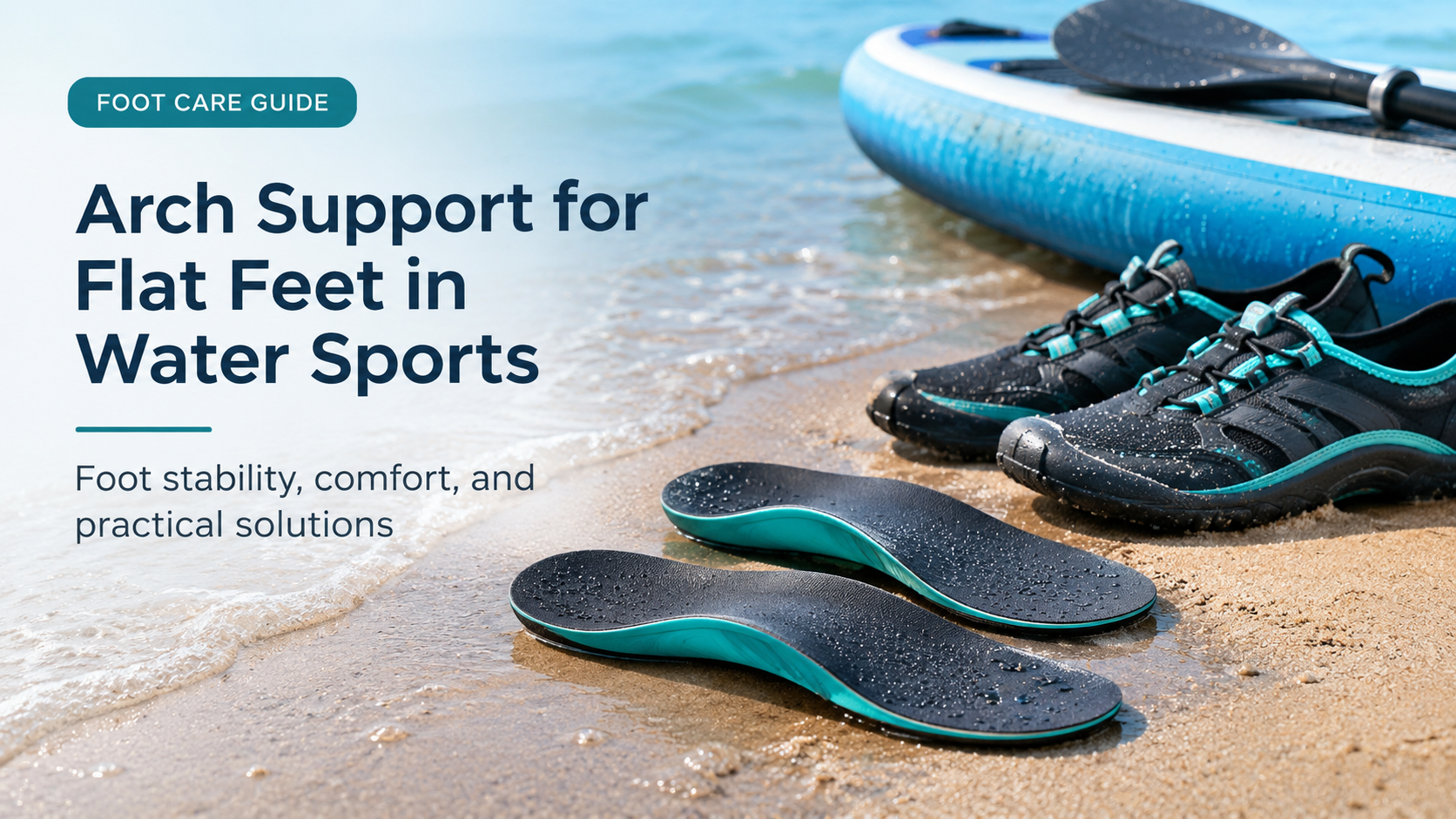

Water sports are some of the kindest activities for the body. The water supports your weight, softens impact and lets you move in ways that feel hard on dry land. But if you have flat feet, the story is not always so simple. Wet decks, slippery boards, rubber fins, paddle footwear and long hours on your feet at the beach can all put extra strain on a foot that has little natural arch to absorb stress.
That is where arch support comes in. A well-chosen arch support can improve comfort, reduce fatigue in the arches and calves, and help your feet stay better aligned while you swim, paddle, surf, wakeboard or join a water aerobics class. This guide explains how arch support works for flat feet in water sports, which materials hold up in wet conditions, how to choose and fit the right pair, and how to keep them clean and long-lasting.
Table of Contents
- What are flat feet and why do they matter in water sports?
- Do you really need arch support in the water?
- How different water sports load a flat foot
- Check your arch type at home
- Best materials for wet-use arch support
- How to choose the right arch support
- Step-by-step: fitting arch support for water use
- Break-in plan
- Care, cleaning and storage
- Strengthening and stretching for flat feet
- Common mistakes to avoid
- When to see a professional
- Frequently asked questions
What Are Flat Feet and Why Do They Matter in Water Sports?
Flat feet, also called pes planus or fallen arches, describe a foot whose inner arch is low or touches the ground when you stand. Some people are born with flat feet, while others develop them over time because of age, weight changes, pregnancy, injury or weakened tendons that normally hold the arch in place.
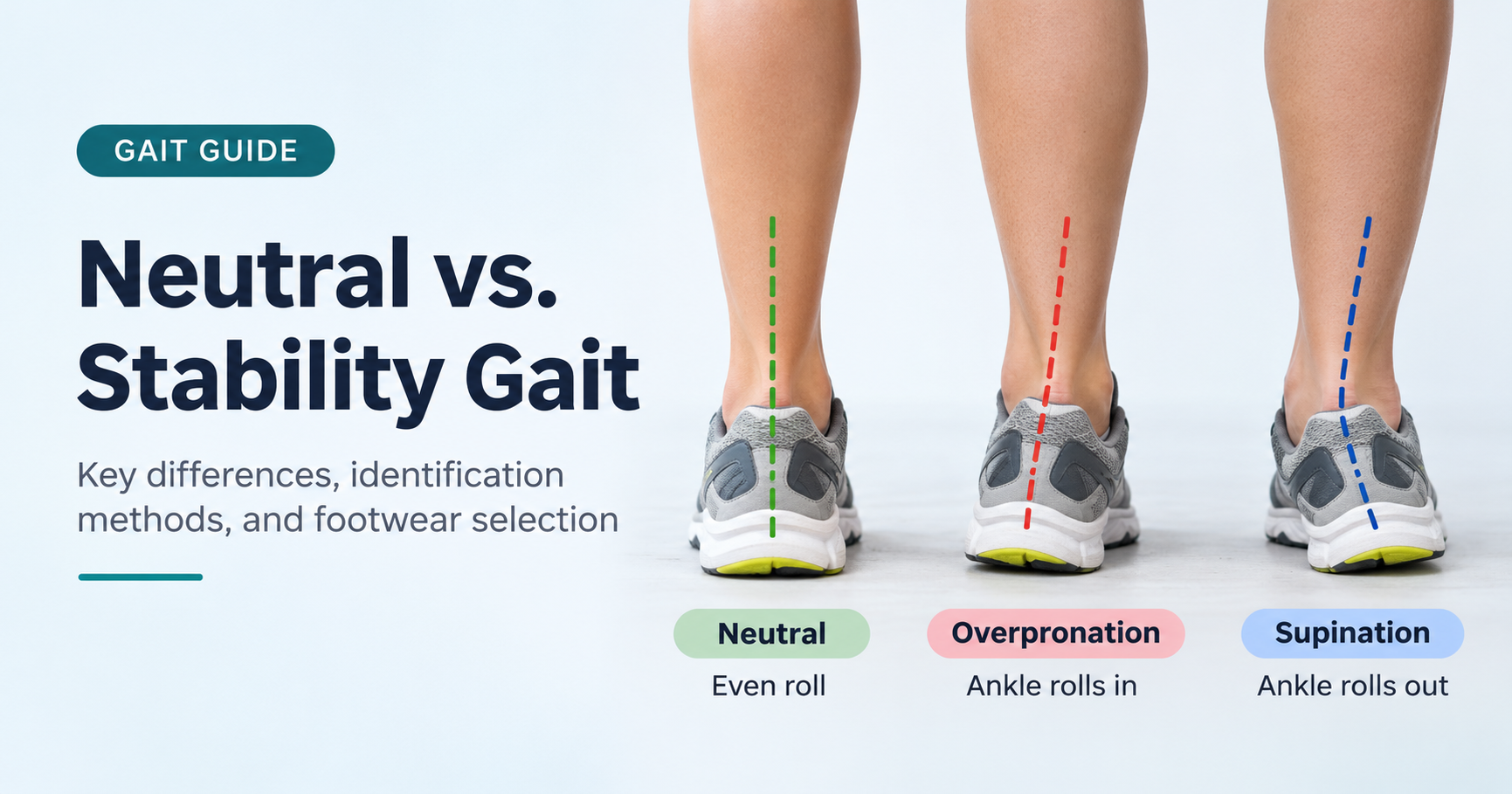
Many people with flat feet never have pain. Others notice a tired, aching feeling along the inner arch, heel soreness, sore calves or shins, or ankles that roll inward during movement. This inward rolling motion is called overpronation. It can make the whole leg work harder than it should, especially during long activity sessions.
Water sports might seem safe from these problems, but they come with their own challenges. Here are a few reasons flat feet can still cause discomfort around water:
- Standing time: Lifeguarding, coaching, boat work, beach days and long hours on a pool deck all keep you on your feet.
- Slippery surfaces: Wet floors make the foot grip harder and tire the small muscles that support the arch.
- Fins and stiff footwear: Swim fins, dive boots and wakeboard boots can squeeze or twist a foot that lacks a stable arch.
- Uneven ground: Rocky shores, sand, boat ramps and docks challenge balance and push the foot to roll inward.
- Cold water: Cold can stiffen muscles and tendons, which may make foot cramps and arch fatigue more likely.
Do You Really Need Arch Support in the Water?
The honest answer is that it depends on the activity. Inside the water, your feet carry far less load. When you swim laps or float on a board, your arch is not bearing your body weight the way it does on land. So a rigid arch support is not needed for every moment of every water activity.
Arch support becomes useful in three situations:
- When your weight is on your feet. Standing on a paddleboard, walking in waist-deep water, doing aqua aerobics on the pool floor or wading along a shore all place load on the arch.
- When you wear footwear. Water shoes, neoprene boots, kayak shoes, sandals and wetsuit boots can all hold an insert that supports the arch.
- Before and after the water. Walking to the beach, carrying gear, standing on a boat deck and walking back to the car are where many people with flat feet feel the most strain.
For purely barefoot activities, such as swimming without fins or surfing on wax, you cannot wear an insert. In those cases, strengthening exercises, supportive footwear on land and sensible rest days become your main tools.
How Different Water Sports Load a Flat Foot
Every water sport asks something different from your feet. Understanding that helps you decide where arch support makes sense.
Swimming and Swim Training
Pool swimming is gentle on flat feet. Problems usually come from pool-deck standing, wet changing rooms and swim fins. Fins pull the foot into a pointed position and can cause cramping in the arch or the sole of the foot. Fins that fit well and are not too tight help, and some swimmers use thin, low-profile supports inside closed-heel fins if the fit allows.
Stand-Up Paddleboarding (SUP)
On a board, you stand for long periods on a slightly unstable surface. The small muscles of the foot work constantly to keep you balanced. Flat feet can fatigue quickly here. Many paddlers go barefoot, but a pair of grippy water shoes with a built-in or removable arch support is a good option for longer sessions or colder weather.
Kayaking and Canoeing
Your feet rest against foot braces for hours. Pressure can build along the arch and the ball of the foot. A thin, firm and low-profile arch support inside a water shoe can spread that pressure out. Make sure it does not make the shoe too tight, because restricted circulation in cold water is uncomfortable and can be unsafe.
Surfing, Bodyboarding and Skimboarding
These are usually barefoot. Flat-footed surfers often find that stance, pop-up and landing put stress on the arches. The best approach is to support the feet before and after surfing. Wear supportive footwear on the beach, do foot-strengthening exercises and consider wetsuit boots in cold water.
Wakeboarding and Water Skiing
Bindings or boots hold the foot firmly. If the boot liner is thin or has no arch, a flat foot can sag inside it. A custom or heat-moldable insole designed for wet conditions may improve comfort, but always check that it fits inside the boot without raising your foot out of the correct position.
Snorkeling and Scuba Diving
Fins and neoprene boots are common here. Divers with flat feet may experience foot cramps and arch fatigue, especially in cold water. A thin arch support in a dive boot may help, as long as the boot and fin still fit properly. Fit matters more than anything with dive gear, so test it in shallow water before a full dive.
Water Aerobics, Aqua Jogging and Water Walking
These classes are popular with people who want low-impact exercise. Many are done in water shoes or on a pool floor that can be hard. Arch support inside water shoes makes these sessions more comfortable, particularly if you have heel or arch pain on land.
Beach Volleyball, Beach Walking and Rocky-Shore Exploring
Soft sand makes flat feet work harder because the foot sinks and the arch has to stabilize each step. Sandals or shoes with a molded arch can reduce fatigue over long beach days.
Check Your Arch Type at Home
Before you buy any support, it helps to know what kind of arch you have. A simple at-home wet footprint test gives you a good idea. Wet the sole of your foot, step onto a piece of dry paper or a dark towel, and look at the print. A full, wide print with little or no curve on the inner edge suggests a flat or low arch. A clear curve suggests a normal arch, and a thin band or gap suggests a high arch.

Keep in mind that this test is only a rough guide. It cannot tell you whether your flat feet are flexible or rigid, and it does not show how your foot moves during activity. A podiatrist, physical therapist or qualified foot specialist can provide a more thorough assessment if you have pain or are unsure.
Flexible vs. Rigid Flat Feet
With flexible flat feet, the arch appears when you sit or stand on your toes but disappears when you stand flat. This is the most common type, and many people respond well to supportive inserts and strengthening exercises. With rigid flat feet, the arch is absent in every position. This type is less common and may need professional assessment, because rigid support is not always the right answer.
Best Materials for Wet-Use Arch Support
Material is the single most important choice for water sports. Many standard insoles are built for dry shoes, and they can absorb water, hold bacteria, lose their shape and develop odor quickly. For wet use, you want materials that resist water, dry fast and handle salt or chlorine.

Closed-Cell EVA Foam
Ethylene-vinyl acetate (EVA) foam with a closed-cell structure does not soak up water like a sponge. It is lightweight, supportive and dries quickly. Most water-friendly arch supports use some form of EVA for their core.
Polyurethane (PU) and Gel Foam
PU foam offers good cushioning and resilience. Dense PU resists absorbing water, though quality varies. Gel inserts can help absorb shock at the heel, but check that they are made for wet use and are not likely to peel.
Silicone and TPU Shells
Thermoplastic polyurethane (TPU) and silicone components provide firm, durable arch shape and do not absorb water. They are often used in the arch shell or heel cup of high-quality inserts.
Neoprene and Quick-Dry Top Covers
A neoprene or synthetic mesh top layer can reduce slipping and speed up drying. Look for perforated or drainage-friendly designs so water does not become trapped under your foot.
Materials to Avoid in Water Sports
Open-cell memory foam, thick felt, cork and leather top covers soak up water, take a long time to dry and can break down or grow odor-causing bacteria. They are fine for everyday dry shoes but are poor choices for wet footwear.
How to Choose the Right Arch Support
Once you know the materials to look for, use the following checklist to narrow your choices.
1. Match the Support Height to Your Arch and Comfort
Flat feet usually do well with a medium to firm arch contour. A very high or aggressive arch can feel uncomfortable or even painful, especially if your arch is flexible and you are not used to support. When in doubt, start with a moderate profile and increase gradually if needed.
2. Choose the Right Firmness
Firmer supports control motion more, while softer supports cushion more. For water sports, many people prefer a semi-rigid design: firm enough to hold the arch, but with a little give so the foot still moves naturally.
3. Look for a Deep Heel Cup
A good heel cup holds your heel in place and helps keep the foot aligned. It also stops the insert from sliding around in a wet shoe, which is a common issue with water footwear.
4. Check Thickness and Shoe Volume
Water shoes, neoprene boots and fins have limited room. A thick insert can crowd the toes, press on the top of the foot or change how your fin fits. Choose a low-profile model when space is tight, and always try the insert with the exact footwear and socks you plan to use.
5. Prioritize Drainage and Quick Drying
Perforations, channels or a ventilated design let water flow out. Without drainage, water can sit under the foot and make it feel soggy and heavy.
6. Consider Grip and Stability
A slightly textured or non-slip underside keeps the insert from shifting. A slippery insert inside a wet shoe can slide forward and cause blisters or loss of balance.
7. Look for Antimicrobial or Odor-Control Features
Wet shoes are a good environment for bacteria and fungi. Antimicrobial treatments can reduce odor, although they are not a replacement for proper drying and cleaning.
8. Choose the Right Length
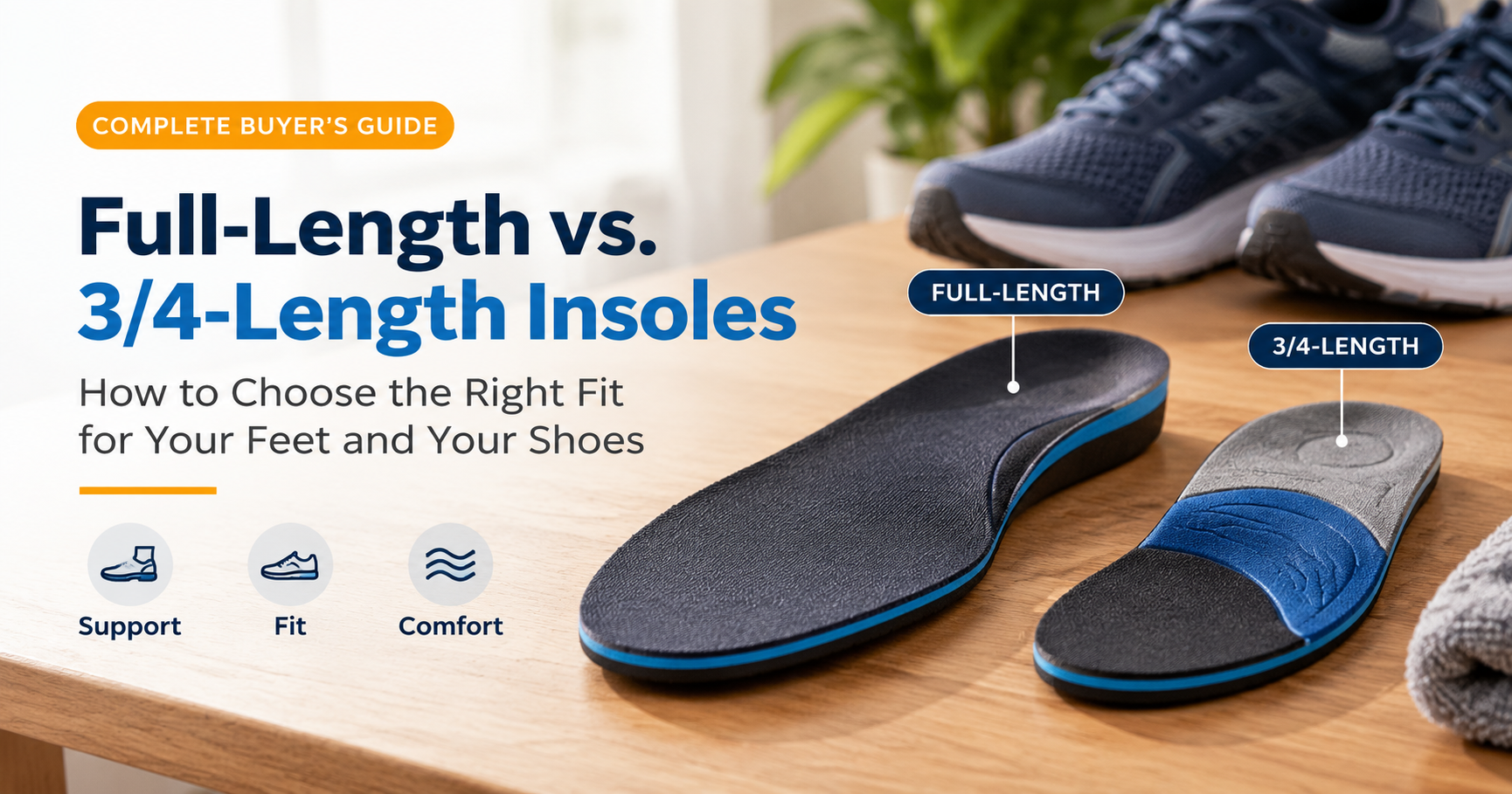
Full-length inserts replace the shoe’s own insole and usually offer the most stable support. Three-quarter-length inserts are smaller and good for tight footwear. Make sure the front edge of the insert does not curl up or bunch under your toes.
9. Decide Between Ready-Made and Custom
Ready-made inserts are affordable and suitable for many people with mild to moderate flat feet. Custom orthotics are made from a mold or scan of your foot and are often recommended when you have significant pain, rigid flat feet or other foot conditions. If you choose custom, tell the provider that the inserts will be used in wet conditions so they can recommend suitable materials.
Step-by-Step: Fitting Arch Support for Water Use
- Remove the original insole. If the shoe has a removable footbed, take it out so the new insert sits flat on the base. Stacking two insoles often makes a shoe too tight.
- Compare sizes. Place the old insole on top of the new support and trim the new one to match, if the manufacturer says trimming is allowed. Trim a little at a time, starting at the toe end.
- Insert and seat the heel. Slide the insert in so the heel cup sits snugly against the back of the shoe. No gaps, no curls and no wrinkles.
- Try it on with your usual socks. Wear neoprene socks or the thickness you normally use for the activity.
- Stand and check alignment. Your heel should feel centered, the arch support should sit under the natural arch area and your toes should have room to spread.
- Walk and balance. Walk around, stand on one foot briefly and do a few gentle squats. The insert should not slide or feel like it is pushing too hard in one spot.
- Test in shallow water first. Before a long session, wade in shallow water to see how the insert behaves when wet. Some materials change shape or slip once soaked.
Break-In Plan: Let Your Feet Adjust
Even a perfectly chosen arch support can feel strange at first. Your foot muscles and tendons are used to a certain position, and giving them new support changes how they work. Going straight into a long session can lead to soreness, blisters or arch cramps. A gradual plan is safer and more comfortable.

Mild awareness or a slight stretch feeling in the arch during the first few days is common. Sharp pain, numbness, tingling, pinching or blisters are not normal. If any of these occur, stop using the insert, check the fit and ask a professional for advice if the problem continues.
Care, Cleaning and Storage
Water sports are tough on gear. Salt, chlorine, sand, sunscreen and bacteria can break down materials and cause odor. A simple routine will extend the life of your arch supports and keep your feet healthier.
- Rinse after every session. Use fresh water to remove salt, chlorine and sand. Salt crystals can irritate the skin and damage materials over time.
- Remove inserts from shoes. Take them out and let both the shoe and insert dry separately. Leaving them stacked traps moisture.
- Dry in shade with airflow. Direct sun, hot cars, radiators and dryers can warp foam and weaken adhesives. Air dry in a shaded, ventilated place.
- Wash gently. Use mild soap and lukewarm water with a soft brush. Avoid harsh chemicals and strong bleach unless the maker says it is safe.
- Rotate pairs if possible. Having a second set lets one pair dry fully while you use the other.
- Store flat. Keep them in a dry place away from heat. Do not fold or crush them in a bag.
- Replace when worn. If the arch has flattened, the surface is cracking, the top cover is peeling or the support no longer feels the same, it is time for a new pair. Many wet-use inserts last several months to a year depending on use.
Strengthening and Stretching for Flat Feet
Arch support can help, but it works best alongside foot and leg strengthening. The muscles in your feet, ankles and calves all help hold up the arch. Here are some simple exercises that many people with flexible flat feet use. Stop if any exercise causes pain.
- Short foot exercise: While seated or standing, gently draw the ball of the foot toward the heel without curling your toes, as if trying to shorten the foot. Hold for a few seconds and repeat.
- Toe spreading: Spread your toes wide and hold for five seconds. This wakes up the small muscles of the foot.
- Towel scrunches: Place a towel on the floor and use your toes to scrunch it toward you.
- Marble or small-object pickups: Pick up small objects with your toes and place them in a cup.
- Heel raises: Rise slowly onto the balls of your feet, then lower with control. This builds calf and ankle strength.
- Calf stretches: Tight calves can increase pressure on a flat arch. Stretch gently against a wall, holding each stretch for around 30 seconds.
- Single-leg balance: Balance on one leg for 30 seconds. For extra challenge, do it on a folded towel or a cushion to simulate the instability of a board.
Common Mistakes to Avoid
- Using dry-shoe insoles in wet gear. Standard sponge-like insoles can stay wet for hours and develop odor.
- Choosing too much arch height. More is not always better. An overly high arch can cause pain and make you avoid wearing it.
- Skipping the break-in period. Going directly to a full session is a common cause of soreness and blisters.
- Stacking insoles. Two insoles in a shoe may squeeze the foot and reduce balance.
- Ignoring fit with fins. Never alter dive or swim fins in a way that affects how they sit or release without checking compatibility with the gear maker’s guidance.
- Not drying inserts. Constant dampness breeds bacteria and fungus.
- Treating arch support as a cure. Supports can reduce symptoms, but they do not replace strength, flexibility and good footwear choices.
- Ignoring pain. Persistent or sharp pain is a sign to get a professional evaluation rather than push through.
When to See a Professional
Many people can manage mild flat-foot discomfort with good footwear, ready-made supports and exercises. However, you should consider seeing a podiatrist, orthopedic specialist or physical therapist if you notice any of the following:
- Pain in the arch, heel or inner ankle that lasts more than a couple of weeks
- Swelling along the inside of the ankle or foot
- A foot that has recently flattened or changed shape
- Flat feet that are rigid and stiff
- Pain that is worse at night or does not improve with rest
- Numbness, tingling or color changes in the foot
- A history of diabetes, circulation problems or reduced foot sensation, since foot checks and well-fitted footwear are especially important in these cases
- Children or teens with painful flat feet
A professional can examine your gait, test the flexibility of your arch and recommend whether over-the-counter or custom supports are best for your water activities.
Frequently Asked Questions
Can I wear arch supports in the pool or ocean?
Yes, as long as they are made from water-resistant materials and fit inside water-friendly footwear. Rinse them after use and dry them thoroughly. Standard dry-shoe insoles are not ideal for wet use.
Do flat feet make swimming harder?
Not usually. Some swimmers with flexible flat feet may even have good ankle flexibility for kicking. Discomfort tends to come from fins, pool-deck standing and the walk to and from the water.
Can I use arch support inside swim fins?
Sometimes, but only if the fin has enough room and the insert does not change how the foot sits. Thin, low-profile supports work best in closed-heel fins. Do not use anything that makes the fit tight or affects safe release in open-heel or strap designs.
Will arch support fix my flat feet?
Arch support does not permanently rebuild the arch in adults. It supports the foot and can reduce discomfort while you are wearing it. Strengthening exercises, suitable footwear and activity changes work together with support to improve comfort and function.
How long do water-friendly arch supports last?
This depends on how often you use them and how well you care for them. Heavy use with regular saltwater or chlorine exposure may shorten their life. Check for flattening, cracking, peeling and odor as signs that it is time to replace them.
Are custom orthotics better than ready-made supports?
Custom orthotics can be a better fit for people with significant pain, rigid flat feet or other foot problems. Ready-made options work well for many people with mild to moderate symptoms. A foot specialist can help you decide.
Should I use arch support if I surf barefoot?
You cannot place an insert on a surfboard, but you can support your feet before and after your session with supportive footwear and do foot-strengthening exercises regularly. In cold water, wetsuit boots can add warmth and a little structure.
Can children with flat feet use arch support for water sports?
Many children have flexible flat feet that are a normal part of development. If a child has pain, tires easily or limps, have a pediatric foot specialist assess them before using any insert.
Final Thoughts
Flat feet do not have to keep you out of the water. With the right arch support, a sensible break-in plan and regular foot care, you can stay comfortable whether you are paddling at sunrise, teaching an aqua class or exploring the shoreline with friends.
Choose water-friendly materials such as closed-cell EVA, TPU and quick-drying covers. Match the support to your arch and your footwear. Rinse, dry and rotate your gear. Build strength in your feet and calves. And pay attention to your body, because lasting pain is a message worth listening to.
A little preparation goes a long way. Once your feet are properly supported, you can spend less time thinking about aching arches and more time enjoying the water.
This article is for general information only and is not a substitute for professional medical advice. If you have foot pain or a medical condition, speak with a qualified healthcare provider.