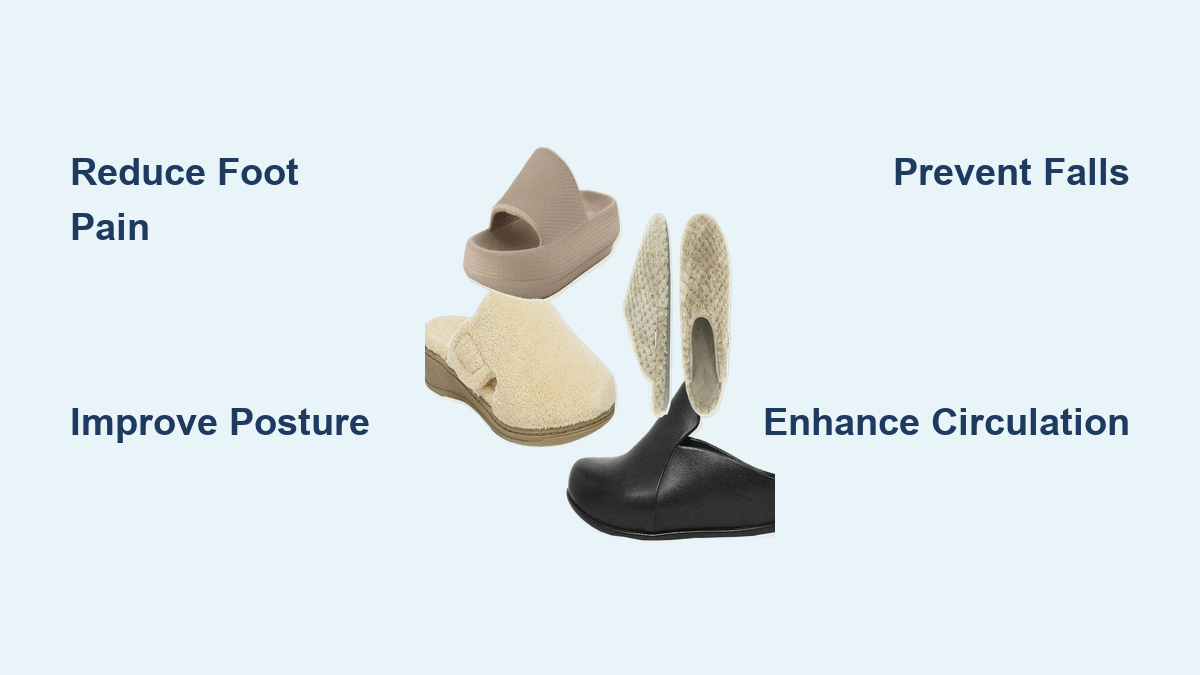
Walking across cold tile or hardwood floors in socks—or worse, barefoot—might seem harmless, but it’s quietly taking a toll on your feet and body. Every step adds up, and without proper support, your arches collapse, your posture shifts, and pain begins to creep in. The simple fix? Wearing slippers with arch support at home. These aren’t just cozy upgrades—they’re biomechanical allies that protect your feet, align your body, and prevent long-term damage.
Podiatrists and ergonomic experts agree: your feet need consistent support, not just during outdoor activities but throughout the day—even indoors. From reducing plantar fasciitis flare-ups to improving balance and circulation, supportive slippers deliver real, measurable benefits. Whether you’re standing while cooking, working from home, or recovering from an injury, the right pair of arch-support slippers can transform everyday movement into proactive care. Let’s explore how.
Reduces Foot Pain and Prevents Chronic Conditions
Hard indoor floors offer zero shock absorption, turning every step into a micro-trauma for your feet. Without arch support, this repetitive stress leads to inflammation, strain, and long-term damage—especially in the plantar fascia, the thick band running from heel to toes.
Stops Plantar Fasciitis Pain at Its Source
Plantar fasciitis is one of the most common causes of heel pain, affecting millions worldwide. It occurs when the plantar fascia becomes inflamed due to overstretching—often because the arch collapses with each step. This is especially painful first thing in the morning when the tissue has tightened overnight.
Arch support slippers combat this by:
– Maintaining the foot’s natural arch shape, reducing strain on the plantar fascia
– Cushioning the heel with shock-absorbing materials like EVA foam or memory foam
– Preventing overextension during early-morning walking
Many users report noticeable pain reduction within days of switching to supportive slippers, particularly when worn immediately upon getting out of bed.
Prevents Heel Spurs and Ball-of-Foot Pain
Left untreated, plantar fasciitis can lead to heel spurs—calcium deposits that form on the underside of the heel bone and cause chronic discomfort. Similarly, metatarsalgia, or pain in the ball of the foot, develops from uneven pressure distribution, common in both flat-footed and high-arched individuals.
Supportive slippers help by:
– Distributing weight evenly across the foot
– Reducing pressure on high-impact zones like the heel and forefoot
– Minimizing micro-tears in connective tissue caused by repetitive strain
Pro Tip: If you feel sharp heel pain or burning in the ball of your foot, don’t wait. Early use of arch-support slippers can stop minor discomfort from becoming a chronic condition.
Improves Posture and Full-Body Alignment

Your feet are the foundation of your posture. When they’re unstable or misaligned, your entire body compensates—often without you realizing it.
Corrects the Kinetic Chain from the Ground Up
Poor foot alignment triggers a domino effect:
– Ankles tilt inward (overpronation) or outward (supination)
– Knees rotate abnormally
– Hips shift off-center
– Lower back tightens
– Shoulders hunch forward
This misalignment leads to joint pain, muscle fatigue, and even chronic back or neck issues. Arch support slippers stabilize the foot at the base, correcting alignment throughout the kinetic chain.
Podiatrist Insight: Many patients with unexplained lower back pain see significant improvement after switching to supportive house shoes—because their feet were the root cause all along.
Supports a Natural, Efficient Gait
A balanced foot strike is essential for smooth, low-impact walking. Without arch support, your gait becomes unstable, forcing muscles to work harder with every step. Supportive slippers promote a neutral stride, reducing wear and tear on joints and improving walking efficiency.
Reduces Joint Stress and Prevents Fatigue
Walking on hard floors sends shockwaves up your legs—each step generating 1.5 to 2 times your body weight in force. Over time, this cumulative impact stresses knees, hips, and the spine.
Absorbs Impact with Smart Cushioning
High-quality arch support slippers feature:
– EVA or memory foam midsoles that compress on impact
– Durable, shock-dissipating outsoles
– Contoured footbeds that cradle the arch and heel
Together, these features absorb 30–50% of impact, protecting joints during routine indoor movement.
Ideal For: Remote workers, caregivers, parents, or anyone who spends long hours on hard floors.
Prevents Muscle Overwork and Soreness
Unstable feet force calf, shin, and thigh muscles to constantly adjust for balance. Over time, this leads to chronic fatigue and soreness. Supportive slippers reduce micro-corrections, allowing muscles to relax and recover—even during light activity.
Enhances Balance and Prevents Falls
Balance starts in the feet. As we age or recover from injury, poor foot support increases fall risk—especially on slick tile or hardwood.
Boosts Stability for Older Adults
Seniors naturally lose fat padding under the heel and develop stiffer joints, reducing shock absorption and sensitivity. Supportive slippers improve safety by:
– Featuring non-slip rubber outsoles with deep treads
– Including heel counters to lock the foot in place
– Offering wider bases for better balance
CDC Alert: Falls are the leading cause of injury in adults over 65. Wearing grippy, supportive slippers indoors can significantly reduce this risk.
Aids Recovery and Neuropathy
People with nerve damage (neuropathy) or recovering from stroke may have reduced sensation or coordination. Supportive slippers improve safety by:
– Preventing foot slippage
– Enhancing ground feedback
– Reducing tripping hazards
Study Finding: Stroke survivors wearing supportive indoor shoes showed improved mobility and fewer balance issues.
Promotes Circulation and Reduces Swelling
Poor foot position can restrict blood flow, especially in people who sit or stand for long periods.
Encourages Healthy Blood Flow
Arch support slippers keep the foot in a neutral, aligned position, which:
– Opens blood vessels in the legs
– Supports venous return (blood moving back to the heart)
– Reduces pooling in the ankles
This is especially helpful for:
– Pregnant women
– People with varicose veins or edema
– Those with sedentary jobs
Retains Warmth for Better Circulation
Cold feet constrict blood vessels. Slippers made with wool, sheepskin, or insulated linings maintain warmth, promoting steady circulation—critical for diabetics and those with Raynaud’s.
Bonus: Warm, supported feet fall asleep faster and stay comfortable longer.
Therapeutic Relief for Chronic Foot Conditions

Supportive slippers aren’t just preventive—they’re therapeutic tools for managing long-term issues.
Manages Common Foot Problems
| Condition | How Arch Support Helps |
|---|---|
| Plantar Fasciitis | Reduces tension on the heel band with arch lift and cushioning |
| Flat Feet | Corrects overpronation with firm medial support |
| High Arches | Fills the void under the arch to prevent supination |
| Bunions | Wide toe boxes reduce pressure and prevent worsening |
| Diabetic Feet | Seamless interiors prevent ulcers; soft linings reduce irritation |
Critical Feature: Look for slippers labeled “diabetic-safe” with non-binding uppers and antimicrobial lining.
Increases Comfort Without Sacrificing Style
Gone are the days when supportive meant bulky or unattractive. Today’s arch support slippers blend medical function with modern design.
Stylish Options for Every Lifestyle
Available in:
– Moccasin styles with leather uppers
– Loafers that look like casual shoes
– Slip-ons with memory foam
– Adjustable straps for a secure fit
Brands like Vionic and Orthofeet prove you don’t have to choose between comfort and style.
All-Day Wearability
Made from breathable materials like cotton, wool, and premium leather, these slippers:
– Resist odor
– Regulate temperature
– Stay comfortable for hours
User Feedback: Many say they forget they’re wearing them—until they take them off and feel the difference.
Prevents Slips, Trips, and Indoor Hazards
Bare feet and socks are major slip risks—especially in kitchens and bathrooms.
Non-Slip Outsoles That Grip Hard Surfaces
Look for:
– Rubber soles with multidirectional tread
– Non-marking bottoms that won’t scratch floors
– Textured patterns tested on wet surfaces
Safety Stat: Walking in socks on hardwood increases fall risk by up to 11 times compared to grippy slippers.
Improves Hygiene and Home Cleanliness
Street shoes carry over 421,000 bacteria into the home. Dedicated indoor slippers:
– Keep contaminants off your feet
– Reduce tracking germs to beds and couches
– Create a cleaner, healthier living space
Supports Recovery After Injury or Surgery
After foot surgery, stress fractures, or tendonitis, your feet need protection—even at home.
Protects During Healing
Supportive slippers provide:
– Stable platforms to limit motion
– Soft cushioning for sensitive areas
– Gradual weight-bearing support
They’re often recommended by physical therapists and orthopedic surgeons.
Clinical Advice: Wear supportive slippers as soon as you’re cleared to walk post-surgery to avoid re-injury.
Ideal for Post-Work Recovery
Even if you’re not injured, switching to supportive slippers after a long day on your feet helps:
– Reduce swelling
– Soothe tired arches
– Speed muscle recovery
Survey Data: A 2024 SELF magazine poll found that 78% of respondents felt less stressed and more relaxed after changing into supportive slippers post-work.
Who Needs Arch Support Slippers?
While everyone benefits, certain groups gain the most:
High-Risk Groups
- People with foot pain (heel, arch, ball-of-foot)
- Flat feet or high arches
- Diabetics or neuropathy patients
- Pregnant women (due to swelling and weight gain)
- Older adults (fall prevention, joint support)
- Remote workers (long hours on hard floors)
- Post-surgical recovery patients
Even if you feel fine now, wearing supportive slippers is a preventive measure—like brushing your teeth before cavities start.
How to Choose the Right Pair

Not all “supportive” slippers are created equal. Use this checklist to pick the best:
Key Features to Look For
| Feature | Why It Matters |
|---|---|
| Contoured footbed | Matches your arch shape; prevents collapse |
| Firm, structured sole | Doesn’t fold in half—provides real support |
| Cushioned midsole | Absorbs shock from hard floors |
| Non-slip outsole | Prevents falls on tile and wood |
| Secure fit | Adjustable straps or closed back prevent slipping |
| Breathable materials | Reduces sweat and odor |
| Removable insole | Lets you insert custom orthotics |
| Slight heel lift (5–10mm) | Reduces strain on Achilles and plantar fascia |
| Wide toe box | Prevents crowding; ideal for bunions |
| Insulated lining | Keeps feet warm, improves circulation |
Trusted Technologies
- Vionic’s Vio Motion™: Podiatrist-approved arch support with deep heel cup
- Orthofeet: Medical-grade insoles, seamless interiors, extra depth
Pro Tip: Try them on late in the day when feet are slightly swollen for the best fit.
FAQs: Your Top Questions Answered
Can I wear arch support slippers outside?
Some models are durable enough for short outdoor trips (porch, mailbox), but they’re designed for indoor use. Outdoor wear wears down soles faster and introduces dirt and bacteria.
How often should I replace them?
Replace every 2–3 years with daily use, or sooner if:
– The arch feels flat
– The sole is cracked or smooth
– The insole won’t spring back
– The heel counter wobbles
Rule of Thumb: After 300–500 miles of indoor walking, support degrades.
Can I use my orthotics with them?
Yes—if the slipper has a removable insole and extra depth (¾” or more). Many supportive models are orthotic-friendly.
Are they worth the cost?
Absolutely. At prices comparable to regular slippers, they offer:
– Pain prevention
– Fall reduction
– Long-term joint protection
– Faster recovery
Bottom Line: A $50 pair could save hundreds in medical bills and discomfort.
Final Note: Your feet work hard all day—don’t let them suffer at home. Wearing slippers with arch support isn’t a luxury; it’s a smart, science-backed way to protect your body from the ground up. Whether you’re managing pain, preventing injury, or simply want to feel better on your feet, the right slippers make all the difference. Support starts at home—step into it.