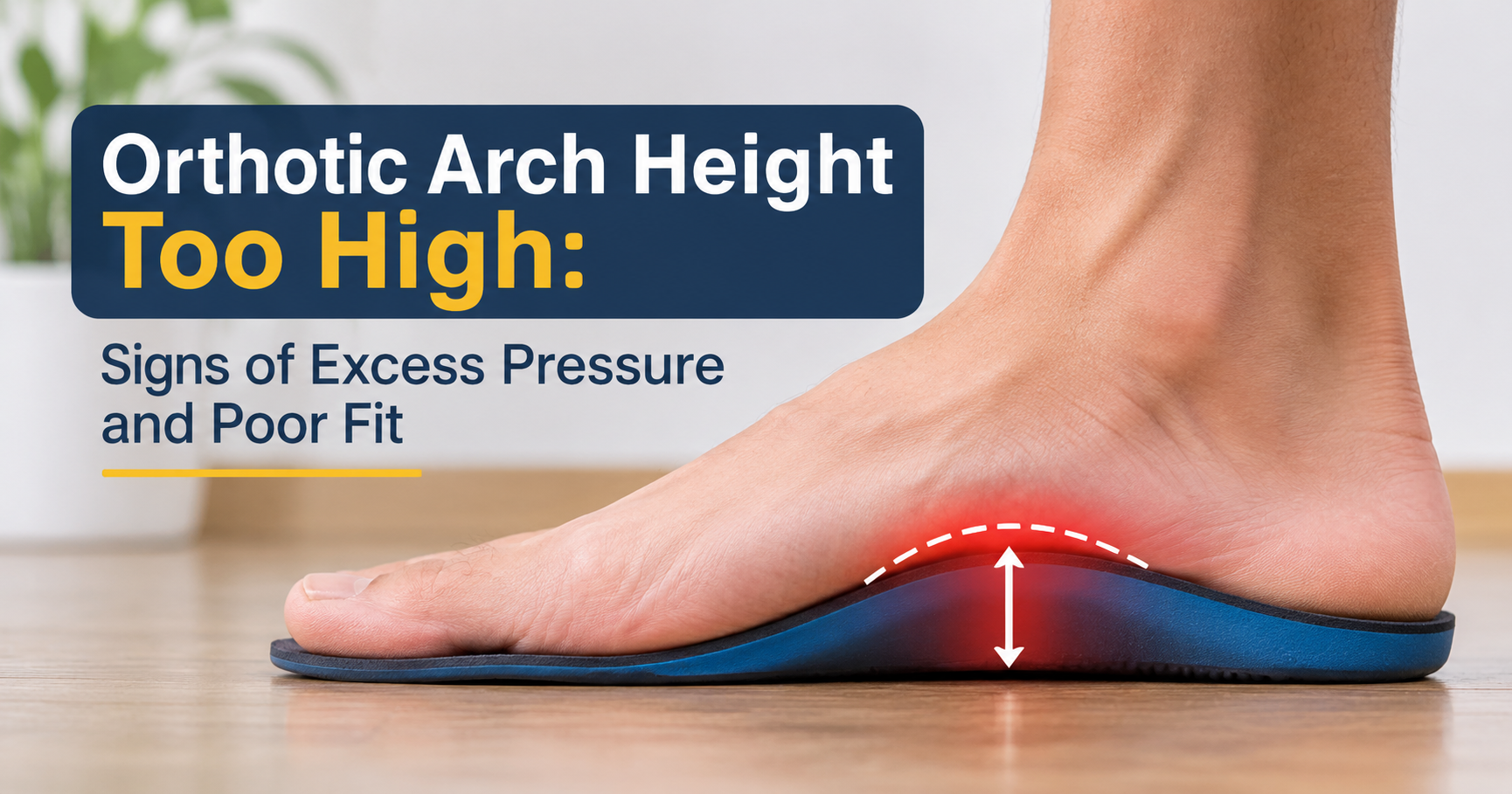
You paid for insoles to feel better, so it is frustrating when they feel worse. If your orthotics push hard into the middle of your foot, make your arch ache, or leave you walking on the outer edge of your feet, the arch height may simply be too high for you.
The good news is that this is a common and usually fixable problem. In this guide you will learn how to tell the difference between normal adjustment and real discomfort, why an orthotic arch can be too high, how to fix it step by step, and what to look for if you need to buy a better pair.
Quick summary
- A well-fitted arch support should feel like firm, even contact. It should never feel like a lump pressing into your foot.
- Mild awareness for the first week or two is normal. Sharp pain, numbness or pain that keeps getting worse is not.
- Common causes: a design that does not match your foot type, shoes that shift the insole, over-correction and wearing new insoles for too long too soon.
- Fixes include a gradual break-in, checking the fit inside the shoe, trying a lower-profile or more flexible insole, and going back to your clinician for adjustment.
What Does “Orthotic Arch Height Too High” Mean?
An orthotic is an insert that sits inside your shoe to support, cushion or realign your foot. Most of them include a raised section under the arch. Arch height is simply how tall that raised section is.
When the raised section is taller than your foot can comfortably accept, it stops supporting the arch and starts pushing into it. Instead of sharing your body weight across the whole sole, the insole concentrates pressure on one spot, and the rest of the foot has to cope with the change.
Why Arch Height Matters
Your arch works like a spring. With every step it flattens a little to absorb shock, then recoils to push you forward. A good orthotic works with that movement. A poorly matched one blocks it.
If the support is too tall, the foot cannot flatten naturally. Your body then compensates, and that compensation can show up in the heel, the ball of the foot, the ankle and even the knee. This is why a small mismatch in height can create discomfort far beyond the arch itself.
Signs Your Orthotic Arch Is Too High
Not every sign appears in every person, but these are the most common ones:
- Arch ache or cramping that builds the longer you wear the insoles.
- A feeling of standing on a bump or a hard ridge under the middle of the foot.
- Heel soreness or a bruised feeling, as weight moves backward.
- Pressure or burning under the ball of the foot because the foot is tilted forward.
- Rolling toward the outside edge of the foot, sometimes with ankle strain.
- Pain that eases the moment you take the insoles out. This is a strong clue that the insole is the cause.
- Knee, hip or lower back tension that appeared after you started wearing them.
Common Reasons the Arch Feels Too High
1. You are still in the adjustment period
If you have never worn arch support, your foot muscles and soft tissues need time to adapt. A noticeable but tolerable pressure in the first days is normal, and it usually settles as you build up wear time gradually.
2. The insole does not match your foot type
Many people buy a “high arch support” insole because they have heard it is better. But the right height depends on your own foot. A flexible flat foot, a normal arch and a rigid high-arched foot all need different things. A tall, rigid support can overwhelm a foot that only needs gentle guidance.
3. Over-correction
An orthotic that tries to change the position of your foot too much, too quickly can feel aggressive. Correction should be enough to help, not enough to force the foot into a position it resists.
4. The shoe is the wrong fit for the insole
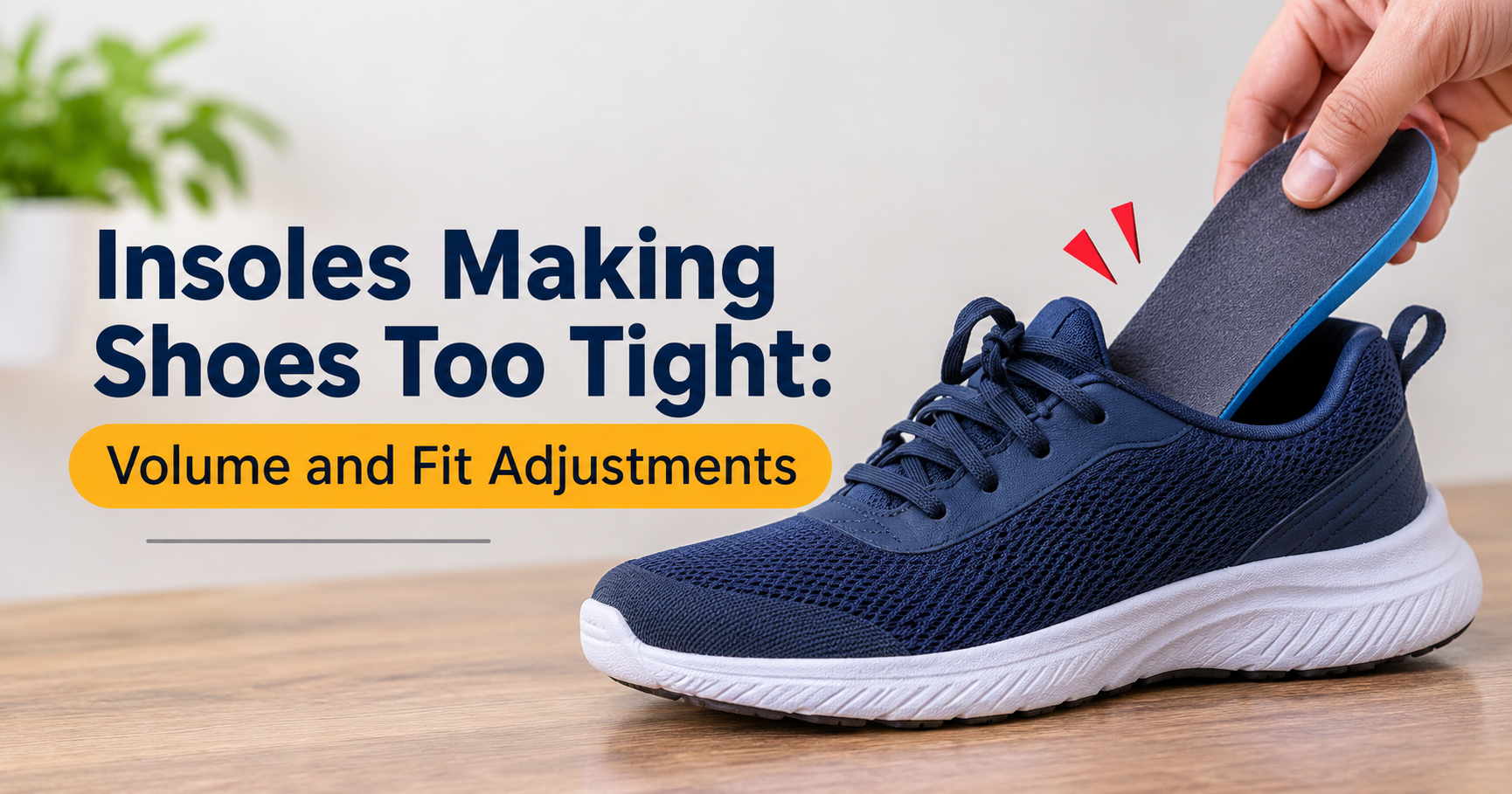
Insoles take up space. In a shoe that is too shallow, too narrow or has a built-in raised footbed, the orthotic can sit too high and press your foot upward. An insole that slides forward or backward will also put the arch peak in the wrong place.
5. Wrong length or placement
The highest part of the arch support should sit under your own arch. If the insole is too long, too short or has been cut incorrectly, the peak lands on the wrong part of the foot.
6. Your foot has changed
Weight change, pregnancy, age, a new activity or an injury can change how your arch behaves. An insole that once felt right may no longer suit you.
Know Your Arch Type First
Before you change anything, it helps to understand your own arch. A simple wet footprint test gives you a rough idea. Wet the sole of your foot, step onto a dark piece of paper or a dry paving surface, and look at the print.
This test is only a guide. It shows the shape of the foot while standing, not how flexible the arch is or how you move when you walk. A clinician can assess both. Still, it is useful for one reason: people with naturally high arches often need cushioning and a broad, shaped contact surface rather than a tall, rigid lift.
Normal Break-In or a Real Problem?
New insoles should be introduced gradually. Wearing them all day on the first day is one of the most common reasons people decide the arch is too high when it may only be too sudden.
| What you notice | Usually normal | Needs attention |
|---|---|---|
| Pressure under the arch | Mild awareness that fades over several days | Strong pressure that grows through the day |
| Pain | Slight muscle tiredness in the foot | Sharp, burning or stabbing pain |
| Other symptoms | None | Numbness, tingling, swelling or skin damage |
| Time frame | Improves within one to two weeks | No improvement, or getting worse after two weeks |
If you are in the right-hand column, stop wearing the insoles for the moment and work through the fixes below.
How to Fix an Orthotic Arch That Is Too High
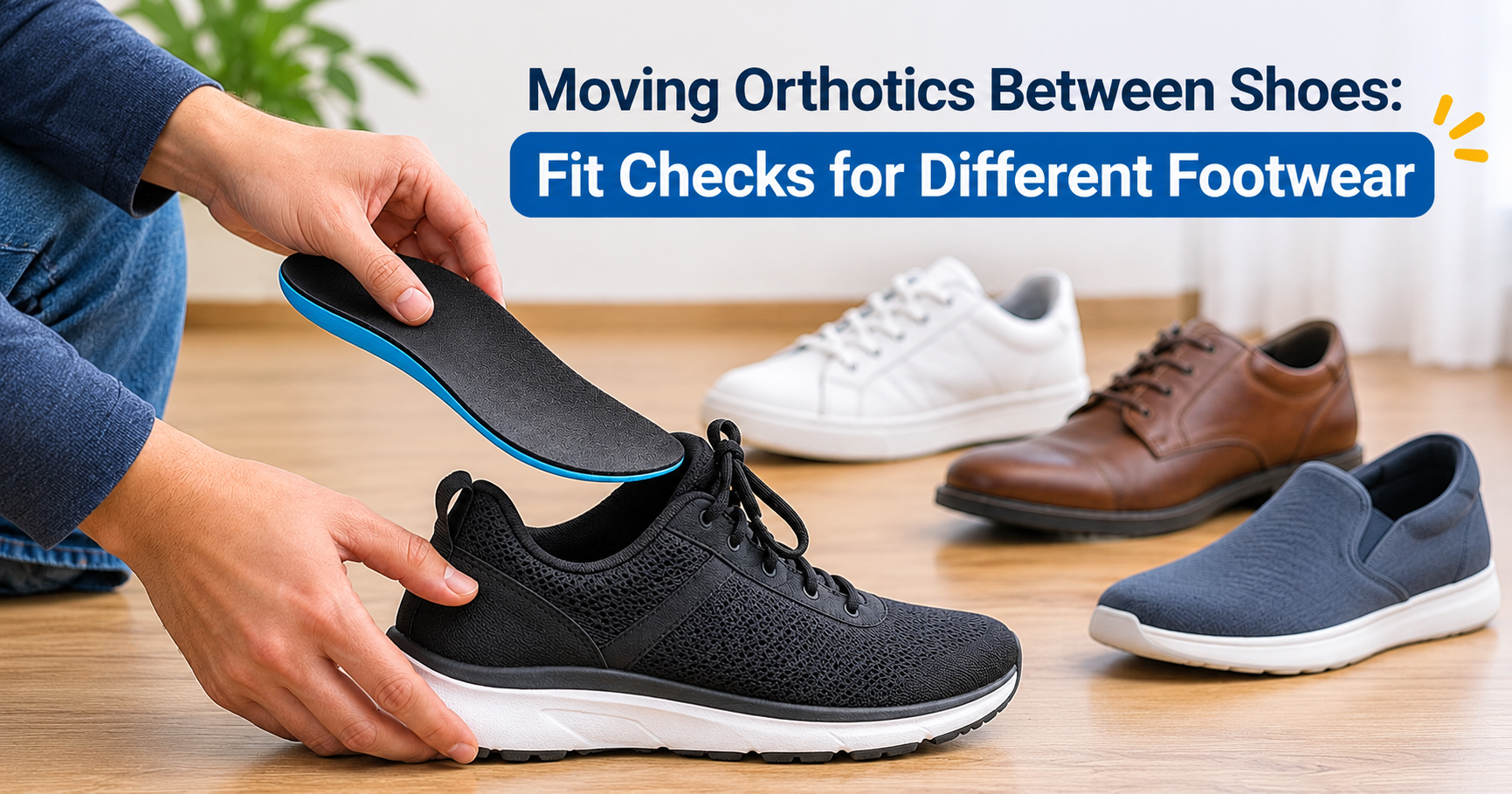
- Check the fit inside the shoe. Remove the shoe’s own removable insole first so the orthotic is not stacked on top of it. Make sure the insole lies flat, fits the length of the shoe and does not slide.
- Make sure the arch is positioned under your arch. The peak should line up with the natural curve of your foot, not sit forward under the ball or back under the heel.
- Go back to a gradual schedule. Start with one hour a day and increase slowly, as in Figure 4. If the discomfort returns at a certain step, stay at the previous step for a few days.
- Try a different shoe. Choose a shoe with a deeper toe and heel area and a removable footbed. Shoes with a firm heel counter keep the insole stable.
- Use thin, soft cushioning where it helps. A thin top cover can soften the contact. Avoid stacking several layers, because that raises the foot further and can make pressure worse.
- Switch to a lower-profile or more flexible design. Semi-flexible insoles with a shaped, gentle arch often suit people who find rigid, tall supports too aggressive.
- Re-mold heat-moldable insoles if the manufacturer allows it, following the instructions exactly. Do not cut or grind the insole yourself.
- Return to your clinician. If your orthotics were custom made, a podiatrist or orthotist can adjust or rebuild them. This is the safest route, because the height is part of a prescription.
Important
Do not force your foot to “get used to” sharp or worsening pain. Discomfort that keeps increasing is a signal that something needs to change.
How to Choose the Right Arch Height When Buying Insoles
If you are replacing your insoles, a little preparation saves money and discomfort. Use the table below as a starting point.
| Arch support level | Best suited to | Watch out for |
|---|---|---|
| Low profile | Flat or low arches, people new to insoles, shoes with little room | May feel too soft if you need strong support |
| Medium profile | Most people with a normal arch, everyday walking and standing | Check that it matches your arch length, not just the size label |
| High profile | Naturally high, rigid arches that need a broad, shaped contact | Can feel aggressive on flat or normal feet; build up slowly |
A buyer’s checklist
- Match the insole to your foot type, not to a marketing label such as “maximum support”.
- Look for a shaped, wide contact area under the arch instead of a narrow, sharp ridge.
- Check the material. Foam gives cushion, cork and EVA give a balance, and firmer plastic shells give more control but need a longer break-in.
- Choose the right length. Full-length insoles stay put better; three-quarter versions suit shoes with little space.
- Consider shoe depth. If your shoes are shallow, choose a thinner insole.
- Read the return and trial policy so you can swap a model that does not suit you.
- Try them with the shoes you will actually wear them in, ideally in the afternoon when feet are slightly larger.
Mistakes to Avoid
- Wearing new insoles all day from the very first day.
- Buying the tallest arch available because “more support must be better”.
- Stacking an insole on top of the shoe’s original footbed.
- Cutting, shaving or padding a custom orthotic yourself.
- Ignoring pain because you assume it is part of the process.
- Using the same insole for years after your feet or activity level have changed.
When to See a Podiatrist
Book an appointment with a podiatrist or other foot specialist if any of the following apply:
- Pain continues or worsens after two weeks of careful adjustment.
- You have numbness, tingling, swelling, redness or blisters under the foot.
- You have diabetes, reduced feeling in your feet or circulation problems. Check with your clinician before wearing any orthotic.
- Your orthotics were prescribed and no longer feel right.
- Your pain wakes you at night or limits your walking.
Frequently Asked Questions
How long should it take to get used to arch supports?
Many people adapt within one to two weeks when they increase wear time gradually. Some firmer or custom designs can take longer, so follow the guidance that came with yours.
Is it normal for orthotics to hurt at first?
Mild pressure or tiredness in the foot is normal early on. Sharp, burning or increasing pain is not, and it is a reason to reduce wear and review the fit.
Can a too-high arch support cause pain elsewhere in the body?
It can contribute. When the foot cannot move naturally, the ankle, knee, hip and lower back may compensate. If you notice new pain higher up after starting insoles, review the fit.
Should I buy a lower arch if my current one is too high?
Often a lower-profile or more flexible insole is worth trying, especially if your foot type does not need strong correction. Matching the insole to your foot matters more than choosing a lower or higher number.
Can I modify my orthotics at home?
It is best not to. Cutting or grinding can change how the insole works. Ask the provider who made them, or choose a different model if they are off the shelf.
Final Thoughts
An orthotic arch that is too high can turn a helpful product into a daily source of discomfort. Start by checking the fit and following a gradual schedule. If the pressure remains, look at your foot type, the shoes you are wearing and the shape of the insole itself. Choosing an arch height that matches your foot, rather than the tallest one on the shelf, is the surest way to get comfort and support together.
This article is for general information and is not a substitute for professional medical advice. If you have persistent foot pain or a medical condition affecting your feet, speak with a qualified healthcare professional.