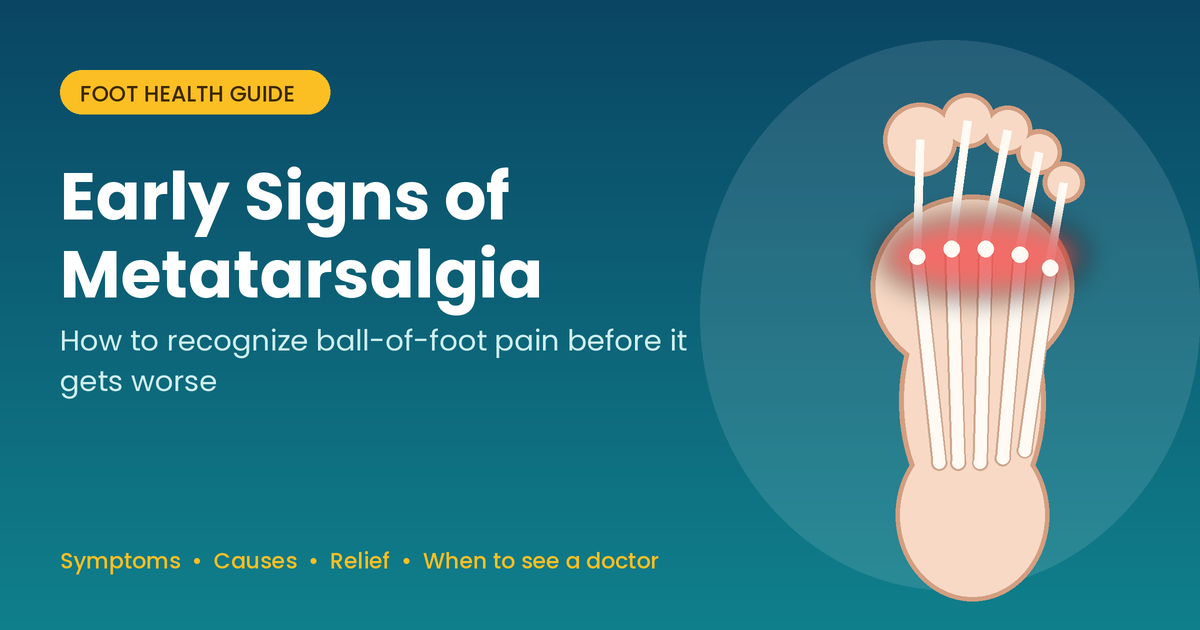
How to Recognize the Early Signs of Metatarsalgia

If the ball of your foot aches after a long day on your feet, or every step feels like you are walking on a small stone, you may be dealing with metatarsalgia. The good news is that it is often manageable when caught early. This guide explains the early signs of metatarsalgia, what causes it, and what you can do to find relief.
- What is metatarsalgia?
- 6 early warning signs
- Common causes and risk factors
- Early vs. advanced symptoms
- Simple ways to relieve pain
- When to see a doctor
- FAQ
What Is Metatarsalgia?
Metatarsalgia is a common condition that causes pain and inflammation in the ball of the foot, the area just behind your toes. It affects the metatarsal heads, the rounded ends of the five long bones in your forefoot. These bones take on a large share of your body weight every time you walk, run, or push off the ground, so repeated overload can make the area sore.

6 Early Signs of Metatarsalgia
Symptoms usually build gradually, which is why they are easy to dismiss. Watch for these early warning signs:

1. An aching or burning pain in the ball of the foot
This is the hallmark symptom. It often starts as a dull ache after standing, walking, or exercising, and may later feel sharper or hot.
2. A “pebble in the shoe” feeling
Many people describe it as walking on a marble or a bunched-up sock, even when the shoe is empty.
3. Pain that gets worse on hard surfaces
Walking barefoot on tile, wearing thin-soled shoes, or standing on concrete tends to trigger or increase discomfort.
4. Sharp or shooting pain when pushing off
Rising onto your toes, climbing stairs, running, or flexing your foot can cause a sharp pain in the forefoot.
5. Tingling or numbness in the toes
Pins and needles, or numbness in some toes, may point to irritation of nearby nerves. This is more typical when a nerve problem such as Morton’s neuroma is also involved.
6. Calluses or mild swelling under the forefoot
Thickened skin or slight puffiness under the ball of the foot can show that the area is taking repeated excess pressure.
Common Causes and Risk Factors
- High-impact activity: running and jumping sports load the forefoot repeatedly.
- Ill-fitting footwear: high heels, tight or narrow toe boxes, and thin, flat soles.
- Foot shape: high arches, a long second toe, bunions, or hammertoes can shift pressure to the ball of the foot.
- Excess body weight: extra load increases pressure on the forefoot.
- Tight calf muscles or stiff ankles: these change how weight moves through the foot.
- Other conditions: arthritis, stress fractures, or nerve irritation can cause similar pain.
Early Stage vs. Advanced Metatarsalgia
Catching metatarsalgia early makes a big difference. Left alone, pain can become constant and may change the way you walk, which can strain your knees, hips, and back.

How to Relieve Early Metatarsalgia Pain
- Rest and ice: apply ice wrapped in a cloth for 10 to 15 minutes and give the foot a break from high-impact activity.
- Choose better shoes: look for a wide toe box, cushioned midsole, and good arch support. Limit high heels.
- Add cushioning: metatarsal pads and cushioned insoles help spread pressure away from the metatarsal heads.
- Stretch your calves: gentle, regular stretching reduces strain on the forefoot.
- Modify activity: swap running for swimming or cycling while the foot settles.
Helpful Products to Consider
These types of products are commonly used to take pressure off the ball of the foot. Choose what suits your foot and shoes.
Metatarsal Pads
Soft pads that sit just behind the ball of the foot to redistribute pressure.
Cushioned Insoles
Shock-absorbing insoles with arch support for all-day comfort.
Wide Toe-Box Shoes
Roomy, well-cushioned shoes that let your toes spread naturally.
When to See a Doctor

Frequently Asked Questions
What are the first signs of metatarsalgia?
The earliest signs are an aching or burning pain in the ball of the foot, a feeling like a pebble under the forefoot, and pain that gets worse when you stand, walk, or run and eases with rest.
Is metatarsalgia serious?
It is usually not dangerous and often improves with rest, better footwear, and cushioning. However, ignoring it can lead to a changed gait and pain in other joints, so early action matters.
Can I keep exercising with metatarsalgia?
Low-impact activities such as swimming or cycling are usually easier on the forefoot than running or jumping. If pain persists, ask a healthcare professional what is safe for you.
How long does metatarsalgia take to improve?
Mild cases often improve within a few weeks once pressure on the forefoot is reduced. If there is no improvement, see a doctor or podiatrist.
What is the difference between metatarsalgia and Morton’s neuroma?
Metatarsalgia is a general term for pain in the ball of the foot. Morton’s neuroma is a specific nerve problem, usually between the third and fourth toes, that often causes burning, tingling, or numbness.
Final Thoughts
Metatarsalgia rarely appears overnight. An ache in the ball of the foot, a pebble-like sensation, or pain on hard floors are early signals worth taking seriously. Reduce pressure, upgrade your footwear, add cushioning, and get checked if symptoms persist. Acting early can help you stay comfortable and active.
Affiliate disclosure: This post may contain affiliate links. If you buy through them we may earn a small commission at no extra cost to you.