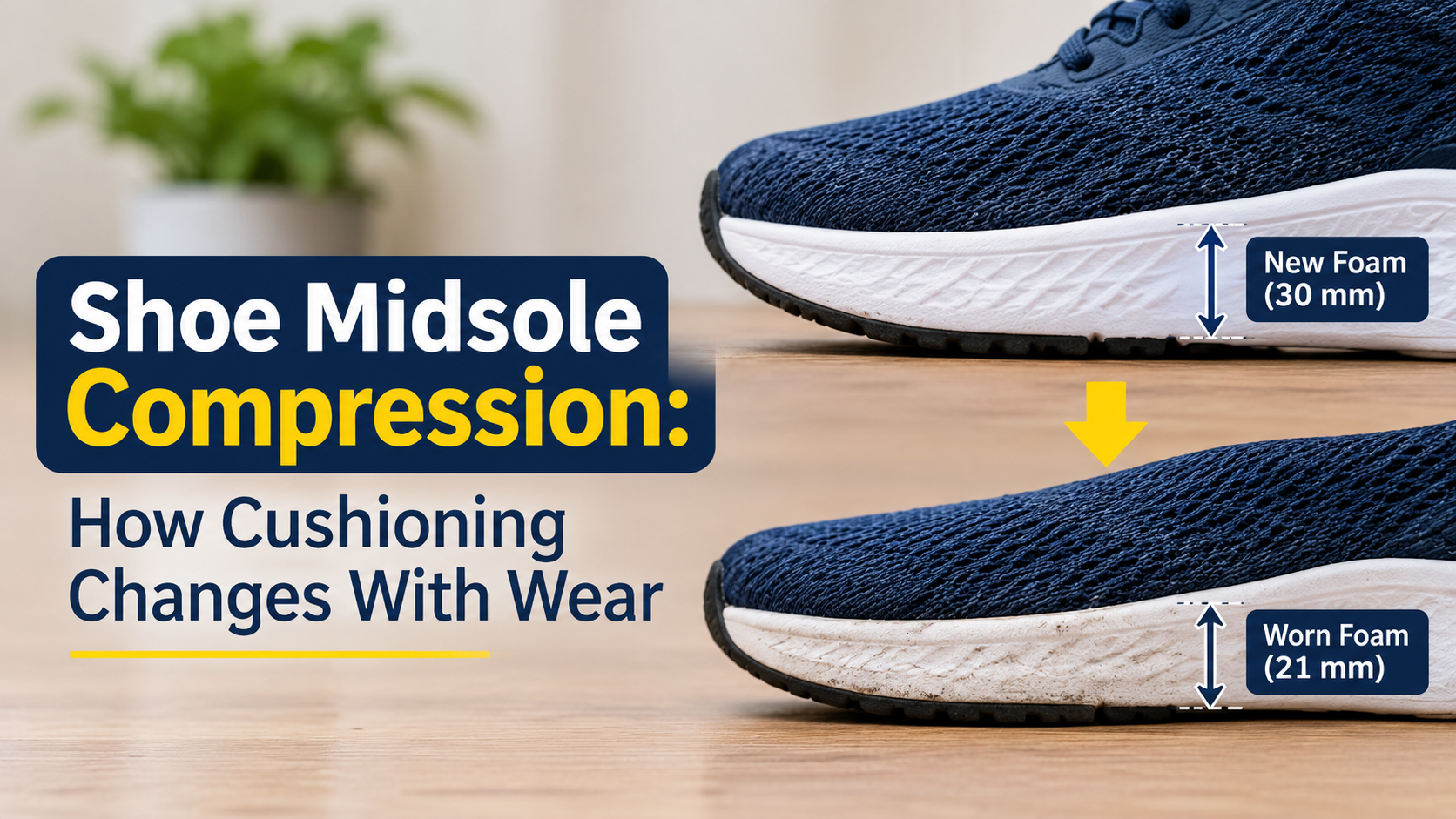
If your running shoes felt springy in the first month and flat by the fourth, you have already met shoe midsole compression. It is the quiet process behind fading cushioning, nagging aches and the “dead” feeling many runners and walkers describe. This guide explains what is happening inside the foam, what speeds it up, how to spot it, and how to buy shoes that hold their feel for longer.
What Is a Shoe Midsole?
The midsole is the layer between the outsole (the rubber that touches the ground) and the upper (the part wrapping your foot). It does three jobs: absorb impact, return some energy as you push off, and keep your foot stable. Because it carries every step, it is the part of the shoe that wears out first, usually long before the rubber outsole looks tired.
What Is Midsole Compression?
Midsole compression is the gradual loss of foam thickness and bounce after thousands of loading cycles. Every footstrike squashes the foam, and every toe-off lets it expand again. Over time the foam does not fully return to its original shape. Materials scientists call this compression set: the permanent deformation left after repeated pressure.
Two things change together: the foam gets thinner, and it gets less lively. A shoe can look fine from the outside while the foam inside has already lost much of its energy return.
Why Midsole Foam Loses Its Cushioning
Midsole foam is full of microscopic air-filled cells. When you land, those cells bend and push back. Several things wear that structure down:
- Repeated impact. Each step is a small stress cycle. Thousands of cycles weaken cell walls.
- Body weight. Heavier runners load the foam harder per step, so it fatigues sooner.
- Heat. Foam softens when warm. Hot cars, direct sun, radiators and hot washing cycles can all speed up damage.
- Not enough recovery time. Foam needs time to rebound. Running in the same pair every day gives it less chance to recover.
- Age. Some foams, especially polyurethane types, can degrade through ageing even if the shoes sit unused for a long time.
- Surface and style. Hard pavement, heavy heel striking and long daily wear (standing jobs, for example) all add load.
Common Midsole Materials and How They Age
| Material | Feel | Durability |
|---|---|---|
| EVA | Light, soft, cushioned | Moderate; can pack down noticeably |
| TPU (expanded) | Bouncy, consistent | Generally good; stays stable in heat and cold |
| PEBA | Very light, very springy | Varies; often favoured for racing rather than daily mileage |
| Polyurethane (PU) | Dense, firm, stable | Resists compression well; heavier |
| Blended or supercritical foams | Soft yet resilient | Depends on the brand’s formula |
The material name is only a starting point. Density, geometry and manufacturing all matter, so two EVA shoes can wear very differently.
How Many Miles Before Compression Matters?
A common rule of thumb is 300 to 500 miles (about 500 to 800 km) for running shoes. Lighter, softer shoes often sit at the lower end, while firmer, denser daily trainers can last longer. Your weight, running style and surface all shift that range. Treat mileage as a guide and let the shoe’s condition and your body make the final call.
Signs Your Midsole Is Compressed
- Visible wrinkles in the foam sidewall that stay when the shoe is unloaded.
- A flat or dead feel, with less bounce than when the shoes were new.
- New aches in the shins, knees, arches or heels after runs that used to feel fine.
- Uneven wear, where one side or the heel looks thinner when you place the shoe on a flat table.
- Press test. Press your thumb into the foam. If it feels hard or leaves lasting dents, the cushioning is likely spent.
Does Midsole Compression Cause Injury?
Research on this is mixed. A worn midsole does not guarantee an injury, and a fresh one does not prevent every injury. Even so, many runners notice a link between tired shoes and soreness, and a flatter, less stable midsole can change how load is shared across the foot and leg. If a new ache appears and your shoes are high on mileage, checking the shoes is a reasonable and cheap first step. For pain that lingers, speak to a qualified health professional.
How to Slow Down Midsole Compression
- Rotate two or more pairs. Alternating shoes gives the foam time to rebound and also varies the load on your body.
- Keep shoes for their purpose. Use running shoes for running, and a separate pair for daily errands or gym sessions.
- Avoid heat. Do not leave shoes in a hot car, in strong sunlight or on a heater. Never machine-dry them.
- Let them air out. Remove insoles and loosen laces after every run so moisture can escape.
- Track mileage. A simple note or app log helps you replace shoes at the right time rather than guessing.
- Clean gently. Use a soft brush and mild soap, then air dry away from heat.
How to Choose Shoes With Longer-Lasting Cushioning
- Look at the foam type. TPU-based and dense PU or blended foams often hold their shape better than very soft, light foams.
- Match the shoe to your weight. Heavier runners usually do better with firmer, more resilient midsoles.
- Read long-term reviews. Feedback after 200 to 300 miles tells you far more than a first-run impression.
- Check the warranty or durability notes. Some brands publish expected lifespans for their models.
- Balance weight and durability. Ultralight foams feel exciting but may fade sooner, so consider using them for races or key sessions only.
Is It Worth Replacing Shoes Early?
Consider the cost per mile. A shoe that costs more but lasts 500 miles can be cheaper per mile than a budget pair that goes flat at 250. Replacing shoes before they are completely finished also lets you avoid running on foam that no longer protects you. Many runners buy a new pair when their current ones reach about 70 to 80 percent of their expected life, so the feel never drops off suddenly.
Frequently Asked Questions
Can compressed midsoles recover?
Short-term, foam does regain some thickness after a rest day. Long-term compression set is permanent, so resting a worn-out shoe will not bring it back to new.
Do shoes compress if I just walk in them?
Yes, though more slowly. Walking and standing also load the foam, and daily wear all adds up.
Do unused shoes lose cushioning on the shelf?
Some foams can age in storage, especially polyurethane types or shoes kept in heat. Store pairs in a cool, dry place and try to use them within a couple of years of buying.
Should I trust the outsole to judge wear?
Not on its own. The rubber often outlasts the foam, so a shoe with a clean outsole can still have a spent midsole.
Do insoles fix compression?
A fresh insole can add comfort, but it cannot restore a collapsed midsole’s energy return or stability.
Final Thoughts
Midsole compression is natural, predictable and manageable. Understanding how foam ages helps you rotate smarter, store shoes better and replace them at the right moment. Watch for wrinkles, a flat feel and new aches, keep a mileage log, and pick shoes that suit your weight and routine. Your feet, knees and wallet will thank you.