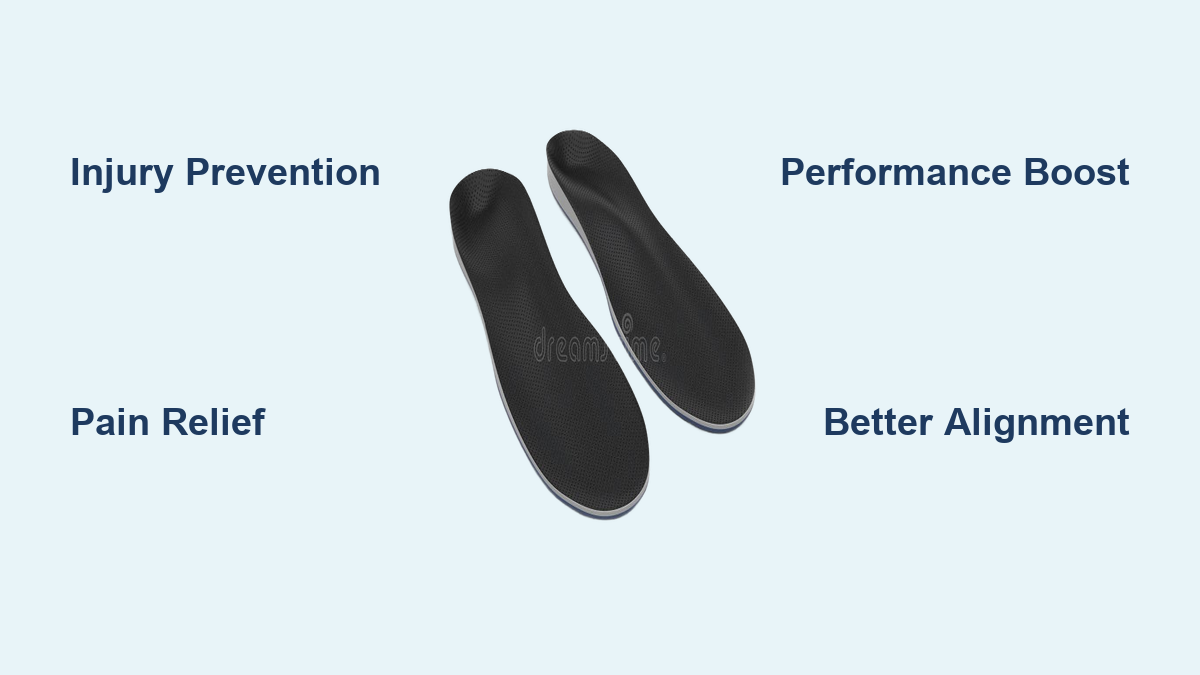
If your feet ache after a run, your knees flare up during squats, or you’re constantly battling shin splints, the culprit might not be your training intensity—it could be your foundation. Wearing orthotics while exercising is a proven strategy to optimize performance, prevent injury, and keep your body moving efficiently. Custom foot orthotics aren’t just for pain relief—they’re precision-engineered tools that correct biomechanical imbalances, enhance stability, and protect your entire musculoskeletal system during physical activity.
Scientific research shows that custom orthotics reduce injury risk by 28% and lower stress fracture incidence by 41%, making them a powerful ally for runners, lifters, and weekend warriors alike. Whether you’re logging miles on pavement, exploding off the line in a sprint, or pushing heavy weights in the gym, properly aligned feet mean better force transfer, reduced fatigue, and faster recovery. This guide dives into the science-backed benefits of wearing orthotics during exercise—from injury prevention and pain reduction to performance gains and long-term joint protection.
Prevent Common Exercise Injuries
Reduce Overuse Injury Risk
Custom orthotics are clinically proven to lower the risk of overuse injuries caused by repetitive strain and poor foot mechanics. Studies show a 28% reduction in overall injury rates among athletes who wear custom devices during training. Unlike generic insoles that offer passive cushioning, custom orthotics actively correct foot motion and alignment, reducing the wear and tear that leads to chronic conditions.
Key injuries prevented or minimized include:
– Shin splints (medial tibial stress syndrome)
– Plantar fasciitis
– Achilles tendinitis
– Patellofemoral knee pain
– Stress fractures
– Ankle sprains
These problems often stem from abnormal foot motion—like overpronation (excessive inward roll) or supination (outward tilt)—which places uneven stress on tendons, joints, and bones over thousands of steps.
Stop Injuries Before They Start
Even subtle biomechanical inefficiencies can escalate into serious injuries over time. Custom orthotics act as preventative maintenance, correcting misalignment before pain develops. For example:
– Athletes with flat feet often overpronate, straining the plantar fascia and tibialis posterior muscle.
– Those with high arches tend to supinate, reducing shock absorption and increasing lateral ankle stress.
Orthotics stabilize the foot in a neutral position, minimizing strain across the lower limbs and halting the injury cycle before it begins.
Protect Your Entire Body
Poor foot function doesn’t just affect your feet—it disrupts the entire kinetic chain. Misalignment at the foot can cause:
– Abnormal knee rotation
– Hip adduction and internal rotation
– Lower back strain
Custom orthotics realign your foundation, distributing forces evenly from the ground up. This reduces compensatory movements and protects joints throughout your body, making orthotics a full-body defense against exercise-related injuries.
Maximize Athletic Performance
Improve Biomechanical Efficiency
Orthotics boost performance by optimizing how your body moves. When your foot is properly aligned, less energy is wasted stabilizing unstable joints. This means:
– Reduced muscular effort in the calves and shins
– Smoother gait cycles
– More efficient movement during running, jumping, or lifting
Athletes often report feeling “lighter” and able to maintain form longer when wearing orthotics—especially during endurance activities.
Enhance Power Transfer
In explosive sports like sprinting or weightlifting, force transfer starts at the foot. If your arch collapses under load, energy leaks out instead of driving forward or upward. Rigid or semi-rigid orthotics prevent this collapse, creating a stable platform for maximum power output.
For sprinters, graphite orthotics enhance forefoot control during push-off. For lifters, firm heel and arch support improves balance and safety during heavy squats and deadlifts.
Gain Sport-Specific Advantages
Orthotics can be fine-tuned for different athletic demands:
| Sport | Orthotic Focus | Performance Benefit |
|---|---|---|
| Running | Shock absorption, arch support | Less fatigue, better stride consistency |
| Sprinting | Rigidity, forefoot control | Faster acceleration, stronger push-off |
| Basketball/Tennis | Lateral stability | Sharper cuts, safer landings |
| Weightlifting | Heel stabilization | Improved balance under heavy loads |
| Cycling | Pedal stroke alignment | Smoother power delivery, reduced knee strain |
| Hiking | Cushioning, durability | Endurance on rough terrain |
| Golf | Balance during swing | Reduced lower back strain, consistent stance |
Generic insoles can’t match this level of customization—making custom orthotics a true performance tool.
Eliminate Pain During and After Workouts
Relieve Foot and Joint Discomfort
Many exercisers experience pain in the feet, knees, hips, or back—often due to poor foot mechanics. Orthotics alleviate this by:
– Correcting flat feet or high arches
– Reducing pressure on heels and ball of foot
– Absorbing impact at heel strike
– Preventing friction that causes blisters
Common pain points that improve with orthotics:
– Heel pain (plantar fasciitis)
– Arch pain
– Shin splints
– Knee pain during running
– Forefoot pain (metatarsalgia)
Support Long-Term Healing
Orthotics do more than mask pain—they promote healing. By reducing mechanical stress on injured tissues, they create optimal conditions for recovery from:
– Plantar fasciitis
– Achilles tendinopathy
– Tibialis posterior dysfunction
– Arthritis-related foot pain
– Diabetic foot ulcers (protective role)
This makes orthotics essential during rehab and for preventing re-injury.
Resolve Whole-Body Pain
Because the body functions as a connected system, fixing foot alignment often resolves seemingly unrelated pain. For example:
– Knee pain caused by overpronation may disappear once foot motion is controlled.
– Hip and lower back pain linked to gait imbalances can improve with balanced orthotic support.
This systemic effect highlights why foot health is foundational to overall physical performance.
Enhance Shock Absorption During High-Impact Exercise

Protect Joints from Repetitive Impact
Running and jumping generate forces up to 5 times body weight per step. Without proper cushioning, this repeated impact damages joints and soft tissues. Custom orthotics use layered materials like EVA foam, polypropylene, cork, and graphite to absorb and disperse shock effectively.
Key protective features:
– Heel cups to stabilize and cushion the heel bone
– Forefoot padding to reduce pressure on metatarsal heads
– Arch support to prevent collapse under load
These are especially valuable for:
– Long-distance runners
– Basketball and volleyball players
– Trail runners
– Gymnasts
Match Materials to Your Body and Sport
Unlike OTC insoles, custom orthotics use materials selected based on:
– Body weight
– Activity type
– Foot shape
– Desired rigidity
For example:
– Lightweight runners benefit from semi-rigid graphite for responsiveness.
– Heavier athletes or those with arthritis may need softer, cushioned materials for maximum shock absorption.
Labs like EVO Laboratory use advanced European materials engineered for sport-specific durability and comfort.
Improve Balance, Stability, and Control
Enhance Postural Control
Orthotics improve balance by ensuring even weight distribution and better ground contact. This is crucial for:
– Maintaining form during squats and lunges
– Staying stable during sudden direction changes
– Reducing postural sway during single-leg movements
By supporting the arch and stabilizing the heel, orthotics enhance control throughout the stance phase of gait.
Optimize Ground Reaction Force
Efficient movement depends on how well you interact with the ground. Custom orthotics “bring the ground up to the foot,” allowing for quicker neuromuscular responses and better force modulation. This leads to:
– Faster reaction times
– Improved agility
– Greater control during landings
Boost Proprioception
Some orthotics include textured surfaces or strategic cutouts to enhance proprioception—your body’s awareness of foot position. This is especially helpful in:
– Rehabilitation
– Sports requiring precision (e.g., gymnastics, dance)
– Preventing ankle sprains on uneven terrain
Better feedback means better control and fewer missteps.
Delay Fatigue and Increase Endurance
Lower Energy Expenditure
When your feet are unstable, muscles work overtime to compensate. This increases energy use and accelerates fatigue. Orthotics reduce this burden by:
– Keeping joints aligned
– Preventing excessive muscle activation
– Smoothing gait cycles
Result: Improved running economy and lower oxygen consumption—key advantages for endurance athletes.
Extend Workout Duration
Runners and hikers consistently report being able to go farther and longer with orthotics. This is due to:
– Even pressure distribution
– Reduced micro-instabilities
– Better shock absorption
Less strain means less cumulative fatigue, letting you push harder without breaking down.
Speed Up Recovery
By minimizing joint and muscle stress, orthotics help you recover faster. Users report:
– Less calf and shin soreness
– Reduced DOMS (delayed onset muscle soreness)
– Quicker return to training
This means more consistent progress and fewer setbacks.
Get Personalized Support for Your Feet

Custom Fit for Your Unique Anatomy
No two feet are alike. Custom orthotics are made using:
– 3D foot scanning
– Foam box casting
– Laser imaging
– Gait analysis
These methods capture:
– Arch height and shape
– Pressure points
– Pronation angles
– Weight distribution
– Leg length differences
This data ensures a perfect, personalized fit—something OTC insoles can’t achieve.
Accommodate Asymmetrical Feet
Many people have different issues in each foot—one flat, one high-arched, for example. Custom orthotics can be made asymmetrically, providing tailored support for each foot independently.
Design for Your Sport
Orthotics can be optimized for specific activities:
– Running: Shock absorption and motion control
– Sprinting: Rigidity and forefoot stability
– Court sports: Lateral support
– Cycling: Pedal efficiency
– Winter sports: Ski/boot compatibility
Some are even made to fit minimalist shoes or cleats without sacrificing performance.
Best for Weight-Bearing Exercises

Ideal for Closed Kinetic Chain Movements
Orthotics provide the most benefit during closed kinetic chain exercises, where your feet are on the ground and bearing weight:
– Running
– Jumping
– Squats
– Lunges
– Weightlifting
– Plyometrics
In these movements, orthotics enhance stability, force transfer, and joint alignment.
Less Needed for Open Chain or Barefoot Work
Activities like:
– Seated leg extensions
– Cycling (in some cases)
– Yoga
– Pilates
Typically don’t require orthotics. However, individuals with known biomechanical issues may still benefit from wearing them during gym workouts to prevent compensatory patterns.
Who Should Use Orthotics?
Top Candidates
Orthotics are especially helpful if you:
– Have flat feet or high arches
– Overpronate or supinate
– Experience recurring foot, knee, or back pain
– Have a history of stress fractures or tendon injuries
– Run high mileage
– Play high-impact sports (basketball, soccer, tennis)
– Are recovering from foot or ankle injuries
– Have diabetes or neuropathy (for protection)
Even pain-free athletes with subtle inefficiencies can gain performance benefits.
When Orthotics May Not Be Needed
If you have:
– Neutral foot alignment
– No pain or injury history
– Efficient gait mechanics
You may not need orthotics. In these cases, focus on strength, mobility, and proper footwear.
However, wearing orthotics isn’t harmful and may still offer preventive benefits.
Custom vs. OTC Insoles: Why Custom Wins

| Feature | Custom Orthotics | OTC Insoles |
|---|---|---|
| Fit | Molded to your foot | One-size-fits-all |
| Correction | Fixes biomechanical issues | Limited support |
| Durability | 2–3 years | 6–12 months |
| Injury Prevention | Proven (28–41% reduction) | Not significant |
| Sport-Specific Design | Yes | No |
| Asymmetry Support | Yes | No |
| Cost | $300–$600 | $20–$100 |
While OTC insoles offer cushioning, only custom orthotics provide real correction and performance gains.
Used by Elite Athletes
Orthotics aren’t just for injury rehab—they’re performance tools used by top athletes:
– LeBron James (NBA) – Uses custom orthotics to manage foot stress
– Usain Bolt – Relied on orthotics for sprint efficiency
– Scarlett Johansson and Kristen Bell – Wear them for active lifestyles
Their use proves orthotics are for peak performance, not just pain relief.
Maintain and Replace Properly
Lifespan and Wear Signs
- Average life: 2–3 years
- Heavy users: Replace after 1 year
- Signs to replace:
- Flattened arch
- Cracked shell
- Loss of cushioning
- Return of pain
Replacement Tips
- Replace based on wear and symptoms, not time
- Don’t reuse old orthotics in new shoes without evaluation
- See a professional if pain returns
Wearing orthotics while exercising is a smart, science-backed strategy for injury prevention, pain relief, and performance enhancement. Custom orthotics correct biomechanical flaws, reduce fatigue, and protect your body from head to toe. Whether you’re healing from injury or chasing a personal best, a professional orthotic evaluation could be the missing piece in your fitness journey.