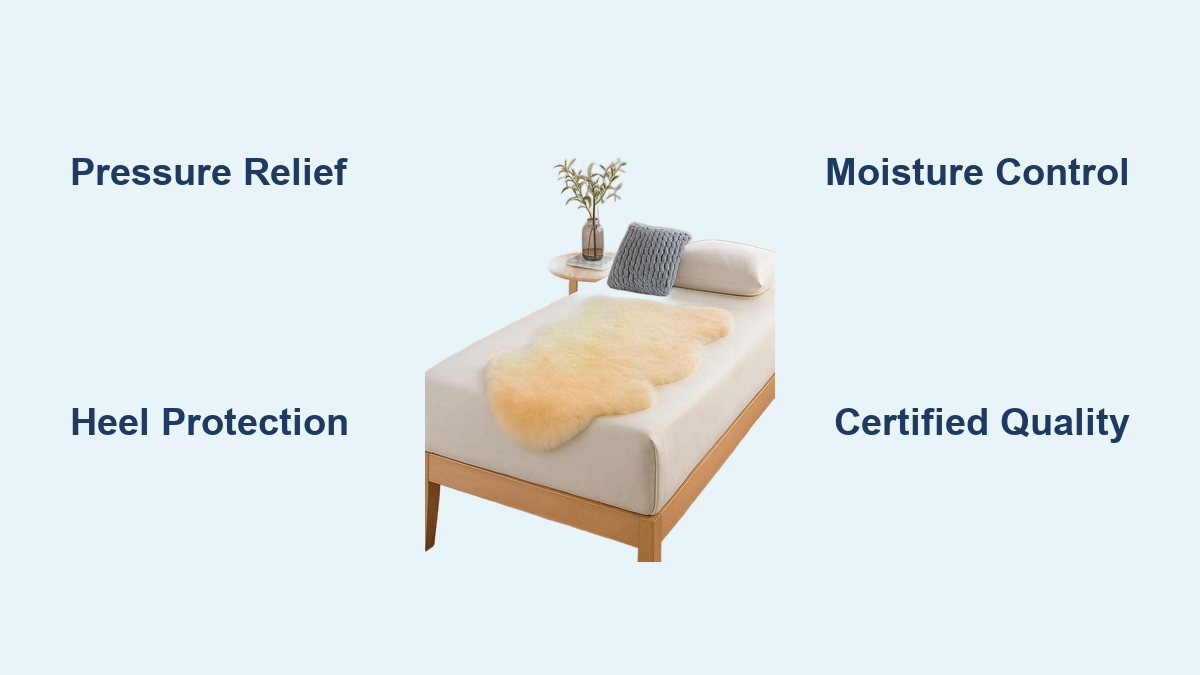
If you or a loved one spends long hours in bed or a wheelchair, foot pressure sores—especially on the heels—can develop quickly and lead to serious complications. One of the most effective, natural, and clinically proven solutions is medical grade sheepskin for foot pressure relief. Unlike ordinary sheepskin blankets or rugs, this specialized material is engineered to protect fragile skin, redistribute pressure, and prevent ulcers in high-risk patients.
Medical grade sheepskin uses ultra-dense Merino wool fibers that act like tiny springs, cushioning bony areas such as the heels and ankles. It’s not just soft—it’s a therapeutic tool backed by science and certified under strict medical standards like AS4480.1, ensuring it performs under real clinical conditions. From hospitals to home care, these products are used daily to keep skin intact, reduce friction, and improve comfort for immobile patients.
In this guide, you’ll learn exactly what sets medical grade sheepskin apart, how it works to relieve foot pressure, which products are most effective, and how to choose and care for them properly. Whether you’re a caregiver, patient, or healthcare provider, this information will help you make informed decisions about preventing pressure injuries—naturally and effectively.
Certified Medical Grade vs. Regular Sheepskin
What Defines Medical Grade Quality
Medical grade sheepskin isn’t just thicker or softer—it’s built to clinical specifications that ensure safety, durability, and therapeutic performance. The key differentiator is certification to AS4480.1, the Australian Standard developed by CSIRO that defines what qualifies as true medical sheepskin.
Products meeting this standard must pass rigorous tests for:
– Fiber density (minimum 4,000 fibers/cm²)
– Pressure redistribution
– Urine resistance
– High-temperature washing (up to 80°C)
– Microbial resistance
– Flame retardancy
Only certified sheepskin maintains its protective qualities after repeated washing—critical in clinical environments where hygiene is non-negotiable.
Why Regular Sheepskin Fails in Medical Use
Standard decorative sheepskins may feel luxurious but lack the resilience and safety features needed for pressure care. They often:
– Mat down quickly under body weight
– Absorb urine and odors permanently
– Degrade when washed at high temperatures
– Offer inconsistent thickness and fiber support
Using non-certified sheepskin on bedridden patients increases infection risk and reduces effectiveness in ulcer prevention. Always look for AS4480.1 HiTemp UR labeling to ensure clinical-grade performance.
How Medical Sheepskin Relieves Foot Pressure

Redistributes Weight Away From Heels
The dense, upright wool fibers in medical sheepskin compress and rebound like micro-springs, spreading pressure over a wider surface area. This “micro-suspension” effect prevents concentrated force on the calcaneus (heel bone)—a common site for pressure ulcers.
Studies show this can reduce peak pressure by up to 50%, significantly lowering the risk of tissue damage and ischemia. For patients unable to shift position independently, this passive protection is vital.
Minimizes Friction and Shear Forces
Shear occurs when the skin sticks to bedding while bones move beneath—common during bed repositioning. This internal tearing can lead to deep tissue injury even before skin breakdown is visible.
Medical sheepskin’s natural fiber structure moves with the body, reducing skin drag. Its low-friction surface allows smooth gliding, protecting delicate dermal layers from trauma—especially critical for diabetic or elderly skin.
Manages Moisture to Prevent Skin Breakdown
Wool can absorb 33% of its weight in moisture without feeling wet. This wicking action pulls sweat and humidity away from the skin, preventing maceration—a softening of skin that makes it prone to tearing and infection.
By maintaining a dry microclimate, medical sheepskin helps preserve skin integrity, especially in patients with incontinence or poor temperature regulation.
Regulates Temperature for Skin Health
Cold skin constricts blood vessels, reducing circulation and healing capacity. Medical sheepskin insulates in winter and breathes in summer, helping maintain optimal skin temperature.
Improved local blood flow supports tissue oxygenation and speeds recovery—making it ideal for post-surgical patients or those with compromised circulation.
Best Medical Sheepskin Products for Feet

Heel Protectors That Prevent Ulcers
Heel protectors are among the most effective tools for preventing Stage I–IV pressure ulcers on the feet. Designed to elevate and cradle the heel, they keep it off hard surfaces and reduce both pressure and friction.
Key features of top-rated models:
– Adjustable Velcro or loop closures for secure fit
– 100% genuine medical grade wool
– Hypoallergenic, chrome-free tanning
– Machine washable at high temps (60–80°C)
Top Heel Protector Models
| Product | Price | Key Features |
|---|---|---|
| Sofsheep Medical Heel Protector (Sheepskin Ranch) | $36–$65 | One-size, reusable, machine washable |
| Shear Comfort SC112 Heel Protectors | $120 | Paired design, superior fit, durable |
| Medical Sheepskin Heel Pad (M112) | $36 | Also known as “Heel Poseys”, lightweight |
| NYOrtho Sheepskin Heel Protector | $45 | Soft foam closure, ideal for cognitively impaired |
Sheepskin Boots for Swollen or Sensitive Feet
For patients with edema, limited mobility, or neuropathy, full-coverage boots offer enhanced protection and comfort.
Types of Medical Sheepskin Boots
- Open-Front Boots: Easy to put on tight or immobile ankles; fastens with hook-and-loop straps.
- Enclosed Boots: Wrap fully around the foot; secured with drawstrings or zippers.
- Wrap-Around Designs: Adjustable fit for fluctuating swelling.
Recommended Boot Options
- Shear Comfort Pressure Care Boot (SC201) – $145
Durable, breathable, ideal for wheelchair users. - Merino Lambswool Wrap Booties (M161) – $44
Lightweight, flexible, great for home use. - Sheepskin Medical Boot with Hard Sole (M170H) – $65
Provides stability and pressure relief; suitable for limited ambulation.
Loose Lambswool for Shoe and Bed Linings
Footcare Lambswool (L101) comes in 10g packets of pure, unspun wool and is used to:
– Line shoes to prevent toe rubbing
– Cushion bony prominences in bed
– Protect fragile skin in diabetic foot care
Unlike synthetic foams, lambswool molds naturally to contours, wicks moisture, and stays breathable—making it ideal for sensitive or neuropathic feet.
Clinical Proof: Does It Really Work?

Scientific Studies Back Its Effectiveness
Multiple randomized controlled trials (RCTs) confirm medical sheepskin reduces pressure ulcer incidence:
- A 2004 Medical Journal of Australia study found a 68% reduction in pressure sores among elderly orthopedic patients using AS4480.1 sheepskin overlays.
- Another trial showed ulcer rates dropped from 30% to 9.6% in patients using certified sheepskin versus standard care.
- Systematic reviews conclude that sheepskin users develop fewer Stage I and II ulcers than those using standard mattresses or pads.
These results have led to growing adoption in hospitals, nursing homes, and home health programs.
Why Modern Sheepskin Beats Older Versions
Historically, sheepskin was dismissed due to poor durability and hygiene issues. But AS4480.1-compliant products solve these problems:
– Withstand 60+ washes at 80°C
– Resist urine degradation
– Maintain fiber loft and pressure relief over time
Today’s medical sheepskin is no longer a comfort item—it’s a validated clinical intervention endorsed for pressure injury prevention in international guidelines.
Who Should Use Medical Sheepskin?
High-Risk Patients Who Benefit Most
Medical grade sheepskin is recommended for anyone with:
– Limited mobility (e.g., post-surgery, stroke recovery)
– Diabetic neuropathy (reduced foot sensation)
– Chronic illness requiring prolonged bed rest
– Spinal cord injuries or multiple sclerosis
– Advanced age and thinning skin
It’s especially effective for heel and ankle protection, where pressure ulcers are common and hard to heal.
Caregivers and Healthcare Providers
For nurses and family caregivers, medical sheepskin offers:
– Easy application and repositioning
– No electricity or setup required
– Visible, immediate comfort improvement
Its simplicity makes it ideal for both clinical and home settings—no training needed.
How to Care for Medical Sheepskin
Washing Without Damaging the Wool
Proper cleaning preserves the therapeutic properties of medical sheepskin. Follow these steps:
Step-by-Step Washing Guide
- Shake out debris daily to maintain fiber loft.
- Pre-treat stains with enzyme-free wool detergent.
- Machine wash using:
– Detergent: Woolskin W103E or FleeceTech Xtra
– Water Temp:- AS4480.1: Up to 80°C
- Other grades: ≤60°C or 40°C
- Cycle: Gentle or wool setting
- Avoid: Bleach, fabric softeners, alkaline detergents
- Dry: Air dry flat or use low-heat tumble dry (no direct sun or radiators)
Extending Product Lifespan
With proper care, medical sheepskin lasts 2–5 years. Maximize longevity by:
– Air out weekly to prevent mustiness
– Rotate placement if used on beds
– Store clean and dry when not in use
– Seek professional cleaning every 6–12 months for deep restoration
Regular maintenance ensures consistent pressure relief and hygiene.
Choosing the Right Product for Your Needs
Compare Sheepskin Grades and Uses
Not all medical sheepskin is the same. Choose based on environment and risk level:
| Grade | Washing Temp | Best For | Durability |
|---|---|---|---|
| AS4480.1 (HiTemp UR) | 80°C | Hospitals, high-risk patients | ★★★★★ |
| Pressure Smart XD1900 | 60°C | Home care, frequent washing | ★★★★☆ |
| Nursing Fleece | 40°C | Low-risk, comfort use | ★★★☆☆ |
For foot protection, always opt for AS4480.1-certified heel pads or boots if infection control or incontinence is a concern.
Where to Use Medical Sheepskin
- Beds: Overlays (30″x60″), mattress pads, heel suspension systems
- Wheelchairs: Seat cushions, footrest covers, armrest pads
- Mobility Aids: Crutch grips, walker handles
- Localized Zones: Elbows, knees, sacrum
For foot-specific care, heel protectors and boots deliver targeted relief where it’s needed most.
Cost vs. Value: Is It Worth It?
Upfront Pricing Overview
- Heel pads: $36–$120
- Sheepskin boots: $44–$145
- Full-body overlays: $185–$692
- Complete prevention kits: ~$690
While more expensive than foam pads, medical sheepskin offers long-term value through durability and clinical effectiveness.
Long-Term Savings on Ulcer Treatment
Treating a single pressure ulcer can cost thousands of dollars in wound care, dressings, and hospitalization. In contrast, a $100 heel protector can prevent ulcers entirely, saving time, pain, and medical costs.
One study found that using medical sheepskin in nursing homes reduced overall treatment expenses by over 40%, making it a cost-effective preventive strategy.
Final Note: Medical grade sheepskin for foot pressure relief is more than a comfort product—it’s a clinically proven, sustainable, and easy-to-use tool for preventing serious skin injuries. Rooted in the AS4480.1 standard, it combines nature’s best fiber with modern medical science to protect vulnerable patients where they need it most: the feet.
From heel protectors to full boots, these products offer unmatched pressure redistribution, moisture control, and friction reduction—backed by real-world studies and caregiver trust. Whether used in hospitals or at home, investing in certified medical sheepskin means investing in skin integrity, comfort, and long-term health.
For anyone managing immobility, diabetes, or aging-related risks, this simple intervention can make a profound difference. Choose certified, properly maintained sheepskin, and give your feet—or your patient’s feet—the protection they deserve.