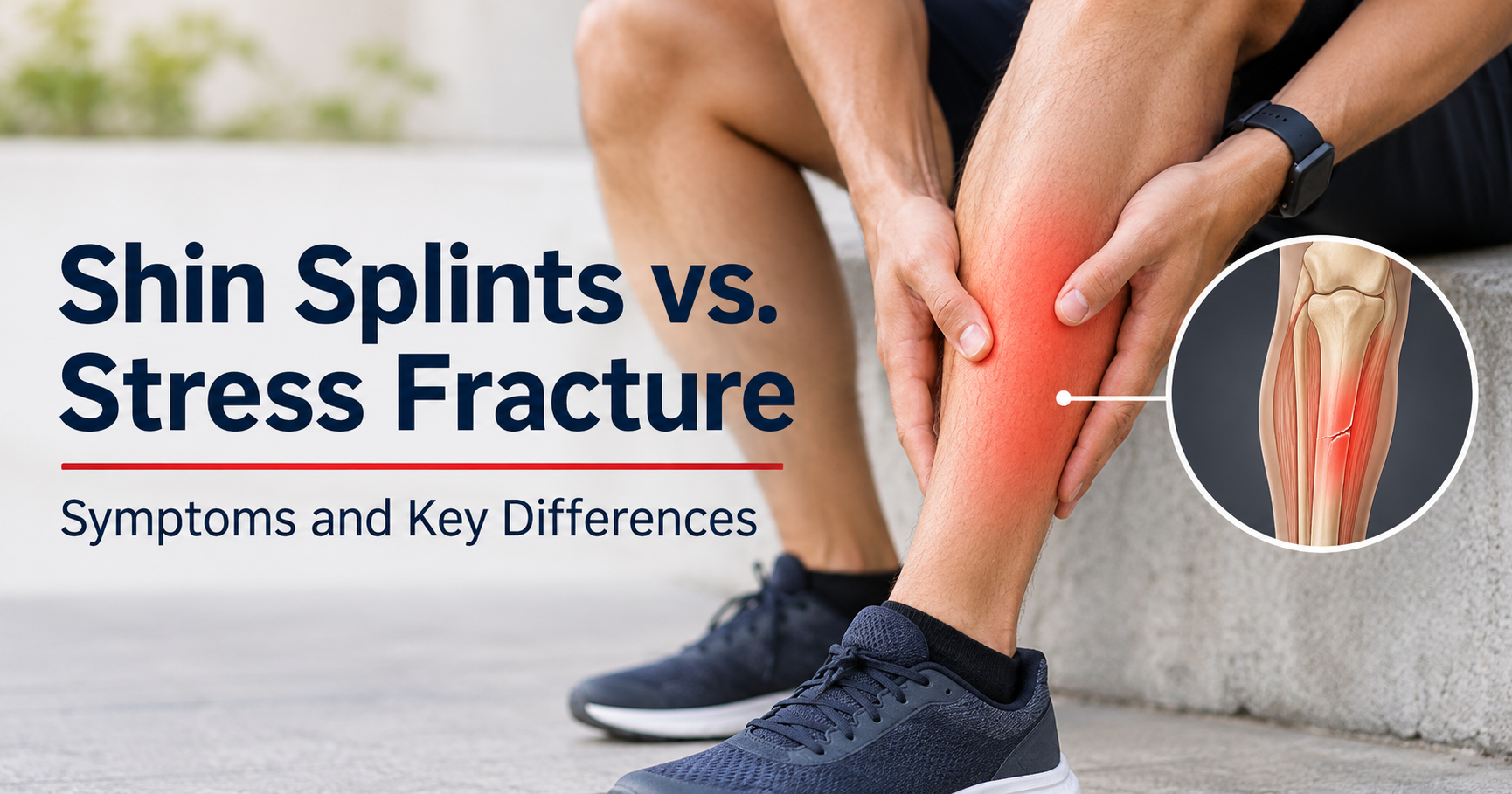
You start running more, or you ramp up training for a new sport, and then your lower leg begins to ache. Is it just shin splints, or could it be a stress fracture? The two injuries share many symptoms, yet they need very different handling. Treating a stress fracture like simple shin soreness can turn a small crack in the bone into a long, frustrating layoff.
This guide explains the symptoms of shin splints versus a stress fracture, how to tell them apart, how doctors confirm the diagnosis, what recovery looks like, and how to protect your legs in the future.
What Are Shin Splints?
Shin splints, medically called medial tibial stress syndrome (MTSS), are pain along the inner edge of the tibia (shinbone). They develop when repeated impact irritates the muscles, tendons, and the thin tissue covering the bone. Shin splints are one of the most common overuse injuries among runners, dancers, military recruits, and athletes in jumping sports.
What Is a Stress Fracture?
A stress fracture is a tiny crack, or a severe bruise-like injury, inside the bone. It happens when the bone is loaded again and again without enough time to repair itself. In the lower leg the tibia is a common site, but stress fractures also occur in the fibula, the foot bones (metatarsals), the heel, and the hip. Many experts see shin splints and stress fractures as points on the same spectrum of bone overload, which is why shin pain should never be ignored.
Shin Splints vs Stress Fracture: Symptom Comparison
| Symptom | Shin Splints | Stress Fracture |
|---|---|---|
| Pain location | Spread along the inner edge of the shinbone, usually 5 cm or more | Small spot you can cover with one fingertip |
| Pain pattern | Starts at the beginning of a run, often eases as you warm up | Starts mild, then worsens during activity and does not ease |
| Rest pain | Usually settles within hours or a day | May continue at rest and at night |
| Touch | Soft, widespread tenderness | Sharp tenderness at one exact point |
| Swelling | Mild or absent | Possible swelling or warmth at the spot |
| Single-leg hop | Uncomfortable at most | Often sharply painful |
| Typical recovery | About 2 to 6 weeks | Around 6 to 12 weeks or longer |
Typical Shin Splints Symptoms
- Dull, aching pain along the lower inner shin
- Soreness that appears when you start exercise and may fade as you continue
- Tenderness when you press along the bone edge
- Mild swelling in some cases
- Pain that improves with rest and returns when you resume training
Typical Stress Fracture Symptoms
- Pain at one precise spot that you can point to with a finger
- Pain that begins with activity and steadily gets worse
- Aching at rest, or pain that disturbs sleep
- Swelling, warmth, or bruising at the site
- Sharp pain when hopping, jumping, or standing on one leg
- Pain that does not improve after a week or two of reduced activity
Simple Self-Checks at Home
These checks do not replace a medical exam, but they can help you decide how urgently you need one.
- Press test: Run your fingers along the shin. A long band of tenderness points toward shin splints. One very sharp spot points toward a stress fracture.
- Rest test: If the pain keeps going when you are sitting or lying down, treat it seriously.
- Hop test: Gently hop on the painful leg. Stop at once if it hurts sharply. Do not repeat it, because it can worsen a fracture.
Common Causes and Risk Factors
- Sudden increases in mileage, speed, or intensity
- Running on hard or uneven surfaces
- Worn-out or unsupportive footwear
- Flat feet or very high arches
- Weak calves, hips, or core muscles
- Low vitamin D or calcium intake
- Low energy availability and, in women, irregular periods, which weaken bone
- A previous stress fracture
How Doctors Diagnose Each Condition
A clinician will ask about your training, check where it hurts, and examine your foot mechanics. For a suspected stress fracture, an X-ray is often the first test, but early cracks can be invisible for two to three weeks. An MRI or bone scan is more sensitive and is commonly used when symptoms strongly suggest a fracture but the X-ray looks normal. Shin splints are usually diagnosed from your history and examination alone.
Treatment and Recovery
Shin Splints
- Cut back or pause high-impact exercise and switch to swimming or cycling
- Apply ice for 15 to 20 minutes after activity if it feels soothing
- Stretch and strengthen the calves, ankles, and hips
- Return gradually, increasing load by small steps each week
Stress Fracture
- Stop the activity that causes pain and get a medical diagnosis
- Follow your doctor’s plan, which may include a walking boot or crutches
- Allow roughly 6 to 12 weeks for healing, and longer for high-risk bones
- Return to impact slowly under guidance, starting with walking, then jogging
Most shin splints recover in a few weeks. Stress fractures take longer, and rushing back is the leading cause of re-injury.
Gear That Can Help Protect Your Shins
The right equipment will not cure an injury, but it can lower the strain on your legs while you recover and after you return.
- Supportive running shoes: Replace them roughly every 500 to 800 km, or sooner if the cushioning feels flat.
- Cushioned insoles or orthotics: Useful if you have flat feet or high arches.
- Compression sleeves: Some people find them comfortable during and after exercise.
- Foam roller and massage ball: Help relieve tight calf muscles.
- Resistance bands: Great for ankle, calf, and hip strengthening.
- Walking boot: Only when a doctor prescribes it for a stress fracture.
How to Prevent Shin Splints and Stress Fractures
- Increase training volume by no more than about 10 percent per week
- Mix hard days with easy days and schedule full rest days
- Run on softer surfaces when possible and vary your routes
- Add strength training for calves, glutes, and core
- Eat enough calories, calcium, and vitamin D to support bone health
- Listen to early warning pain and act on it quickly
When to See a Doctor
- Pain at one specific spot that is getting worse
- Pain at rest or at night
- Visible swelling, bruising, or warmth over the bone
- No improvement after one to two weeks of rest
- Pain that causes limping or makes walking difficult
- Numbness, tingling, or a cold, pale foot (seek urgent care)
Frequently Asked Questions
Can shin splints turn into a stress fracture?
Yes. If the bone keeps being overloaded, shin splints can progress to a stress reaction and then a stress fracture, which is why persistent pain needs attention.
Can I walk on a stress fracture?
Sometimes it is possible, but it can worsen the injury. Follow your clinician’s advice about weight-bearing.
Will a stress fracture show on an X-ray?
Not always. Early fractures often only appear on an MRI or bone scan.
How long until I can run again?
After shin splints, often within 2 to 6 weeks of a gradual return. After a stress fracture, usually 6 to 12 weeks or more, once your doctor confirms healing.
Final Thoughts
Shin splints and stress fractures can feel similar at first, but the clues are in the details: a wide, warming-up ache suggests shin splints, while a pinpoint, worsening, rest-and-night pain suggests a stress fracture. When in doubt, rest and get checked. Early care is faster, cheaper, and far better for long-term running.
Medical disclaimer: This article is for general information only and is not a substitute for professional medical advice, diagnosis, or treatment. Consult a qualified healthcare provider about your symptoms.