If you have a nagging pain under the ball of your foot that feels like you are walking on a pebble, you are not imagining it. This is one of the classic plantar plate tear symptoms, and it is often mistaken for a bruise, a neuroma, or simple overuse. Because the problem tends to get worse the longer it is ignored, learning to recognize the early signs can save you months of pain and, in some cases, prevent surgery.
This guide explains what the plantar plate is, what a tear feels like, how it differs from other forefoot problems, how doctors confirm it, and what you can do at home while you arrange proper care.
Quick summary
- The most common sign is pain under the ball of the foot, usually at the base of the second toe.
- Swelling, a toe that drifts sideways, and a feeling of walking on a pebble are typical.
- Symptoms often start gradually and slowly worsen if the foot is not protected.
- Early rest, supportive footwear, and padding can help. A medical exam is the only way to confirm a tear.
What Is the Plantar Plate?
The plantar plate is a thick, fibrous pad of tissue found on the underside of each of the four lesser toes, right where the toe joins the foot. Doctors call this junction the metatarsophalangeal joint, or MTP joint. The plate works like a strong ligament and a cushion at the same time.
Its main jobs are to:
- Hold the toe in a stable, straight position
- Stop the toe from bending upward too far when you push off
- Absorb pressure under the ball of the foot with every step
- Help the toe grip the ground and share load with the metatarsal bones
The second toe is affected most often. It is usually the longest lesser toe and carries a large share of body weight during walking and running, so its plate is under constant stress.

What Is a Plantar Plate Tear?
A plantar plate tear happens when the tissue is overstretched, partly torn, or in severe cases completely ruptured. Sometimes the damage builds up slowly from repeated strain. In other cases it follows a single event, such as a hard landing or a sudden twist.
Once the plate is weakened, the toe loses its main support under the joint. The toe may begin to lift, drift toward the big toe, or cross over its neighbor. This is why the condition is sometimes linked with crossover toe or an unstable, floating toe.
Common Plantar Plate Tear Symptoms
Symptoms vary from person to person and depend on how severe the injury is. The signs below are the ones people report most often.

1. Pain under the ball of the foot
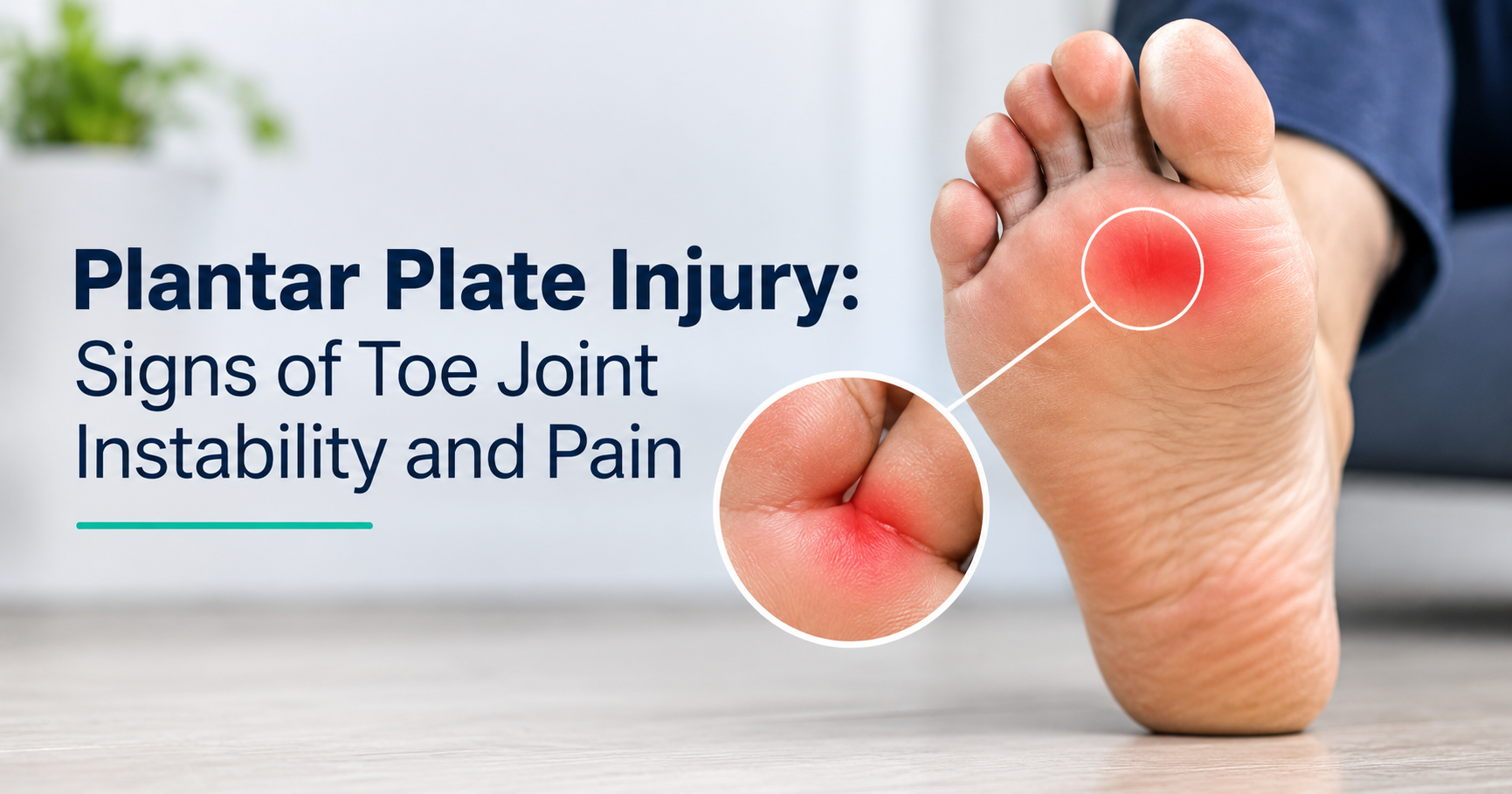
Pain at the base of the second toe is the hallmark symptom. It may feel dull and aching at first, then sharper as the injury progresses. The pain is usually felt on the sole, just behind the toe, and often gets worse when you walk barefoot, wear thin-soled shoes, or stand for long periods.
2. A pebble or bunched-up sock sensation
Many people describe the feeling as walking on a small stone or a folded sock inside the shoe. Because the shoe is clearly empty when checked, this sensation can be confusing. It happens because the joint is inflamed and the soft tissue under it has lost its normal cushioning.
3. Swelling around the toe joint
Puffiness on the top or the bottom of the joint is common. The toe may look thicker than the same toe on the other foot, and the area may feel warm or tender when pressed.
4. A toe that drifts or crosses over
As the plate weakens, the toe may slowly angle toward the big toe or away from it. A gap can open between the second and third toes. This visible change is one of the stronger clues that the plate is no longer holding the joint in place.
5. Pain that rises with push-off and tiptoeing
Walking uphill, rising onto your toes, running, and wearing heels all load the plantar plate. If those activities set off sharp pain at the ball of the foot, the plate may be involved.
6. A floating toe
In more advanced cases, the toe lifts slightly and no longer touches the ground when you stand. This happens because the joint has lost its stabilizing support underneath.
Other signs you may notice
- Pain that eases with rest but returns when you resume activity
- A feeling that the toe is loose or unstable
- Stiffness in the joint, especially in the morning
- Calluses forming under the ball of the foot because pressure is shifting
- Difficulty finding comfortable shoes
How Plantar Plate Tears Progress
A plantar plate injury rarely appears overnight. It commonly moves through stages, and the visible changes become more obvious the longer the joint stays under stress.

- Stage 1, early strain: pain and mild swelling, with no visible change in toe position.
- Stage 2, partial tear: the toe begins to drift slightly and the joint feels a little loose.
- Stage 3, major tear: the toe clearly deviates and push-off becomes weak or painful.
- Stage 4, unstable joint: the toe may cross over, curl like a hammertoe, or sit partly out of the joint.
Clinicians use more formal grading systems, but the idea is the same: the earlier the problem is managed, the less likely the toe is to become fixed in a bent or crooked position.
What Causes a Plantar Plate Tear?
Most tears come from repeated overload rather than one dramatic injury. Common causes and risk factors include:
- A long second toe or long second metatarsal. This puts extra pressure on the second MTP joint.
- Bunions. A bunion shifts weight toward the second toe and increases stress on its plate.
- High-impact activity. Running, jumping, dancing, and sports with quick pivots all load the forefoot heavily.
- Unsupportive or tight footwear. Thin soles, narrow toe boxes, and high heels push pressure onto the ball of the foot.
- A tight calf muscle. Limited ankle flexibility makes the forefoot work harder at push-off.
- Flat feet or unusual foot mechanics. These can change how weight travels across the foot.
- Corticosteroid injections near the joint. Repeated injections can weaken soft tissue and are generally approached with caution by foot specialists.
- Age and long-term wear. Plantar plate problems are more common in middle-aged adults, and women are affected more often than men.
- A sudden injury. A hard landing, stubbed toe, or forced bending of the toe can cause an acute tear.
Plantar Plate Tear vs. Other Forefoot Problems
Several conditions cause pain in the ball of the foot, and they overlap more than most people expect. The table below shows how they usually differ. It is a guide only, and a professional exam is needed to tell them apart.
| Condition | Typical Feeling | Key Clue |
|---|---|---|
| Plantar plate tear | Aching or sharp pain under the toe joint, pebble sensation | Swelling, toe drift or a toe that floats |
| Morton’s neuroma | Burning, tingling, or numbness between the toes | Nerve-type symptoms, often relieved by removing the shoe |
| Capsulitis | Pain and swelling at the joint | Often an early stage of a plantar plate problem |
| Metatarsalgia | General soreness across the ball of the foot | Broader pain, less toe instability |
| Stress fracture | Localized bone pain that builds with activity | Pinpoint tenderness on the bone itself |
How Is a Plantar Plate Tear Diagnosed?
Diagnosis usually begins with a physical exam by a podiatrist, orthopedic foot specialist, or sports medicine doctor. They will look at how you stand and walk, check the position of your toes, and press on the joint to find the exact point of tenderness.
The drawer test
One of the most useful bedside checks is the drawer test, sometimes called the Lachman test of the toe. The examiner steadies the foot and gently moves the toe up and down at the joint. Too much movement, or pain during the test, suggests the plate is damaged.
Imaging
- X-rays do not show the plate itself, but they help rule out fractures and show toe alignment.
- Ultrasound can show the plate in real time and is often used for a quick, low-cost look.
- MRI gives the clearest picture of the plate and surrounding tissues and can show the size and location of a tear.
Home Care While You Wait for an Appointment
These steps may ease symptoms and keep the joint from getting worse. They are not a substitute for a proper diagnosis.
- Reduce load. Pause running, jumping, and other high-impact activity. Swap in swimming or cycling if they do not cause pain.
- Wear stiff, supportive shoes. A shoe with a firm sole that bends little at the ball of the foot reduces stress on the joint. Avoid going barefoot on hard floors.
- Choose a roomy toe box. Tight shoes squeeze the joint and can worsen toe drift.
- Use cushioning. A soft insole or a metatarsal pad placed just behind the painful area can spread pressure away from the plate.
- Try toe taping. Gently taping the affected toe in a neutral position can add support. Keep it snug but not tight, and remove it if the toe becomes numb, cold, or discolored.
- Apply ice. Ten to fifteen minutes at a time, with a cloth between ice and skin, can help control swelling.
- Avoid stretching the toe upward. Do not repeatedly bend or pull the toe to “test” it, since this can irritate the joint further.
Professional Treatment Options
Treatment depends on the size of the tear, how much the toe has shifted, and how active you are.
Non-surgical care
Most partial tears and early-stage injuries are managed without surgery. Options often include:
- Taping or splinting the toe to hold it in a corrected position
- A walking boot or stiff-soled shoe for a period of rest
- Custom or off-the-shelf orthotics that offload the forefoot
- Anti-inflammatory medicine, if appropriate for you
- Physical therapy to improve calf flexibility and foot strength
Surgical repair
If the tear is large, the toe is badly out of line, or conservative care fails after a reasonable trial, surgery may be discussed. Procedures can include repairing the plate directly, shortening a long metatarsal, or correcting related deformities. Your surgeon will explain which approach fits your foot.
A note on injections
Steroid injections into or near the toe joint are used cautiously for this condition because they can weaken the plate further. If an injection is suggested, ask your doctor about the risks.
How Long Does Recovery Take?
Recovery varies widely. Mild strains may settle in several weeks with rest and better footwear, while partial tears often need two to three months of protection. After surgery, a longer period of limited weight-bearing and gradual return to activity is common. Following your care team’s plan matters more than any single timeline, because returning to sport too early is a common reason for relapse.
How to Prevent Plantar Plate Injuries
- Wear shoes that fit well, with enough width in the toe box and support under the forefoot.
- Limit time in high heels and thin, flat shoes that offer little cushioning.
- Increase running distance and intensity gradually.
- Stretch the calf muscles regularly to reduce forefoot strain.
- Strengthen the small muscles of the foot with exercises such as toe curls and towel scrunches, once any current pain has settled.
- Treat bunions and other alignment problems early.
- Replace worn running shoes before the cushioning breaks down.
When to See a Doctor
Book an appointment with a foot specialist if you notice any of the following:
- Pain under the ball of the foot that lasts more than one to two weeks
- A toe that is visibly shifting, crossing over, or lifting off the ground
- Swelling that does not go down with rest
- Pain after a sudden injury, especially if you heard or felt a pop
- Difficulty walking or wearing normal shoes
Seek urgent care if you have severe pain with significant swelling, numbness, a toe that looks pale or blue, or signs of infection such as redness and fever.
Frequently Asked Questions
Can a plantar plate tear heal on its own?
Mild injuries and partial tears can improve with rest, supportive shoes, and toe taping. The plate has a limited blood supply, so healing can be slow, and a complete tear is unlikely to repair itself without help.
Is it safe to keep walking with a plantar plate tear?
Gentle walking in supportive shoes is often fine, but pushing through pain can enlarge the tear. If walking hurts, reduce your activity and get the foot examined.
What does a plantar plate tear feel like?
Most people describe aching or sharp pain under the base of the second toe, often with a pebble-like feeling, swelling, and pain that worsens when walking barefoot or pushing off.
Can a plantar plate tear cause a hammertoe?
Yes. When the plate can no longer hold the joint stable, the toe may gradually curl or cross over, which is why early treatment is encouraged.
Can I exercise with a plantar plate tear?
Low-impact options such as swimming or stationary cycling with a stiff shoe are usually better tolerated than running or jumping. Check with your clinician before returning to any forefoot-loading activity.
Final Thoughts
Plantar plate tear symptoms can look like many other forefoot problems, which is why they are so often missed in the early weeks. Pain under the base of the second toe, a pebble-like feeling, swelling, and a toe that begins to drift are all worth taking seriously. Protecting the joint early with supportive footwear, reduced impact, and professional guidance gives you the best chance of keeping the toe straight and getting back to normal activity.
Disclaimer: This article is for general information only and is not a substitute for professional medical advice, diagnosis, or treatment. Always consult a qualified healthcare provider about foot pain or injury.