If you have had heel pain for months and plantar fasciitis treatment has not worked, the real culprit may be a trapped nerve. Baxter nerve entrapment is an often overlooked condition that can feel almost identical to plantar fasciitis. This guide explains what it is, how to recognize it, and the treatments that work.
What Is Baxter Nerve Entrapment?
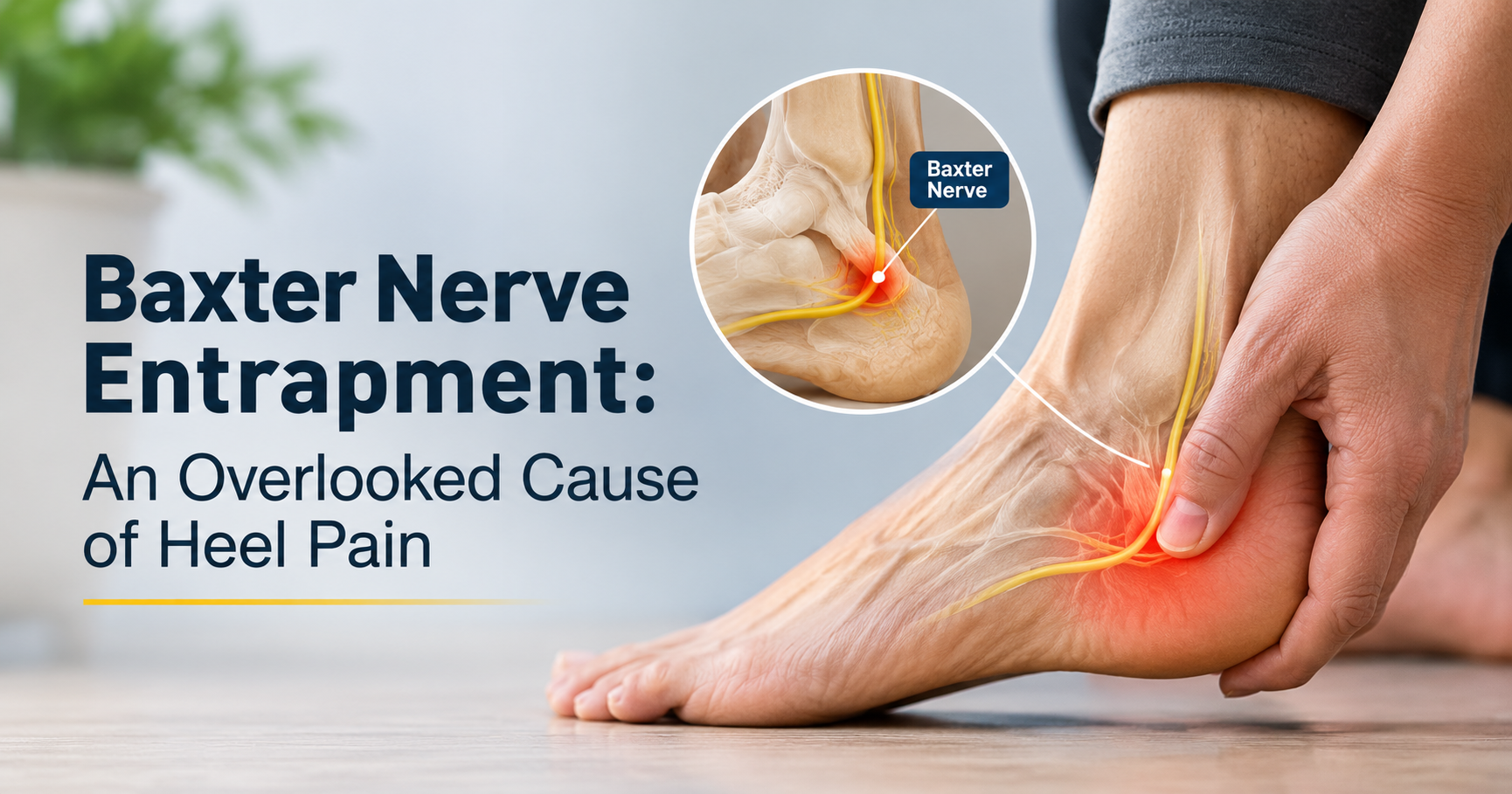
Baxter’s nerve is the first branch of the lateral plantar nerve, which comes from the tibial nerve in your ankle. It runs deep along the inner heel, between the abductor hallucis muscle and the quadratus plantae muscle, and supplies the abductor digiti minimi muscle and the heel bone lining. When tissue around it tightens, swells or thickens, the nerve gets compressed and sends out pain signals. It is also known as inferior calcaneal nerve entrapment. Research suggests it accounts for roughly 15 to 20 percent of chronic heel pain cases.
Main Causes
- Overpronation (flat feet): the heel rolls inward and stretches or squeezes the nerve.
- Enlarged or tight abductor hallucis muscle: common in runners and athletes.
- Plantar fasciitis or heel spurs: swelling and bone changes can crowd the nerve.
- Repetitive impact: running, jumping, long hours standing on hard floors.
- Poor footwear: shoes without arch support or with thin, hard soles.
- Injury or swelling: ankle sprains, fractures, varicose veins or scar tissue.
- Excess body weight and diabetes: both increase nerve stress and vulnerability.
Symptoms to Look For
- Chronic pain on the inner side of the heel, sometimes spreading toward the arch
- Burning, tingling, numbness or sharp shooting sensations
- Pain that worsens with activity and may linger at night or after rest
- Tenderness when pressing the inner heel, near the nerve
- Pain that does not respond to standard plantar fasciitis treatment
- In long-standing cases, weakness of the little toe muscle (hard to notice)
Baxter Nerve Entrapment vs Plantar Fasciitis
Because both conditions cause heel pain, they are often confused, and they can occur together. Here is how they usually differ:
| Feature | Baxter Nerve Entrapment | Plantar Fasciitis |
|---|---|---|
| Pain location | Inner heel, deeper | Bottom of the heel, front edge |
| Pain type | Burning, tingling, shooting | Sharp, stabbing |
| First steps in morning | Not always worse | Typically very painful |
| Pain with activity | Often increases | Often eases after warming up |
| Night pain | Common | Uncommon |
How Is It Diagnosed?
A foot and ankle specialist, orthopedic doctor or podiatrist will take your history, press along the nerve path (a positive Tinel’s sign reproduces the pain) and examine your foot posture. Tests may include an MRI (which can show swelling or shrinkage of the abductor digiti minimi muscle), ultrasound, and sometimes nerve conduction studies. A diagnostic nerve block can also help confirm the source.
Treatment Options
1. Rest and Activity Changes
Reduce running, jumping and long hours on hard floors for several weeks. Switch temporarily to low-impact exercise such as swimming or cycling.
2. Supportive Footwear
Choose shoes with firm arch support, a cushioned midsole and a stable heel counter. Avoid walking barefoot on hard surfaces, flat sandals and worn-out shoes.
3. Orthotics and Heel Support
Arch-support insoles, heel cups and custom orthotics can limit overpronation and reduce pressure on the nerve. A silicone heel cup offers extra shock absorption for daily use.
4. Stretching and Strengthening
- Calf stretch: hold 30 seconds, repeat 3 times, twice daily.
- Plantar fascia stretch: pull toes toward shin while seated, hold 20 to 30 seconds.
- Towel curls and marble pick-ups: strengthen the small muscles of the foot.
- Nerve gliding exercises: gentle ankle movements guided by a physiotherapist.
5. Ice, Massage and Anti-Inflammatories
Roll the sole over a frozen water bottle for 10 to 15 minutes. Gentle massage and short-term over-the-counter anti-inflammatory medicine may help, if your doctor agrees it is suitable for you.
6. Injections and Advanced Therapy
If symptoms persist, a doctor may suggest a corticosteroid injection near the nerve, ultrasound-guided treatment, or shockwave therapy.
7. Surgery
When 6 to 12 months of conservative care fails, a nerve release (decompression) may be recommended. It frees the nerve by releasing tight fascia and muscle. Success rates are generally good when the diagnosis is accurate.
Helpful Products for Heel Pain Relief
These common, doctor-friendly supports are worth considering as part of conservative treatment:
- Orthopedic arch-support insoles
- Gel or silicone heel cups
- Cushioned walking or running shoes with a stable heel
- Foot massage roller or frozen therapy ball
- Night splint for stretching the calf and foot
- Compression sleeve for the foot and ankle
Check size, material, arch height and return policy before buying, and choose products that match your foot type.
Recovery Time
Mild cases often improve in 6 to 12 weeks with consistent care. Chronic cases can take 3 to 6 months. After surgery, most people return to normal activity in 6 to 12 weeks, depending on the procedure and the individual.
Prevention Tips
- Wear supportive shoes and replace them every 400 to 500 miles of use.
- Warm up and stretch before exercise.
- Increase running or workout intensity gradually.
- Maintain a healthy weight.
- Use cushioned mats if you stand for long periods.
- Treat foot problems such as plantar fasciitis early.
Frequently Asked Questions
Can Baxter nerve entrapment go away on its own?
Mild cases may settle with rest and proper footwear, but persistent pain usually needs targeted treatment.
Is walking good for Baxter nerve entrapment?
Gentle walking in supportive shoes is usually fine. Stop if pain increases, and avoid high-impact activity until you improve.
Can it be mistaken for tarsal tunnel syndrome?
Yes. Both involve nerves in the heel and ankle region, so a specialist exam is important for accurate diagnosis.
Which doctor should I see?
A podiatrist, orthopedic foot and ankle specialist or sports medicine physician is the best choice.
Final Thoughts
Baxter nerve entrapment is a common but underdiagnosed reason for stubborn heel pain. If your pain sits on the inside of the heel and plantar fasciitis care has not helped, ask your doctor about this condition. With the right diagnosis, supportive footwear, stretching and orthotics, most people recover without surgery.
Disclaimer: This article is for general information only and is not a substitute for professional medical advice, diagnosis or treatment. Always consult a qualified healthcare provider about your condition.