Disclosure: this article is for educational purposes. If you buy through links on this site, we may earn a small commission at no extra cost to you.
You spend good money on a pair of shoes, wear them a few dozen times, and then the back of the heel starts to cave in. The leather creases, the heel collapses, and a pair that should have lasted for years looks tired in a few months. The cause is rarely the shoe itself. It is usually the way we put them on.
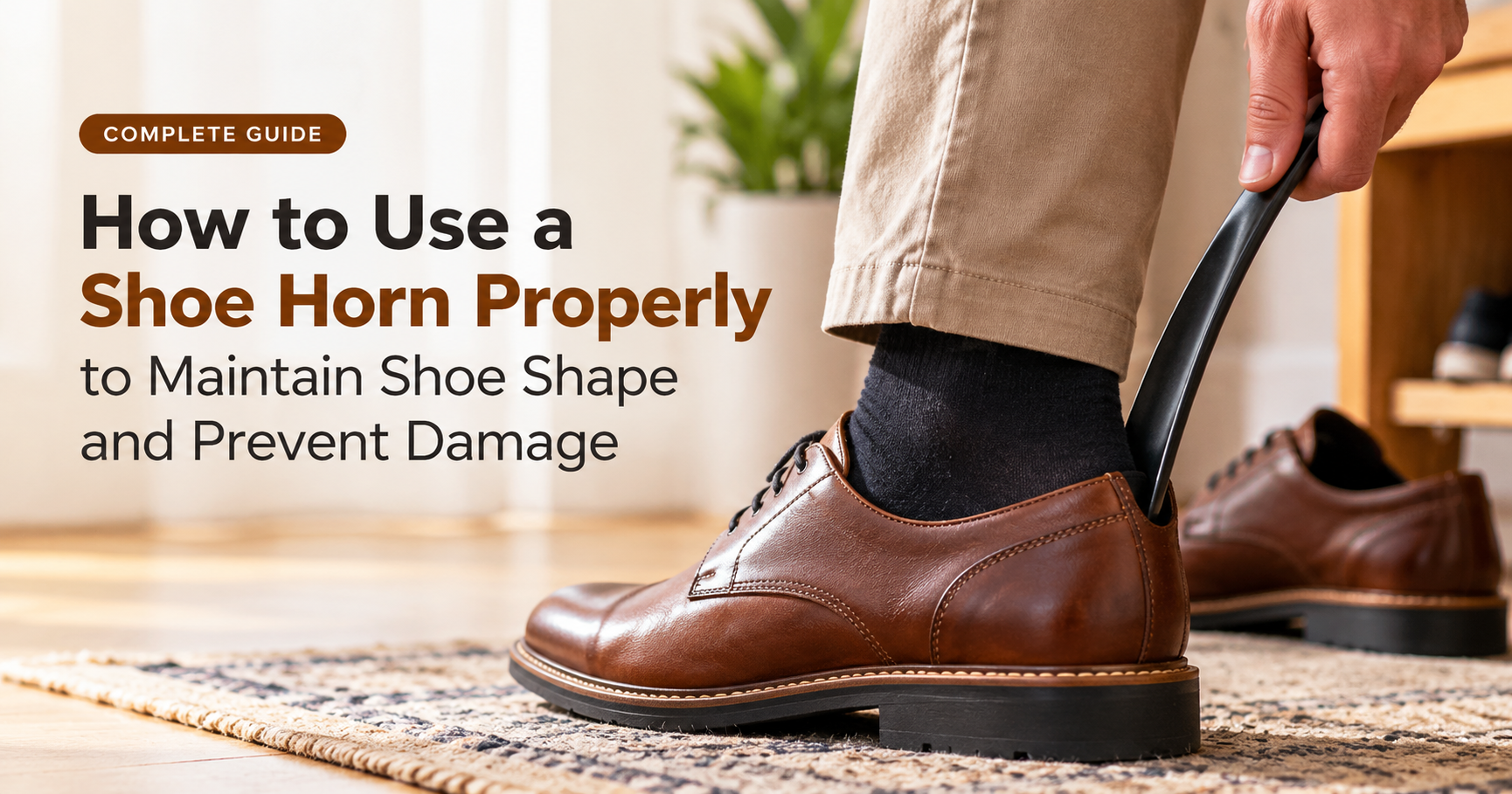
A shoe horn is a small, inexpensive tool that solves this problem. In this complete guide you will learn how to use a shoe horn properly, why it protects the structure of your shoes, which type to choose, and what mistakes to avoid. By the end you will know exactly how to keep your shoes in shape for years.
What Is a Shoe Horn and What Does It Do?
A shoe horn is a curved, smooth, scoop-shaped tool, usually 6 to 32 inches long. It acts as a slide at the back of the shoe. Instead of forcing your heel against the heel cup, you let your heel glide down the smooth surface of the horn and drop straight into position.
The name comes from the days when these tools were made from animal horn, which was smooth, strong and naturally curved. Today they are made from plastic, stainless steel, brass, wood and even leather-wrapped metal, but the purpose is exactly the same: reduce friction and protect the heel area.
Why Shoe Structure Matters
To understand why a shoe horn is so useful, you first need to understand how a shoe holds its shape. Most closed shoes contain a stiff piece of material at the back, between the outer layer and the inner lining. This piece is called the heel counter. It cups your heel, keeps your foot stable and stops the back of the shoe from folding over.
The heel counter can be made from molded leather, thermoplastic, fiberboard or other firm materials. When it stays firm, the shoe keeps its shape, your foot feels secure and the shoe looks sharp. When it is crushed, the damage is permanent. You cannot easily bring a collapsed heel counter back to life.
What Happens When You Skip the Shoe Horn
Pushing your foot into a shoe without a horn, or pressing down the back with a finger, creates concentrated pressure on the heel area. Over time, this leads to:
- Collapsed heel counters. The firm cup bends inward or flattens, so the back of the shoe no longer stands upright.
- Creased and cracked leather. Repeated folding at the same point leaves deep creases that eventually crack.
- Torn heel lining. Dragging your heel against the lining wears it away and exposes the material underneath.
- Heel slippage and blisters. A weakened heel counter lets your heel move up and down, which rubs the skin.
- Uneven wear and poor fit. A distorted heel changes how the shoe sits on your foot and how the sole wears down.
- A shorter shoe life. Once the structure goes, the shoe often cannot be repaired economically.
How to Use a Shoe Horn Step by Step
Using a shoe horn takes only a few extra seconds, and it quickly becomes a habit. Follow these steps for any closed shoe, loafer or boot.
Step 1: Loosen the Shoe
Open the laces, buckles, zips or straps enough to create a wide opening. If the shoe is laced tightly, your foot cannot slide in smoothly, and you will be tempted to push the heel down. Loosen the tongue as well, and pull it forward so it does not bunch up under your toes.
Step 2: Position the Shoe Horn
Hold the handle of the shoe horn and slide the curved end into the back of the shoe, between the heel lining and the spot where your heel will go. The wide, curved side should face your heel, and the horn should sit flat against the inside of the heel counter. For a long-handled shoe horn, place the shoe on the floor and rest the horn against the heel, holding the handle at a comfortable angle.
Step 3: Slide Your Heel Down the Horn
Put your toes into the shoe first, then lower your heel onto the shoe horn. Apply gentle downward pressure and let your heel slide along the smooth surface. Your foot should drop into place without any force. If you feel strong resistance, stop and loosen the shoe a little more rather than pushing harder.
Step 4: Remove the Shoe Horn Carefully
Once your heel is fully seated, hold the shoe horn and lift it straight up and out. Do not yank it sideways, because that can scrape the lining. Then tighten the laces or fasten the straps, and stand up to check that your heel feels snug.
How to Use a Shoe Horn With Different Types of Shoes
The basic technique is the same, but small adjustments make it work better for each style.
Dress Shoes and Oxfords
These shoes usually have a firm heel counter and a snug fit. Loosen the laces fully, pull the tongue up, and use a smooth metal or wooden horn. This is the category where a shoe horn pays off the most, because leather dress shoes are expensive and the heel crease is very noticeable.
Loafers and Slip-Ons
Loafers have no laces to open, so the heel is under even more pressure. A shoe horn is essential here. Slide the horn in first, step in slowly and let the heel glide down. Never press the back flat with your finger to wriggle in.
Boots
Boots have taller shafts and tighter openings. A longer shoe horn, around 12 inches or more, makes the job easier and protects the back of the boot. Unzip or loosen the boot fully, and keep your leg straight as you step in.
Sneakers and Athletic Shoes
Many people crush the heel of sneakers to slip them on like slides. This breaks down the heel counter and the foam around it, which reduces stability. Use a short plastic shoe horn and loosen the laces so you can get in without damage. This is also useful for running shoes, where heel support matters for comfort.
Women’s Heels and Flats
Pumps and closed flats rely on a firm heel grip. A slim metal or plastic horn fits easily into narrow shoes and helps keep the back of the shoe smooth and neat. For tight heels, take your time and avoid forcing the foot in.
Kids’ Shoes
Children often stamp their feet in or fold down the back of their shoes. Teaching them to use a small, colorful shoe horn helps shoes last longer, especially school shoes that need to survive daily wear. It also helps prevent heel blisters.
Types of Shoe Horns and How to Choose One
Not every shoe horn suits every person. Think about the shoes you wear, how often you travel and whether you have any trouble bending down.
| Type | Pros | Cons | Best For |
|---|---|---|---|
| Plastic | Lightweight, affordable, available in many colors | Can flex, crack or snap over time | Travel, kids, gym bags |
| Metal (stainless steel or brass) | Strong, slim, smooth and long-lasting | Rough or sharp edges can scratch delicate lining | Everyday use, tight dress shoes |
| Wood or horn | Classic look, gentle on leather, comfortable to hold | Higher price, needs to be kept dry | Gifts, home use, leather shoe lovers |
| Long-handled | No bending needed, great leverage and reach | Bulky to store and carry | Boots, seniors, back or hip discomfort, pregnancy |
| Folding or travel size | Compact, easy to pack | Short reach, small hinge can wear out | Business trips, suitcases |
What to Look for When Buying a Shoe Horn
- Smooth, rounded edges. Run your finger along the edge. Any sharpness can scratch the lining or damage the heel.
- The right length. Short horns (6 to 8 inches) are good for travel. Medium horns (8 to 12 inches) suit most people. Long horns (16 inches and up) are best for boots or anyone who prefers not to bend.
- A comfortable curve and width. The horn should be wide enough to cover the back of the heel but slim enough to fit inside narrow shoes.
- A sturdy build. A good shoe horn should not bend or flex when you put your weight on it.
- A hanging hole or hook. This lets you store it near your shoes so you actually use it.
- Material suited to your shoes. For fine leather shoes, wood, horn or smooth polished metal is a safe choice. For everyday sneakers, plastic is plenty.
- Non-slip handle. This matters most for long-handled models where you rely on grip and leverage.
Who Benefits Most From Using a Shoe Horn?
- Anyone with leather or structured shoes. The heel counter is the first part to fail, so protecting it protects the whole shoe.
- People with limited mobility. A long-handled shoe horn allows you to put on shoes without bending or reaching.
- Older adults. It reduces strain and makes dressing easier and safer.
- Frequent travelers and office workers. You often switch between shoes, and a travel shoe horn is light and easy to pack.
- Parents. Teaching children early helps school shoes survive a full term.
- Sneaker collectors. A clean heel keeps collectible shoes looking new.
Common Mistakes to Avoid
- Using the shoe horn at the wrong angle. The horn should lie flat against the heel. If it sits crooked, it can crease the lining.
- Pushing too hard. A shoe horn should make entry smooth. If you have to force it, loosen the shoe more.
- Skipping it when you are in a hurry. Most heel damage happens in rushed moments. Make the shoe horn part of your routine.
- Keeping a cracked or damaged horn. A split plastic edge can tear the lining. Replace it if it is rough.
- Dragging the horn out sideways. Always lift it out cleanly.
- Relying on it alone. A shoe horn is one part of good shoe care, not the only part.
Other Habits That Help Preserve Shoe Structure
A shoe horn does its best work when combined with a few other easy habits.
Use Shoe Trees
After wearing your shoes, insert shoe trees (cedar ones are popular because they absorb moisture and odor). They hold the toe box open, smooth out creases and help the shoe dry in its natural shape.
Rotate Your Shoes
Give each pair at least a full day of rest between wears. This allows sweat and moisture to evaporate, which helps the leather and lining keep their strength and shape.
Do Not Leave Shoes Crammed in Bags or Cupboards
Shoes stacked or squashed under heavy items can lose their shape. Store them upright with space around them.
Dry Wet Shoes the Right Way
If your shoes get wet, remove the insoles, stuff the shoes loosely with paper or insert shoe trees, and let them dry at room temperature. Direct heat can shrink leather and warp the heel counter.
Clean and Condition Leather
Dry, cracked leather is more likely to crease and break. Clean off dirt and use a suitable conditioner now and then to keep the material supple.
Replace Worn Heel Tips and Soles in Time
Worn heels change your stride and put uneven stress on the back of the shoe. A quick repair at the right time saves the whole pair.
How to Care for Your Shoe Horn
- Wipe it with a soft, dry cloth after use, especially if it picked up dirt from the shoe.
- Keep wooden and horn types away from water and heat to prevent cracking.
- Check the edges regularly for burrs or chips.
- Store it in a dry place and hang it up if it has a hole, so it does not bend under other items.
- Replace it when it becomes cracked, warped or rough.
Is a Shoe Horn Worth It?
Absolutely. A shoe horn costs a small fraction of the price of a quality pair of shoes, and it protects the one part that cannot be easily repaired: the heel counter. Even if you only own a few pairs, it makes them look better, feel more comfortable and last far longer. If you wear leather shoes or boots, it is one of the best value accessories you can buy.
Frequently Asked Questions
How do you use a shoe horn properly?
Loosen the shoe, place the curved end of the shoe horn inside the back of the shoe against the heel, slide your heel down along the horn until it is fully seated, then lift the horn out gently and fasten the shoe.
Does a shoe horn really protect shoes?
Yes. It reduces pressure and friction at the heel, which helps prevent a collapsed heel counter, creased leather and torn lining, all of which shorten the life of a shoe.
Which side of the shoe horn goes in the shoe?
The curved, scooped end goes inside the shoe at the back, with the curve following the shape of your heel. The handle stays outside so you can hold it.
What length of shoe horn is best?
A medium shoe horn of roughly 8 to 12 inches works for most people. Choose a short one for travel and a long-handled one of 16 inches or more for boots or if bending is uncomfortable.
Can I use a shoe horn on sneakers?
Yes. A plastic shoe horn works well on sneakers and running shoes, and it helps keep the heel from collapsing when you slip them on quickly.
Is a metal or plastic shoe horn better?
Metal is stronger and slimmer, which is great for tight dress shoes, while plastic is light and affordable for everyday use and travel. Whichever you choose, make sure the edges are smooth.
Can a crushed heel be fixed?
Sometimes a cobbler can reinforce or replace the heel counter, but it is not always possible or cost-effective. Prevention with a shoe horn is far easier and cheaper.
How often should I use a shoe horn?
Every time you put on closed shoes, loafers or boots. Consistency is what protects the heel over the long term.
Final Thoughts
Knowing how to use a shoe horn is one of the simplest ways to protect your footwear. By guiding your heel into place instead of forcing it, you keep the heel counter firm, the leather smooth and the shoe looking sharp. Combined with shoe trees, rotation and regular care, a shoe horn can add years to the life of your favorite pairs.
Choose a model with smooth edges and a length that suits your shoes and lifestyle, keep it close to where you get dressed, and make it part of your routine. Your shoes, and your wallet, will thank you.