

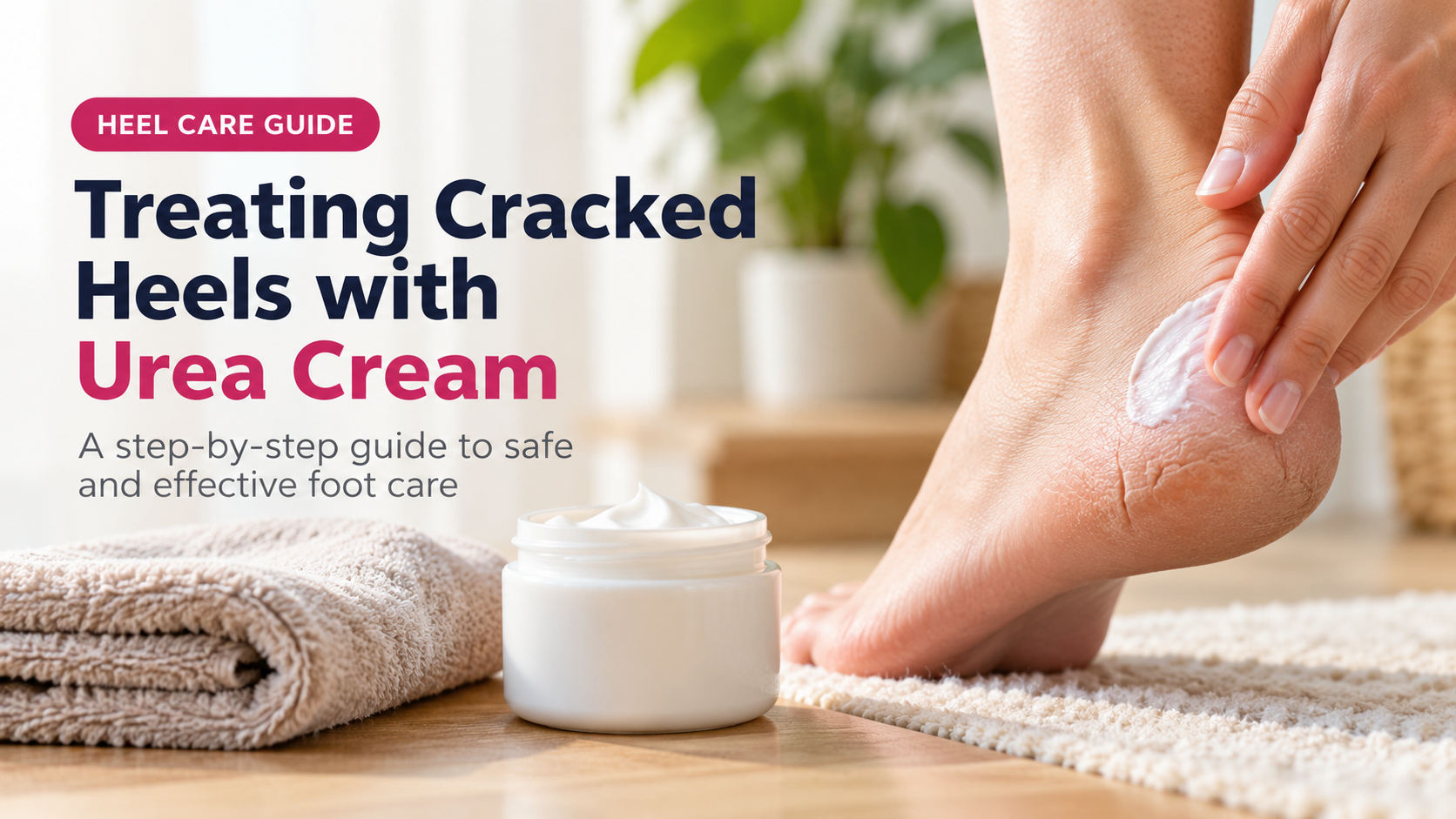
Step by Step Guide to Treating Cracked Heels with Urea Cream

Cracked heels are one of the most common foot problems, and they can be more than a cosmetic concern. What starts as dry, rough skin can turn into deep, painful splits that catch on socks, hurt with every step, and sometimes bleed. The good news is that most cases respond well to a consistent routine at home, and urea cream is one of the most widely recommended ingredients for the job.
This step by step guide explains why heels crack, how urea cream works, which strength to choose, and exactly how to use it for the best results.
Why Do Heels Crack?
The skin on your heels is naturally thick and has fewer oil glands than skin elsewhere on the body. When it dries out, it loses flexibility. Each time you put weight on your heel, the fat pad underneath expands sideways, and dry, hardened skin cannot stretch with it. The result is a crack, also called a heel fissure.
Common causes and contributing factors include:
- Dry skin, especially in cold weather or low humidity.
- Standing for long hours or walking barefoot on hard floors.
- Open-back shoes and sandals, which let the heel spread and dry out.
- Hot showers and harsh soaps that strip natural oils.
- Thickened skin or calluses that split under pressure.
- Excess body weight, which increases pressure on the heel pad.
- Underlying conditions such as eczema, fungal infection, or diabetes, which can make skin more fragile.
What Is Urea Cream and How Does It Help?
Urea is a substance that occurs naturally in healthy skin as part of its moisturizing system. In creams, it is used in two main ways, depending on the strength.
- As a humectant: at lower strengths, urea draws water into the outer layer of the skin and helps it hold moisture, which keeps skin soft and flexible.
- As a keratolytic: at higher strengths, urea gently breaks down the bonds between dead skin cells, which softens thick, hard skin and helps it shed.
This combination makes urea especially useful for heels, where the problem is usually both dryness and thickened skin. Moisturizing alone often cannot soften a thick layer of hardened skin, while urea can do both jobs at once.
Know Where You Start: Mild, Moderate or Severe
Before you begin, take a look at the condition of your heels. This tells you whether home care is enough and which approach to take.

- Mild: rough, dry skin with fine lines and no pain. Home care with urea cream is usually enough.
- Moderate: visible cracks, thick skin, and some tenderness. Urea cream with gentle buffing works well.
- Severe: deep, painful cracks, bleeding, redness, swelling, or signs of infection. Seek advice from a doctor or podiatrist.
Step 1: Choose the Right Urea Strength
Urea creams come in a range of concentrations, and the right one depends on how dry and thick your heels are.

- 5% to 10%: mild dryness and sensitive skin. Good for daily moisturizing.
- 10% to 20%: dry, rough heels and mild cracking. A common choice for everyday treatment.
- 20% to 25%: thick, cracked heels and stubborn dryness.
- 30% to 40%: heavy calluses and very thick skin. Use these for short periods and only on thickened skin, since they can sting or irritate open cracks.
If you are unsure, start with a moderate strength of about 10% to 20%. You can move up if your skin does not improve after a couple of weeks, or move down if you notice stinging or irritation. Check the product label for directions as well.
The 5-Step Urea Cream Routine

Step 2: Soak Your Feet
Soak your feet in warm, not hot, water for about 10 minutes. This softens the thick skin on the heels. Hot water and long soaks can dry the skin out further, so keep the water comfortable and the time short. A mild, fragrance-free cleanser is enough.
Step 3: Gently Smooth Away Dead Skin
While the skin is soft, gently buff the thickened areas with a pumice stone or a foot file. Use light, even strokes, and stop as soon as the skin feels smoother. The goal is to remove loose, dead skin, not to scrub the heel raw.
- Do not file open cracks, bleeding areas, or irritated skin.
- Do not use razor blades or sharp tools to cut away skin.
- Clean your pumice stone or file after each use and let it dry.
Step 4: Dry Your Feet Thoroughly
Pat your feet dry with a clean towel, including between the toes. Moisture left between the toes can encourage fungal infection. Skin that is slightly damp, rather than soaking wet, can also take in cream a little better.
Step 5: Apply Urea Cream
Wash and dry your hands, then apply a thin layer of urea cream to the heels and any rough areas. Massage it in until it is absorbed. Using a small amount more often works better than using a thick layer once. Avoid applying it between the toes, and keep it away from broken or bleeding skin, since it can sting.
Step 6: Seal It In with Cotton Socks
For best results, apply the cream at bedtime and put on clean cotton socks. The socks keep the cream on the skin and reduce transfer onto sheets. They also help trap moisture so the cream works throughout the night.
How Often Should You Apply Urea Cream?
Consistency matters more than strength. A good routine looks like this:
- Twice a day: morning and bedtime, for the first two weeks.
- Soak and smooth: two or three times a week, not every day.
- After healing: once a day as maintenance, using a lower strength if you wish.
Many people notice softer skin within several days, and visible improvement in cracks within one to two weeks. Deep cracks and thick calluses may take longer. If you stop treatment completely, the problem often comes back, so a simple maintenance routine is worth keeping.
Possible Side Effects and Precautions
Urea cream is generally well tolerated, but a few precautions are useful:
- Stinging or burning: this is more likely with higher strengths or on cracked skin. If it is uncomfortable, switch to a lower strength.
- Redness or itching: stop using the product if it continues, and ask a pharmacist or doctor for advice.
- Do a patch test: if you have sensitive skin, try a small amount on a small area first.
- Not for broken, bleeding or infected skin: get advice first.
- Children, pregnancy and breastfeeding: check with a doctor or pharmacist before using stronger creams.
Everyday Habits That Help Prevent Cracked Heels
- Moisturize daily. Apply a good foot cream after showering, while skin is still slightly damp.
- Wear closed-heel shoes. Shoes that support the heel reduce spreading and pressure.
- Try silicone heel cups or socks. They can help hold the heel pad in place and trap moisture.
- Avoid very hot showers. Warm water is gentler on dry skin.
- Do not walk barefoot on hard floors for long periods.
- Drink enough water and eat a balanced diet.
- Use a humidifier in dry weather if the air in your home is very dry.
When to See a Doctor or Podiatrist
Home treatment is suitable for most mild to moderate cases, but you should seek professional advice if:
- The cracks are deep, painful, or bleeding.
- You see redness, warmth, swelling, pus, or other signs of infection.
- Your heels do not improve after two to four weeks of regular care.
- You have diabetes, poor circulation, or reduced feeling in your feet. In this case, check with a healthcare professional before starting any new treatment, and examine your feet daily.
- You also have skin symptoms such as scaling, itching, or peeling that may suggest a fungal infection or another skin condition.
Frequently Asked Questions
How long does urea cream take to heal cracked heels?
Softening usually starts within a few days. Most mild to moderate cracks improve in one to two weeks with regular use, while deeper cracks may take longer.
Can I use urea cream on my whole foot?
Yes, lower strengths are suitable for the whole foot. Higher strengths are best kept to thick areas such as the heels and calluses.
Is 40% urea cream too strong for cracked heels?
It can be effective for very thick skin and calluses, but it can irritate cracked or sensitive skin. Many people do better starting with 10% to 25% and only using higher strengths when needed.
Should I put on socks after applying the cream?
Yes. Clean cotton socks help the cream stay in place and improve moisture retention, especially overnight.
Can I use urea cream every day?
Yes, most people can use it once or twice a day. Reduce the frequency or strength if you notice irritation.
Why do my heels crack again after they heal?
The causes, such as dry skin, pressure, and open-back footwear, are still there. A simple maintenance routine of daily moisturizing helps keep the skin soft.
Final Thoughts
Treating cracked heels with urea cream is simple, but it works best when you follow a steady routine: choose a suitable strength, soak and gently smooth, dry well, apply a thin layer, and seal it in with cotton socks. Stay consistent, protect your heels with good footwear, and keep up a light maintenance routine once your skin has healed.
With a little patience, most people can turn rough, painful heels into soft, comfortable skin. If the problem is severe or does not improve, a professional can help find the cause and recommend the right treatment.