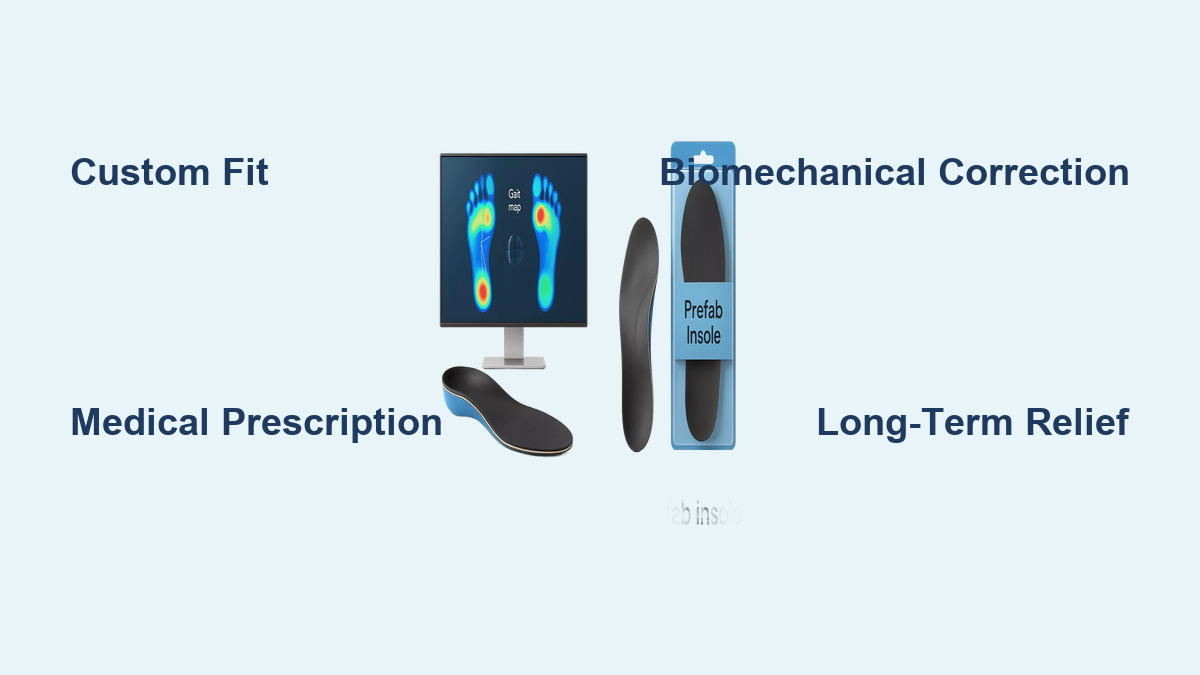
If you’ve ever stood for hours, gone for a long hike, or simply walked through a busy day with aching feet, you’ve probably considered adding insoles to your shoes. But when it comes to what is a semi-custom insole vs a full custom orthotic, the answer isn’t just about comfort—it’s about function, precision, and long-term foot health.
Full custom orthotics are medical-grade devices prescribed by a podiatrist or healthcare provider, crafted from a 3D scan or cast of your foot. They’re designed to correct biomechanical imbalances like overpronation, flat feet, or leg length discrepancies. Semi-custom insoles, on the other hand, are advanced prefabricated inserts that offer adjustable features—such as arch height and top covers—so you can tailor them to your foot type without a doctor’s visit.
So, which one do you really need? Is the higher price of custom orthotics worth it, or can a semi-custom insole deliver the same relief? This guide breaks down every key difference—design, effectiveness, cost, durability, and ideal use cases—so you can make an informed decision based on your symptoms, lifestyle, and goals.
How Full Custom Orthotics Are Made and Why They Work

Precision Engineering Based on Your Unique Foot Shape
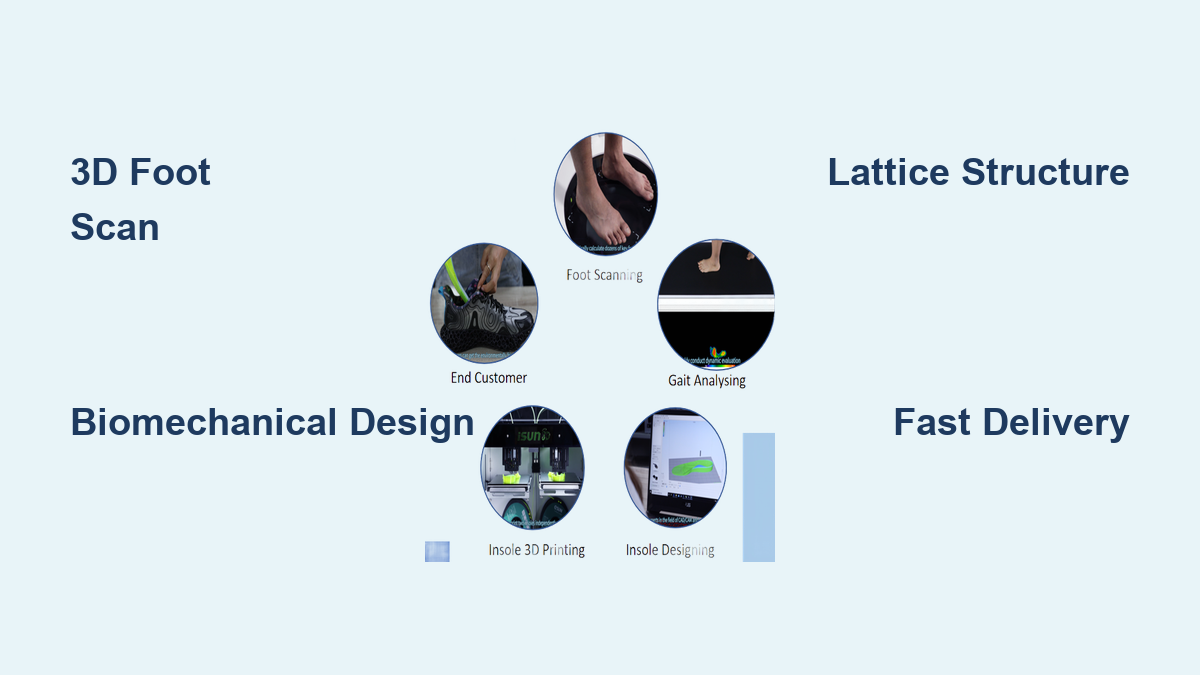
Full custom orthotics aren’t mass-produced. They begin with a detailed assessment of your feet, usually involving a 3D laser scan, foam impression, or plaster cast taken while your foot is in a neutral, non-weight-bearing position. This captures the ideal alignment of your arches and joints—something a simple in-store scan can’t replicate.
A licensed professional, such as a podiatrist or chiropractor, conducts a full biomechanical evaluation. This includes analyzing your gait (how you walk), checking joint mobility, and identifying issues like overpronation (excessive inward roll) or supination (outward tilt). Based on this data, the clinician prescribes specific corrections, materials, and support zones tailored to your condition.
Key Insight: Custom orthotics don’t just cushion—they correct. Their goal is to retrain your foot’s movement, reducing strain not only in your feet but also in your knees, hips, and lower back.
Who Should Consider Full Custom Orthotics?
You may benefit from full custom orthotics if you have:
- Chronic heel or arch pain that hasn’t improved with OTC insoles
- Diagnosed structural conditions like flat feet (pes planus) or high arches (pes cavus)
- Medical conditions such as diabetes (to prevent ulcers), rheumatoid arthritis, or neuropathy
- Recurring injuries linked to foot mechanics—shin splints, stress fractures, Achilles tendinopathy
- Leg length discrepancies or post-surgical rehabilitation needs
Athletes also turn to custom orthotics to enhance performance, reduce impact stress, and prevent overuse injuries by optimizing foot alignment.
Materials, Build Quality, and Lifespan
Custom orthotics use medical-grade materials chosen for durability and function:
- Semi-rigid shells (e.g., polypropylene, carbon fiber) for motion control
- Accommodative foams for pressure relief in high-risk areas
- Custom top covers designed for breathability and shoe compatibility
Because of their robust construction, full custom orthotics typically last 2–4 years, even under heavy daily use. Plus, they can be adjusted over time—relined, reshaped, or posted (wedge-added)—to adapt as your foot changes or your condition evolves.
What Makes a Semi-Custom Insole Different?
Adjustable Support Without a Prescription
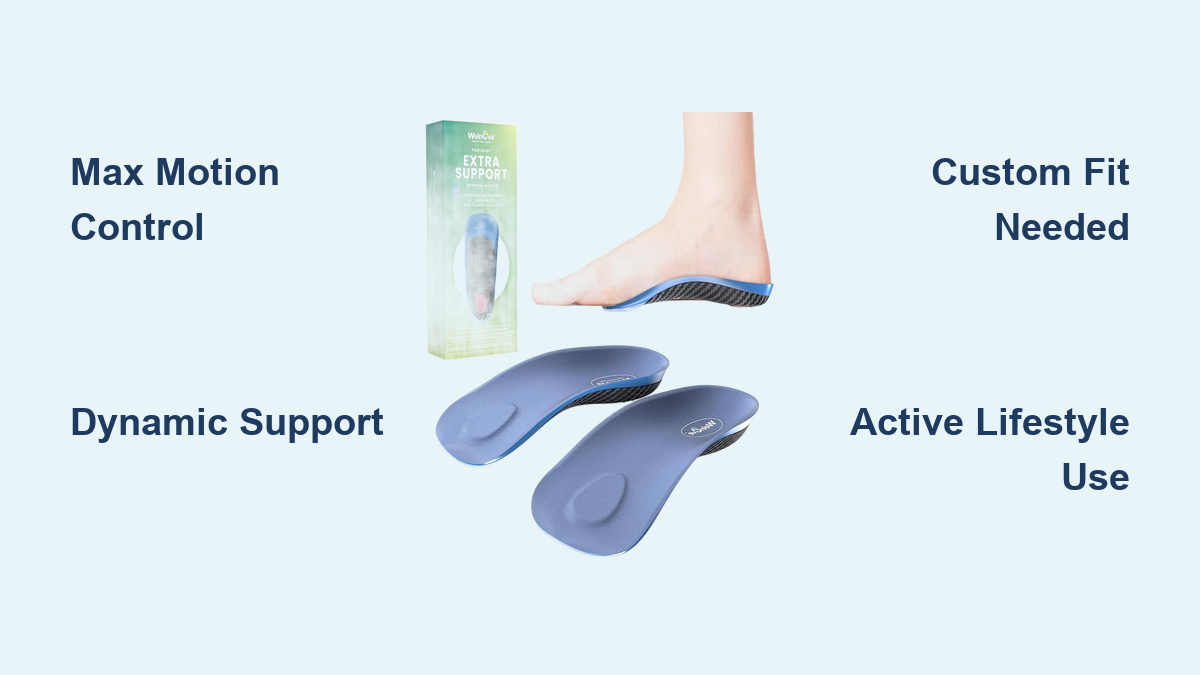
Semi-custom insoles are not molded from your foot, but they go far beyond basic over-the-counter (OTC) inserts. These prefabricated insoles come with modular components that let you personalize fit and function:
- Multiple arch heights (low, medium, high, extra-high) to match your foot type
- Interchangeable top covers for different shoes—dress, hiking, running, or cleats
- Layered design allowing adjustments in firmness and volume
Brands like TreadLabs use foot type guidance—based on arch height, shoe size, and activity level—to help users select the best configuration. It’s like building your own support system without needing a specialist.
Pro Tip: Think of semi-custom insoles as “build-your-own” orthotics. You’re not getting a footprint-perfect fit, but you’re moving beyond the one-size-fits-all model.
Best Use Cases for Semi-Custom Insoles
Semi-custom insoles are ideal if you:
- Experience mild arch fatigue or heel discomfort after prolonged standing
- Want better support across multiple shoe types (e.g., work boots, loafers, runners)
- Are active but don’t have diagnosed biomechanical pathologies
- Prefer a cost-effective alternative to custom orthotics
- Want to test whether orthotic support helps before investing in a prescription option
They’re also useful during recovery from minor sprains or as a temporary upgrade while transitioning to more supportive footwear.
Performance and Longevity
Made from quality EVA foam, TPU, or polyurethane, semi-custom insoles typically last 1–2 years, depending on usage. They offer moderate arch support and shock absorption but lack the structural rigidity needed for significant biomechanical correction.
While they improve comfort and reduce general foot strain, they won’t actively correct gait deviations or redistribute pressure in high-risk areas like diabetic foot ulcers.
Key Differences: Side-by-Side Comparison

| Feature | Semi-Custom Insoles | Full Custom Orthotics |
|---|---|---|
| Personalization Level | Adjustable arch height/top cover | Molded to exact foot shape |
| Prescription Required? | No | Yes |
| Assessment Process | Self-selection or basic guidance | Biomechanical exam + gait analysis |
| Fabrication Method | Prefabricated with modular parts | Individually crafted via scan/cast |
| Support Precision | Moderate; better than OTC | High; anatomically exact |
| Correction Capability | General arch support only | Corrects overpronation, leg length issues, etc. |
| Whole-Body Impact | Minimal | Improves knee, hip, spine alignment |
| Target Conditions | Mild discomfort, fatigue | Chronic pain, structural deformities, arthritis |
| Average Cost | $75–$150 | $300–$600+ (includes professional fees) |
| Insurance Coverage | Rarely covered | Often covered via HSA/FSA or podiatry benefits |
| Time to Obtain | Immediate (online order) | 1–3 weeks (after appointment and lab production) |
Do Custom Orthotics Work Better? What the Research Says
Evidence on Pain Relief for Plantar Fasciitis
A 2019 review by the Canadian Agency for Drugs and Technologies in Health (CADTH) analyzed studies comparing custom-made and prefabricated foot orthoses for plantar heel pain, including plantar fasciitis.
The findings were surprising:
- No significant difference in pain reduction between custom and prefabricated orthotics at 6, 12, or 52 weeks
- No meaningful gap in functional improvement (measured by tools like the Foot Functional Index)
- Mixed comfort results: One study found 3D-printed custom orthotics more comfortable after 8 weeks; others showed equal patient satisfaction
However, the evidence quality was rated low to very low, and all studies focused on plantar heel pain—not broader conditions like flat feet or arthritis.
Takeaway: For common issues like plantar fasciitis, semi-custom or even OTC insoles may offer comparable short-term relief at a fraction of the cost.
Where Custom Orthotics Excel
Despite similar pain outcomes, full custom orthotics provide advantages beyond immediate symptom relief:
- Long-term correction: They actively retrain faulty movement patterns.
- Adjustability: Can be modified over time as your needs change.
- Durability: Last twice as long under daily stress.
- Whole-body alignment: Address postural imbalances originating in the feet.
For complex or chronic conditions, custom orthotics remain the gold standard—even if initial pain relief matches cheaper options.
Real-World Impact: When Custom Orthotics Change Lives

Mark R., a long-time hiker, suffered debilitating foot pain for years. Over-the-counter insoles provided no lasting relief. After a consultation with Dr. Scott Van Aman, he was fitted with full custom orthotics based on a 3D foot scan.
Result? He eliminated his pain, avoided surgery, and went on to hike through 63 U.S. National Parks across 28 states and two territories—pain-free for nearly a decade.
His story highlights a critical point: semi-custom insoles may help manage symptoms, but full custom orthotics can restore function and lifestyle when conservative treatments fail.
Expert Note: “When you’re doing the simple things and they’re not working, that’s when you want to seek medical care,” says Dr. Van Aman.
Making the Right Choice: A Step-by-Step Guide
Step 1: Assess Your Symptom Severity
| Symptom Profile | Recommended Option |
|---|---|
| Occasional tired feet after standing | Semi-custom insole |
| Persistent heel or arch pain | Full custom orthotic |
| Pain radiating to knees, hips, or back | Full custom orthotic (biomechanical link) |
Step 2: Evaluate Foot Type and Lifestyle
| Foot Type / Activity | Best Option |
|---|---|
| Neutral arch, low-impact job | OTC or semi-custom |
| Flat feet or high arches | Full custom |
| High-impact sports, military, or manual labor | Full custom |
Step 3: Consider Long-Term Goals
- Short-term relief or trial use → Try semi-custom
- Long-term correction, injury prevention, chronic management → Invest in full custom
Warning: Using OTC or semi-custom insoles for serious biomechanical issues may delay proper treatment and lead to worsening symptoms or secondary injuries.
Cost vs. Value: Is Custom Worth the Investment?
Upfront Pricing and Long-Term Value
- Semi-custom insoles: $75–$150 per pair (no doctor visit needed)
- Full custom orthotics: $300–$600+ (includes consultation, scanning, lab fabrication)
While custom orthotics cost more upfront, their 2–4 year lifespan makes them cost-competitive over time—especially if they prevent surgery, chronic pain, or lost productivity.
Insurance and Reimbursement
- Custom orthotics are often eligible for HSA/FSA reimbursement and may be covered by health insurance with a podiatrist’s prescription.
- Semi-custom insoles are rarely covered, though some plans accept them if labeled as medical support devices.
Dr. Miguel Cunha notes: “While I recommend custom foot orthotics over pre-fabricated insoles, some insurance plans do not cover them, and they can be costly out-of-pocket.”
Final Verdict: Which One Is Right for You?
Choose Semi-Custom Insoles If You:
- Have mild foot fatigue or occasional discomfort
- Want improved support without a doctor’s visit
- Need versatile inserts for multiple shoe types
- Are budget-conscious or testing orthotic benefits
They’re a smart upgrade from basic insoles and may be enough for many active adults.
Choose Full Custom Orthotics If You:
- Suffer chronic pain unrelieved by OTC or semi-custom options
- Have a diagnosed foot condition (flat feet, plantar fasciitis, bunions)
- Are managing systemic diseases like diabetes or arthritis
- Want long-term correction, not just cushioning
A professional foot assessment is the best way to determine your true needs. Don’t guess—get evaluated.
Bottom Line: Semi-custom insoles offer convenience and moderate support. Full custom orthotics deliver precision, correction, and lasting biomechanical change. Your choice depends on symptoms, structure, and goals—not just price.
Final Note: Whether you start with a semi-custom insole or go straight to custom orthotics, the goal is the same: healthier feet, better movement, and a pain-free life. Take the first step today—your feet carry you every day. Give them the support they deserve.