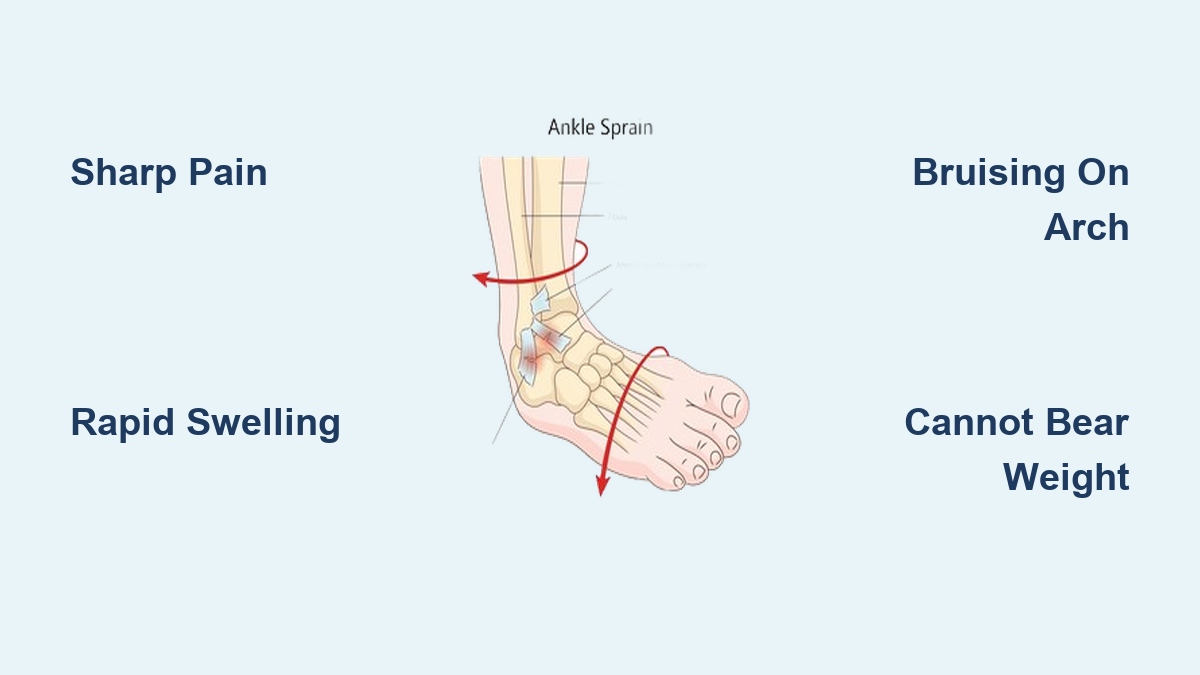
You twist your ankle stepping off a curb, feel a sudden sharp pain, and within minutes, swelling begins to rise. Walking becomes difficult, and a bruise starts to spread across the arch of your foot. While many dismiss this as a minor sprain, these could be signs of a torn ligament in the foot—a more serious injury that, if ignored, can lead to chronic pain, instability, and long-term joint damage. Recognizing the symptoms early is critical. This guide breaks down the key indicators of a torn ligament, how to assess severity, when to seek medical help, and what treatments can get you back on your feet safely.
Immediate Sharp Pain at the Injury Site
One of the first and most telling signs of a torn ligament is sudden, intense pain that occurs at the exact moment of injury—often during a twist, fall, or awkward landing. This isn’t the dull ache of overuse; it’s a sharp, localized sensation that can stop you in your tracks.
Pain Location Reveals the Injured Ligament
The exact spot of pain helps identify which ligament is damaged:
– Outside of the ankle: Likely a tear in the anterior talofibular ligament (ATFL)—the most commonly injured ligament in ankle sprains.
– Inside of the ankle: Points to a possible deltoid ligament injury, often caused by inward rolling (pronation).
– High ankle (above the joint): May signal a syndesmotic ligament tear, commonly called a high ankle sprain, which is more severe and slower to heal.
– Arch of the foot: Suggests involvement of plantar ligaments or midfoot structures like the Lisfranc ligament.
Pain intensity often correlates with tear severity. A mild stretch (Grade I) causes discomfort, while a complete rupture (Grade III) brings intense pain—though it may fade quickly due to nerve disruption from swelling.
Did You Hear a “Pop”?
Some people report feeling or hearing a pop or snap at the moment of injury. This is more common in Grade III tears and often indicates a complete ligament rupture. Even if the pain lessens shortly after, don’t be misled—this can be a sign of serious damage.
Pro tip: If you heard a pop and can’t bear weight, treat it as a severe injury. Seek evaluation, even if symptoms seem to improve.
Rapid Swelling and Bruising

Swelling and bruising are among the most visible signs of a torn ligament and typically develop within minutes to hours after injury.
Swelling Appears Quickly and Spreads
Inflammation is the body’s natural response to tissue damage. With a ligament tear, swelling:
– Starts at the injury site
– Can make the foot feel tight or warm
– Often spreads to the ankle and sole
– May prevent you from wearing shoes comfortably
The faster and more extensive the swelling, the more severe the injury likely is.
Bruising on the Arch: A Red Flag
While bruising around the ankle is common after a sprain, bruising on the arch of the foot is a major warning sign. This area rarely bruises from external impact, so discoloration here strongly suggests internal trauma—such as a ligament tear or avulsion fracture (where a ligament pulls a small piece of bone with it).
Visual cue: Watch for purple or blue discoloration spreading from the ankle into the sole. This pattern often signals deep structural damage.
Tenderness and Pain When Touching the Foot
Pressing on the foot can help pinpoint the injury. Localized tenderness along a specific ligament is a key diagnostic clue.
Where to Check for Tenderness
- ATFL: Pain just in front of the outer ankle bone (lateral malleolus)
- CFL (calcaneofibular ligament): Tenderness below the outer ankle, along the side of the heel
- Deltoid ligament: Pain along the inner ankle, especially behind the medial malleolus
- Plantar ligaments: Pain under the arch when pressing with your fingers
Pain with Movement and Stiffness
Moving the foot may trigger sharp pain, especially during:
– Inward rolling (inversion): Aggravates lateral ligaments
– Outward rolling (eversion): Stresses medial ligaments
– Twisting motions: Can worsen syndesmotic or midfoot injuries
Stiffness often worsens after rest, making the first steps in the morning particularly painful.
Inability to Bear Weight or Walk Normally
Trouble walking is one of the most reliable signs of a significant ligament injury.
Can You Take 3–4 Steps?
Medical guidelines use a simple test: if you can’t walk at least 3–4 steps immediately after injury, it may indicate a serious sprain or even a fracture. This is a strong signal to get medical attention.
- Grade I (mild): You may limp but can still put weight on the foot.
- Grade II (moderate): Walking is painful and unstable; crutches are often needed.
- Grade III (severe): Walking is usually impossible without severe pain or support.
Warning: Never “walk it off.” Doing so can worsen the tear, delay healing, and increase the risk of long-term instability.
Joint Instability and the “Giving Way” Feeling
If your foot or ankle feels loose, wobbly, or collapses during movement, it may mean the ligament is severely damaged.
Recurrent “Giving Way” Episodes
A sensation that your ankle buckles or gives out when standing, walking, or turning is a hallmark of ligament laxity. This is common in Grade III tears and greatly increases the risk of re-injury.
Even after swelling goes down, persistent instability may indicate incomplete healing or chronic ligament weakness.
Clinical Tests for Instability
Doctors use physical exams to assess joint stability:
– Anterior Drawer Test: Pulls the foot forward—excess movement indicates ATFL damage.
– Talar Tilt Test: Inverts the heel—increased motion suggests CFL or deltoid injury.
– Squeeze Test: Squeezing the calf causes pain at the ankle if the syndesmotic ligament is torn.
These tests are most accurate within the first 48 hours before swelling masks instability.
Limited Range of Motion and Stiffness
Swelling and pain restrict how far you can move your foot, leading to stiffness.
Reduced Dorsiflexion and Plantarflexion
- Dorsiflexion (pulling toes toward shin) may be limited due to front-of-ankle swelling.
- Plantarflexion (pointing toes) can be painful, especially if plantar structures are involved.
Stiffness often worsens after sitting or sleeping and improves slightly with gentle movement.
Delayed Recovery Without Treatment
Without proper care, stiffness can persist for weeks. Early, controlled motion—once swelling decreases—helps restore joint function and prevent long-term stiffness.
Numbness or Tingling: A Serious Warning Sign
While not common, numbness or tingling in the foot after a ligament injury can indicate nerve compression.
Nerve Compression from Swelling
Swelling can press on nerves such as:
– Sural nerve (outer foot): Causes tingling on the outside of the foot or ankle
– Tibial nerve (inner foot): Leads to numbness under the arch or heel
Urgent sign: If numbness persists or worsens, it may signal compartment syndrome or severe soft tissue damage. Seek medical help immediately.
Grading the Injury: From Mild to Severe

Understanding the severity helps guide treatment and recovery.
Grade I: Mild Stretch or Micro-Tear
- Mild pain, little swelling, no bruising
- Can walk with minor discomfort
- Heals in 2–4 weeks with rest and basic care
Grade II: Partial Ligament Tear
- Moderate to severe pain, noticeable swelling, bruising
- Difficulty walking, some instability
- Requires 4–8 weeks of bracing and physical therapy
Grade III: Complete Rupture
- Severe initial pain (may fade), extensive swelling and bruising
- Cannot bear weight, ankle feels “loose”
- Healing takes 8–12 weeks; may need surgery
Note: Ligaments have poor blood supply, so complete tears often don’t heal fully without intervention.
When to See a Doctor
Don’t wait if you have:
– Inability to walk 3–4 steps after injury
– Severe pain or swelling that doesn’t improve in 3–5 days
– Bruising on the arch
– Numbness or tingling
– Recurrent “giving way” episodes
– History of prior ankle sprains
Early diagnosis prevents chronic instability, arthritis, and repeated injuries.
Diagnosis: Exam and Imaging

Doctors combine physical exams with imaging:
– X-ray: Rules out fractures; may show avulsion fragments
– Ultrasound: Real-time view of ligaments and swelling
– MRI: Gold standard for soft tissue—confirms partial vs. complete tears
Pro tip: MRI is recommended if symptoms persist beyond 2 weeks or instability is suspected.
Treatment: From R.I.C.E. to Surgery
Immediate Care: R.I.C.E. Protocol
- Rest: Stop activity
- Ice: 15–20 minutes every 2–3 hours
- Compression: Use an elastic bandage
- Elevation: Keep foot above heart level
Avoid heat in the first 72 hours—it increases swelling.
Support and Medication
- Brace, boot, or crutches for support
- NSAIDs (ibuprofen) for pain and swelling
- Physical therapy to restore strength and balance
Surgery for Severe Tears
Needed if:
– Ligament is completely torn and unstable
– Conservative treatment fails
– Patient is a high-level athlete
Recovery takes 3–6 months, with full return to activity at 6–12 months.
Prevention and Recovery Tips
- Strengthen calf and ankle muscles
- Use balance training (wobble board)
- Wear supportive shoes
- Warm up before activity
- Consider ankle braces if you’ve had prior sprains
Final Note: A torn ligament in the foot is more than a sprain—it’s a structural injury that needs attention. From sharp pain and arch bruising to instability and numbness, recognizing the signs early can prevent long-term damage. Whether healing at home or needing surgery, proper care leads to full recovery. Don’t ignore persistent symptoms—see a specialist to get back on solid ground.