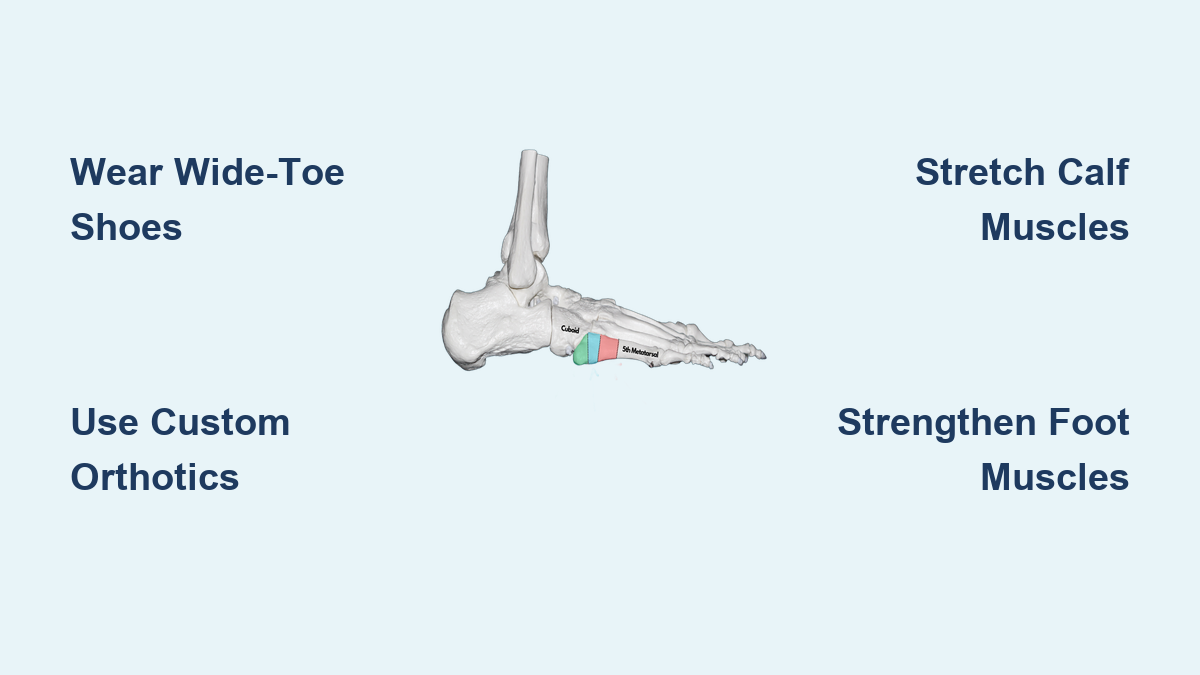
If you’ve ever felt a sharp, burning, or persistent ache beneath your little toe—especially when walking, standing, or pushing off during movement—you may be dealing with excessive pressure on the fifth metatarsal. This long bone forms the outer edge of the forefoot and plays a crucial role in balance, stability, and propulsion. When overloaded, it can lead to pain, inflammation, and even stress fractures. Left unchecked, this pressure alters your gait, increasing strain on other joints like the ankle, knee, and hip. The good news? Most cases respond well to conservative care. By adjusting footwear, using targeted orthotics, stretching tight muscles, strengthening weak ones, and correcting biomechanical imbalances, you can effectively offload the fifth metatarsal and restore pain-free movement. This guide delivers a science-backed, step-by-step plan to reduce pressure, relieve discomfort, and prevent future flare-ups.
Choose Supportive Footwear to Offload the Lateral Forefoot
The shoes you wear directly influence how weight is distributed across your foot. Ill-fitting or unsupportive footwear is a leading cause of fifth metatarsal overload.
Ditch High Heels and Narrow-Toe Shoes
High heels shift your center of gravity forward, forcing up to 80% of your body weight onto the forefoot—particularly the lateral side where the fifth metatarsal sits. Pointed or narrow toe boxes compress the toes, restricting natural splay and increasing pressure on the outer edge of the foot. Avoid stilettos, ballet flats without arch support, and flip-flops. Instead, choose shoes with a heel height under 1 inch and a wide, anatomical toe box that allows your toes to spread naturally.
Opt for Rocker-Soled Shoes
Rocker-bottom soles are designed to reduce pressure during the push-off phase of walking. Their curved design encourages a smooth roll-forward motion, minimizing the time the fifth metatarsal spends bearing full weight. These are commonly found in orthopedic shoes and many athletic models marketed for plantar fasciitis or metatarsalgia. Look for brands that offer a forefoot rocker—a subtle upward curve at the ball of the shoe—for immediate relief.
Prioritize Lateral Support and Shock Absorption
Shoes with a firm heel counter help stabilize the rearfoot and prevent excessive supination, which can increase lateral loading. A cushioned midsole made from EVA foam or gel absorbs impact, reducing shock transmission to the forefoot. If you walk or stand for long periods, consider stability or motion-control shoes that match your gait pattern. Always replace worn shoes—typically every 300–500 miles—to maintain support.
Use Custom Orthotics with Targeted Modifications

While over-the-counter insoles may offer temporary cushioning, custom orthotics provide precise biomechanical correction tailored to your foot.
Scoop the Fifth Metatarsal Area
A depression or “scoop” carved under the fifth metatarsal head in your orthotic allows the bone to drop slightly, preventing it from pressing into a rigid surface. This is especially effective for people with a C10 foot type, who naturally bear more weight on the outer foot. The scoop should be deep enough to relieve pressure but not so deep that it destabilizes the foot. A podiatrist can customize the depth and location based on a 3D foot scan or mold.
Add a Cuboid Bar for Lateral Arch Support
A cuboid bar—a small wedge of cork or EVA foam placed just behind the fifth metatarsal head—helps elevate the lateral arch and support the cuboid bone. This reduces strain on the fifth metatarsal by preventing lateral column collapse. The bar should angle slightly inward to cradle the foot’s outer edge, promoting better alignment during gait. It’s a common modification for people with cuboid syndrome or chronic lateral forefoot pain.
Ensure Proper Arch Contouring and Material Balance
Your orthotic should mirror your foot’s natural shape, offering balanced support under both the medial and lateral arches. Too much rigidity can increase pressure, while too much softness fails to correct mechanics. Work with a podiatrist to get a custom-molded orthotic based on a biomechanical assessment and gait analysis. For daily wear, choose orthotics with a semi-rigid shell and cushioned top cover for comfort and control.
Perform Daily Stretches to Improve Ankle and Foot Flexibility
Tight lower leg muscles restrict ankle motion, forcing you to walk on your toes and increasing pressure on the forefoot—including the fifth metatarsal.
Stretch Tight Calf Muscles
Limited ankle dorsiflexion from tight calves causes a “toe-walking” gait, which overloads the metatarsals. Perform a standing calf stretch: stand on a step with your heels hanging off, then slowly lower them until you feel a stretch in the back of your lower leg. Hold for 30 seconds, repeat 3 times per leg. Do this daily, especially before activity.
Release the Achilles Tendon
A stiff Achilles tendon contributes to poor foot mechanics and increased forefoot load. Try a wall-based Achilles stretch: place one foot back, keep the heel down, and lean forward until you feel a stretch in the back of the ankle. Keep the back knee slightly bent to target the soleus. Hold 30 seconds, repeat 3 times per leg.
Loosen the Plantar Fascia and Toes
Tightness in the plantar fascia can shift weight laterally. Sit and cross one leg over the other. Grab your toes and gently pull them back toward your shin until you feel a stretch along the arch. Hold 15–20 seconds, repeat 10 times per foot. Also stretch individual toes to improve mobility and reduce overcompensation.
Strengthen Foot and Ankle Muscles to Improve Stability

Weak intrinsic foot muscles lead to poor arch control and uneven pressure distribution, increasing strain on the fifth metatarsal.
Do Towel Scrunches and Marble Pickups
Place a towel on the floor and use your toes to scrunch it toward you. This strengthens the small muscles that support the arches. Perform 10–15 reps per foot. For added challenge, try marble pickups: pick up marbles with your toes and place them in a cup. Aim for 10–15 per foot.
Practice Arch Doming
Stand barefoot with feet hip-width apart. Press the ball of your foot and heel into the ground while lifting the arch upward—without curling your toes. Hold for 5 seconds, repeat 10 times. This activates the transverse arch, improving stability and reducing lateral overload.
Add Resistance Band Exercises
Loop a resistance band around both feet. Slowly spread your feet apart against the tension to strengthen the lateral foot muscles. Perform 2 sets of 15 reps. This enhances balance and reduces the tendency to roll outward during walking.
Modify Daily Habits to Reduce Forefoot Stress
Small lifestyle changes can significantly reduce strain on the fifth metatarsal.
Limit High-Impact Activities
Running, jumping, or prolonged standing increases repetitive loading on the forefoot. Temporarily switch to low-impact exercises like swimming, cycling, or using an elliptical to allow healing. Gradually reintroduce impact as pain improves.
Avoid Walking Barefoot
Hard floors offer no shock absorption, increasing direct pressure on the metatarsals. Always wear supportive slippers or sandals indoors—never walk barefoot on tile or wood.
Apply Ice for Inflammation
If the area is tender or swollen, apply ice for 15–20 minutes several times a day. Use a gel pack or roll a frozen water bottle under the foot for added massage and pain relief.
Manage Body Weight
Excess weight increases mechanical load on all metatarsals. Even a modest weight loss can significantly reduce pressure and improve symptoms.
Seek Professional Evaluation for Persistent Pain

If pain doesn’t improve within two weeks of home care, see a podiatrist.
Rule Out Serious Conditions
Pain under the fifth metatarsal could signal a stress fracture, cuboid syndrome, or Morton’s neuroma. An X-ray can detect bone issues, while ultrasound or MRI may be needed for soft tissue problems.
Get a Gait Analysis
A podiatrist can assess your walking pattern and identify issues like lateral heel strike or supinated gait that increase fifth metatarsal pressure. Video gait analysis helps pinpoint the root cause.
Receive Custom Padding or Taping
Your podiatrist may apply felt padding or kinesiology tape to offload the fifth metatarsal immediately. This provides short-term relief while longer-term solutions take effect.
Consider Medical or Surgical Options (If Needed)
Most people improve with conservative care, but advanced cases may require intervention.
Use NSAIDs for Inflammation
Over-the-counter ibuprofen or naproxen can reduce pain and swelling during flare-ups. Use short-term and avoid long-term reliance.
Explore Cortisone Injections
For persistent inflammation, a cortisone injection may be considered. However, repeated use near the metatarsal heads risks fat pad atrophy or tissue damage, so it’s used sparingly.
Begin Physical Therapy
A physical therapist can guide you through a personalized rehab program focusing on foot mechanics, strength, and gait retraining—especially helpful if you have muscle imbalances.
Discuss Surgery as a Last Resort
Surgery is rare but may be needed for structural issues. Options include shortening the fifth metatarsal, correcting cuboid misalignment, or removing a neuroma that’s altering your gait.
Prevent Recurrence with Ongoing Foot Care
Once pain resolves, maintain foot health to avoid future problems.
Wear Orthotics Daily
Continue wearing your custom orthotics—even in supportive shoes. They help maintain proper alignment and prevent overload.
Stick to a Foot Exercise Routine
Keep doing arch doming, towel scrunches, and calf stretches 3–5 times per week. Strong, flexible feet are less prone to pressure imbalances.
Replace Shoes Regularly
Worn-out shoes lose cushioning and support. Replace athletic shoes every 300–500 miles or when the sole shows visible wear.
Schedule Annual Foot Checkups
If you have high arches, a history of foot pain, or a C10 foot type, see a podiatrist annually for a biomechanical review. Early detection prevents problems.
Final Note: Reducing pressure on the fifth metatarsal isn’t just about pain relief—it’s about restoring balance to your entire foot. With the right combination of supportive footwear, custom orthotics, daily stretches, and strength training, you can offload the lateral forefoot and walk comfortably again. Start with conservative steps, monitor your progress, and don’t hesitate to seek professional help if pain persists. Your feet carry you every day—give them the care they deserve.