If your toes feel squished, numb, or sore by the end of the day, your shoes are likely to blame. For decades, conventional footwear has prioritized sleek design over foot function—narrowing toward the toes and forcing your feet into an unnatural, compressed shape. But growing scientific evidence confirms that wide toe box shoes—those that let your toes spread naturally—are not just more comfortable, they’re essential for long-term foot health. Unlike most shoes that squeeze the forefoot, wide toe box designs match the foot’s true anatomy, which is widest at the toes, enabling full splay and natural movement.
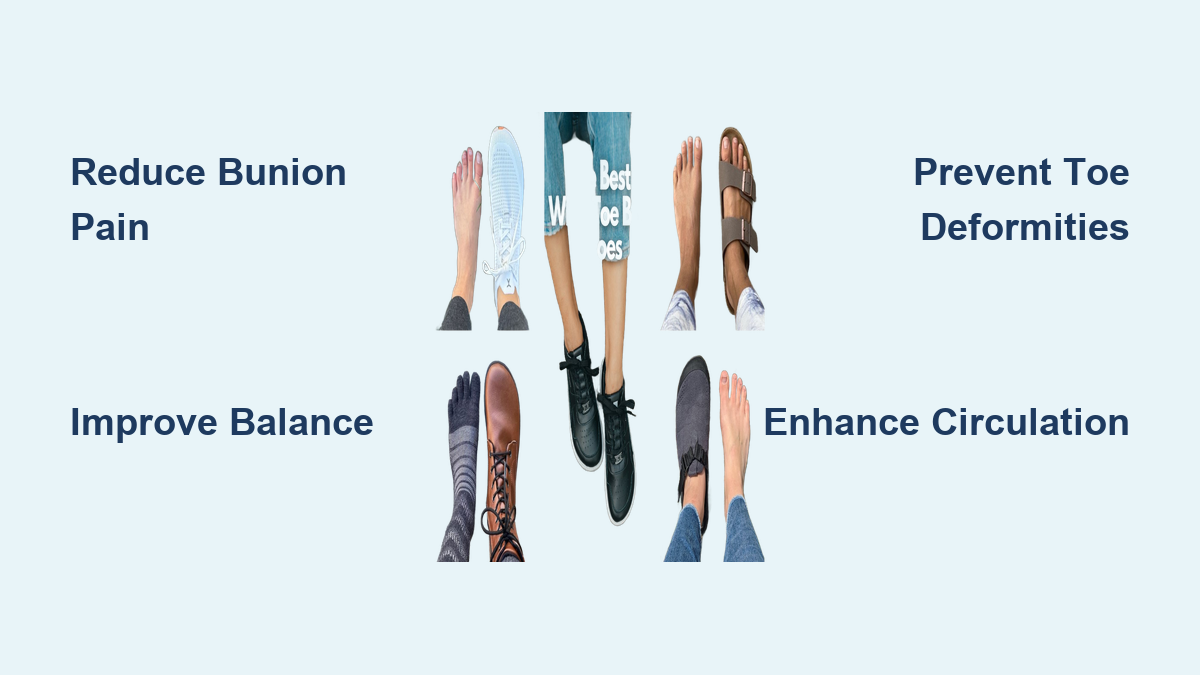
The advantages go far beyond comfort. Studies show these shoes reduce bunion pain by up to 34%, lower the risk of overuse injuries by 23%, improve balance, and even enhance circulation. They support the foot’s biomechanics, restoring critical functions like the windlass mechanism for efficient walking and running. Whether you’re on your feet all day, training for a marathon, or simply want healthier feet, understanding the science-backed benefits of wide toe box shoes can transform how you move—literally. Here’s what the research says and how to choose and transition to better footwear.
Reduce Bunion and Forefoot Pain
Narrow shoes are a primary cause of foot deformities, and wide toe box footwear offers a non-invasive, effective way to relieve and prevent pain in the forefoot.
Alleviate Hallux Valgus Pressure
Bunions (hallux valgus) form when the big toe is pushed inward due to tight, tapered shoes, creating a painful bony bump at the base joint. A 2024 study in Gait & Posture found that wider footwear significantly reduces peak pressure on the medial first MTP joint, the main site of bunion pain. By eliminating lateral compression, wide toe box shoes stop aggravating the joint, allowing inflammation to decrease and pain to ease. This makes them a key conservative treatment—no surgery required.
Prevent Tailor’s Bunions and Hammertoes
Pressure isn’t limited to the big toe. Narrow toe boxes also compress the pinky toe, leading to bunionettes (tailor’s bunions) and hammertoes, where toes curl abnormally. When toes can splay freely, they maintain proper alignment and avoid the friction and crowding that cause these conditions. Users report less pain and slower progression of existing deformities after switching to wide toe box styles.
Stop Ingrown Toenails and Neuromas
Tight shoes press toenails into the skin, a leading cause of ingrown toenails. A roomy toe box gives nails space to grow straight, preventing painful infections. Similarly, Morton’s neuroma—a thickened, painful nerve between the third and fourth toes—is often worsened by forefoot compression. Wide toe boxes reduce nerve irritation, easing symptoms and lowering the risk of recurrence.
Pro Tip: Look for depth as well as width. A deep toe box prevents toenail trauma, especially for runners or those with high insteps.
Improve Natural Foot Biomechanics

Your foot isn’t meant to be locked in place. Wide toe box shoes restore natural movement, improving how you walk, run, and balance.
Activate the Windlass Mechanism
During push-off, the big toe extends upward, tightening the plantar fascia like a cable. This “windlass mechanism” turns the foot into a rigid lever for powerful propulsion. But if the big toe is squeezed or misaligned, this system fails, leading to inefficient gait and strain. Wide toe box shoes let the hallux move freely, restoring this critical biomechanical function.
Enhance Toe Splay and Stability
Toes naturally spread like fingers when bearing weight, creating a wider, more stable base. A 2024 Applied Sciences study showed that toe box shape directly affects foot displacement and deformation during running. Wider boxes reduce internal foot movement, meaning less energy is lost and more stability is gained. This is especially helpful on uneven terrain or during lateral movements.
Reduce Ground Impact Forces
A study on marathon runners found that raised and widened toe boxes significantly reduce vertical and antero-posterior ground reaction forces during foot strike. Lower impact means less stress on joints, reducing the risk of stress fractures and overuse injuries. The same study noted a 60% reduction in big toe deformation, protecting against bruised toenails (subungual hematoma).
Expert Note: One user observed: “When I wear a thicker-soled shoe, I often try to move my foot a certain way and find that I can’t—so I know it’s limiting my full range of motion.”
Prevent Common Foot Injuries

From plantar fasciitis to stress fractures, many foot problems stem from restricted movement. Wide toe box shoes help prevent them by supporting natural foot function.
Lower Risk of Overuse Injuries
A meta-analysis in the British Journal of Sports Medicine found that neutral shoes—often featuring wide toe boxes—reduce overuse injuries by 23% compared to motion-control or stability shoes. The reason? Natural foot motion reduces abnormal loading patterns that lead to inflammation and microtrauma.
Protect Toes During Running
Runners frequently suffer bruised toenails and toe jamming, especially on downhill runs. Raised and widened toe boxes add clearance, preventing the big toe from repeatedly hitting the shoe’s front. The 2024 runner study confirmed significantly reduced impact severity on the hallux, making wide toe box running shoes a smart choice for long-distance athletes.
Strengthen Intrinsic Foot Muscles
Conventional shoes weaken the small muscles inside the foot by doing the work for them. Wide toe box shoes allow these intrinsic muscles to activate and strengthen over time, improving arch support and shock absorption. This leads to more resilient feet and fewer issues like fallen arches or plantar fasciitis.
Warning: Sudden transition can cause muscle fatigue. Start slowly—see transition tips below.
Boost Balance and Proprioception
Your feet are your foundation. When toes can spread and grip, your entire body benefits.
Expand Base of Support
A toddler’s foot is naturally widest at the toes—a design optimized for balance. Wide toe box shoes preserve this advantage. By allowing full toe splay, they create a broader, more stable platform, improving balance during walking, running, or standing on unstable surfaces.
Enhance Proprioceptive Feedback
Proprioception—the body’s awareness of foot position—is critical for coordination and injury prevention. Compressed toes reduce sensory input from the forefoot. When toes are free to move, they send clearer signals to the brain, improving reaction time and reducing the risk of ankle rolls or missteps.
Improve Performance on Uneven Terrain
Hikers, trail runners, and outdoor workers benefit greatly. A wider, more natural foot stance increases grip and adaptability on rocks, roots, or slopes. Users consistently report greater confidence and control when wearing foot-shaped footwear.
Pro Tip: Combine wide toe box shoes with barefoot-style activities (like walking on grass) to further sharpen proprioception.
Support Circulation and Tissue Health
Footwear doesn’t just affect bones and muscles—it can influence blood flow and tissue recovery.
Improve Blood Flow to the Foot
A 2019 study (Jacobs et al.) cited in Natural Footgear suggests that big toe misalignment—common in narrow shoes—may reduce foot blood flow by up to 20%. While more research is needed, proper toe alignment likely supports healthier circulation, aiding tissue repair and reducing swelling.
Prevent Nerve Compression
Tight toe boxes can compress digital nerves, leading to numbness, tingling, or neuromas. A wide, foot-shaped design eliminates this pressure, preserving nerve health and sensation.
Promote Faster Recovery
Better circulation and reduced inflammation mean feet recover faster after activity. Athletes wearing wide toe box shoes often report less post-run soreness and quicker return to training.
Expert Note: Dr. Kevin Springer, DPM, emphasizes that while barefoot shoes aren’t for everyone, wide toe box shoes are safe and beneficial for most people, especially those with bunions or circulation issues.
Choose the Right Wide Toe Box Shoe

Not all “wide” shoes are created equal. Many brands market “wide” fits that still taper at the toes.
Prioritize True Foot-Shaped Design
Look for shoes where the widest part is at the toes, not the ball of the foot. Trace your foot on paper and compare it to the shoe’s outline. If the shoe narrows before the toes, it’s not truly wide.
Check for Depth and Flexibility
A high toe box prevents toenail trauma. A flexible sole allows natural bending. Avoid stiff, rigid soles that restrict movement, even if the toe box seems wide.
Secure Heel, Roomy Forefoot
The heel should fit snugly to prevent slippage, while the forefoot allows full splay. If your foot slides forward, you’ll still jam your toes—defeating the purpose.
Red Flag: Some brands, like Altra post-2018, have narrowed their toe boxes despite marketing claims. Read reviews and check user photos for real-world fit.
Avoid “Faux Wide” Toe Boxes
Some shoes are wide but only at the big toe, leaving the pinky toe cramped. As one user noted: “Too many brands have too much space inside the big toe and not enough for the pinky. The toe box is technically ‘wide’ but it doesn’t feel like it.”
Transition Safely to Wide Toe Box Shoes
Switching from narrow shoes? Don’t rush it. Your foot muscles may be weak from years of restriction.
Start with Short Walks
Begin with 20–30 minute walks, then gradually increase time. Alternate with your current shoes to allow adaptation.
Strengthen Supporting Muscles
Incorporate exercises like:
– Toe spreads and lifts
– Towel scrunches
– Calf stretches
– Short foot exercises (activating the arch)
These prepare your feet for greater mobility and reduce soreness.
Monitor for Discomfort
Some fatigue is normal as muscles wake up. But sharp pain, blisters, or numbness means the fit is wrong or you’re progressing too fast. Adjust accordingly.
Expert Advice: Dr. Springer warns that barefoot shoes aren’t ideal for everyone—especially those with high arches, flat feet, or plantar fasciitis—but wide toe box shoes are generally safe and beneficial.
Measure Your Feet Regularly
Foot size changes over time—especially after pregnancy, weight gain, or aging.
Women After Childbirth
Hormones like relaxin loosen ligaments, often leading to permanent foot widening. Many women unknowingly wear shoes that are too narrow post-pregnancy.
Seniors and Foot Spreading
With age, arches flatten and feet widen. Seniors should re-measure every 1–2 years and opt for shoes with room to accommodate changes.
Replace Shoes Regularly
Even if the sole looks fine, shoes lose support after 300–600 miles (for runners) or 12 months of daily wear. Compression of midsole foam reduces cushioning and stability.
Pro Tip: Rotate between two pairs to extend their life and give foam time to rebound.
The evidence is clear—wide toe box shoes are a cornerstone of foot health. They reduce pain, prevent deformities, improve gait, and lower injury risk by supporting the foot’s natural design. While zero-drop or minimalist features offer added benefits, the wide toe box is consistently ranked as the most important factor by users and experts alike. Whether you’re walking, running, or standing all day, choosing footwear that lets your toes spread is a simple, powerful step toward lifelong mobility. Start with a proper fit, transition gradually, and let your feet function as nature intended.