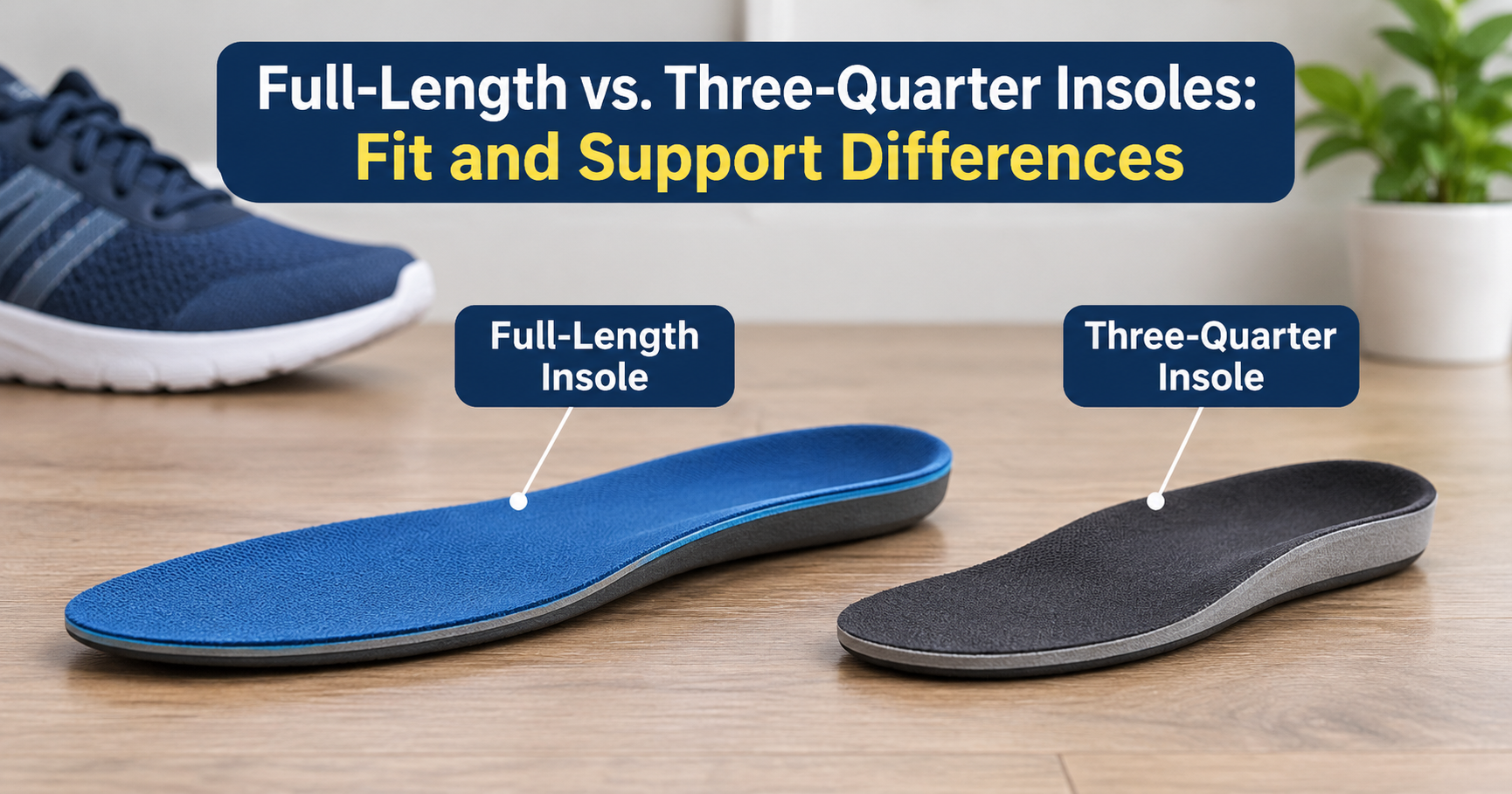
Walk into any shoe store or browse any online foot care shelf and you will quickly notice that insoles come in different lengths. Some run all the way from heel to toe. Others stop partway along the foot. If you have ever wondered whether a full length insole or a three quarter insole is the better pick, you are asking exactly the right question.
The length of an insole changes more than you might expect. It affects how the shoe fits, how much cushioning you get, how much room your toes have and even which shoes you can use the insole in. Choosing the wrong length is one of the most common reasons people feel their new insoles “just don’t work.”
In this guide, we will explain what each type is, how they differ, who each one suits best, and how to decide based on your shoes, activities and foot needs. By the end, you will know exactly which length to choose.
Key Takeaways
- Full length insoles cover the whole foot, from heel to toes, and add cushioning and support along the full footbed.
- Three quarter insoles end just behind the ball of the foot and support the heel and arch while leaving the toe area open.
- Choose full length if you want forefoot cushioning or an all-day insole for sneakers, boots and walking shoes.
- Choose three quarter if your shoes are snug, such as dress shoes, loafers, heels or cleats.
- Fit matters as much as length. A well-fitted insole of either type beats a badly fitted one.
What Is a Full Length Insole?
A full length insole, sometimes called a full-size insole, runs the entire length of the shoe’s footbed. It sits under your heel, arch, the ball of your foot and your toes. In most cases it replaces the factory insole that came with the shoe, although some people place it over the original.
Because it covers the whole foot, a full length insole can do several jobs at once: cushion the heel, support the arch, and soften pressure under the forefoot. Many full length designs also include a deep heel cup that helps hold the heel in place and a top cover made of fabric or foam for comfort.
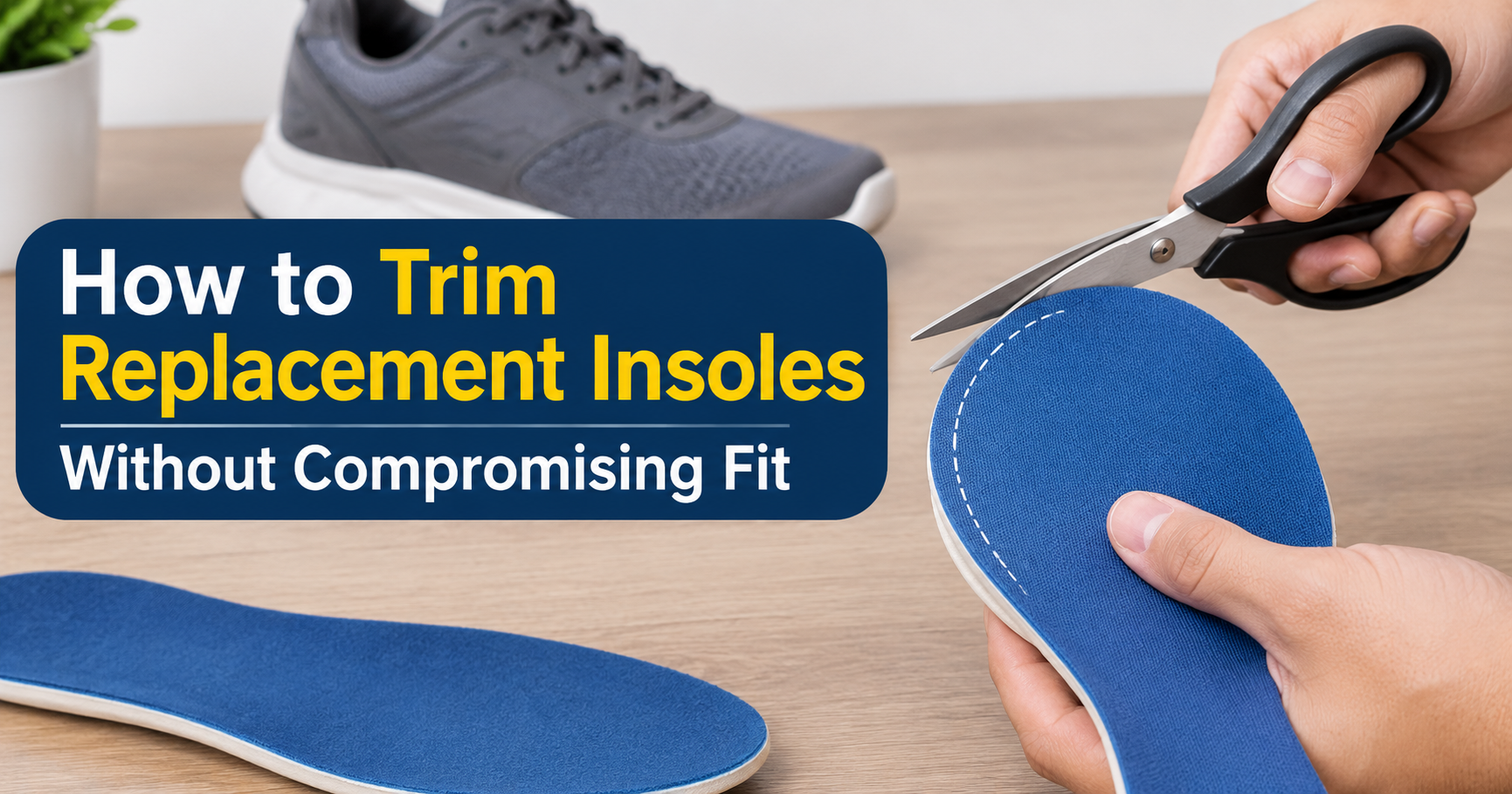
These insoles are usually cut slightly larger than most shoes need, so you trim them with scissors to match the size of the shoe. This trimming step gives a close, custom-like fit when it is done carefully.
Common Materials
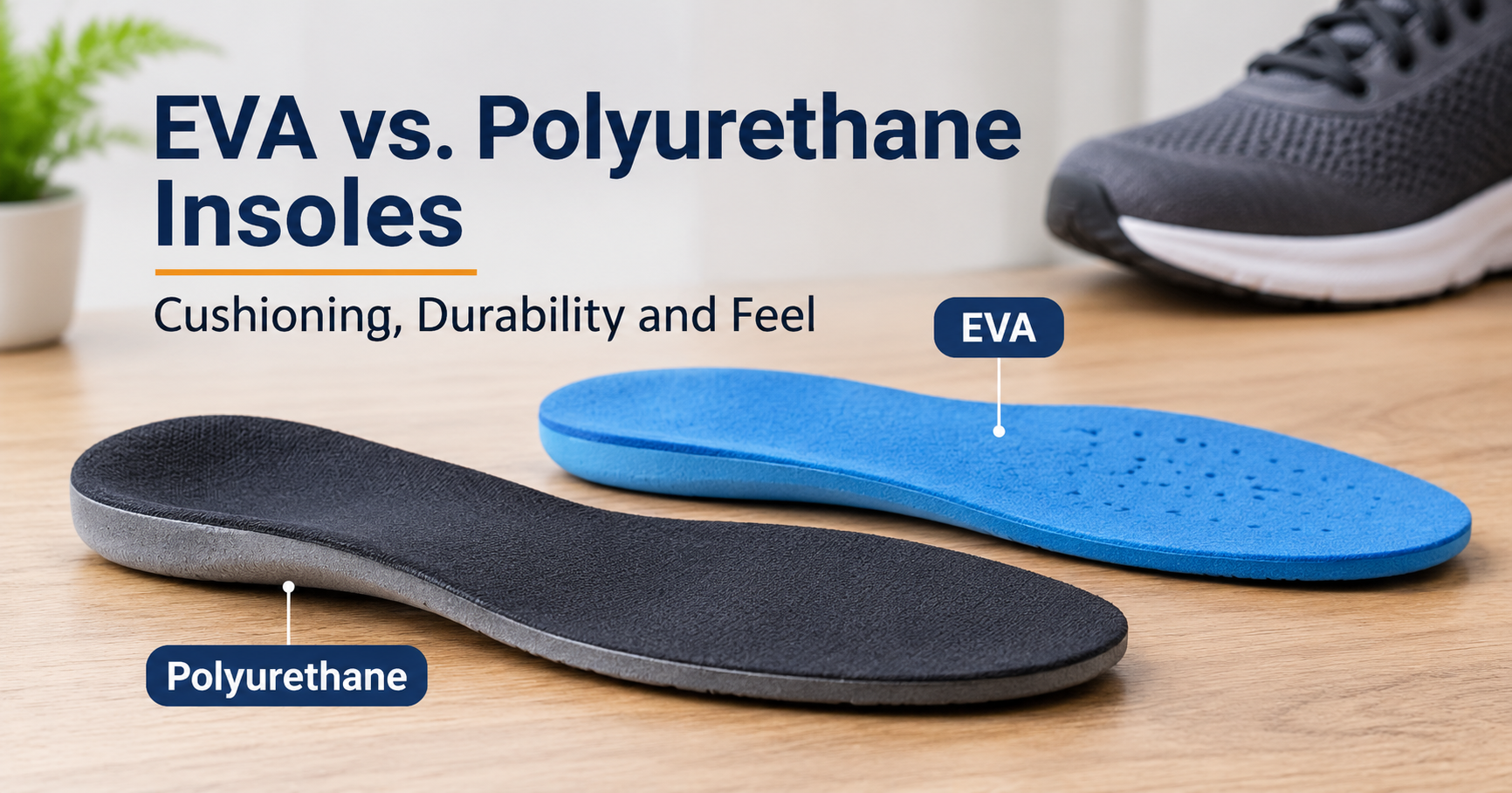
- EVA foam: light, responsive and common in sports and everyday insoles.
- Polyurethane (PU) foam: softer and more durable, with good shock absorption.
- Gel inserts: placed in the heel or forefoot to soften impact.
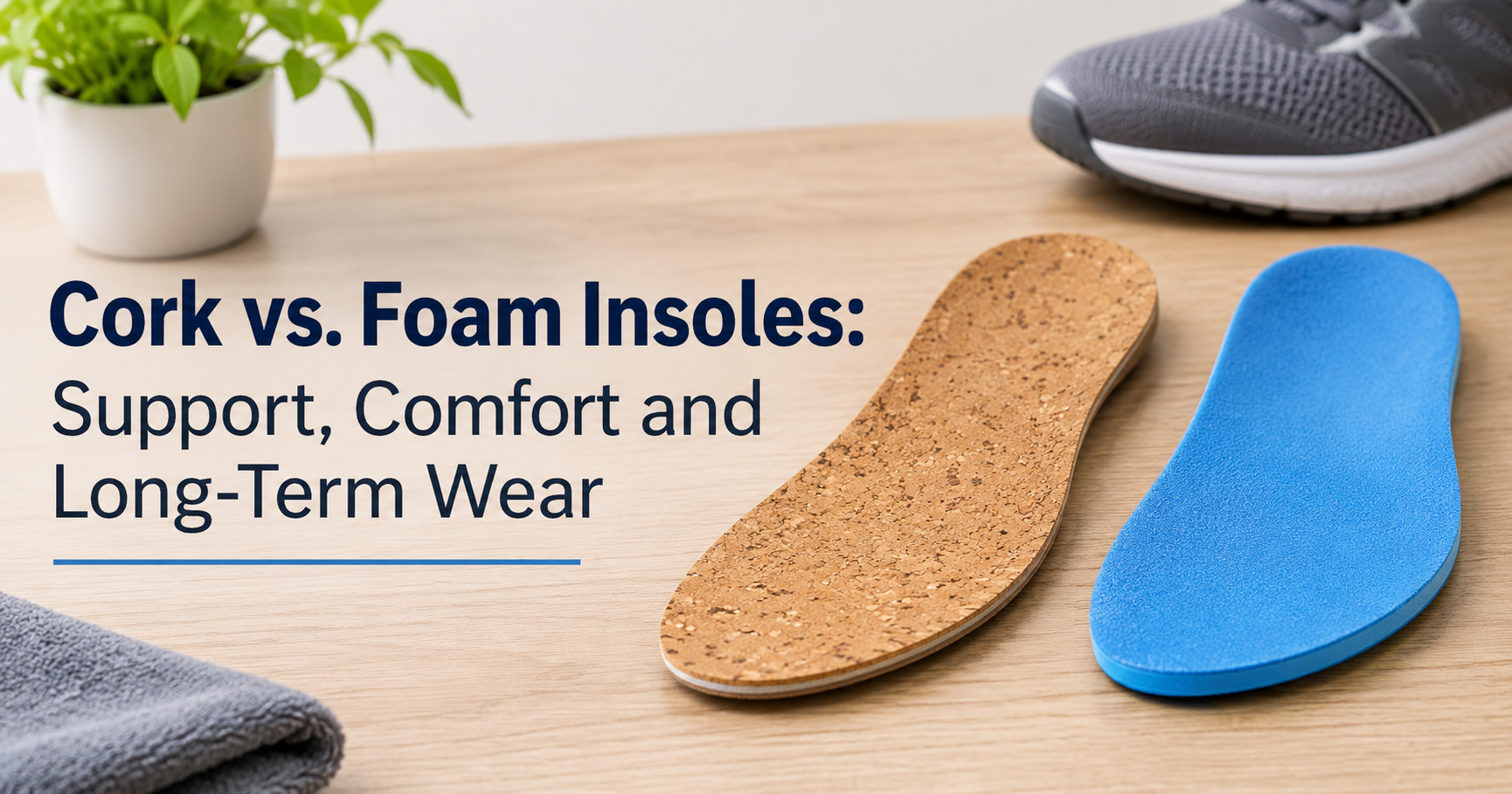
- Cork and firm polymer shells: used where firm structure and arch support are the priority.
What Is a Three Quarter Insole?
A three quarter insole, also written as a 3/4 insole or sometimes called a sulcus-length insole, covers about three quarters of the foot. It starts at the heel, supports the arch, and ends just behind the ball of the foot, near the metatarsal heads. The toe area and the front part of the foot stay on the shoe’s own footbed.
This shorter design makes it slimmer and more flexible at the front. Because nothing sits under the toes, there is more room in the toe box and less chance of the foot feeling squeezed. That is the main reason three quarter insoles are popular in dress shoes, loafers, heels, ice skates and cleats, where space is limited.
Three quarter insoles are often placed on top of the shoe’s existing insole without removing it. The factory insole continues to support the front of the foot, while the added insole improves the heel and arch.
Full Length vs Three Quarter Insoles: Side-by-Side Comparison
The table below shows how the two types compare in the areas that matter most when you are choosing between them.
| Feature | Full Length Insoles | Three Quarter Insoles |
|---|---|---|
| Coverage | Heel to toes, matches the shoe footbed | Heel to just behind the ball of the foot |
| Forefoot cushioning | Yes, under the ball of the foot and toes | No, the forefoot stays on the shoe’s own footbed |
| Heel and arch support | Yes | Yes |
| Toe box space | Slightly less, depending on thickness | More, since nothing sits under the toes |
| Best shoe types | Sneakers, work boots, hiking shoes, walking shoes | Dress shoes, loafers, heels, cleats, snug shoes |
| Fit method | Usually trimmed to match the shoe | Usually placed in the shoe as it comes, or on top of the factory insole |
| Replaces factory insole | Usually yes | Often sits on top, or replaces it in part |
| Typical price | Moderate to higher | Often lower to moderate |
Advantages and Drawbacks of Full Length Insoles
Advantages
- Complete cushioning: soft support from heel to toes, including the ball of the foot.
- Consistent feel: no front edge to feel, because the insole matches the full footbed.
- Good for long hours: helpful for jobs and activities that keep you standing or walking.
- Replaces worn factory insoles: a fresh footbed can make an old shoe feel new again.
- Wide range of options: available with different arch heights, thickness levels and materials.
Drawbacks
- Can make shoes tighter: extra thickness reduces volume, especially in the toe box.
- Needs trimming: an uneven cut can cause bunching or slipping.
- Not ideal for slim shoes: dress shoes and low-profile shoes may not have room.
- Often costs more: more material usually means a higher price.
Advantages and Drawbacks of Three Quarter Insoles
Advantages
- Slim and shoe-friendly: fits dress shoes, loafers, heels and other snug footwear.
- Leaves the toe box free: helpful if you have wide forefeet, bunions or hammertoes and need space.
- Easy to use: usually no trimming is needed, so you can place it in the shoe straight away.
- Targets heel and arch: gives support where many people need it most.
- Often more affordable: less material means a lower price in many cases.
Drawbacks
- No forefoot cushioning: if the ball of your foot is sore, you may not get relief.
- May shift or slide: if the size is wrong or the insole is not secured.
- Front edge can be felt: some people notice the edge where the insole ends.
- Less full-shoe coverage: not the best pick when you want a single insole for all-day walking.
Which Insole Is Better for Common Foot Problems?
Insoles can support comfort, but they do not treat every foot condition. The right length depends on where the discomfort sits and what your shoes allow. Below are general guidelines for common situations. They are not a diagnosis.
Heel Pain and Plantar Fasciitis
Heel pain often responds well to firm heel and arch support. Both full length and three quarter insoles can provide this. Look for a deep heel cup and an arch that feels supportive without being uncomfortable. If your forefoot also feels sore after long days, a full length insole may feel better overall.
Flat Feet and Low Arches
People with flat feet often want more arch support and better control of the foot. Full length insoles frequently offer the most stable platform in sneakers and walking shoes. In dress shoes, a three quarter insole with a supportive arch can be a good compromise.
High Arches
High arches tend to place more pressure on the heel and the ball of the foot. Cushioning in both areas can help, which is where full length insoles often have the advantage. A three quarter insole may still work if the shoe already has good forefoot padding.
Ball-of-Foot Pain (Metatarsalgia)
Pain under the ball of the foot calls for forefoot cushioning or a metatarsal pad. Since three quarter insoles stop before this area, a full length insole is typically the better choice. Some people add a separate metatarsal pad on top of a three quarter insole.
Bunions, Hammertoes and Wide Forefeet
When the front of the foot needs room, a slim three quarter insole prevents extra crowding in the toe box. Pairing it with a shoe that has a wide, deep toe box tends to work better than forcing a thick insole into a snug shoe.
Sensitive Feet, Diabetes and Circulation Concerns
If you have diabetes, poor circulation or reduced sensation in your feet, speak with a podiatrist or healthcare professional before choosing insoles. Ill-fitting insoles can cause rubbing or pressure spots that you may not feel straight away.
Choosing by Shoe Type
Your shoes often decide the right insole length before your feet do. A good insole that does not fit the shoe will not be comfortable for long.
- Running and athletic shoes: full length insoles usually fit well, especially in shoes with removable footbeds.
- Work boots: full length insoles give all-day cushioning for standing and walking on hard floors.
- Hiking shoes and boots: full length insoles help with shock absorption on rough ground.
- Dress shoes and loafers: a three quarter insole keeps the shoe looking and fitting as designed.
- High heels and fashion shoes: three quarter or specially designed slim insoles avoid pushing the foot forward.
- Cleats and skates: three quarter insoles preserve the snug, precise fit these shoes need.
- Casual sneakers and canvas shoes: either can work; check how much room the shoe has first.
Choosing by Activity
- Standing all day: full length insoles spread pressure across the foot and can reduce fatigue.
- Walking for fitness: full length offers steady support through each step.
- Office or formal wear: three quarter is easier to fit into smart shoes.
- Sports with tight-fitting shoes: three quarter keeps the shoe feel close to the original.
- Mixed daily use: some people keep one pair of each, using the right one for each pair of shoes.
Factors to Consider Before You Buy
- Shoe volume: if the shoe already feels snug, choose a slimmer, three quarter design.
- Removable factory insole: if you can take it out, a full length insole fits more easily.
- Arch type: match the arch height to your foot. Too high can feel like a lump; too low gives little support.
- Heel cup depth: a deeper heel cup improves stability, but needs enough shoe depth.
- Thickness and material: softer foam feels comfortable first, firmer materials give more structure.
- Sizing: choose the size closest to your shoe size, and plan to trim full length insoles.
- Purpose: think about whether you need comfort, support, or both.
How to Fit Each Type Correctly
Fitting a Full Length Insole
- Remove the factory insole from the shoe, if it comes out.
- Place it on top of the new insole, lining up the heel edge.
- Trace around it with a pen.
- Cut just inside the line, trimming a little at a time.
- Test the fit in the shoe. The insole should lie flat with no bunching.
- Re-trim if needed, then wear the shoe and check for heel slip or toe crowding.
Fitting a Three Quarter Insole
- Place the insole in the shoe with the heel edge pressed against the back of the shoe.
- Check that the front edge sits just behind the ball of your foot, not under the toes.
- Make sure the insole lies flat and does not curl up at the edges.
- Put the shoe on and walk around to check for slipping or pressure.
- If it slides, use the insole with a grippy base or try a smaller or larger size.
Breaking In New Insoles
Even a perfect insole needs a short adjustment period. Your feet and the muscles in them are used to a certain shape, and a new insole changes it.
- Wear them for one to two hours on the first day.
- Add an hour or two each day over the next week or so.
- Do not start with a long walk or a full work shift.
- Mild awareness of the new support is normal. Sharp pain, numbness or blisters are not.
- If something feels wrong after a week or two, re-check the fit before giving up.
Common Mistakes to Avoid
- Stacking insoles: placing a new insole on top of a thick factory insole can make the shoe too tight.
- Skipping the trim: a full length insole that is too big will fold or bunch.
- Choosing by price or looks: the best insole is the one that fits your shoe and your foot.
- Expecting instant results: comfort often improves over days, not minutes.
- Using the same insole in every shoe: different shoes often need different lengths.
- Ignoring wear: flattened insoles stop supporting and may cause the old pain to return.
When to See a Podiatrist
Over-the-counter insoles work well for many people, but they are not a substitute for professional care. Consider seeing a podiatrist or healthcare professional if:
- foot pain lasts longer than two weeks despite using supportive insoles,
- you notice swelling, redness, numbness or tingling,
- you have diabetes or circulation problems,
- pain affects how you walk or interferes with daily life,
- you have had a foot injury or surgery,
- you think you may need custom orthotics.
How Long Do Insoles Last?
Most insoles last roughly six to twelve months with regular use, though this varies with materials, body weight and activity level. People who stand or walk a lot may need to replace them sooner. Signs it is time for a new pair include flattened or cracked foam, a torn top cover, loss of arch shape, a worn heel area, or the return of the discomfort you were trying to solve.
Frequently Asked Questions
Are three quarter insoles as good as full length insoles?
Neither is automatically better. Three quarter insoles are very good at supporting the heel and arch while keeping the toe area free. Full length insoles do the same and also cushion the ball of the foot and toes. The better choice depends on your shoes and where you need support.
Can I wear a full length insole in dress shoes?
Sometimes, but dress shoes often have a snug, shallow toe box. A thick full length insole can push the foot upward and cause pressure on the toes or heel slip. A thin full length insole or a three quarter insole is usually more comfortable in dress shoes.
Do three quarter insoles slip forward?
They can if they are not secured. Many have a slightly grippy base or a thin adhesive area. Choosing the right size and making sure the insole sits flat against the heel of the shoe reduces sliding.
Should I trim a full length insole?
Yes, in most cases. Remove the shoe’s factory insole, trace it onto the new insole, and trim just inside the line. Trim a little at a time, because you cannot add material back.
Which is better for plantar fasciitis?
Many people with heel and arch discomfort do well with either type, as long as the arch support suits their foot and the heel cup is firm. If the forefoot is also sore, a full length insole may feel more comfortable. A podiatrist can help match the insole to the cause of the pain.
How long does it take to get used to new insoles?
Most people need one to two weeks. Start with an hour or two a day and slowly increase the wearing time. Mild awareness of the new support is normal, but sharp or lasting pain is a sign to stop and get advice.
How often should insoles be replaced?
Many last around six to twelve months with regular use. Replace them sooner if the foam feels flat, the top cover is torn, the arch has lost its shape, or the old discomfort returns.
Final Thoughts: Which Should You Choose?
There is no single winner in the full length vs three quarter insoles debate. Each one solves a slightly different problem. Full length insoles are the all-rounder, offering cushioning and support from heel to toes. Three quarter insoles are the space-saver, supporting the heel and arch while keeping the toe box open.
If you wear sneakers, boots or walking shoes and want complete comfort, a full length insole is usually the way to go. If your shoes are tight, dressy or built for a precise fit, a three quarter insole is often the smarter choice. And if you wear both kinds of shoes, there is nothing wrong with owning both types of insole.
Start with your shoes, think about where your feet need support, give the insoles time to settle in, and do not hesitate to ask a professional if the discomfort does not go away.
Disclaimer: This article is for general information only and is not medical advice. If you have ongoing foot pain or a medical condition, please speak with a qualified healthcare professional.