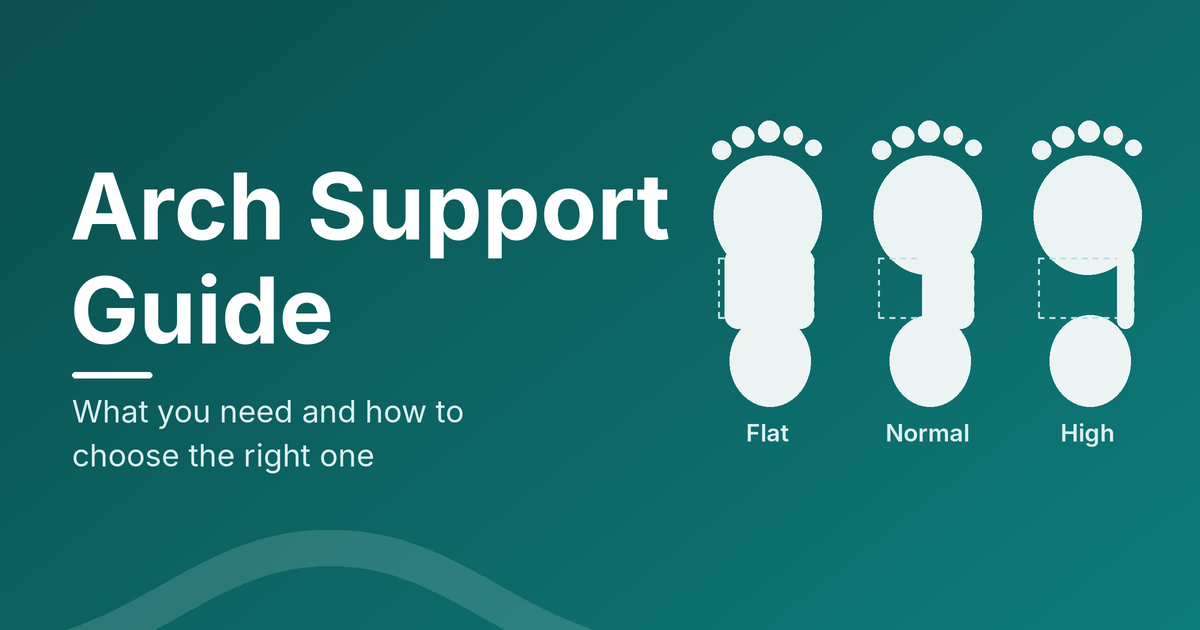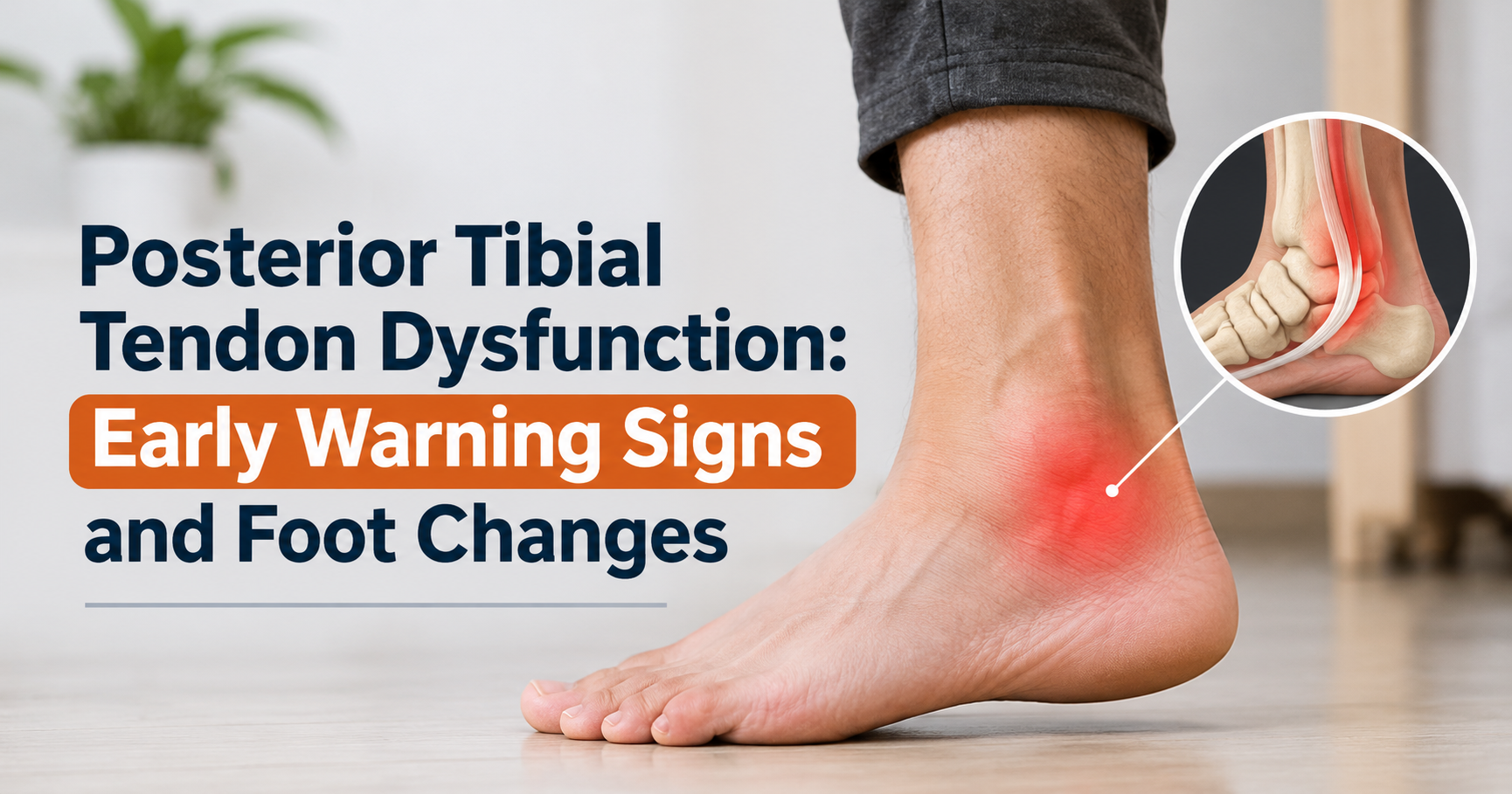
If the inside of your ankle aches after a walk, or you have noticed that one foot looks flatter than the other, the cause may be a small but important tendon you have probably never thought about. The posterior tibial tendon holds up the arch of your foot every time you step. When it weakens, the whole foot can slowly change shape.
This condition is called posterior tibial tendon dysfunction (PTTD), and it is the most common cause of a flat foot that develops in adulthood. The encouraging news is that it responds best to treatment when it is caught early. The difficult part is that the first symptoms are easy to dismiss as ordinary tiredness or “just a sore ankle.”
In this guide you will learn the early and late symptoms of PTTD, how the condition progresses through four stages, two simple self-checks, what else it can be confused with, and when it is time to see a professional.
Quick summary
- The earliest symptoms are usually pain and swelling along the inner ankle and arch.
- Over time the arch flattens and the heel tilts outward.
- In later stages the pain can move to the outside of the ankle.
- Early care with rest, supportive footwear and orthotics works far better than waiting.
What Is Posterior Tibial Tendon Dysfunction?
The posterior tibial tendon starts at a muscle deep in your calf, runs down behind the bony bump on the inside of your ankle, and attaches under the arch of your foot. Think of it as a support cable. It pulls the arch upward and keeps the inner side of the foot stable while you push off the ground.
With PTTD, that cable becomes inflamed, stretched, or partially torn. It can no longer hold the arch in place, so the arch gradually collapses. Doctors may also call the resulting problem adult-acquired flatfoot. Another name you may see is posterior tibial tendonitis, which usually describes the earlier, inflamed stage of the same problem.
Why the tendon is vulnerable
The tendon makes a sharp turn around the inner ankle bone, which places a lot of tension on it. Some research also suggests that part of the tendon has a limited blood supply, so it heals slowly after strain. Combine those two facts with thousands of steps a day and you can see why small injuries add up.
Early Symptoms of PTTD
In the beginning, symptoms are mild and often come and go. Most people first notice one or more of the following:
- Pain on the inside of the ankle or arch. It typically follows the line of the tendon, behind and below the inner ankle bone.
- Swelling along the inner ankle. The area may look puffy and feel warm or tender when pressed.
- Aching or fatigue in the arch. The foot feels tired after standing, walking, or climbing stairs.
- Pain that builds with activity. It tends to get worse the longer you are on your feet and eases with rest.
- Weak push-off. Walking uphill or going up on your toes feels harder than it used to.
Symptoms often appear after a change in activity, such as a new job on hard floors, more hiking, a jump in running mileage, or an increase in body weight.
Later Symptoms as the Condition Progresses
If the tendon keeps being overloaded, it lengthens and loses strength. The foot then begins to change shape, and new symptoms appear:
- A visibly flatter arch, often on one foot first. Bilateral disease is uncommon.
- The heel drifting outward, so the ankle appears to roll inward.
- Toes pointing outward and the forefoot looking turned away from the body’s midline.
- Trouble walking on uneven ground, because the foot can no longer lock into a stable position.
- Pain on the outside of the ankle. As the heel tilts outward, bones can press together on the outer side. Many people are surprised when the pain moves there from the inner side.
- Stiffness and arthritis. In advanced cases the joints in the back of the foot, and sometimes the ankle, wear down.
The 4 Stages of PTTD
The Four Stages of PTTD
Doctors classify PTTD into stages because the best treatment depends on how far the condition has advanced. Naming differs slightly between clinics, but the overall pattern is consistent.
| Stage | What is happening | What you may notice |
|---|---|---|
| Stage 1 | The tendon is inflamed or irritated but still working. | Inner ankle pain and swelling, normal arch, heel raise still possible. |
| Stage 2 | The tendon is stretched or partly torn. The foot is flat but still flexible. | Arch drops, heel tilts outward, single heel raise is weak or painful. |
| Stage 3 | The flatfoot deformity becomes fixed and rigid. | Stiff foot, pain on the outer ankle, arthritis may begin. |
| Stage 4 | The ankle joint itself is affected. | Ankle tilts outward, constant pain, difficulty walking. |
The most important takeaway is that stages 1 and 2 respond much better to non-surgical care. Once the foot becomes rigid, treatment options narrow, and some damage becomes permanent.
Two Simple Self-Checks at Home
These checks cannot diagnose PTTD, but they can tell you whether it is worth booking an appointment.
1. The “too many toes” sign
Stand barefoot and ask a family member to look at your feet from directly behind. On a normal foot, only the smallest toe, or perhaps one or two toes, can be seen on the outer side of the heel. If three or more toes are visible, the heel may be tilting outward, which suggests the arch has dropped.
The “Too Many Toes” Sign (Rear View)
|
Normal Foot
Outer side
Normal: 1 to 2 toes visible
|
PTTD Foot
Heel tilts
outward
PTTD: 3 or more toes visible
|
2. The single-leg heel raise
This is the classic clinical test. Stand on the sore foot only, lightly touching a wall for balance, and try to rise onto your toes. A healthy foot can do this smoothly and the heel tilts slightly inward at the top. With PTTD, you may be unable to lift the heel, may manage only with pain, or the heel may stay tilted outward.
Safety note: Stop immediately if either test causes sharp pain. Do not repeat it. Mention the result to your doctor instead.
What Causes PTTD and Who Is at Risk?
Overuse is the most common trigger, but certain factors make the tendon more likely to fail. These include:
- Being over 40, with higher rates in women
- Obesity or recent weight gain, which increases load on the arch
- Diabetes and high blood pressure
- Inflammatory arthritis, such as rheumatoid arthritis
- A pre-existing flat foot
- Repeated high-impact activity, including running, hiking and stair climbing
- A previous ankle or foot injury
- Jobs that involve long hours of standing or walking on hard surfaces
Conditions That Can Look Like PTTD
Not every sore inner ankle is PTTD. A doctor will want to rule out other problems that cause similar symptoms, including:
- A tarsal coalition, where bones in the back of the foot are joined abnormally
- Inflammatory arthritis of the foot or ankle
- Charcot arthropathy, which is a nerve-related joint breakdown
- Neuromuscular disease
- Injury to the ligaments in the middle of the foot
- Ordinary flat feet that have always been painless
This is one reason self-diagnosis is unreliable. A flat foot is not always a problem, but a new or changing flat foot with pain is worth investigating.
How PTTD Is Diagnosed
Diagnosis usually combines your history, a physical exam, and imaging. During the exam, a clinician will look at your foot from behind, press along the tendon, check your strength, and ask you to perform the heel raise. Weight-bearing X-rays show how far the arch has dropped and whether the joints are affected. An MRI or ultrasound can show whether the tendon is inflamed, thickened, or torn.
Treatment Options in Brief
Treatment depends on the stage, your symptoms, and your goals. Many people improve without surgery, especially in the early stages.
Non-surgical care
- Rest from aggravating activity to let the tendon calm down
- Ice and anti-inflammatory measures as advised by your doctor
- Supportive footwear with a firm heel counter and a stable midsole
- Custom or well-fitted arch-supporting orthotics to take load off the tendon
- A walking boot or ankle brace for more severe flare-ups
- Physical therapy to strengthen the muscles that support the arch
Surgery
Surgery is usually reserved for advanced cases or when months of conservative care have not helped. Options range from cleaning up or repairing the tendon to moving another tendon into its place, realigning bones, or fusing joints in later stages.
Everyday Support: What to Look for in Foot Gear
While you are waiting for an appointment, or as part of your long-term plan, the right gear can reduce strain on the tendon. These are the features that matter most.
- Shoes with a rigid heel counter. Squeeze the back of the shoe. If it collapses easily, it will not hold your heel steady.
- A shoe that bends only at the ball of the foot. If you can fold it in half, there is too little support under the arch.
- Arch-supporting insoles. Look for firm, contoured support rather than soft foam alone. Your clinician can advise whether a ready-made or custom type is right.
- A lace-up ankle brace. It can help during activity if your clinician recommends one.
- Cushioned socks and a cold pack for comfort after long days.
Always check that any product is suitable for your foot type and condition before relying on it, and avoid going barefoot on hard floors while symptoms are active.
When to See a Doctor
Book an appointment soon if you notice:
- Inner ankle pain or swelling lasting more than a couple of weeks
- An arch that has visibly dropped, or a heel that tilts outward
- Inability to rise onto your toes on one foot
- Pain that has moved to the outside of the ankle
- A sudden pop or tearing sensation followed by a collapsed arch
- Numbness, redness, or a wound on the foot, especially if you have diabetes
A podiatrist, orthopedic foot and ankle specialist, or sports medicine doctor can usually stage the problem in a single visit.
Frequently Asked Questions
What is the first sign of posterior tibial tendon dysfunction?
Pain, tenderness, and swelling along the inside of the ankle and arch are usually the first signs. They often get worse with activity and ease with rest.
Can PTTD go away on its own?
Mild irritation may settle with rest and better footwear, but true tendon dysfunction tends to be progressive if the cause is not addressed. Early assessment gives the best chance of avoiding a permanent change in foot shape.
Does PTTD always affect both feet?
No. It most often affects one foot, though a flat foot on the other side can raise the load on it.
Why does my outer ankle hurt if the problem is on the inside?
As the arch collapses and the heel tilts outward, bones on the outer side of the ankle can press against each other. That is why pain can move from inside to outside in later stages.
Can I keep exercising with PTTD?
Low-impact options such as swimming or cycling are often easier on the tendon than running or jumping, but the right level depends on your stage. Ask your clinician before continuing high-impact exercise.
How long does recovery take?
Early-stage cases managed conservatively often need several weeks to a few months of consistent care, including physical therapy. Recovery after surgery is longer. Your clinician can give a realistic estimate for your situation.
Final Thoughts
Posterior tibial tendon dysfunction rarely begins with a dramatic injury. It starts as a nagging ache on the inside of the ankle, and because it develops slowly, it is easy to ignore. Learning to recognise the pattern of inner ankle pain, swelling, a dropping arch, and a tilting heel gives you a real advantage, because the earlier stages are far easier to manage.
If any of the symptoms in this guide sound familiar, take the two home checks, choose supportive footwear, reduce the activities that trigger pain, and arrange an exam. Looking after this small tendon now can keep you walking comfortably for years.
Medical disclaimer: This article is for general information only and is not a substitute for professional medical advice, diagnosis, or treatment. Always consult a qualified healthcare provider about any foot or ankle symptoms.