If you spend any real time on a ladder, you already know the feeling: after an hour or two your feet burn, your calves tighten, and every step feels less secure than the one before. The cause is simple. A ladder rung is narrow and hard, and it asks a small part of your foot to carry your entire body weight. That is why arch support for standing on ladders matters for comfort, fatigue control and overall stability.
This guide explains how arch support works on ladders, which features to look for, how to use it safely, and which mistakes to avoid. Whether you are a roofer, painter, electrician, warehouse worker, or a homeowner cleaning gutters, the advice below will help you stay steady and comfortable on every rung.
Why Ladders Are Hard on Your Feet
On flat ground your weight spreads across the whole sole. On a ladder rung, the contact area shrinks to a thin strip, usually under the arch and ball of the foot. This creates three problems:
- Concentrated pressure: The arch is unsupported over the rung, so pressure builds on a small area and causes aching and numbness.
- Muscle fatigue: The small muscles in your feet and lower legs work constantly to hold your balance.
- Reduced stability: A tired, sore foot reacts more slowly and shifts more, which can make your footing less secure.
What Arch Support Actually Does
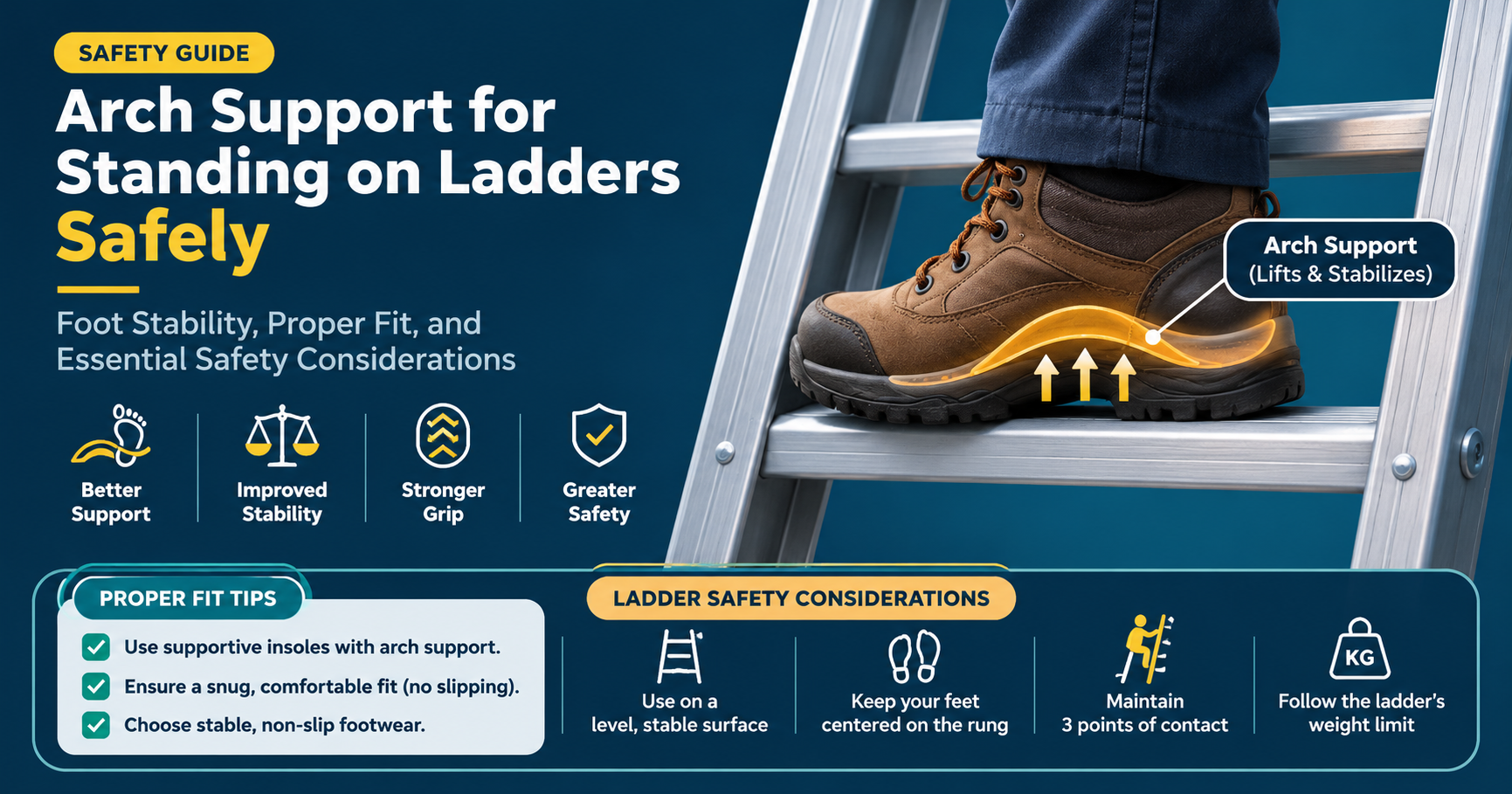
Arch support is a contoured insert or a built-in footbed shape that fills the gap under the arch of your foot. It does not make the rung wider, but it gives your foot more surface to share the load. Used correctly, it can:
- Spread pressure across the heel, arch and forefoot rather than one narrow band
- Reduce foot fatigue during long periods of standing
- Help the foot hold a more neutral position inside the shoe
- Improve the overall feel of the shoe, so you feel more settled on the rung
It is important to be realistic. Arch support is a comfort and fit aid, not a replacement for safe ladder practice. It will not fix an unstable ladder, a wrong angle, or rushed climbing.
Types of Arch Support for Ladder Work
There are several options, and the right one depends on your foot shape, your footwear and how long you stay up on the ladder.
| Type | Best For | Things to Watch |
|---|---|---|
| Soft foam insoles | Light, short jobs and cushioning | Can compress quickly and feel unstable |
| Semi-rigid insoles | All-day ladder and standing work | Need a short break-in period |
| Rigid or firm insoles | Heavy-duty support and stability | Can feel hard at first and take up space |
| Boots with built-in arch support | A complete, matched solution | Fit varies by brand and foot shape |
| Custom orthotics | Specific foot conditions or ongoing discomfort | Higher cost, and should be made by a professional |
How to Choose the Right Arch Support
1. Match the Support to Your Arch
People generally have low, medium or high arches. A flatter foot usually needs firmer, fuller support, while a high arch often benefits from a deeper contour with some cushioning. A simple wet-foot test on a dry surface can give you an idea of your arch type, and a shoe fitter or foot specialist can confirm it.
2. Keep It Low-Profile
Ladder work rewards a close, connected feel with the rung. A very thick insole can raise your heel, crowd your toes and reduce your feel for the rung. Choose a slim, firm insole that supports the arch without changing the fit of your footwear too much.
3. Look for a Deep Heel Cup
A good heel cup cradles the heel and stops it from sliding inside the shoe. A secure heel gives you better control with every step up and down.
4. Check the Boot, Not Just the Insole
The insole works with the footwear around it. The best ladder boots usually offer:
- A stiff or semi-stiff shank (the supportive layer in the middle of the sole) that spreads pressure over the rung
- A clearly defined heel that helps with grip and control
- A slip-resistant outsole in good condition
- Firm ankle and midfoot support
5. Test the Fit With the Insole Inside
Always try boots on with the insole you plan to use. Replacing a factory insole with a thicker one can make boots too tight, which causes pinching and loss of feel.
Using Arch Support Safely on a Ladder
Good footwear supports good habits, but it does not replace them. These core practices should always come first:
- Inspect the ladder first. Check the rungs, feet, rails and locking parts for damage before every use.
- Set it up correctly. Place the ladder on firm, level ground at a safe angle and follow the manufacturer’s instructions and load rating.
- Wear the right footwear. Use closed, supportive shoes or boots with clean, dry, slip-resistant soles. Avoid sandals, slippery soles or worn-out shoes.
- Keep three points of contact. Face the ladder and keep two hands and one foot, or two feet and one hand, in contact at all times.
- Place your foot properly. Step so the middle of your foot, over the arch, rests on the rung, and keep your weight centred between the rails.
- Do not overreach. Keep your belt buckle between the side rails and climb down to reposition the ladder instead of leaning.
- Take breaks. If your feet are numb or aching, climb down, walk around and rest before going back up.
Common Mistakes to Avoid
- Choosing very soft insoles only: Pure cushioning can feel comfortable at first but may compress and feel unstable under load.
- Adding thick insoles to tight boots: This can reduce circulation, cause hot spots and affect your control.
- Using worn-out insoles: Flattened or cracked insoles no longer support the arch. Replace them regularly.
- Ignoring muddy or oily soles: Even the best arch support cannot help if your outsole is slippery. Clean your soles before climbing.
- Skipping the break-in period: Wear new insoles for short periods first so your feet can adjust.
- Treating arch support as a safety guarantee: It improves comfort and fit. Safe ladder practice is still what keeps you protected.
Breaking In and Caring for Your Arch Support
Start by wearing new arch support for an hour or two a day and build up over a week or so. Take the insoles out regularly to let them dry, especially after sweaty days. Wipe them clean following the maker’s instructions, and replace them when they look flat, cracked or no longer feel supportive. For daily heavy use, many people check their insoles every few months.
Who Benefits Most?
Anyone who spends long periods on a ladder can benefit from well-chosen arch support, including painters, electricians, HVAC technicians, roofers, window cleaners, warehouse and retail staff, and keen DIYers. People with flat feet or high arches often notice the difference more. If you have ongoing foot pain, swelling, numbness or a medical foot condition, speak to a podiatrist or a qualified healthcare professional before choosing insoles or orthotics.
Frequently Asked Questions
Does arch support make ladders safer?
It can help your feet feel more comfortable and stable, which supports better balance and less fatigue. However, safety on a ladder still depends mainly on the ladder’s condition, correct setup, suitable footwear and safe climbing habits.
Can I use running insoles in work boots?
You can, but check the fit carefully. Many running insoles are soft and thick, which may not suit ladder work. A slimmer, firmer insole designed for work or standing usually performs better.
How tight should my boots feel with arch support?
Snug but never painful. Your heel should stay put, and your toes should have room to move slightly. If you feel pinching or pressure, the insole is too thick or the boot size is wrong.
How often should I replace insoles?
There is no single rule. Replace them when the arch looks flattened, the material cracks or compresses, or the support no longer feels like it did when new. Heavy daily use wears them out faster.
Is a stiff boot sole better for ladders?
A stiff or semi-stiff shank generally helps spread pressure over the rung and reduces foot fatigue. Choose a level of stiffness that still lets you move and feel the rung comfortably.
Final Thoughts
Standing on ladders puts concentrated pressure on a small part of your foot, and that is exactly where arch support can help. A slim, firm, well-fitted insole inside a boot with a stiff shank, a defined heel and a clean, slip-resistant sole gives you a more comfortable and settled stance. Combine it with a well-maintained ladder, correct setup and three points of contact, and you will work longer, with less foot fatigue and more confidence on every rung.
Disclaimer: This article is for general information only and is not medical or professional safety advice. Always follow the ladder manufacturer’s instructions and your local workplace safety rules. If you have foot pain or a medical condition, consult a qualified healthcare professional.