

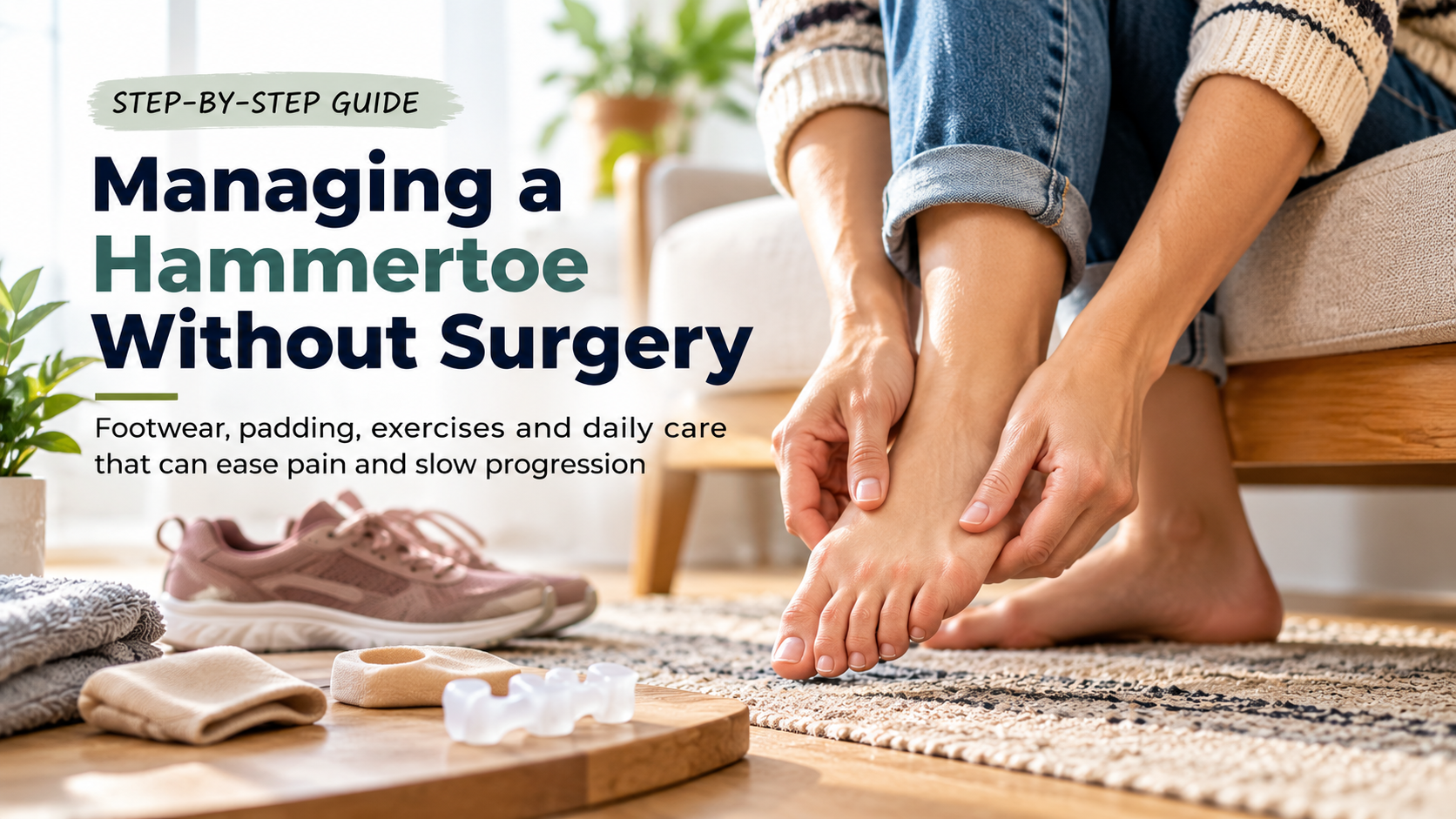
Step by Step Guide to Managing a Hammertoe Without Surgery
A hammertoe can start as a small bend in the second, third or fourth toe and slowly turn into a painful, rubbing, stubborn problem. The good news is that most people do not need surgery right away. With the right shoes, padding, exercises and daily habits, many hammertoes become comfortable again, and flexible ones can often be stopped from getting worse.
This step by step guide to managing a hammertoe without surgery explains what a hammertoe is, how to work out whether yours is flexible or rigid, and exactly what to do each day to reduce pain, protect the skin and keep your toes moving. It also covers the warning signs that mean it is time to see a professional.
Please note
This article is for general education and is not a substitute for a personal assessment. If you have diabetes, poor circulation or numb feet, speak to a podiatrist or doctor before trying any home treatment.
What Is a Hammertoe?
A hammertoe is a deformity in which a toe bends at its middle joint (the proximal interphalangeal or PIP joint), so the toe looks like a small hammer or an upside-down V. It usually affects the second toe but can involve the third, fourth or fifth toes. The bent joint often rubs on the top of the shoe, causing a corn, while the tip of the toe presses into the ground and may develop a callus.
Common Causes and Risk Factors
- Muscle and tendon imbalance: when the muscles that straighten the toe are weaker than the ones that bend it, the toe gradually curls.
- Tight, narrow or pointed shoes: they force the toes into a bent position for hours every day.
- High heels: they push the body weight forward and crowd the toes.
- Foot structure: a long second toe, flat feet, high arches or a bunion that pushes on the neighbouring toe.
- Past injury: a stubbed, jammed or broken toe can change how it sits.
- Medical conditions: arthritis, diabetes-related nerve damage and some neurological conditions can contribute.
- Genetics and age: the problem often runs in families and becomes more common later in life.
Common Symptoms
- A visibly bent toe that may look raised at the middle joint.
- Pain or irritation at the top of the bent joint when wearing shoes.
- Corns on top of the toe or calluses at the tip or under the ball of the foot.
- Redness, swelling or burning around the toe.
- Difficulty moving the toe or straightening it.
- In some cases, an open sore where the toe has been rubbing.
Can a Hammertoe Be Fixed Without Surgery?
The honest answer depends on how stiff the toe is. Non-surgical care cannot physically straighten a joint that has become fixed, but it can very effectively relieve pain, protect the skin and prevent progression. For a toe that is still flexible, consistent care can sometimes improve its position.
| Type | How to recognise it | What to expect from non-surgical care |
|---|---|---|
| Flexible hammertoe | The toe bends at the joint, but you can gently straighten it with your fingers. | Best outlook. Footwear changes, exercises and splints may improve position and stop progression. |
| Semi-rigid hammertoe | The toe straightens only partly and the movement feels tight. | Care can ease symptoms and slow worsening, with limited correction. |
| Rigid (fixed) hammertoe | The joint will not straighten, even with gentle assistance. | Care focuses on comfort and protection. Surgery may be considered if pain persists. |
Your Step-by-Step Plan
Work through the six steps below in order. Each one builds on the one before it.
Step 1: Check Whether Your Toe Is Flexible or Rigid
Sit down, relax your foot and hold the base of the affected toe with one hand. With the other hand, gently press on the bent joint and try to straighten the toe, using only light pressure. Notice whether it straightens fully, partly or not at all. Never force it. If you feel sharp pain, stop.
Make a note of the result. It will guide how much you can expect from exercises and splints, and it gives you something useful to show your podiatrist. Also look at the skin for corns, redness or sores, and check whether other toes are starting to bend.
Step 2: Switch to Roomier, Better-Designed Footwear
Footwear is the single most important change. If your shoes keep pressing the bent joint into the upper, nothing else will work well.
- Deep, rounded or square toe box: the toes should be able to lie flat and wiggle without touching the top of the shoe.
- Space at the front: leave roughly a thumb’s width between your longest toe and the end of the shoe.
- Low, broad heel: keep heels as low as practical, ideally under about 2 cm, to stop weight sliding your foot forward.
- Soft, stretchy upper: avoid hard stitching, seams or overlays that sit over the toe joints.
- Adjustable fastening: laces or hook-and-loop straps let you fine-tune the fit as your feet swell.
- Measure late in the day: feet are largest in the evening, so that is the best time to try on shoes. Measure both feet, since they often differ in size.
| Choose | Avoid |
|---|---|
| Rounded or square, deep toe boxes | Pointed or narrow toe boxes |
| Cushioned soles with some flexibility at the ball of the foot | Stiff, thin soles with no cushioning |
| Low heels or flat, supportive shoes | High heels and wedges |
| Stretchy fabric or soft leather uppers | Hard uppers with thick seams over the toes |
| Extra-depth or wide-fit styles | Shoes that feel tight and are expected to stretch |
Step 3: Protect the Toe With Padding
Padding reduces friction and pressure, which is often what makes a hammertoe painful. Several types are available in pharmacies and foot-care shops:
- Hammertoe crest pads: a soft crescent that sits under the curled toes to hold them gently in a better position and lift the tips away from the ground.
- Gel or fabric toe sleeves and caps: cushion the top of the bent joint against the shoe.
- Corn pads and non-medicated cushions: reduce rubbing over a corn. Choose non-medicated versions, since medicated acid pads can damage healthy skin.
- Metatarsal pads: sit just behind the ball of the foot to offload pressure that often builds under the forefoot with hammertoes.
- Moleskin or soft tape: a cheap option for protecting hot spots.
Change gel and fabric pads regularly, wash reusable sleeves, and check the skin underneath each day.
Step 4: Do Daily Toe and Calf Exercises
Exercises strengthen the small muscles that hold the toe straight and stretch the tight structures that pull it into a bend. They work best on flexible and semi-rigid toes and should be done gently every day.
| Exercise | How to do it | Suggested amount |
|---|---|---|
| Toe extension stretch | Sit with the foot resting on the opposite knee. Hold the base of the toe and slowly straighten the bent joint with gentle pressure. | Hold 15 to 20 seconds, repeat 5 times |
| Towel curl | Place a small towel flat under your foot and scrunch it toward you with your toes, then release. | 10 to 15 repetitions, 2 to 3 sets |
| Marble or small-object pick-up | Pick up marbles or small objects with your toes and drop them in a cup. | About 3 to 5 minutes |
| Toe spread (toe yoga) | Spread your toes apart as wide as you comfortably can, hold, then relax. | Hold 5 seconds, 10 repetitions |
| Big toe lift | Keep your heel and the other toes on the floor and lift only the big toe, then lower it and lift the small toes alone. | 10 repetitions each, 2 sets |
| Calf stretch | Stand facing a wall with one leg back and heel on the floor, leaning gently forward until you feel the stretch. | Hold 30 seconds, 3 times per leg |
Stop any exercise that causes sharp or lasting pain. Mild stretching sensations are normal, but your toes should not hurt more afterward.
Step 5: Add Splints, Straighteners or Orthotic Support
Once your footwear and exercise routine are in place, supportive devices can add another layer of help.
- Toe straighteners and gel splints: gently hold the toe in a straighter position, usually worn at home or inside roomy shoes.
- Toe separators: keep neighbouring toes from pressing together, which is useful when a bunion or crowding is part of the picture.
- Buddy taping: loosely taping the bent toe to its neighbour with a soft, breathable tape can give light support. Place a small piece of gauze or padding between the toes and never tape tightly.
- Supportive insoles or custom orthotics: correct underlying problems such as flat feet or high arches that overload the toe tendons and may reduce strain on the toe over time.
Safety tip
Straighteners and tape should feel snug but never tight. Remove them if you notice numbness, tingling, a change in toe colour or increased pain, and ask a professional before continuing.
Step 6: Manage Corns, Calluses and Pain
- Soak and soften: after a warm foot soak, gently smooth a callus with a pumice stone or foot file. Avoid sharp blades, which can cause cuts and infection.
- Moisturise daily: a foot cream helps keep skin supple and less likely to crack. Keep the areas between toes dry.
- Cold therapy: wrap an ice pack in a cloth and apply it to a sore toe for 10 to 15 minutes after a long day.
- Over-the-counter pain relief: some people use paracetamol or anti-inflammatory medicines. Follow the label and check with a pharmacist or doctor if you have other conditions or take other medications.
- Rest and activity changes: choose low-impact exercise such as swimming or cycling while the toe is irritated, and build up walking and running gradually.
A Simple Daily Routine
Consistency matters more than intensity. Most people can fit the essentials into about ten minutes a day.
How Long Until You See Results?
Comfort often improves within a few days of changing your shoes and adding padding, because friction drops straight away. Exercise-related changes in toe strength and flexibility tend to take several weeks of regular practice, and many clinicians suggest reassessing after about 6 to 12 weeks. A rigid toe will not straighten, but it should become much less painful if pressure is relieved.
Common Mistakes to Avoid
- Continuing to wear tight or pointed shoes “just for special occasions” every day.
- Cutting corns or calluses with razor blades or scissors.
- Using strong medicated corn removers on or around the toe.
- Forcing a stiff toe straight or wearing a splint too tight.
- Ignoring a sore, which can turn into an ulcer or infection.
- Giving up on exercises after a few days instead of building a habit.
When to See a Podiatrist or Doctor
Home care is a good start, but professional help makes a real difference, particularly when the problem is advanced. See a podiatrist if:
- Pain continues despite several weeks of careful footwear and padding changes.
- The toe is becoming more bent, or other toes are starting to curl.
- You cannot find shoes that fit comfortably.
- A corn or callus keeps returning or becomes thick and painful.
- You have diabetes, reduced feeling or poor circulation, even if the toe looks mild.
Seek prompt medical attention if you notice:
An open sore or blister on the toe, redness spreading from the toe, warmth, swelling, pus, fever, or a toe that looks dark, pale or blue. These can signal infection or circulation trouble and should not be left waiting.
What If Surgery Is Suggested?
Surgery is usually considered only after non-surgical care has not provided enough relief, or when a rigid toe causes persistent pain, ulcers or difficulty wearing any shoe. Procedures range from releasing a tight tendon to correcting or fusing the joint, depending on how flexible the toe is. A podiatrist or foot and ankle surgeon can explain the options, recovery time and likely results for your situation. Knowing you have already tried a thorough conservative plan also helps you make that decision with confidence.
Foot Care Products People Commonly Use
If you are building a home-care kit, these categories are the ones most often recommended for hammertoes. Always ask your podiatrist which will suit your foot.
- Gel hammertoe crests and toe sleeves
- Toe straighteners and separators
- Metatarsal pads and ball-of-foot cushions
- Wide, deep-toe-box shoes in adjustable styles
- Supportive or custom orthotic insoles
- Foot cream, pumice stone and soft foot files
- Cold gel packs and breathable medical tape
Frequently Asked Questions
Can a hammertoe go away on its own?
No, a hammertoe does not normally correct itself, and it often gets worse slowly if the cause continues. Early care, especially better shoes and exercises, gives the best chance of stopping it progressing.
Do toe exercises really work?
They help most when the toe is still flexible. Exercises strengthen weak muscles and keep joints moving, though they are usually combined with footwear changes and padding for the best results. They are less able to change a fixed deformity.
Is it safe to wear a toe straightener all day?
Many are designed for use at home or inside roomy shoes, but how long you can wear one depends on the design and your comfort. Follow the product instructions, remove it if you feel any numbness or pressure, and ask a podiatrist if you are unsure.
Can I still exercise with a hammertoe?
Yes. Low-impact activities such as swimming, cycling and walking in well-fitting shoes are usually fine. If running or sport aggravates the toe, try a roomier athletic shoe and add padding.
Are hammertoes the same as bunions?
No, but they often appear together. A bunion affects the base of the big toe, and it can push on the second toe and contribute to hammertoe development.
Is a hammertoe dangerous?
Usually it is a pain and comfort problem rather than a danger. However, in people with diabetes or reduced circulation, a rubbing toe can lead to ulcers, so early care and regular foot checks are especially important.
Final Thoughts
Managing a hammertoe without surgery is largely about reducing pressure and keeping the toe as strong and mobile as possible. Roomy shoes, simple padding, gentle daily exercises and support devices can transform how the foot feels, even when the toe itself stays bent. Start with the steps in this guide, give them a few weeks, and keep track of what helps.
If your pain persists or the deformity is progressing, a podiatrist can tailor the plan, rule out other causes and discuss whether more advanced options are worthwhile. Acting early keeps your choices open and your feet comfortable.
Medical disclaimer
This article provides general information only and is not medical advice. It does not replace an assessment by a qualified podiatrist or healthcare provider. Consult a professional about your own symptoms before starting any treatment.