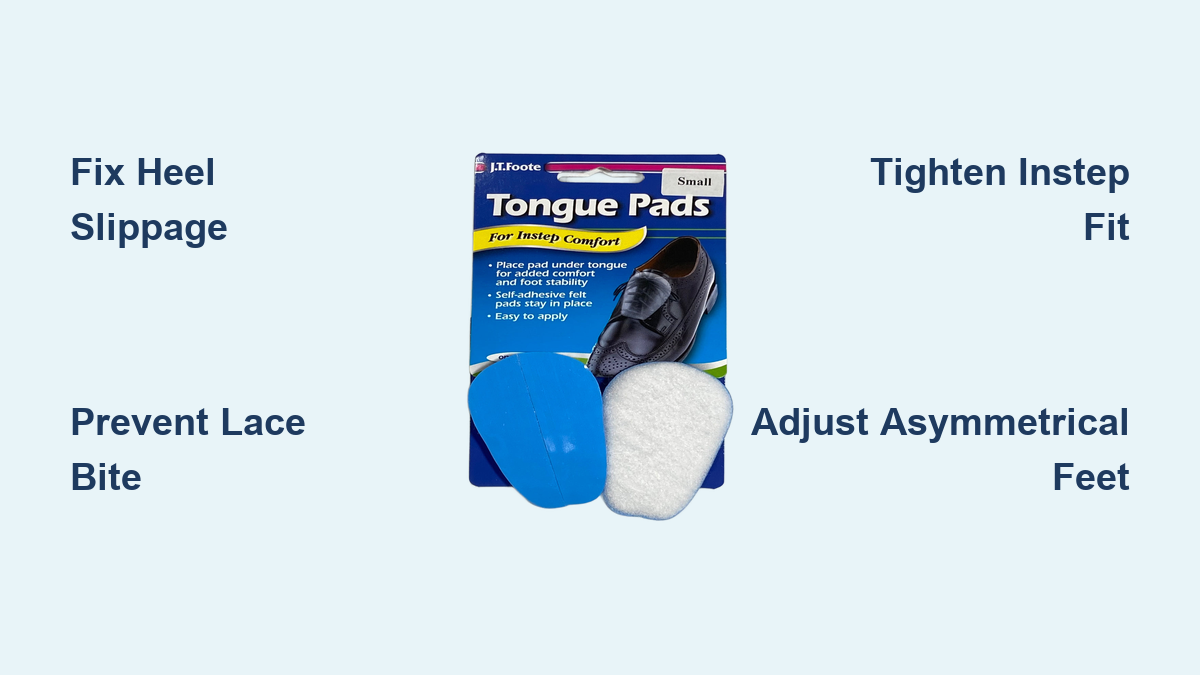
If your shoes feel loose across the top of your foot or your heel keeps slipping with every step, you’re not alone—and you may not need a new pair. A tongue pad for shoes could be the simple, affordable fix you’ve overlooked. This small insert, applied to the underside of a shoe’s tongue, can transform an ill-fitting shoe into a secure, comfortable fit. Designed to fill dead space over the instep, tongue pads improve lace tension, reduce slippage, and prevent common discomforts like lace bite and blisters.
Used by athletes, professionals, and everyday wearers, tongue pads are especially helpful in lace-up or slip-on styles that lack adjustability—think dress shoes, loafers, hiking boots, or stiff new footwear. They’re non-permanent, easy to install, and ideal for minor fit issues that don’t warrant resizing or costly modifications. Whether you have narrow feet, one foot smaller than the other, or simply bought a slightly roomy pair, a tongue pad offers a targeted solution where it matters most: across the bridge of your foot.
In this guide, you’ll learn exactly how tongue pads work, when to use them, and how to apply them for maximum effect—so you can walk farther, work longer, and wear your favorite shoes with confidence.
How Tongue Pads Improve Shoe Fit

Add Volume Where It’s Needed
Tongue pads work by increasing thickness under the shoe’s tongue, directly beneath the instep. This added bulk forces the laces to pull the upper tighter around the foot, creating a snugger, more secure fit. Unlike insoles or heel grips, which alter foot position vertically, tongue pads enhance horizontal stability—locking the foot in place without raising it.
This is especially effective in shoes with laces, where tightening engages the entire upper. The pad acts like a shim, ensuring that lace tension translates into real compression across the foot’s highest point.
Enhance Lace Engagement
Without sufficient pressure on the tongue, laces can’t do their job. A flat or thin tongue allows slack, even when laced tightly. By padding the tongue, you maximize the mechanical advantage of your lacing system. Each pull on the laces now draws the sides of the shoe closer together, hugging your foot like a glove.
This is critical when using the fifth eyelet (the topmost lace hole). With a tongue pad, looping the laces through this eyelet creates a “heel lock” that pulls the collar inward and upward, securing the ankle and preventing lift.
Prevent Heel Slippage Mechanically
Heel slippage often isn’t about shoe length—it’s about instep engagement. If the upper doesn’t hug the midfoot, the foot slides forward with each step, lifting the heel out of the cup. Tongue pads fix this at the source: by stabilizing the front of the foot, they keep the heel seated where it belongs.
Unlike heel grips, which can push the heel up and out, tongue pads work with the shoe’s design to keep the foot fully nestled in the heel cup.
Common Problems Tongue Pads Solve
Stop Heel Slippage in Lace-Ups
When your heel lifts during walking, especially in boots or dress shoes, it’s usually due to loose lacing over the instep—not an oversized shoe. A tongue pad eliminates this slack, allowing laces to hold the foot back firmly.
- Look for: Shoes that fit at the toe but allow heel movement.
- Best fix: Apply pad and use fifth-eyelet lacing for full lockdown.
Fix Loose Fit in Slightly Oversized Shoes
Sometimes you need a little extra room in the toe box, but the rest of the shoe feels too wide. Instead of squeezing into a smaller size and risking toe compression, use a tongue pad to tighten only the instep area.
This is a reversible, low-risk way to fine-tune fit—perfect for shoes that are almost right.
Address One Foot Smaller Than the Other
Over 60% of people have asymmetrical feet. If you size up for your larger foot, the smaller one will slide inside its shoe, leading to blisters and fatigue. Apply a tongue pad to just one shoe—the one for the smaller foot—and eliminate movement without compromising comfort.
No need for custom orthotics or dual-sizing tricks—just targeted volume adjustment.
Prevent Lace Bite Pain
Lace bite—sharp pressure or bruising across the top of the foot—is common in stiff or new shoes like hiking boots, work boots, or athletic cleats. The rigid tongue or tight laces press directly on tendons and bones.
A tongue pad acts as a cushioned buffer, spreading out lace pressure and protecting sensitive areas. It’s especially useful during the break-in period.
Support Low-Volume or Narrow Feet
People with narrow heels, flat arches, or low insteps often struggle with shoes that gap at the top. This is common in unisex or men’s models, which are built for wider feet.
Tongue pads fill this dead space, helping the shoe conform to slimmer foot profiles—without resorting to bulky socks or heel grips that worsen the problem.
Reduce Foot Slide on Downhill Terrain
In trail running or hiking, gravity pulls your foot forward with every step downhill, causing toes to jam into the toe box. A tongue pad anchors the foot rearward, minimizing forward movement and protecting toenails from trauma.
Combine with proper lacing for all-terrain stability.
Relieve Pressure from Bony Prominences
For those with navicular ptosis—a protruding bone on the top of the foot—a standard tongue can cause painful pressure. Here’s the fix: cut a small hole in the center of the tongue pad to relieve pressure on the bump, while the surrounding foam cushions the rest.
This custom relief zone redirects force away from sensitive areas—ideal for therapeutic or orthopedic footwear.
When to Use a Tongue Pad: Key Scenarios
Instep Feels Loose Despite Tight Laces
✅ Use a tongue pad if:
– You’ve pulled the laces tight, but the upper still feels slack.
– There’s visible gap between your foot and the tongue.
– Your foot moves side-to-side or forward-backward.
This is the most common use case—and where tongue pads deliver the biggest improvement.
Heel Lifts in Properly Sized Shoes
✅ Use a tongue pad if:
– Your heel rises during walking, even though the shoe fits in length.
– Heel grips or thicker socks made it worse by lifting your foot too high.
Tongue pads fix the root cause: insufficient instep pressure. They keep the foot seated fully in the heel cup.
One Shoe Fits Looser Than the Other
✅ Use a tongue pad if:
– You wear different sizes or have asymmetrical feet.
– One foot slides inside the shoe, causing blisters.
Apply the pad only to the looser shoe—a simple, unilateral fix.
Wearing Stiff or New Footwear
✅ Use a tongue pad if:
– Your new boots or shoes are causing lace bite.
– You need comfort during the break-in period.
The pad cushions the top of the foot while maintaining support—ideal for leather shoes, safety boots, or athletic models.
Using Slip-On Shoes Like Loafers or Chelsea Boots
✅ Use a tongue pad if:
– Your loafers or Chelsea boots lack laces and feel loose.
– Your heel slips out when walking.
Even without laces, a tongue pad pushes the foot back into the heel cup, simulating the effect of a tied-down upper.
Wearing Orthotics or Thick Insoles
✅ Use a tongue pad if:
– Adding an insole raised your foot too high, causing heel lift.
– You lost instep contact after inserting orthotics.
The pad restores lace tension without removing supportive inserts.
How to Apply a Tongue Pad Correctly

Step-by-Step Installation
-
Clean the Tongue Surface
Wipe the underside of the shoe’s tongue with a dry cloth. Remove dust or moisture to ensure strong adhesion. -
Peel and Position
Remove the backing from the adhesive side. Place the pad on the underside of the tongue, opposite the front of the ankle—not too close to the collar.
- Too high? It won’t compress properly during wear.
- Too low? It won’t engage the instep.
-
Press Firmly into Place
Use your fingers to press the entire surface, ensuring full contact. Walk in the shoe to test adhesion. -
Test the Fit
Wear the shoe with your usual socks and lace normally. Check for improved heel lock and reduced slippage.
Pro Tips for Best Results
- Try a DIY test first: Fold a small piece of paper towel or thin fabric and tuck it under the tongue. If it reduces slippage, a tongue pad will likely work.
- Start thin: Use a single layer. Add a second pad only if needed.
- Combine with loop lacing: Use the fifth eyelet to lock down the heel for maximum stability.
- Use asymmetrically: Only apply to the shoe with the smaller foot.
- Avoid over-padding: Excess thickness can cause ankle pressure or discomfort.
Tongue Pads vs. Other Fit Solutions
| Solution | Best For | Limitations |
|---|---|---|
| Tongue Pad | Instep looseness, heel slippage, lace bite | Only adjusts instep; not for severely oversized shoes |
| Heel Grips | Mild heel slippage in snug shoes | Can bunch or lift heel; often ineffective |
| Insoles / Orthotics | Arch support, cushioning, foot alignment | Add height; may cause heel lift or tight toe box |
| Thicker Socks | Temporary fix, warmth | Add bulk everywhere; compress over time |
| Lacing Techniques | Minor adjustments, heel lock | Limited by shoe structure and tongue thickness |
Why tongue pads win in many cases:
They address the mechanical root of heel slippage—lack of instep pressure—while other solutions often work against it. Heel grips lift the foot, insoles add volume, and thick socks compress. Tongue pads enhance the shoe’s natural fit system without compromise.
Recommended Tongue Pads and Brands
Pedag Supra Suede Tongue Pads with Memory Foam
- Features:
- Adhesive-backed memory foam with suede cover
- Two sizes: Small/Medium and Large/X-Large
- Includes one pair (two pads)
- Universal fit (left/right interchangeable)
-
Designed for therapeutic and everyday shoes
-
Why it’s top-rated:
Combines durability, comfort, and strong adhesion. Ideal for dress shoes, boots, and orthopedic footwear. -
Where to buy: Pedag USA
Generic Alternatives
Available on:
– Amazon (search: “shoe tongue pads”)
– Zappos (under foot care or shoe accessories)
– Shoe repair shops or podiatry supply stores
Look for pads with:
– Strong adhesive
– Thin profile (under 1/8 inch)
– Breathable, non-slip material
Limitations and When Not to Use
Not for Severely Oversized Shoes
Tongue pads are for minor fit adjustments only. If your shoe is too long or wide, no amount of padding will fix it. Use them when the length is correct but the instep feels loose.
May Not Fit Zip-Front Shoes
If the zipper runs along the tongue (common in some boots), there may be no room to attach a pad. In these cases, consider insoles or heel grips instead.
Adhesive May Wear Over Time
With frequent shoe removal, the pad may loosen after several months. Reapply or replace as needed.
Unnecessary in Well-Designed Shoes
Premium brands like Freeman Footwear or Allen Edmonds often include built-in padded tongues and collars that reduce pressure and improve fit. If your shoes already have thick, cushioned tongues, a pad may not be needed.
Caring for Your Tongue Pads
Keep Them Clean and Secure
- Wipe occasionally with a damp cloth if accessible.
- Check adhesion weekly—press down if the edges start to lift.
- Replace when compressed—foam loses resilience over time.
- Store shoes properly—use shoe trees or stuff with paper to maintain tongue shape.
Extend Pad Life
- Avoid exposing shoes to excessive moisture.
- Remove pads before washing or deep cleaning.
- Don’t use with silicone-based sprays that can degrade adhesive.
Real-World Success Stories
Doc Martens Adrian Bex Loafers
Users reported chronic heel slippage despite trying heel grips, thicker socks, and insoles. After applying tongue pads, the heel stayed locked in place. One user noted: “The insole actually made it worse—it lifted my foot so high the heel couldn’t stay in the cup. The tongue pad fixed it in seconds.”
Chelsea Boots with No Laces
A frequent complaint with slip-on boots is heel lift. Video demos show how inserting a tongue pad pushes the foot back, eliminating slippage. Wearers say it feels like the boot was custom-fitted.
Hiking Boot Break-In Period
One hiker used a tongue pad during the first 10 miles of a new boot. It prevented lace bite and toe jamming, allowing a smoother break-in. “It’s like giving the boot a head start on fitting my foot,” they said.
A tongue pad is a smart, simple upgrade for better shoe wearability. It solves common fit issues—heel slippage, lace bite, instep looseness—with minimal effort and cost. Whether you’re breaking in new shoes, dealing with asymmetrical feet, or just want a more secure feel, this small insert delivers big results. For anyone who’s given up on a favorite pair due to poor fit, a tongue pad might be the solution you’ve been missing.