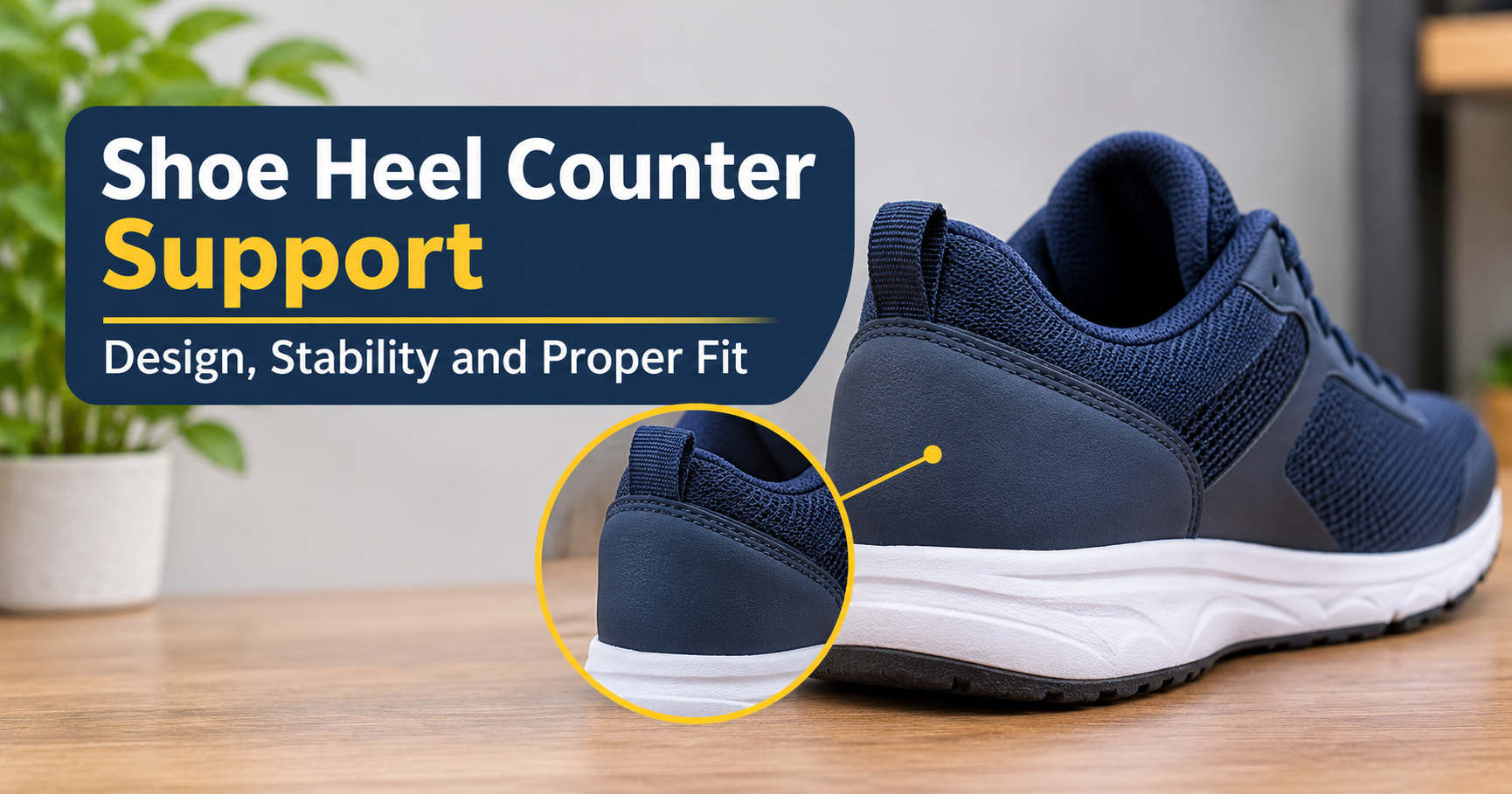
Ask most people what makes a shoe supportive and they will point to the arch, the cushioning or the thickness of the sole. Very few look at the small, firm cup hidden at the back of the shoe. Yet that cup, known as the heel counter, quietly decides whether your heel stays centered, whether your ankle feels steady and whether the shoe keeps its shape after a few months of use.
This guide explains shoe heel counter support in plain language. You will learn what a heel counter is, how it is built, what it actually does for your feet, who benefits most from a firm one, how to test it before you buy and when it is time to retire a pair of shoes.
Key Takeaways
- A heel counter is a stiff cup built into the rear of a shoe that wraps around your heel bone.
- Its main jobs are to hold the heel in place, guide the foot through each step and keep the shoe from twisting or collapsing at the back.
- Firmer is not always better. The right amount of stiffness depends on your foot, your activity and your comfort.
- You can test a counter in under a minute with the squeeze test, the twist test and a heel slip check.
- A counter that leans, folds or feels soft is a sign the shoe has lost much of its support.
What Is a Shoe Heel Counter?
The heel counter is a semi-rigid insert that sits between the outer material of the shoe (the upper) and the soft lining on the inside. It curves around the back and sides of the heel, forming a cup that cradles your heel bone (the calcaneus). Because it is sandwiched between layers, you usually cannot see it. You can feel it, though, by pinching the back of the shoe: a good counter pushes back.
The counter generally runs from the base of the heel up toward the ankle collar and extends forward along both sides of the heel. In many shoes it reaches partway toward the arch. Its height, length and stiffness vary widely from one design to the next, which is why two shoes that look similar can feel completely different on the foot.

What Is Heel Counter Support Supposed to Do?
A well-made heel counter performs several jobs at the same time. Understanding them helps you judge whether a shoe is giving you real support or just a padded back.
1. Holds the Heel in Place
The most obvious job is keeping your heel from sliding around. When the heel moves up and down inside the shoe, friction builds up against the skin. That friction is a common cause of blisters, hot spots and rubbed-raw patches at the back of the foot. A snug counter reduces that movement.
2. Improves Rearfoot Stability
Every step begins with the heel striking the ground. At that moment the foot normally rolls slightly inward, a motion known as pronation, which helps absorb shock. A firm counter helps guide the heel through this motion so it does not tip too far to either side. Research on the exact size of this effect is mixed, but many footwear designers and clinicians still consider a stable heel cup an important part of a stable shoe.
3. Keeps the Shoe’s Shape
Without a counter, the back of a shoe folds in on itself over time. A strong counter helps the shoe keep its shape through months of walking, standing and flexing. That shape matters because a collapsed heel changes how your foot sits on the midsole.
4. Supports the Natural Heel Cushion
Under your heel bone is a thick pad of fatty tissue that acts as a built-in shock absorber. When the foot strikes the ground, this pad can spread outward. A counter that fits well helps keep the pad centered under the bone, so it can do its work properly.
5. Helps With Balance and Confidence
A secure heel makes the whole foot feel more connected to the shoe. This is especially valuable for older adults, for people who stand all day and for anyone walking on uneven ground, where a wobbling heel can make steps feel unsure.
Types of Heel Counters and What They Are Made Of
Not every counter is built the same way. Manufacturers choose materials based on the purpose of the shoe, and each option involves trade-offs between stiffness, weight and comfort.

Rigid Thermoplastic Counters
These are molded from firm plastic such as TPU or similar polymers. They keep their form well, resist twisting and are common in running shoes, walking shoes and stability models. Because they are molded, designers can shape them precisely around the heel. The trade-off is that they offer less give, which some people find too stiff.
Leather or Fibreboard Counters
Traditional dress shoes, work boots and many classic styles use layered leather or compressed cellulose board. These counters are firm but can soften slightly with wear, and they can mold toward the shape of your heel. They are generally heavier than modern plastic options, and they can lose firmness over time, especially if the shoe gets wet repeatedly.
Soft or Flexible Counters
Casual shoes, slippers and many minimalist designs use foam or thin fabric reinforcement instead of a true rigid cup. They are light and flexible, and they can be very comfortable. However, they offer little structural support, so they are better suited to short wear and low-demand activities than to long days on your feet.
Internal, External and Extended Designs
Counters can also differ in placement. An internal counter is hidden between layers, which is the most common style. An external counter is a visible cage or clip on the outside of the heel, often seen in performance running shoes. Some designs extend the counter forward along the arch side to add extra control. Each approach changes how much the shoe resists twisting and how it feels on the foot.
| Counter Type | Stiffness | Typical Use | Main Drawback |
|---|---|---|---|
| Rigid thermoplastic | High | Running, walking, stability shoes | Can feel too firm for some feet |
| Leather or fibreboard | Medium to high | Dress shoes, boots, classic footwear | Heavier and may soften with age |
| Soft or flexible | Low | Casual shoes, slippers, minimalist styles | Limited stability for long wear |
Who Benefits Most From a Supportive Heel Counter?
Almost everyone benefits from a counter that holds the heel securely, but some groups have more to gain.
- People with flat or low arches. Feet that roll inward more than average often feel steadier in a shoe with a firm heel cup.
- People with heel pain. Those dealing with plantar fasciitis or tenderness under the heel often find that a snug, supportive back keeps the heel pad in place and limits excess motion. A podiatrist can tell you whether that applies to your situation.
- Runners and walkers. Repeated heel strikes add up over many miles. A stable counter helps keep each landing consistent.
- People who stand for long hours. Nurses, teachers, retail workers and factory staff often notice less end-of-day fatigue in shoes that hold the heel steady.
- Older adults. A secure heel can improve the feeling of stability when walking, especially on uneven surfaces.
- People with weak or unstable ankles. A firm counter adds lateral stability, which can help the ankle feel more controlled.
A Note on Heel Bumps and Achilles Pain
If you have a bony bump at the back of the heel or an irritated Achilles tendon, a very stiff or tall counter can sometimes rub exactly where it hurts. In that case a softer, lower or notched heel collar may be more comfortable. Pain in this area is worth discussing with a healthcare professional rather than trying to solve with footwear alone.
Signs of a Good Heel Counter
When you pick up a shoe in the store, look for these qualities:
- It resists squeezing. Pinch the sides of the heel between your thumb and finger. A good counter holds its shape and springs back.
- It cups the heel fully. The counter should wrap around the back and sides, not just sit flat behind the heel.
- It is smooth inside. Run a finger along the inside. There should be no hard edges, rough seams or ridges that could rub the skin.
- It sits at a sensible height. It should rise high enough to hold the heel but stop below the sensitive Achilles area.
- It stands upright. Place the shoe on a flat table and look from behind. The heel should be straight, not tilted.
Three Quick Tests You Can Do Before Buying
You do not need special equipment to check a heel counter. These three quick tests give a reliable first impression of how supportive a shoe really is.

Test 1: The Squeeze Test
Press the sides of the heel cup together with your thumb and fingers. A strong counter resists and returns to shape quickly. If it folds flat or feels like thin cardboard, the shoe offers very little rearfoot support.
Test 2: The Twist Test
Hold the heel in one hand and the front of the shoe in the other, then gently twist in opposite directions. A supportive shoe resists twisting, especially around the heel and midfoot. A shoe that wrings out like a dishcloth will not control your foot well.
Test 3: The Heel Slip Check
Put the shoe on, lace it fully and walk around the store, including a few steps up a slope or stairs if possible. A very slight lift of the heel as you step forward is normal, especially in a new shoe. If the heel clearly slides up and down or the shoe feels loose at the back, either the size or the counter is wrong for your foot.
How to Tell When a Heel Counter Is Worn Out
Even a high-quality counter does not last forever. Repeated flexing, sweat, moisture and the simple pressure of thousands of steps gradually break it down. Watch for these warning signs:

- The heel leans. Set the shoes on a flat surface and look from behind. If the back tilts inward or outward, the counter has lost its structure.
- The back feels soft. If the squeeze test now feels much easier than it did when the shoe was new, support has faded.
- The outsole wears unevenly. Heavy wear on one side of the heel can point to a tilting heel or a foot that is no longer held in a neutral position.
- The lining is torn or rubbed through. Holes at the inner heel mean the counter and padding underneath have taken a lot of friction.
- Your feet or heels ache more than usual. New heel soreness, blisters or a feeling of slipping can all signal the shoe has had its day.
As a rough guide, many running shoe makers suggest replacing running shoes somewhere around 300 to 500 miles (about 500 to 800 kilometers), though this varies with body weight, running style and surface. Everyday walking shoes often last several months to a year or more depending on how often you wear them. The condition of the heel and midsole matters more than the calendar.
Choosing the Right Heel Counter for Your Activity
| Activity | What to Look For |
|---|---|
| Running | Firm but well-padded counter, smooth interior, a secure fit without pressure on the Achilles |
| Daily walking | Moderate to firm counter, comfortable padding and a stable base |
| Standing all day | Strong counter, cushioned midsole and a roomy toe box |
| Hiking and trail use | Very firm counter, higher collar for ankle support and good heel lock |
| Work boots | Rigid, durable counter that resists crushing and holds its shape on hard surfaces |
| Dress shoes | Firm leather or fibreboard counter and a snug heel without pinching |
| Casual or house wear | A softer counter is acceptable for short wear, but choose structure if you walk a lot |
Fit Tips That Make Heel Counter Support Work
Even the best counter cannot help if the shoe does not fit. Keep these points in mind:
- Shop later in the day. Feet swell slightly through the day, so an afternoon or evening fit gives a more realistic size.
- Wear the socks you plan to use. Thick athletic socks and thin dress socks change the fit noticeably.
- Try both shoes. Most people have one foot slightly larger than the other, and the heel can fit differently on each side.
- Check the width at the heel. The heel should feel held, not crushed. If the sides press hard or pinch, try a different model rather than hoping it will break in.
- Use the top eyelet. Many shoes have an extra eyelet near the ankle. Using it creates a “heel lock” lacing pattern that pulls the heel firmly into the counter.
How to Do a Heel Lock Lace
Thread each lace end through the top eyelet on the same side to form a small loop. Cross the laces and pass each end through the opposite loop. Pull firmly so the shoe draws backward against your heel, then tie your usual bow. This simple change often reduces heel slip without needing a smaller size.
Heel Counter Problems and Practical Solutions
| Problem | Possible Cause | What to Try |
|---|---|---|
| Heel slips up and down | Shoe too large or counter too wide | Heel lock lacing, a narrower shoe or a different model |
| Blisters on the back of the heel | Friction from movement or a rough seam | Better-fitting shoe, moisture-wicking socks, protective patches |
| Pressure on the Achilles area | Counter or collar too high or too stiff | Shoe with a notched or softer collar |
| Heel leans to one side | Worn counter or uneven wear | Replace the shoes and seek advice if the pattern repeats |
| Heel pain at end of day | Several possible causes, including poor support | Supportive shoes and a professional assessment if pain persists |
Can Heel Cups or Insoles Add Support?
Many people ask whether they can add support to a shoe that has a weak counter. Heel cups and supportive insoles can improve the way the heel sits and add a little cushioning. They do not rebuild a collapsed counter, though, and they cannot replace a shoe that has lost its structure. If the back of the shoe is soft, leaning or damaged, new shoes are usually the better solution. If your shoes are still in good shape and you want a little extra stability or comfort, an insole with a deep heel cup can be a useful addition.
How to Make Your Heel Counters Last Longer
- Use a shoe horn. Stepping into shoes with your heel crushing the back is the fastest way to ruin a counter.
- Loosen the laces before taking shoes off. Kicking them off with the laces tied strains the heel area.
- Rotate pairs. Giving shoes a day to rest lets the cushioning and the materials recover.
- Dry shoes naturally. Heat from radiators or dryers can warp materials and weaken adhesives. Remove the insoles and let the shoes air dry at room temperature.
- Keep them clean. Dirt and salt can break down leather and fibreboard over time.
- Do not use them for the wrong job. Wearing casual shoes for long runs or hikes wears out a counter faster than it was designed to handle.
Common Myths About Heel Counters
Myth: The stiffer the counter, the better the shoe.
Fact: A counter that is too stiff or too tall can press on sensitive areas. The goal is a secure, comfortable hold, not maximum rigidity.
Myth: A heel counter fixes foot problems by itself.
Fact: Footwear is one factor among many. Strength, flexibility, activity level, body weight and medical conditions all play a part.
Myth: Shoes only need replacing when the outsole wears through.
Fact: The counter and midsole often break down before the tread does. A shoe can look fine from below while its support is already gone.
Myth: Soft shoes are always more comfortable for sore feet.
Fact: Very soft footwear can feel pleasant at first yet leave the foot with less control. Many people with heel discomfort do better in shoes that combine cushioning with a stable heel.
Frequently Asked Questions
What is the heel counter in a shoe?
It is the firm cup built into the back of a shoe that wraps around the heel. It holds the heel steady, helps the shoe keep its shape and supports stability during each step.
How do I know if my shoes have a good heel counter?
Squeeze the back of the shoe with your fingers. A good counter resists and springs back. Then look at the shoe from behind to make sure the heel is straight, and walk in the shoe to check that the heel does not slip.
Is a stiff heel counter good for plantar fasciitis?
Many people with heel pain find a firm, well-fitting counter helpful because it keeps the heel centered and limits excess motion. However, plantar fasciitis has several possible contributing factors. A healthcare professional can suggest the right combination of footwear, stretching and other care for your case.
Why does my heel slip out of my shoes?
The most common reasons are a shoe that is too big, a heel that is narrower than the shoe’s heel cup, or a counter that has softened. Try heel lock lacing first, and consider a different size or model if slipping continues.
Can a worn heel counter cause foot or ankle pain?
A collapsed counter changes how your heel sits and moves in the shoe, which can leave the foot less stable. Some people notice more soreness, uneven wear or a feeling of rolling to one side. If discomfort continues after you replace your shoes, it is sensible to have it checked.
Can I repair a broken heel counter?
Some cobblers can reinforce or replace counters in leather shoes and boots. For athletic shoes, repair is rarely practical, and replacing the pair is usually the better choice.
Do kids need shoes with a firm heel counter?
Children’s feet are still developing, and many footwear specialists recommend shoes with a reasonably firm heel that holds the foot securely while remaining flexible at the forefoot. Fit should always be checked often because children outgrow shoes quickly.
How often should I replace shoes with a worn counter?
There is no single schedule. Replace shoes when the heel leans, the back feels soft, the heel slips or your feet start to feel less supported. For running shoes, the common range is roughly 300 to 500 miles.
Final Thoughts
Heel counter support is one of the least visible parts of a shoe, but it plays a big role in comfort, stability and how long a pair keeps performing. A good counter holds the heel securely, keeps the back of the shoe in shape and helps your foot move through each step with more control.
When you shop, take a minute to squeeze, twist and walk in the shoe. Match the firmness of the counter to your activity, make sure the fit is comfortable and replace shoes as soon as the heel begins to lean or soften. Small checks like these can make the difference between shoes that merely look good and shoes that truly support your feet.
This article is for general information only and is not a substitute for professional medical advice. If you have ongoing heel, ankle or foot pain, please consult a qualified healthcare professional or podiatrist.