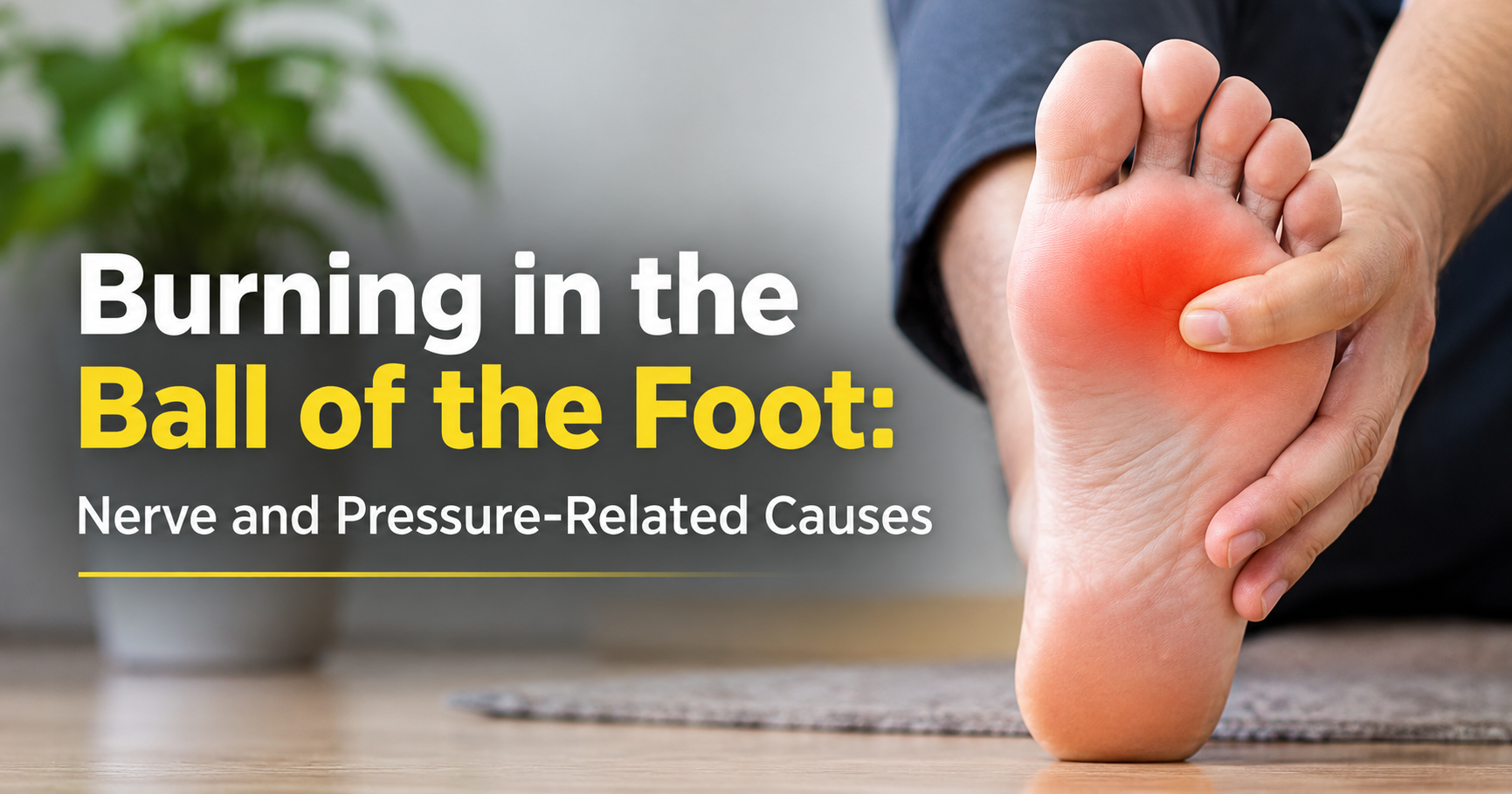
That hot, stinging or “walking on coals” feeling under the front of your foot can turn a simple walk into a struggle. A burning sensation in the ball of foot is one of the most common foot complaints, and it has a long list of possible causes, from tight shoes and overworked joints to pinched or damaged nerves.
The good news is that most cases improve with the right footwear, cushioning and a few daily habits. The key is working out what is behind the burning so you treat the real problem. This guide explains what the ball of foot is, the most likely causes, how to tell them apart, what you can do at home, what to look for when buying foot-care products, and the warning signs that mean it is time to see a professional.
Quick answer
Burning in the ball of foot is most often caused by metatarsalgia, Morton’s neuroma, peripheral neuropathy or poorly fitting shoes. Mild cases usually calm down with rest, a wide and cushioned shoe, a metatarsal pad and cooling. Burning that lasts more than two weeks, affects both feet, or comes with numbness, swelling or a wound needs a proper medical check.
What Is the Ball of Foot?
The ball of foot is the rounded, padded area on the sole just behind your toes. It is where most of your body weight lands when you push off to walk, run or climb stairs. Several delicate structures sit packed together here:
- Metatarsal heads: the knuckle-like ends of the five long bones in your forefoot.
- Sesamoid bones: two tiny bones under the big toe joint that act like pulleys for tendons.
- Digital nerves: small nerves running between the metatarsal bones to the toes.
- The fat pad: a natural cushion that absorbs shock with every step.
- Joint capsules and ligaments: the soft tissue that holds each toe joint in place.
Because so much force and so many sensitive nerves are squeezed into a small area, irritation here is very common, and burning is a typical way it shows up.
Symptoms That Often Come With Burning in the Ball of Foot
Burning rarely travels alone. Paying attention to the other sensations helps narrow down the cause:
- Sharp, aching or bruised pain under the forefoot, especially when walking barefoot or on hard floors
- A feeling of a pebble in your shoe or a bunched-up sock under the toes
- Tingling, “pins and needles” or numbness in the toes
- Pain that gets worse when you stand, run or wear heels, and eases when you rest
- Swelling, redness or warmth around the painful area
- Burning that is worse at night or when your feet get warm in bed
- Toes that look crooked, or calluses forming under the ball of foot
9 Common Causes of Burning in the Ball of Foot
1. Metatarsalgia
Metatarsalgia is a general term for pain and inflammation in the ball of foot. It develops when the metatarsal heads are overloaded, often from high-impact sports, high heels, a high arch, hammertoes, bunions, or carrying extra body weight. The pain is usually aching or burning and gets worse when you stand or walk barefoot.
2. Morton’s Neuroma
This is a thickening of the tissue around a nerve, most often between the third and fourth toes. It causes burning, tingling or numbness in the ball of foot that can spread into the toes, along with the classic feeling of standing on a pebble. It is more common in people who wear narrow or high-heeled shoes, and in women.
3. Peripheral Neuropathy
When the nerves that carry sensation from your feet are damaged, burning is a typical symptom. It usually affects both feet, often feels worse at night, and may come with tingling or numbness. Common triggers include diabetes, vitamin B12 deficiency, heavy alcohol use, kidney or thyroid disease, and certain medicines such as some chemotherapy drugs. Because this cause can be serious, burning in both feet deserves a medical check.
4. Sesamoiditis
Inflamed sesamoid bones and the tendons around them cause throbbing or burning pain under the big toe joint. It is common in runners, dancers and people who spend long hours on their feet.
5. Capsulitis and Plantar Plate Problems
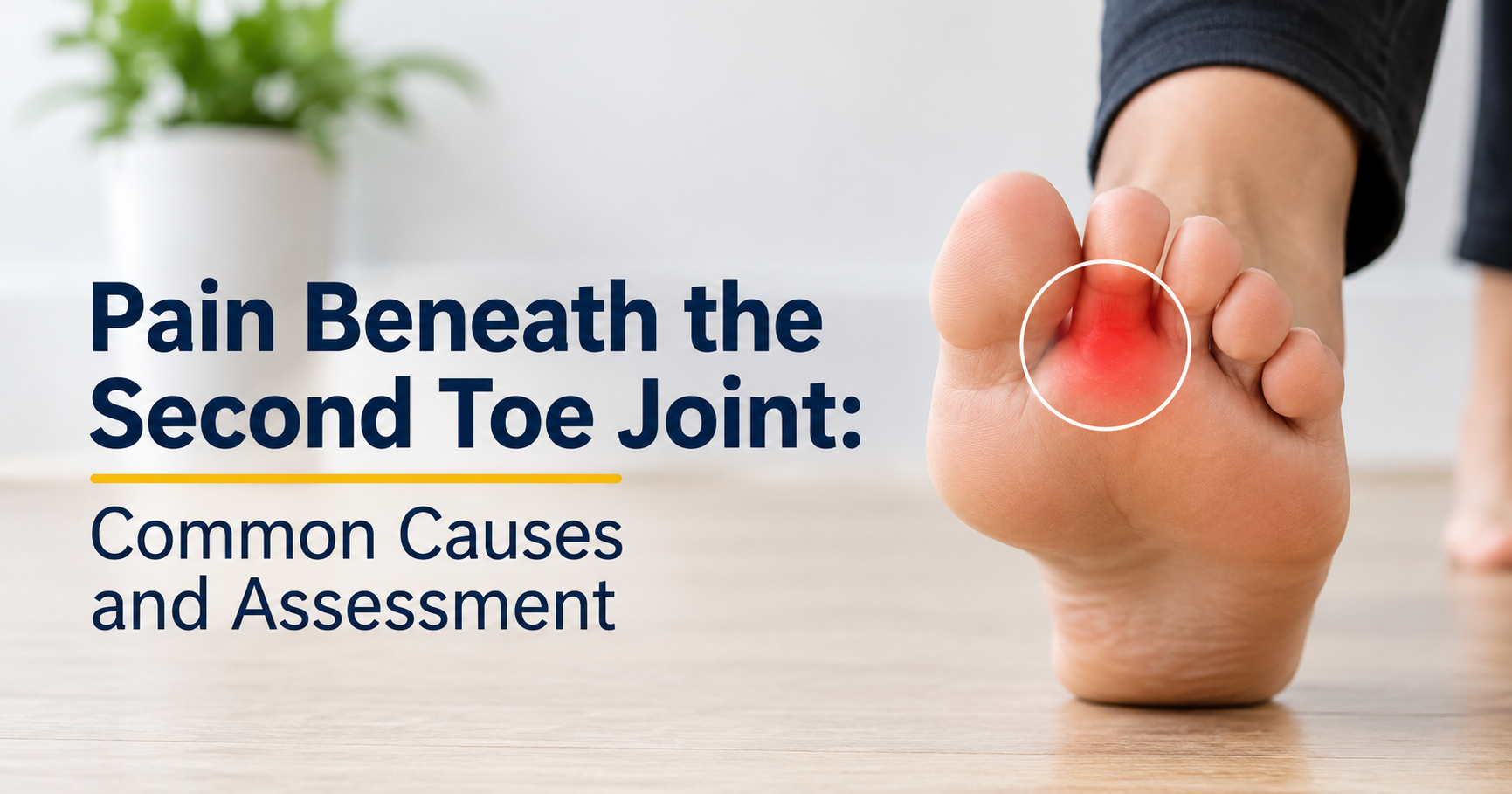
The ligament-like tissue at the base of a toe (usually the second) can become inflamed or torn. This creates pain under the ball of foot that may feel like a bunched-up sock, sometimes with swelling and a toe that slowly drifts out of line.
6. Tight, Worn-Out or Non-Breathable Shoes
Shoes with a narrow toe box squeeze the forefoot and nerves together. Worn-out soles lose their cushioning, and shoes that trap heat and sweat can make feet feel hot and burning by the end of the day. Fixing your footwear is often the single most effective change.
7. Stress Fracture of a Metatarsal
A tiny crack in one of the forefoot bones can cause pain that starts mildly and builds over days or weeks, with swelling on top of the foot. It is more common after a sudden increase in activity. Pain that is localized to one spot and worsens with each step should be examined.
8. Tarsal Tunnel Syndrome
Just as carpal tunnel affects the wrist, a nerve in the ankle (the tibial nerve) can be squeezed, sending burning, tingling or electric sensations into the sole and ball of foot. Symptoms often spread from the inner ankle and may worsen after long periods of standing.
9. Skin and Heat Related Causes
Fungal infections such as athlete’s foot, excessively sweaty feet, and eczema can cause burning and itching on the sole. A rare condition called erythromelalgia causes intense burning with redness and heat, usually relieved by cooling the feet. If your skin looks red, scaly or cracked, mention it to a healthcare professional.
Other contributors include thinning of the natural fat pad with age, arthritis of the big toe, gout, tight calf muscles, and sudden changes in activity or weight.
Quick Comparison: Which Cause Looks Most Like Yours?
| Condition | Where you feel it | Typical sensation | Helpful clue |
|---|---|---|---|
| Metatarsalgia | Under the forefoot, often several toes | Aching, burning, bruised | Worse barefoot or on hard floors |
| Morton’s neuroma | Between toes 3 and 4 | Burning, tingling, numbness | Pebble-in-shoe feeling; relief when shoes come off |
| Peripheral neuropathy | Usually both feet, soles and toes | Burning, pins and needles | Worse at night; may be linked to diabetes |
| Sesamoiditis | Under the big toe joint | Throbbing, burning | Painful when pushing off or bending the big toe |
| Capsulitis | Base of second toe | Aching, bunched-sock feeling | Swelling; toe may drift sideways |
| Stress fracture | One specific spot on the forefoot | Pain that builds over days | Tender to press, swelling on top of foot |
| Tarsal tunnel syndrome | Sole, sometimes inner ankle | Burning, electric tingling | Symptoms spread from the ankle |
| Skin or fungal problem | Sole and between toes | Burning with itching | Visible redness, peeling or cracks |
Who Is Most at Risk?
- People who wear high heels, pointed shoes or worn-out footwear
- Runners and athletes in high-impact sports
- Anyone with high arches, flat feet, bunions or hammertoes
- People who stand for long hours, such as nurses, teachers, shop and factory workers
- Those who are overweight, which increases the load on the forefoot
- People with diabetes, thyroid disease, kidney disease or vitamin deficiencies
- Adults over 50, as the foot’s fat padding thins with age
Home Remedies and Self-Care for Burning in the Ball of Foot
If your symptoms are mild and you have no warning signs, these steps often bring real relief. Give changes at least a couple of weeks before judging whether they work.
Rest and reduce impact
Take a break from running, jumping and long walks for a few days to a couple of weeks. Swap to low-impact activity such as swimming or cycling while the area settles. Avoid walking barefoot on hard floors.
Cool the area safely
Hold a cold pack wrapped in a thin towel against the ball of foot for 10 to 15 minutes, a few times a day. A cool (not icy) foot soak can also be soothing. Never apply ice directly to skin, and be extra careful if you have reduced feeling in your feet, because you might not notice damage.
Change your shoes
Choose shoes with a wide toe box, a thick cushioned sole and a heel no higher than about an inch or two. Replace athletic shoes that are worn flat, as most lose their cushioning well before they look old.
Add cushioning and support
A metatarsal pad placed just behind the ball of foot helps spread pressure off the sore area. Cushioned insoles or soft forefoot inserts also absorb shock. Place pads according to the package directions, and stop using anything that makes the pain worse.
Try gentle stretches and exercises
- Calf stretch: stand facing a wall, step one foot back and press the heel down. Hold for 30 seconds, repeat three times per leg.
- Toe spreading: sit and spread your toes as wide as comfortable for five seconds, then relax. Repeat 10 times.
- Towel scrunches: place a towel on the floor and pull it toward you using only your toes.
- Marble pick-ups: pick up small objects with your toes to strengthen the small foot muscles.
- Gentle foot massage: use your thumbs or a soft ball under the arch, avoiding direct pressure on the painful spot.
Stop any exercise that increases burning or sharp pain.
Manage pain carefully
Short-term over-the-counter pain relievers can help some people, but they are not suitable for everyone, especially those with stomach, kidney or heart conditions or who take blood thinners. Ask a pharmacist or doctor which option is safe for you. Some people also find topical creams containing lidocaine or capsaicin helpful for nerve-type burning.
Look after the basics
- Keep feet clean and dry, and change damp socks promptly
- Maintain a healthy weight to reduce forefoot pressure
- Check your feet every day if you have diabetes
- Limit alcohol, which can damage nerves over time
Foot-Care Products Worth Considering: What to Look For
The right supportive products can make a noticeable difference, but quality varies widely. Instead of buying on price alone, use these features as a checklist:
| Product type | What it does | What to look for |
|---|---|---|
| Metatarsal pads | Lift and spread the metatarsal heads to reduce forefoot pressure | Soft but firm material, adhesive or sleeve style that stays in place, correct size |
| Cushioned insoles | Absorb shock under the whole foot | Good arch support, shock-absorbing foam or gel, fits your shoe without crowding it |
| Wide toe box shoes | Give nerves and joints room so they are not squeezed | Roomy front, firm heel counter, thick midsole, secure fit |
| Rocker-sole shoes | Reduce bending at the forefoot while you walk | Stiff, curved sole; good for ball of foot pain and stiff big toe joints |
| Forefoot gel cushions | Add padding between the foot and the shoe | Thin enough to fit, washable, non-slip backing |
| Moisture-wicking socks | Keep skin dry and cool to reduce heat and friction | Seamless, breathable fabrics with light cushioning |
| Toe separators | Help relieve crowding and bunion-related pressure | Soft silicone, comfortable for all-day use |
| Cold gel pack for feet | Soothes burning and inflammation | Flexible when frozen, covered with a soft fabric layer |
Buying tip
Shop for shoes in the afternoon when feet are slightly swollen, stand up while trying them on, and leave about a thumb’s width of space in front of your longest toe. Walk around the store on a hard floor before deciding.
How Doctors Diagnose the Cause
A healthcare professional will ask about when the burning started, what makes it better or worse, your shoes, your job and your medical history. They will examine your feet, press on specific areas, watch you walk and check sensation and circulation. Depending on what they find, they may order:
- X-rays to look at bone problems, arthritis or stress fractures
- Ultrasound or MRI to view nerves, ligaments and soft tissue (helpful for neuroma or plantar plate injuries)
- Blood tests for blood sugar, vitamin B12, thyroid and kidney function
- Nerve studies if neuropathy or nerve compression is suspected
Medical Treatment Options
Treatment depends on the cause, and most people improve without surgery. Options your doctor or podiatrist may discuss include:
- Custom orthotics or prescription insoles that offload the painful area
- Physical therapy to improve foot mechanics, calf flexibility and strength
- Corticosteroid injections for inflamed joints or neuromas, used sparingly
- Prescription nerve-pain medicines for neuropathy
- Treating the underlying problem, such as better blood sugar control or correcting a vitamin deficiency
- Fungal or skin treatments if the sole is infected or irritated
- Surgery in a small number of stubborn cases, for example to release a nerve or realign a bone
When to See a Doctor
Do not ignore burning that does not improve. See a healthcare professional promptly if you notice any of these signs:
People with diabetes should be especially cautious. Nerve damage can hide injuries, and small foot problems can turn serious quickly.
How to Prevent Burning in the Ball of Foot
- Wear shoes that fit properly and give your toes room to move
- Rotate your shoes and replace worn athletic footwear regularly
- Save high heels for short occasions
- Increase exercise gradually instead of suddenly
- Stretch your calves and feet regularly
- Keep a healthy weight and stay active
- Use cushioned insoles or metatarsal pads if you are on your feet all day
- Manage diabetes, thyroid and vitamin levels with your healthcare provider
- Check and care for your feet daily
Frequently Asked Questions
Why does the ball of my foot burn when I walk?
Walking loads the forefoot with your whole body weight on every step. If the metatarsal heads, nerves or fat pad are irritated, that repeated pressure triggers a burning sensation. Tight shoes, hard surfaces and extra weight make it worse.
Is burning in the ball of foot a sign of diabetes?
It can be. Diabetic neuropathy often causes burning, tingling or numbness in both feet. But many other conditions produce similar symptoms, so a blood test and examination are the best way to find out.
What does Morton’s neuroma feel like?
Most people describe a burning or sharp pain in the ball of foot with tingling or numbness in the toes, and a feeling of standing on a pebble or a folded sock. Symptoms often ease when shoes are removed and the area is massaged.
How long does burning in the ball of foot last?
Mild cases related to footwear or overuse often improve within a couple of weeks after changes. Nerve-related and chronic conditions can take longer and need professional guidance.
Can tight shoes cause a burning sensation under the foot?
Yes. Narrow toe boxes compress the forefoot and the nerves between the toes, while thin, worn soles fail to absorb shock. Both can lead to burning pain.
Should I use heat or ice for burning feet?
Cooling usually feels better for burning and inflammation. Use a cloth-wrapped cold pack for short periods. Avoid very hot soaks, and be careful with both heat and cold if you have numbness.
Do metatarsal pads really work?
Many people find that they reduce pressure on the metatarsal heads and ease metatarsalgia and neuroma symptoms. Placement matters: the pad should sit just behind the ball of foot, not directly under the painful spot.
Can vitamin deficiency cause burning feet?
Yes. Low vitamin B12 is a well-known cause of nerve-related burning and tingling. If you suspect a deficiency, ask for a blood test before taking supplements on your own.
Final Thoughts
A burning sensation in the ball of foot is your body’s signal that something is overloaded, squeezed or irritated. In many cases, the fix is simple: better-fitting shoes, cushioning, rest and gentle stretching. When the burning is persistent, affects both feet or comes with numbness or other warning signs, getting a proper diagnosis is the safest way to protect your feet and your mobility. Start with the changes above today, and your next steps will be much easier to pick.
Medical disclaimer
This article is for general information only and is not a substitute for professional medical advice, diagnosis or treatment. Always seek the advice of a qualified healthcare provider about your symptoms or before starting any new treatment.