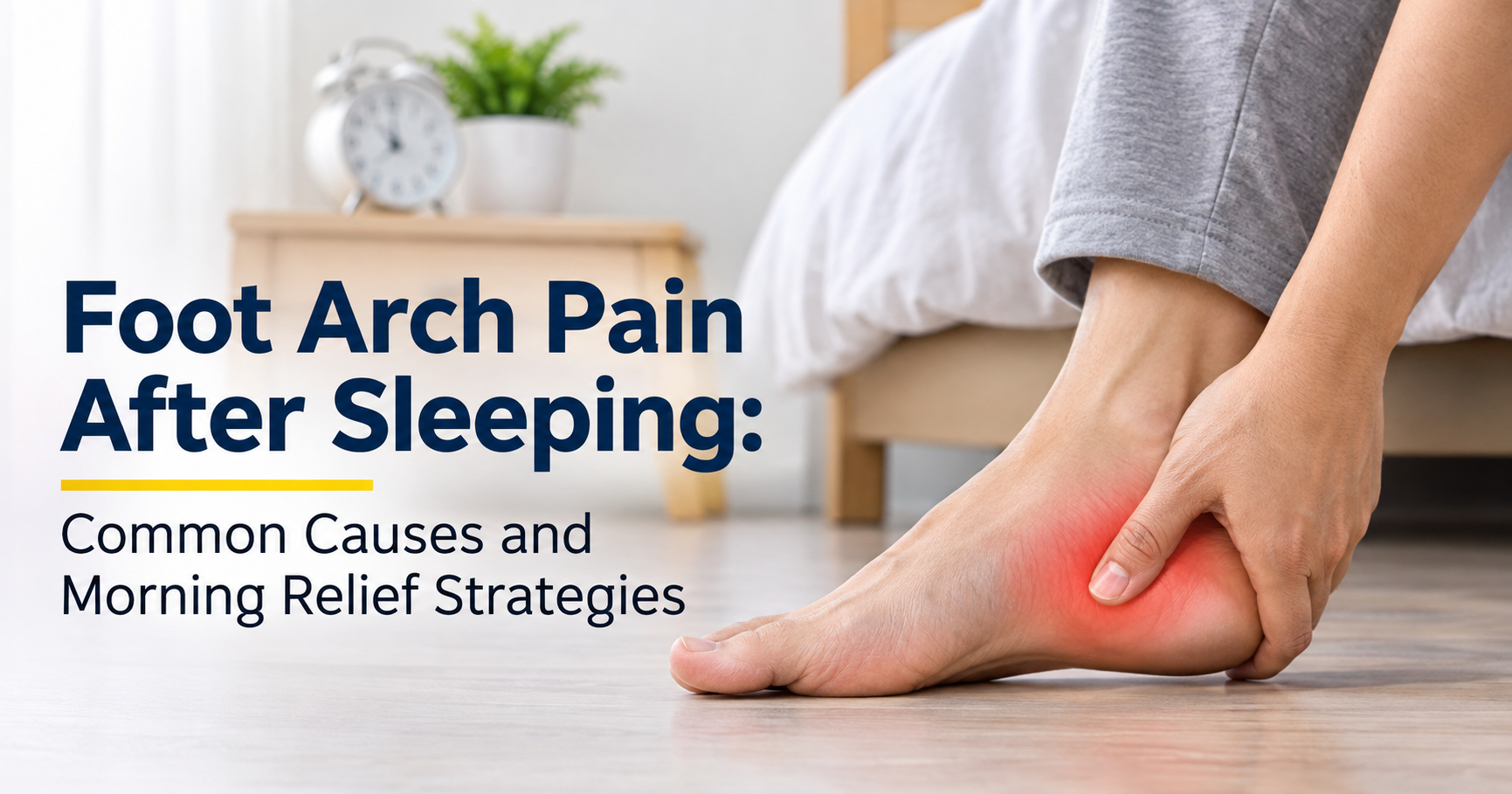
You swing your legs out of bed, put your feet on the floor, and a sharp, stabbing or aching pain shoots through the arch of your foot. After a few steps it may ease, but the first moments of the day are miserable. If this sounds familiar, you are far from alone. Foot arch pain after sleeping is one of the most common foot complaints, and in most cases it has a clear, treatable cause.
In this complete guide, you will learn why arch pain peaks in the morning, the most common conditions behind it, proven home remedies, the right kind of supportive footwear and products to look for, prevention habits, and the warning signs that mean it is time to see a doctor.
Quick Answer
Arch pain after sleeping is usually caused by plantar fasciitis or tight calf and foot tissues. During sleep your feet stay relaxed with the toes pointed, so the plantar fascia (the thick band under your arch) and the Achilles tendon shorten and stiffen. Your first steps suddenly stretch these tight tissues, which triggers pain. Gentle stretching before getting up, supportive footwear, and consistent self-care resolve most cases within weeks to a few months.
Table of Contents
- Understanding the structure of your foot arch
- Why your arch hurts after sleeping
- Common causes of morning arch pain
- Symptoms and what they may mean
- How your sleeping position can make it worse
- Home remedies and relief strategies
- A simple morning routine to protect your arches
- Choosing supportive footwear and foot-care products
- Medical treatments
- Prevention tips
- When to see a doctor
- Frequently asked questions
Understanding the Structure of Your Foot Arch
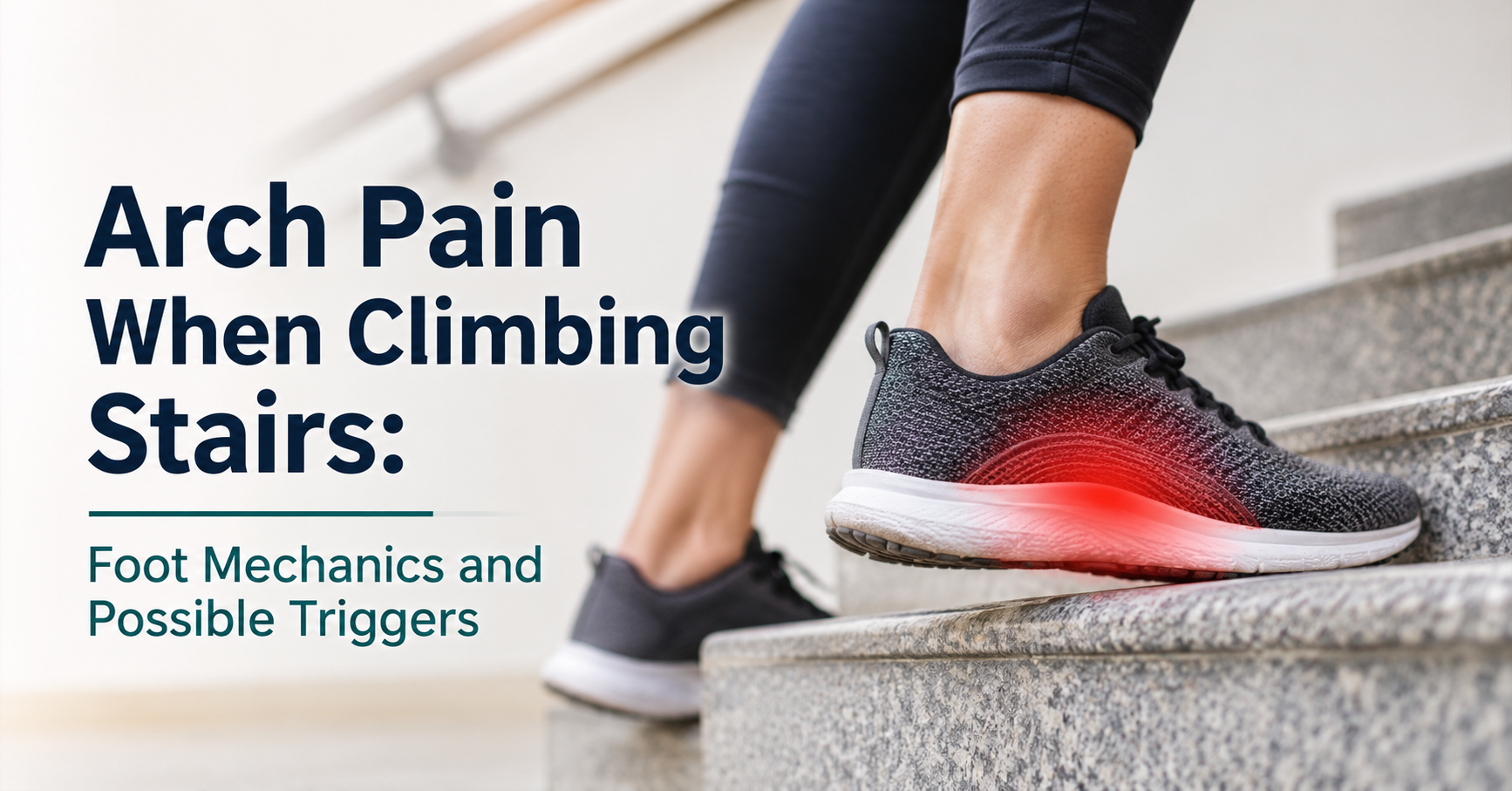
Your foot is a remarkable structure made of 26 bones, more than 30 joints, and over 100 muscles, tendons, and ligaments. The arch is the curved portion on the inner side of the sole that acts like a natural spring. It absorbs shock when you walk, distributes your body weight, and helps push you forward with each step.
Three key players keep the arch healthy:
- Plantar fascia: a thick, fibrous band that runs from the heel bone to the base of the toes. It supports the arch like a bowstring.
- Achilles tendon and calf muscles: tightness here pulls on the heel and increases tension in the plantar fascia.
- Tibialis posterior tendon: a tendon on the inner ankle that supports the arch from the inside.
When any of these structures become irritated, overloaded, or tight, the arch becomes painful.

Why Your Arch Hurts After Sleeping
Morning foot pain is so common that doctors often call the first steps of the day a diagnostic clue. Several things happen overnight:
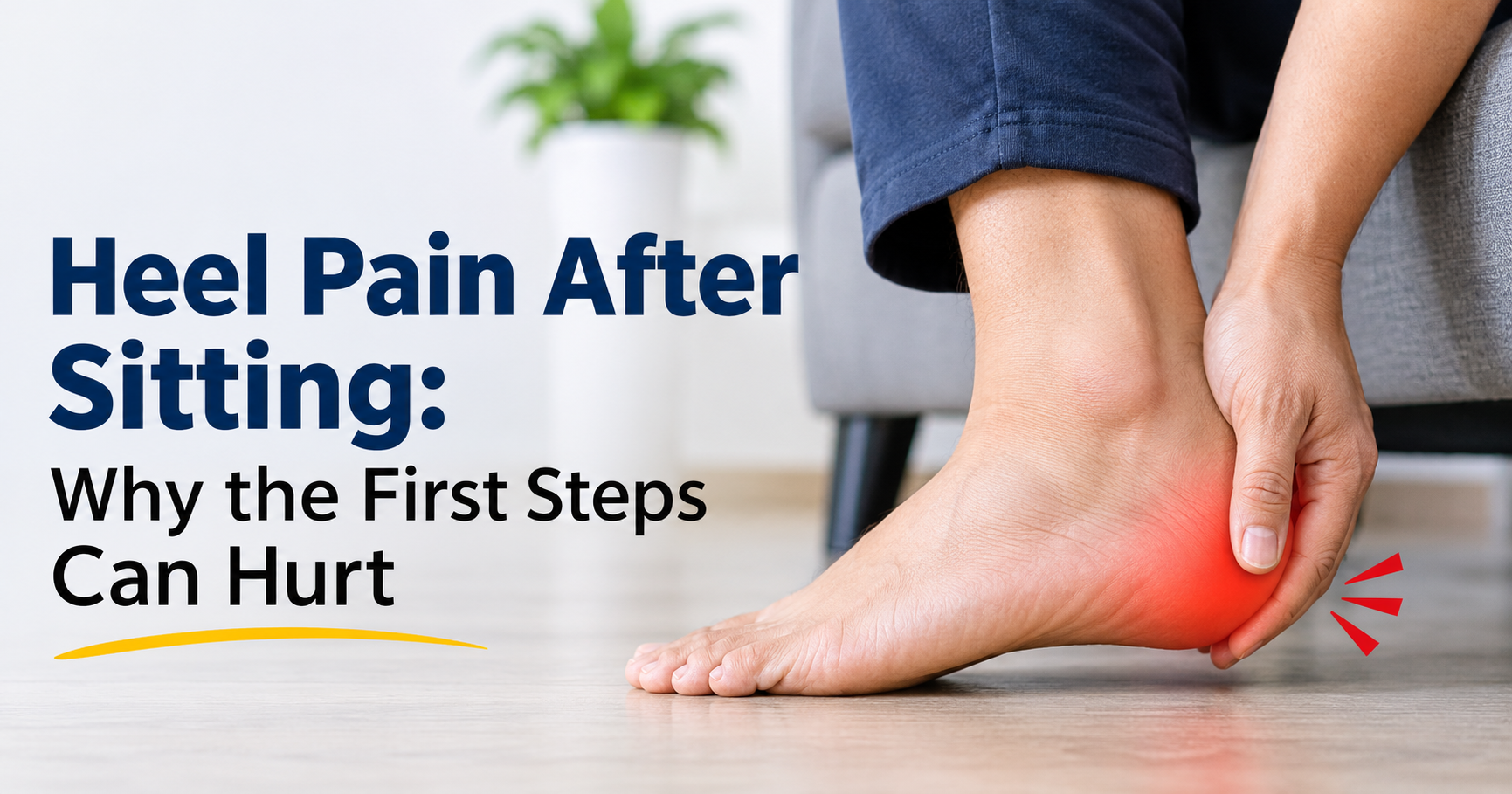
- Your feet relax in a pointed position. Under blankets, most people sleep with the toes pointed downward (plantar flexion). This keeps the plantar fascia and Achilles tendon in a shortened position for hours.
- The tissue tightens. Shortened tissue becomes stiff and less flexible, especially if it is already inflamed.
- Circulation and movement slow down. With less movement, there is less blood flow and less joint lubrication, so the foot feels stiff.
- Sudden loading on waking. When you stand, your full body weight instantly stretches the tight fascia. Tiny micro-tears or irritated fibers are pulled, producing sharp pain.
After a few minutes of walking, the tissue warms up and lengthens, and the pain usually fades. However, it often returns after long periods of sitting or at the end of a busy day.

Common Causes of Morning Arch Pain
1. Plantar Fasciitis
This is the number one cause. Plantar fasciitis is irritation and degeneration of the plantar fascia, usually near the heel but often felt along the arch. The hallmark symptom is stabbing pain with the first steps in the morning or after rest. It is common in runners, people who stand for long hours, and those who are overweight.
2. Tight Calf Muscles and Achilles Tendon
Limited ankle flexibility transfers extra strain to the arch. People who wear high heels, sit most of the day, or have weak calf flexibility often develop this problem.
3. Flat Feet (Fallen Arches)
When the arch collapses, the plantar fascia and ligaments are overstretched with every step. Flat feet can be present from childhood or develop with age, weight gain, or pregnancy.
4. High Arches
A very high arch is rigid and does not absorb shock well. The fascia is under constant tension, which commonly leads to arch and heel pain.
5. Posterior Tibial Tendon Dysfunction
This condition affects the tendon that supports the inner arch. Pain is often felt on the inner ankle and arch, sometimes with swelling and a gradually flattening foot.
6. Overuse and Sudden Activity Increases
Starting a new exercise routine, increasing running mileage too fast, or standing on hard floors for long shifts can overload the arch tissues.
7. Unsupportive Footwear
Flat sandals, worn-out shoes, thin-soled footwear, and high heels fail to support the arch. Walking barefoot on hard floors can have a similar effect.
8. Excess Body Weight
Extra weight increases the load on your arches with every step, raising the risk of plantar fasciitis and arch strain.
9. Night Cramps and Mineral Imbalance
Sometimes arch pain is really a muscle cramp. Dehydration, low magnesium or potassium, heavy exercise, and certain medications can trigger cramping in the foot at night or on waking.
10. Arthritis and Other Conditions
Osteoarthritis, rheumatoid arthritis, and other inflammatory conditions can cause morning stiffness and arch pain. Nerve problems such as tarsal tunnel syndrome may cause burning, tingling, or numbness in the arch. Diabetes-related nerve damage can also change foot sensation and should be checked promptly by a doctor.
11. Stress Fractures
Small cracks in the foot bones may develop from repetitive impact. The pain usually worsens with activity and is tender to touch over one specific spot.
Symptoms and What They May Mean
The pattern of your pain offers useful clues. The table below is a general guide only and is not a diagnosis.
| Symptom Pattern | Possible Cause |
|---|---|
| Sharp, stabbing pain with first steps that eases after walking | Plantar fasciitis |
| Pain along the inner arch with ankle swelling or a flattening foot | Posterior tibial tendon dysfunction or flat feet |
| Sudden tight, knotted feeling in the arch at night or on waking | Muscle cramp (hydration or mineral imbalance, overuse) |
| Burning, tingling, or numbness in the arch | Nerve irritation such as tarsal tunnel syndrome |
| Pain that worsens through the day with activity and hurts at one bony spot | Possible stress fracture |
| Stiffness in several joints in the morning lasting 30+ minutes | Inflammatory arthritis |
How Your Sleeping Position Can Make It Worse
Your sleeping habits may contribute more than you think:
- Tight blankets or tucked-in sheets force the toes to point downward all night.
- Sleeping on your stomach with your feet hanging off the bed keeps the foot in a fully pointed position.
- Sleeping with feet pressed against a footboard or wall can create unnatural pressure.
- Cold rooms can increase muscle tension and cramping in some people.
Loosening the bedding at the foot end, sleeping on your back or side, and keeping the room comfortably warm can help your feet stay in a more neutral position.
Home Remedies and Relief Strategies
Most arch pain from plantar fasciitis and tight tissues improves with consistent home care. The key word is consistent. Give any routine at least four to six weeks.
Stretch Before You Stand
Stretching before your feet touch the floor is the single most effective habit for morning arch pain. It pre-lengthens the fascia and calf so the first step is gentler.
- Towel stretch: sit with your leg straight, loop a towel around the ball of your foot, and gently pull your toes toward you. Hold for 30 seconds and repeat three times.
- Toe pull: sit up, cross one foot over the opposite knee, and pull the big toe back toward your shin. You should feel a stretch along the arch. Hold 15 seconds, repeat five times.
- Ankle circles: slowly rotate each ankle ten times in each direction to wake up the joint.

Calf Stretching During the Day
Stand facing a wall, place both hands on it, step one foot back, keep the heel down and the knee straight, and lean forward until you feel a stretch in the calf. Hold for 30 seconds and repeat two to three times per leg, a couple of times daily.
Cold Therapy and Rolling
Rolling the arch over a frozen water bottle for five to ten minutes combines gentle massage with cooling. It is especially helpful after a long day or at night.
Self-Massage
Use a small massage ball or your thumbs to apply moderate pressure along the arch for a few minutes. Avoid pressing hard on very painful or bruised spots.
Rest and Activity Modification
Reduce high-impact exercise like running and jumping while pain is active. Swimming, cycling, and other low-impact activities help you stay fit without overloading the arch.
Strengthen Your Feet
Once the acute pain settles, simple exercises such as towel scrunches, picking up marbles with the toes, and calf raises build strength in the muscles that support the arch.
Over-the-Counter Pain Relief
Short-term use of anti-inflammatory medication may reduce pain for some people, but it should be used as directed on the label and only if it is safe for you. Check with a doctor or pharmacist first, especially if you have stomach, kidney, or heart conditions or take other medications.
Weight Management
Even modest weight loss can noticeably reduce the stress on your arches over time.
A Simple Morning Routine to Protect Your Arches
- Before getting up, do the towel stretch and toe pulls for about two minutes.
- Rotate your ankles and flex your feet up and down ten times.
- Sit up and slip on supportive slippers or shoes. Avoid taking your first steps barefoot on a hard floor.
- Walk slowly for the first minute to let the tissue warm up.
- Drink a glass of water, since good hydration supports muscle and tissue function.
Choosing Supportive Footwear and Foot-Care Products
The right gear can make a major difference, especially when you are on your feet for most of the day. Here is what to look for in each category.
Supportive Shoes
- Firm heel counter that does not collapse when pressed from the sides.
- Moderate cushioning with a shoe that bends at the toes, not in the middle.
- Built-in arch support suited to your foot type.
- Good fit with enough room for the toes. Replace running shoes roughly every 500 to 800 kilometers (300 to 500 miles).
Arch Support Insoles and Orthotics
Arch support insoles can reduce tension on the plantar fascia, especially for people with flat feet or high arches. Over-the-counter options help many people, while custom orthotics prescribed by a podiatrist are better for complex foot problems. Choose insoles that match your arch height, and give your feet a few days to adjust.
Supportive Slippers and Recovery Sandals
Many people reach for flat, thin slippers around the house. Slippers or sandals with a contoured footbed and arch support are a smart choice for those first morning steps and for relaxing at home.
Night Splints
A night splint holds the foot gently flexed while you sleep so the plantar fascia and Achilles tendon do not shorten overnight. They can feel awkward at first, but they are widely used for stubborn morning heel and arch pain.
Massage Balls, Rollers and Stretching Straps
Inexpensive tools such as a spiky massage ball, a foot roller, and a stretching strap make daily self-care easier and more effective.
Compression Foot Sleeves
Light compression sleeves support the arch and may reduce swelling and aching during long days on your feet.
Medical Treatments
If home care does not help after several weeks, a doctor or podiatrist may recommend:
- Physical therapy with guided stretching, strengthening, and manual techniques.
- Custom orthotics designed for your foot shape and walking pattern.
- Taping or strapping to support the arch.
- Corticosteroid injections for short-term relief of stubborn inflammation. They are used cautiously because repeated injections carry risks.
- Shockwave therapy for chronic plantar fasciitis that has not responded to other treatments.
- Surgery in rare cases when long-term, well-managed conservative treatment fails.
Prevention Tips
- Wear supportive shoes and avoid going barefoot on hard surfaces.
- Stretch your calves and feet daily, not only when you have pain.
- Increase exercise intensity and duration gradually, by roughly 10 percent per week.
- Replace worn-out footwear on time.
- Maintain a healthy weight.
- Take short walking breaks if you sit or stand for long periods.
- Stay hydrated and eat a balanced diet that includes magnesium and potassium rich foods.
- Keep bedding loose around your feet.
When to See a Doctor
Most arch pain is not dangerous, but some signs should not be ignored.

Frequently Asked Questions
Why does my arch hurt only in the morning?
Overnight, the plantar fascia and calf tissues tighten because your foot rests in a pointed position. Your first steps suddenly stretch these stiff tissues, causing pain that tends to ease once they warm up.
Is foot arch pain after sleeping always plantar fasciitis?
No. Plantar fasciitis is the most common cause, but tight calves, flat feet, tendon problems, nerve irritation, cramps, and arthritis can all produce similar symptoms. A healthcare professional can confirm the cause.
How long does it take for morning arch pain to go away?
Many people notice improvement within a few weeks of consistent stretching and better footwear, but full recovery from plantar fasciitis can take several months. Ignoring the problem often makes it last longer.
Should I walk through the pain?
Gentle walking after stretching is usually fine, but sharp or worsening pain is a signal to rest and reduce activity. Do not push through severe pain.
Do arch support insoles really help?
For many people, yes. Insoles that match your arch type reduce strain on the plantar fascia and improve comfort. If pain continues, ask a podiatrist about custom orthotics.
Can dehydration cause arch pain at night?
Dehydration and low mineral levels can contribute to muscle cramps, including in the arch of the foot. Staying hydrated and eating a balanced diet may help reduce cramping.
Is heat or ice better for arch pain?
Ice is usually preferred for inflamed, sore tissue after activity, while gentle warmth before stretching can help stiff tissue loosen up. Use whichever feels better and avoid extreme temperatures on the skin.
Can pregnancy cause arch pain?
Yes. Weight gain, hormonal changes that loosen ligaments, and swelling can flatten the arch and lead to pain. Supportive footwear and gentle stretching are helpful, and a doctor can advise on safe options.
Final Thoughts
Waking up to arch pain is frustrating, but it is also very treatable. Understanding why your feet stiffen overnight is the first step. By stretching before you stand, wearing supportive footwear, using the right foot-care tools, managing your activity, and adjusting your sleeping habits, most people experience meaningful relief. Be patient and consistent, and if the pain lingers or comes with worrying symptoms, get professional advice so you can return to pain-free mornings.
Disclaimer: This article is for general educational purposes only and does not replace professional medical advice, diagnosis, or treatment. Always consult a qualified healthcare provider about your symptoms and before starting any new treatment.