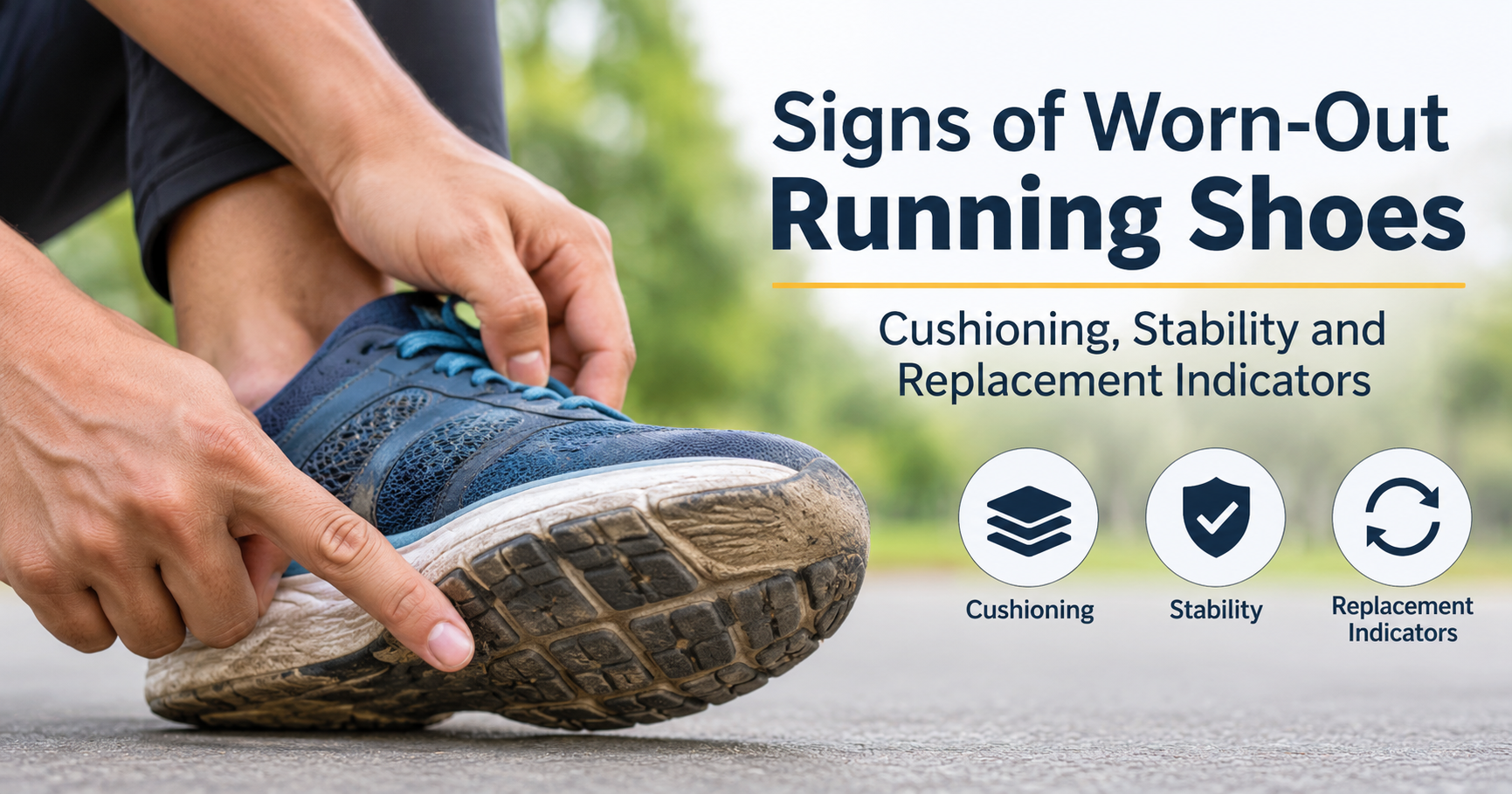
Your running shoes quietly take thousands of impacts every week. Each stride sends a force of two to three times your body weight through the shoe and into your legs. Over time the cushioning breaks down, the rubber wears away, and the structure that once kept your foot stable starts to fail. The tricky part is that this happens gradually, so many runners keep wearing shoes long after they have stopped doing their job.
In this guide you will learn the most reliable signs of worn out running shoes, how to test your pair at home, how long shoes typically last, and how to make a pair live longer. By the end, you will know exactly when it is time to retire your shoes and shop for a replacement with confidence.
Why Worn Out Running Shoes Matter
A running shoe is more than a piece of clothing. It is a piece of equipment designed to absorb shock, guide your foot, and give you traction. When these functions fade, your muscles, tendons, and joints take on extra load. Runners who ignore the warning signs often report sore shins, achy knees, tight calves, heel pain, and general fatigue that seems to appear “out of nowhere.”
Replacing shoes at the right time is one of the cheapest and simplest ways to keep your training consistent and comfortable.

7 Clear Signs of Worn Out Running Shoes
1. You Have Passed the Recommended Mileage
Most running shoes last roughly 300 to 500 miles (500 to 800 km). Lightweight racing shoes with thin foam may fade sooner, while durable daily trainers and max-cushion models can last somewhat longer. If you have no idea how many miles are on your shoes, start tracking them with a running app, a watch, or a simple note with the date you bought them. Once you are in or beyond the range, begin checking the other signs carefully.
2. The Midsole Looks Wrinkled or Feels Flat
The midsole is the foam layer between your foot and the ground, and it provides most of the cushioning. Look at the sides of the shoe. Deep horizontal creases or compressed, uneven foam are strong signs that the material has lost its bounce. Press your thumb into the midsole: if it feels hard, thin, or dead compared with a new pair, the cushioning is gone.
3. The Outsole Tread Is Worn Smooth
Flip the shoe over. The rubber outsole should show a clear tread pattern. If you see smooth, shiny patches, especially under the heel or ball of the foot, or if the softer foam is peeking through the rubber, your traction is reduced. Worn outsoles are particularly risky on wet roads, leaves, and trails.
4. Uneven Wear Makes the Shoe Tilt
Place both shoes on a flat table and look at them from behind. A healthy shoe sits level. If the heel leans inward or outward, or one side looks more compressed than the other, the support has collapsed. This tilt changes how your foot lands and can strain your ankles, knees, and hips.
5. You Feel New Aches, Pains, or Numbness
Your body is often the best early warning system. If you suddenly feel shin soreness, knee pain, arch discomfort, or heel pain without changing your training, your shoes may be the cause. Some runners also notice tingling or numb toes because the upper has stretched or the structure has softened. When fresh discomfort appears and goes away on a different pair, the old pair has probably expired.
6. The Upper Is Damaged or Stretched
Check the fabric around the toes, the sides of the forefoot, and the heel collar. Holes, fraying, or thinning mesh mean the shoe no longer holds your foot securely. A heel counter that feels soft or collapses when you squeeze it can lead to heel slipping, blisters, and instability. Internal lining that has worn through at the heel is another common sign.
7. The Shoe Feels Flat, Heavy, or “Dead”
Do you remember how lively your shoes felt in the first few weeks? If runs now feel harder, flatter, or more tiring at your usual pace, the foam has likely lost its energy return. This subtle change is easy to miss, so compare your old pair with a newer one if you have a spare.

Simple At-Home Tests for Running Shoe Wear
- The twist test: Hold the shoe at the heel and toe and twist it like wringing a towel. A new shoe resists. A worn shoe twists easily because the structure has weakened.
- The bend test: A good shoe bends near the ball of the foot, where your foot naturally flexes. If it folds in the middle of the shoe, support is fading.
- The table test: Set the shoes on a flat surface and check for tilting, as described above.
- The comparison test: Wear your old pair on one foot and a newer pair on the other for a short walk. The difference in cushioning is often obvious.
What Affects How Fast Running Shoes Wear Out?
- Body weight: Heavier runners compress foam faster.
- Running surface: Asphalt and concrete are tougher on shoes than tracks, treadmills, or soft trails.
- Running style: Heavy heel strikers and runners who drag their feet wear down outsoles quickly.
- Weekly mileage: More frequent runs give the foam less time to recover between sessions.
- Shoe type: Lightweight and racing shoes generally trade durability for speed.
- Storage and care: Heat, humidity, and leaving shoes in a hot car can break down glue and foam.
How to Make Your Running Shoes Last Longer
- Rotate two pairs. Alternating shoes gives the foam about 24 hours to decompress and can extend the life of both pairs.
- Use them only for running. Walking all day, gym sessions, and yard work add miles and wear that you are not tracking.
- Untie them properly. Loosen the laces before taking them off so you do not crush the heel counter.
- Dry them naturally. Remove the insoles, stuff the shoes with paper, and let them air dry away from direct heat.
- Skip the washing machine. Hand clean with a soft brush, mild soap, and cool water instead.
When Should You Buy New Running Shoes?
A smart habit is to start shopping when your current pair reaches about 70 to 80 percent of its expected life, or as soon as you spot two or more of the signs above. Buying a replacement early lets you rotate the new pair in gradually and removes the pressure of finding the right shoe in a hurry. When choosing your next pair, consider your foot shape, running surface, weekly mileage, and the amount of cushioning you prefer. Trying shoes on in the afternoon, when feet are slightly swollen, usually gives a more accurate fit.
Frequently Asked Questions
How do I know if my running shoes are worn out?
Look for a wrinkled or hard midsole, smooth outsole tread, uneven wear, upper damage, new aches and pains, and shoes that feel flat. Passing 300 to 500 miles is another strong clue.
Can I still wear worn running shoes for walking or casual use?
Yes, for light, everyday use they are usually fine. However, avoid using them for runs, because they no longer provide proper cushioning and support.
Do running shoes expire if I do not use them?
Yes, to a degree. The foam and adhesives can degrade over several years even in storage, especially in hot or humid places. Shoes stored for a long time should be checked before use.
Can worn out running shoes cause injuries?
They can contribute to discomfort and overuse problems such as shin splints, knee pain, and plantar fasciitis. Persistent pain should be checked by a doctor or physiotherapist.
How often should I replace my running shoes?
Most runners replace shoes every 300 to 500 miles, which is about every 4 to 8 months for someone running 15 to 20 miles per week.
Final Thoughts
Running shoes do not fail all at once. They fade slowly, which is why checking the midsole, outsole, upper, and your own comfort regularly is so important. Track your mileage, run the simple tests above, and listen to your body. When the signs of worn out running shoes start to pile up, replacing them is a small investment that protects your joints, your training, and your enjoyment of every run.