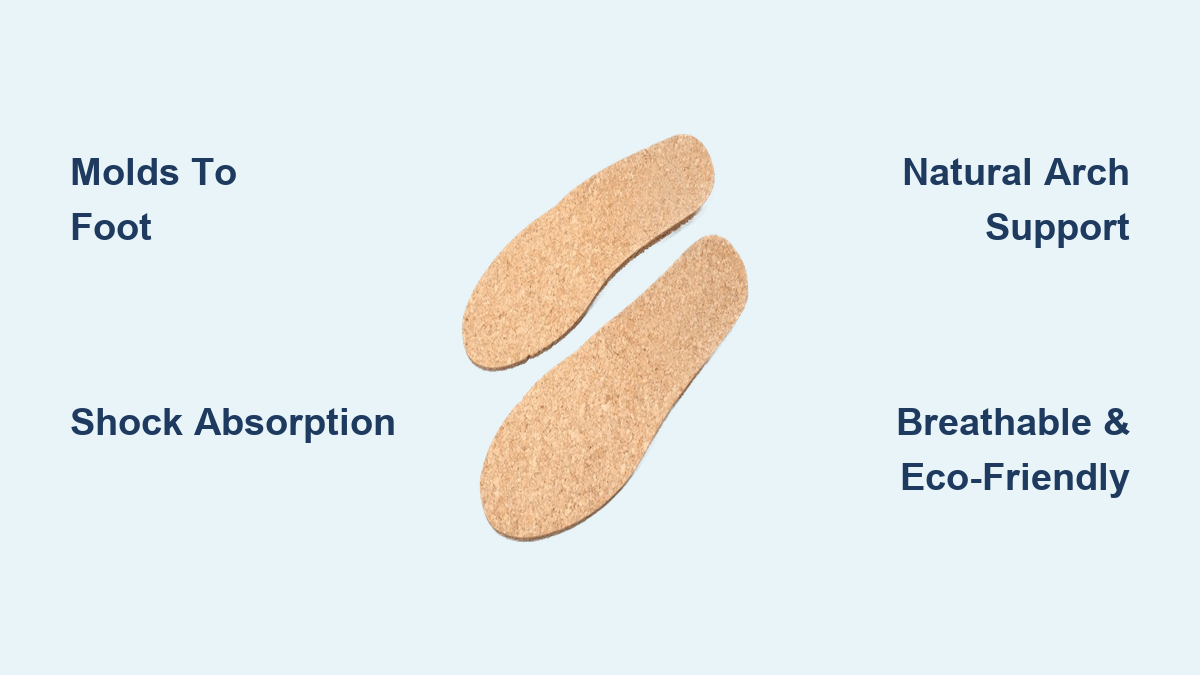
If your feet ache after standing, walking, or wearing everyday shoes, you’re not alone. Millions suffer from foot pain caused by poor arch support, overpronation, or ill-fitting footwear. The solution may lie in a natural, time-tested material: cork insoles for natural arch support. Unlike synthetic foam or gel inserts that flatten over time, cork molds to your foot, offering personalized comfort, shock absorption, and long-term biomechanical correction.
Backed by clinical studies, podiatrist endorsements, and real-world user results, cork insoles deliver more than just cushioning—they actively improve foot alignment, reduce pain from conditions like plantar fasciitis and metatarsalgia, and enhance posture by supporting the entire kinetic chain. With natural breathability, odor resistance, and sustainability, cork stands out as a superior alternative to plastic-based insoles. Whether you have flat feet, high arches, or just want better daily comfort, this guide reveals exactly how cork insoles work, why they last longer, and what to look for when choosing the right pair.
How Cork Molds to Your Foot

Custom Fit Through Body Heat
Cork insoles don’t just fit your foot—they adapt to it. When worn, body heat and pressure cause the cork’s millions of air-filled cells to compress slightly, conforming precisely to your arch, heel, and forefoot. Within 5–10 days, most users report a noticeable shift from initial firmness to a glove-like fit.
This molding process creates a custom orthotic effect without the cost of prescription inserts. As the insole shapes itself, it fills gaps under the arch that would otherwise lead to strain or overpronation.
Pro Tip: Start with 1–2 hours of wear daily and gradually increase over a week to avoid soreness.
Visual Signs of Proper Molding
After break-in, inspect your insole:
– A clear impression of your arch should be visible
– No gaps under the medial (inner) arch
– Even wear across the heel and ball of foot
If large gaps remain, the insole may not match your arch height—consider switching to a firmer or higher-profile model.
Shock Absorption That Protects Joints
Honeycomb Structure Absorbs Impact
Cork contains 40 million elastic cells per cubic centimeter, arranged in a honeycomb lattice. This structure compresses under load and rebounds instantly—absorbing up to 80% of impact forces during walking or standing.
Compared to EVA foam or gel, which collapse permanently over time, cork maintains resilience. This means consistent protection for:
– Heels (reducing bruising and plantar fascia strain)
– Metatarsal heads (relieving forefoot pain)
– Knees, hips, and lower back (via reduced ground reaction forces)
Study Finding: Research in the Journal of Biomechanics confirmed cork significantly lowers plantar pressure in high-impact activities.
Reduces Stress on the Plantar Fascia
For those with plantar fasciitis, excessive tension on the tissue connecting heel to toes is the root problem. Cork insoles reduce this strain by:
– Supporting the arch to prevent overstretching
– Cushioning the heel with deep cups
– Distributing weight evenly across the foot
User Result: One Fulton insole wearer reported complete pain relief within two weeks of consistent use.
Natural Arch Support for Flat Feet

Corrects Overpronation and Rebuilds Arch
Flat feet (pes planus) often lead to overpronation—where the foot rolls inward excessively during walking. This misalignment stresses the plantar fascia, Achilles tendon, and knee joints.
Cork insoles counteract this by providing firm, targeted arch support that:
– Lifts the collapsed medial arch
– Stabilizes the heel in a neutral position
– Encourages proper gait mechanics
Clinical Evidence: A 2011 study found flat-footed participants showed measurable improvement in foot function after six weeks of cork insole use.
Prevents Long-Term Damage
Without support, flat feet can lead to:
– Chronic plantar fasciitis
– Bunions and hammertoes
– Shin splints and hip pain
Cork acts as a preventive orthotic, correcting alignment before damage becomes irreversible.
Expert Note: Dr. Casey Ann Pidich, DPM, states: “A quality cork footbed provides the perfect combination of firmness and adaptability your feet need.”
Cushioning for High Arches
Addresses Lack of Natural Padding
High-arched feet (pes cavus) are rigid and inefficient at shock absorption. This leads to increased pressure on the heel and ball of the foot, causing pain during standing or running.
Cork insoles help by:
– Adding soft yet supportive cushioning under high-pressure zones
– Maintaining flexibility to avoid stiffness
– Conforming to the elevated arch for full contact
User Feedback: Many with high arches describe cork as “walking on clouds” due to its responsive, springy feel.
Improves Weight Distribution
High arches often result in uneven loading—too much weight on the heel and forefoot, little in the middle. Cork’s compressibility balances this by:
– Filling the void under the midfoot
– Reducing peak pressures by up to 25% (per Journal of Foot and Ankle Research)
Look for insoles with extra midfoot cushioning and a contoured shape that matches your arch height.
Breathability That Keeps Feet Dry
Regulates Temperature Naturally
Sweaty, overheated feet lead to discomfort, odor, and fungal infections. Cork’s cellular structure allows continuous airflow and moisture vapor transfer, keeping feet cooler in summer and warmer in winter.
Study Confirmed: The Journal of Athletic Training found cork insoles reduced sweating and improved comfort in individuals with hyperhidrosis.
Unlike synthetic foams that trap heat, cork breathes like skin, wicking moisture away and releasing it slowly.
No Smell, Even After All-Day Wear
Cork contains suberin, a waxy substance that:
– Resists water absorption
– Inhibits bacterial and fungal growth
– Prevents odor buildup
Multiple users report their cork insoles “don’t hold foot odor” and stay fresh even after months of use.
Pro Tip: Pair cork insoles with moisture-wicking socks for maximum dryness.
Durability That Lasts Years

Resists Flattening and Wear
Foam and gel insoles lose up to 50% of their thickness within 6–12 months. Cork, however, resists permanent compression due to its resilient cell walls.
High-quality cork-latex composites maintain structural integrity for:
– 12+ months of daily use
– 500+ miles of walking or running
– Repeated molding cycles without breakdown
User Proof: A Fulton insole user walked 125+ miles and noted the insoles “get more comfortable and supportive” over time.
Avoid Fake Cork Insoles
Many budget brands sell “cork” insoles made from:
– Cork-printed fabric
– Glue-bound cork dust
– Foam with a cork veneer
These materials delaminate quickly, offer no real support, and fail within weeks.
Warning Sign: If the top layer peels off or feels smooth like plastic, it’s not real cork.
Look for: Solid, textured cork with visible grain and slight give when pressed.
Improves Posture and Reduces Joint Pain
Aligns the Kinetic Chain
Your feet are the foundation of your body. Misalignment there ripples upward, affecting knees, hips, and spine. Cork insoles correct this by:
– Stabilizing the heel
– Supporting the arch
– Promoting neutral foot positioning
This alignment reduces strain across the entire lower body.
User Result: One individual reported hip, ankle, and Achilles pain disappeared after six weeks of use.
Eases Back and Knee Pain
Poor arch support forces joints to compensate. Over time, this leads to:
– Knee pain from inward rotation
– Hip tightness from altered gait
– Lower back strain due to pelvic tilt
Cork insoles minimize these issues by restoring natural foot function.
Clinical Insight: Studies show improved foot alignment correlates with reduced lower back pain in standing workers.
Sustainable and Eco-Friendly Choice
Harvested Without Harming Trees
Cork comes from the bark of the cork oak (Quercus suber), primarily in Portugal and Spain. Harvesting is done by hand every 9–12 years without cutting down the tree.
A single cork oak lives 200–300 years, supporting up to 17 harvests in its lifetime.
Environmental Bonus: Cork forests are biodiversity hotspots and major carbon sinks.
Biodegradable and Recyclable
Unlike plastic-based insoles that sit in landfills for centuries, cork is:
– 100% biodegradable
– Fully recyclable
– Often produced in carbon-negative facilities
Brand Leader: Primal Soles offers the only 100% recyclable cork insole with a carbon-negative production cycle.
How to Choose the Right Cork Insole
Match to Your Arch Type
| Arch Type | Best Insole Features |
|---|---|
| Flat Feet | Firm arch support, deep heel cup, motion control |
| High Arches | Cushioned midfoot, flexible support, shock absorption |
| Medium Arches | Moderate contour, balanced cushioning, anatomical shape |
Use the “wet test” at home: Wet your foot, step on paper, and compare the imprint to standard arch diagrams.
Essential Features to Look For
- ✅ Solid natural cork core (not printed or glued)
- ✅ Deep heel cup for stability
- ✅ Metatarsal pad to relieve ball-of-foot pain
- ✅ Breathable top cover (organic cotton, wool, or microfiber)
- ✅ Anatomical contouring that matches foot shape
Avoid insoles that feel too flat, too soft, or have a smooth, plastic-like surface.
Break-In Period: What to Expect
- Days 1–3: Firm feel, possible mild soreness
- Days 4–7: Noticeable molding, increased comfort
- Week 2+: Custom fit, pain relief begins
Expert Advice: Dr. Saylee Tulpule confirms cork “maintains its supportive properties throughout the day.”
Top Brands Using Real Cork
Birkenstock: Gold Standard in Footbeds
- Material: Cork-latex composite
- Features: Deep heel cup, contoured arch, pressure-relieving footbed
- Best For: Everyday wear, sandals, long-term support
- Price: $80–$150
Trusted for decades, Birkenstock molds perfectly over time and is a favorite among podiatrists.
Mephisto: Premium Comfort and Support
- Material: Cork footbed + SOFT-AIR midsole
- Features: Shock absorption, chemical-free leather, wide toe box
- Best For: Walking, travel, sensitive feet
- Price: $120–$200
Ideal for those who want luxury comfort with medical-grade support.
Fulton: Affordable and Effective
- Material: Sustainably sourced cork, natural latex, organic cotton
- Features: 90-day guarantee, designed for plantar fasciitis
- Best For: Runners, walkers, budget-conscious buyers
- Price: $59.95
Users report pain relief within days and durability beyond 100+ miles.
Primal Soles: Most Sustainable Option
- Material: 100% recyclable cork (EU compliant)
- Features: Carbon-negative production, user-designed shape
- Best For: Eco-conscious consumers, minimalist footwear
- Price: $$
The only brand offering a full recycling program for worn insoles.
Preventive Health and Cost Savings
Avoid Costly Medical Treatments
Prescription orthotics can cost $300–$600 and aren’t always covered by insurance. High-quality cork insoles ($20–$60) offer comparable benefits for common foot conditions.
Real Example: One user avoided $300+ in custom orthotics by using $59.95 Fulton insoles with equal or better results.
Reduces Risk of Long-Term Conditions
Untreated foot misalignment leads to:
– Plantar fasciitis
– Bunions
– Hammertoes
– Knee and hip degeneration
Cork insoles act as daily preventive care, reducing long-term healthcare costs and improving mobility.
Economic Insight: Reports from ACFAS and AOFAS highlight foot pain as a major driver of lost productivity and medical spending.
Final Tips for Maximum Benefit
Wear Them Consistently
To get full benefits:
– Use in all daily shoes (work, walking, casual)
– Allow 1–2 weeks for adaptation
– Replace every 12–18 months or when visible wear appears
Pro Tip: Rotate between two pairs to extend lifespan and maintain hygiene.
Pair with Proper Footwear
Cork insoles work best in shoes with:
– Firm heel counters
– Roomy toe boxes
– Removable insoles (to replace)
Avoid tight, flat shoes like ballet flats or flip-flops unless designed for orthotics.
Consult a Podiatrist If Pain Persists
While cork insoles help most people, severe conditions like torn ligaments or nerve damage may require professional care.
When to See a Doctor:
– Sharp, persistent pain
– Numbness or tingling
– No improvement after 6–8 weeks
Final Note: Cork insoles are more than just inserts—they’re a natural, durable, and scientifically supported way to support your feet and body. By choosing authentic cork, you invest in comfort, health, and sustainability. Let your feet mold the support they need, and feel the difference from the ground up.