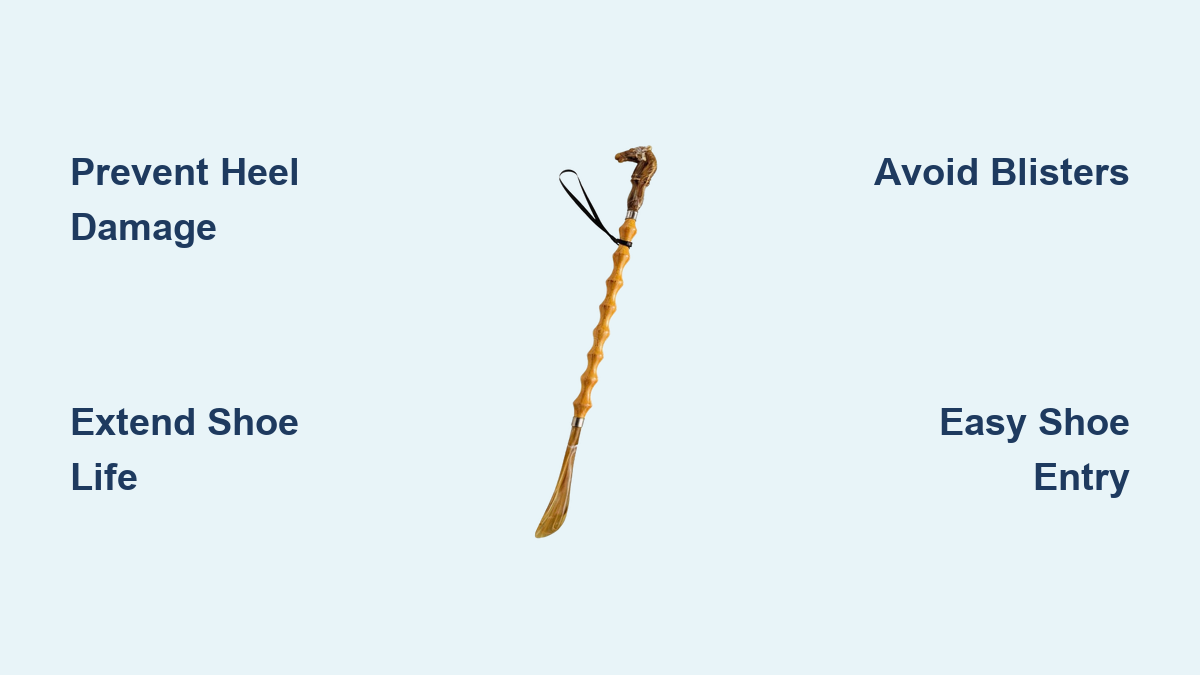
Putting on stiff leather oxfords or heavy winter boots shouldn’t mean wrestling your foot inside while crushing the back of the shoe. Yet millions of people do this every day—unknowingly damaging their footwear, risking blisters, and straining their balance. The fix? A simple, centuries-old tool: the shoehorn.
A shoehorn is a smooth, curved instrument designed to guide your heel effortlessly into a shoe. It acts as a low-friction ramp, sliding between your foot and the shoe’s heel counter—the rigid structure that supports your foot and maintains shape. While it may look like a minor accessory, using a shoehorn can dramatically extend the life of your shoes, prevent discomfort, and make getting dressed easier—especially if you wear snug, high-quality footwear or have mobility limitations.
This guide explains what a shoehorn is, why it’s essential for shoe care, who benefits most, and how to use it properly. You’ll also learn about different types, materials, and which one suits your needs—all to help protect your footwear investment and simplify your daily routine.
Prevents Permanent Heel Counter Damage

The heel counter is one of the most critical parts of a structured shoe. Hidden inside the back of dress shoes, boots, and even many sneakers, it’s made from reinforced leather, plastic, or composite material. Its job is to hold the shoe’s shape, support your heel, and stabilize your gait.
When you step into a shoe without a shoehorn, your heel pushes against the inside collar, bending the heel counter inward. Over time, this causes irreversible deformation. Once collapsed, the heel cup loses its structure, leading to:
- Heel slip (your foot moves up and down)
- Blisters from constant friction
- Poor fit and reduced support
- Permanent damage that often can’t be repaired
A shoehorn prevents this by creating a smooth surface for your heel to glide over, eliminating pressure on the heel counter.
Signs Your Heel Counter Is Already Damaged
Look for these telltale signs:
– The back of the shoe folds inward when standing
– Wrinkles or creases form at the collar
– Your heel lifts noticeably with each step
– The shoe no longer stands upright on its own
Using a shoehorn from day one stops this damage before it starts.
Extends the Life of Your Shoes

Quality shoes are an investment. A well-made pair of leather oxfords or winter boots can last years—if cared for properly. Yet one of the most common forms of preventable damage happens every time you put them on.
How a Shoehorn Saves Your Footwear
- Reduces leather stress: Forcing your foot in stretches the heel area, causing permanent loosening.
- Protects stitching: Repeated bending weakens seams around the collar.
- Maintains alignment: Keeps the heel cup upright and functional.
- Delays repairs: Prevents the need for counter patching or costly resoling due to misalignment.
A $20 shoehorn can protect footwear worth $300 or more.
Even with regular polishing and conditioning, a crushed heel counter ruins a shoe’s performance and appearance. A shoehorn is the simplest, most effective way to avoid this.
Keeps Shoes Looking Sharp
A crisp, well-structured shoe makes a strong impression. But nothing ruins that look faster than a crumpled heel.
Avoid Collapsed Heel Cups
Without a shoehorn, the back of the shoe gets folded down each time you wear it. This leads to:
– Wrinkled, uneven leather
– Asymmetrical shape
– Loss of the clean, structured silhouette
Using a shoehorn keeps the collar standing tall, preserving the shoe’s original design and polished look—day after day.
Ideal for Dress and Formal Shoes
Oxfords, brogues, and loafers are especially vulnerable. Their stiff construction means they resist foot entry, increasing the temptation to “stomp” them on. A shoehorn eliminates that need, maintaining a crisp, professional appearance.
Makes Getting Dressed Easier and Faster
Even properly fitted shoes can be hard to get into—especially when new or made of stiff leather.
Smooth Entry Without Struggle
A shoehorn reduces friction between your foot (or sock) and the shoe’s interior. This allows:
– One-motion heel insertion
– No need to use fingers or force your way in
– Faster dressing, especially in the morning or before events
It’s particularly helpful for snug-fitting shoes that haven’t yet broken in.
Eliminates Laces Loosening Habit
Many people loosen their laces just to get their shoes on—then forget to tighten them. This compromises:
– Arch support
– Ankle stability
– Overall foot security
With a shoehorn, you can keep laces properly tied while still entering the shoe easily.
Prevents Blisters and Foot Discomfort
Blisters aren’t just caused by ill-fitting shoes—they’re often the result of heel slip, which starts with a damaged heel counter.
How Heel Slip Causes Blisters
When the heel counter collapses, your foot moves up and down with each step. This constant rubbing against the shoe’s interior creates friction, leading to painful blisters—especially during long walks or workdays.
A shoehorn prevents this by:
– Maintaining a snug heel fit
– Allowing proper lacing
– Reducing internal foot movement
Even the smooth surface of a quality shoehorn minimizes initial abrasion when inserting your foot.
Who Benefits Most from a Shoehorn?

While anyone wearing structured shoes should use a shoehorn, some groups gain even greater advantages.
Wearers of Leather Dress Shoes
Oxfords, derbies, and loafers have rigid heel counters and are often worn in professional settings. A shoehorn keeps them looking sharp and functioning properly over time.
Seniors and People with Mobility Issues
Bending down to put on shoes can be painful or impossible for those with:
– Arthritis
– Back or hip pain
– Knee replacements
A long-handled shoehorn allows standing entry—no bending required.
Users of Winter and Work Boots
Tall boots like Sorel, Blundstone, or Baffin are stiff and often worn with thick socks. A long shoehorn (50 cm or more) is essential for easy entry without damaging the shaft.
Frequent Travelers
Compact shoehorns fit in luggage and help preserve dress shoes on the go. No more crushed heels after a business trip.
New Shoe Owners
New shoes are the stiffest. A shoehorn eases the break-in process without sacrificing structure.
“Long-handled shoehorns restore independence in daily dressing routines.”
Choose the Right Length for Your Needs
Shoehorns come in different lengths to suit various lifestyles.
Travel and Pocket Shoehorns (4–7 inches)
- Best for: Travel, office, briefcase use
- Pros: Fits in pockets or luggage
- Cons: Requires bending; not ideal for boots
- Use case: Quick access for dress shoes on the go
Standard Shoehorns (8–12 inches)
- Best for: Everyday home use while seated
- Pros: Good balance of reach and storage
- Cons: Still requires some bending
- Ideal users: Most people with average mobility
Long-Handled Shoehorns (18–24+ inches)
- Best for: Standing use, mobility limitations
- Pros: Eliminates need to bend
- Cons: Takes up more space
- Use case: Entryway or bedroom; perfect for seniors or winter boots
Boot-Specific Shoehorns (24–31+ inches)
- Best for: Tall riding, winter, or work boots
- Pros: Reaches deep into high shafts
- Cons: Less portable
- Tip: Must extend beyond the boot’s top edge for effective use
For Canadians wearing winter boots from October to April, a 50 cm (20″) or longer shoehorn is ideal.
Compare Shoehorn Materials: What’s Best?

The material affects durability, feel, and maintenance.
Natural Horn
- Pros: Exceptionally smooth, warm feel, unique grain
- Cons: Requires occasional oiling; higher cost
- Best for: Luxury users, traditionalists, gift-giving
Metal (Stainless Steel, Brass, Aluminum)
- Pros: Durable, easy to clean, long-lasting
- Cons: Cold to touch, heavier
- Best for: Daily use, high durability
Wood
- Pros: Elegant look, pleasant texture
- Cons: Needs oiling; avoid moisture
- Best for: Dress shoes, aesthetic appeal
Plastic
- Pros: Affordable, lightweight
- Cons: Can warp or crack; less smooth
- Best for: Travel, temporary use
Spring Steel
- Pros: Flexible, conforms to heel shape
- Cons: Less rigid support
- Best for: Extra assistance during entry
Avoid thin plastic models—they flex too much and fail to support stiff shoes.
How to Use a Shoehorn the Right Way
Using a shoehorn correctly ensures maximum protection for your shoes and body.
Seated Use (Short/Medium Shoehorn)
- Loosen laces fully to widen the shoe opening.
- Sit with feet flat on the floor.
- Insert the blade into the heel, curved side facing inward.
- Slide your heel down the shoehorn into the shoe.
- Remove the shoehorn once your heel is seated.
- Tighten laces for secure fit.
Never use a shoehorn with tight laces—it defeats the purpose.
Standing Use (Long-Handled Shoehorn)
- Stand upright, holding the handle.
- Place shoe on floor, insert blade into heel.
- Slide foot down the curve while keeping posture.
- Pull handle up as heel settles.
- Fasten shoe normally.
For Laceless Shoes (Loafers, Mules)
- Loafers and slip-ons are highly prone to heel damage due to no laces.
- Always use a shoehorn to prevent repeated crushing.
- Technique: Insert, guide heel in, remove once seated.
For Boots
- Unlace or unzip fully.
- Use a long-handled shoehorn (18–31″).
- Insert vertically along the back.
- Slide foot down, keeping contact with heel counter.
- Remove once heel is fully seated.
Short shoehorns (4–6″) are useless for tall boots.
Part of a Complete Shoe Care Routine
A shoehorn is just one part of proper shoe maintenance. Combine it with:
- Shoe trees: Maintain shape and absorb moisture
- Regular cleaning: Remove dirt and salt
- Leather conditioning: Prevent cracking
- Waterproofing: Protect against rain and snow
- Rotation: Let shoes dry between wears
- Proper storage: Use boxes or racks to prevent dust
Together, these habits maximize shoe life, comfort, and appearance.
A quality shoehorn costs less than most shoe repairs—but prevents the damage that leads to them.
Which Shoes Actually Need a Shoehorn?
Not all shoes benefit equally. Here’s a quick guide:
| Shoe Type | Shoehorn Recommended? | Reason |
|---|---|---|
| Dress shoes | ✅ Yes | Structured heel, high value |
| Loafers, slip-ons | ✅ Yes | No laces = higher crush risk |
| Boots | ✅ Yes (long) | Stiff shafts need long reach |
| High-end sneakers | ✅ Yes | Structured counters, worth protecting |
| Fashion sneakers | ✅ Yes | Snug fits justify care |
| Mules, slides | ❌ No | No heel counter |
| Soft slippers | ❌ No | No rigid structure |
| Canvas shoes | ⚠️ Only if tight | Minimal risk unless very snug |
Rule of thumb: If you can crush the back inward with your finger, it has a heel counter and needs a shoehorn.
Horn vs. Metal Shoehorns: Which Is Better?
Both materials protect shoes effectively. The choice depends on preference.
| Feature | Natural Horn | Metal |
|---|---|---|
| Smoothness | Warm, ultra-smooth | Cold, very smooth |
| Durability | High (with care) | Extremely high |
| Maintenance | Oil occasionally | Wipe clean |
| Aesthetic | Artisanal, unique | Sleek, modern |
| Cost | Higher | Moderate to high |
| Best For | Gifting, tradition | Daily use, longevity |
Both last decades with proper care. Pick based on feel and intended use.
Where to Buy Quality Shoehorns
Avoid flimsy plastic models from generic stores.
Trusted Brands and Retailers
- Saphir BdC: Premium wood, metal, horn models (e.g., Imperial, Dragonne)
- Medaille d’Or: Real horn with leather trim
- Walter’s Shoe Care: Specializes in Canadian winter needs
- Guaranteed stockists: Canadian Tire, Shoppers Drug Mart (basic models)
Invest in quality: A good shoehorn lasts a lifetime and protects thousands in footwear.
Care and Maintenance Tips
Maintenance varies by material.
Natural Horn
- Clean: Soap and tepid water only
- Condition: Apply vegetable oil occasionally
- Store: Hang or lay flat; avoid heat
Metal
- Clean: Damp cloth, dry immediately
- Condition: None
- Store: Keep dry to prevent corrosion
Wood
- Clean: Dry wipe only
- Condition: Mineral or wood oil
- Store: Avoid moisture and warping
Plastic
- Clean: Mild soap and water
- Store: Away from heat
Never leave in direct sunlight or near radiators—can warp or crack.
Store long-handled models upright or hung to prevent bending.
Final Note
A shoehorn is a small tool with a big impact. It protects your shoes, prevents discomfort, and simplifies daily life. Whether you wear $200 dress shoes or $300 winter boots, using a shoehorn is one of the most cost-effective habits in shoe care. From Queen Elizabeth I to modern professionals, it remains a timeless essential—proving that sometimes, the simplest tools make the greatest difference.