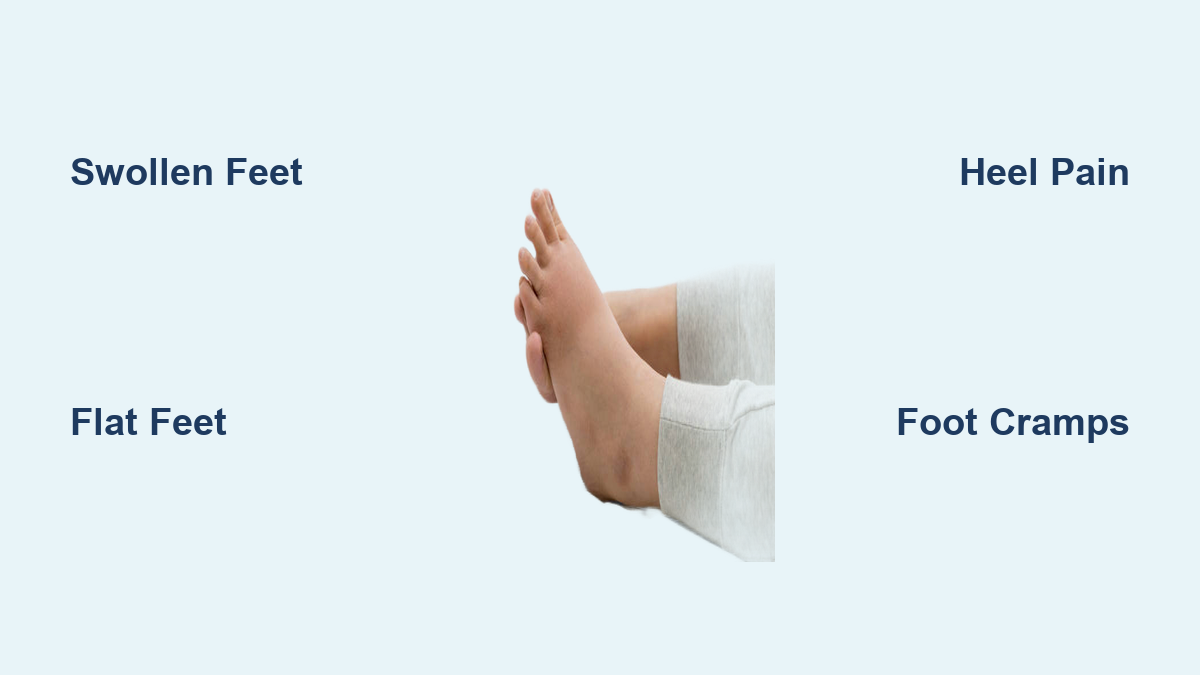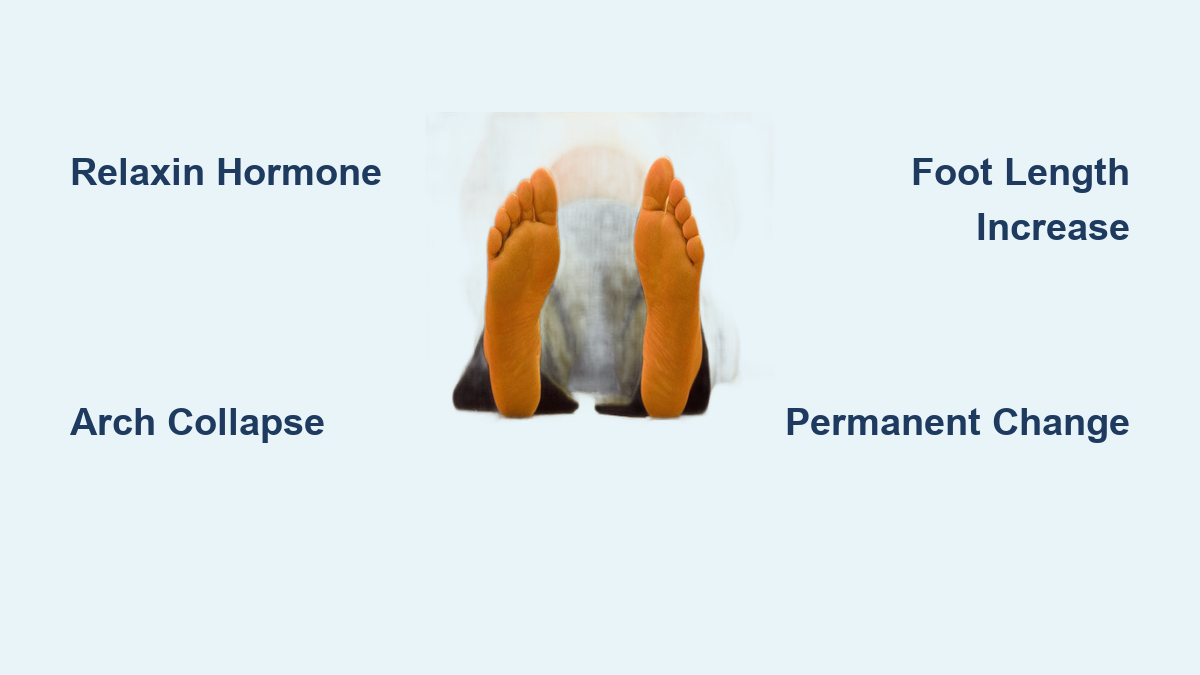
If you’ve noticed your favorite shoes suddenly feel tight—or you’re buying a new pair only to discover you’re now a full size larger—chances are, it’s not just swelling. Pregnancy hormones, especially relaxin, can cause your feet to literally flatten, increasing both length and width in ways that are often permanent. This isn’t a myth or temporary puffiness—it’s measurable structural change. Research shows that during pregnancy, the arches of your feet can collapse by up to a centimeter, leading to longer, wider feet and lasting biomechanical shifts. The culprit? A hormone designed to help your body deliver a baby ends up softening ligaments far beyond the pelvis—right down to your soles.
As relaxin surges up to ten times its normal level, it loosens connective tissues systemically. When combined with added weight, fluid retention, and postural changes, your feet bear the brunt of these transformations. The result? Flattened arches, overpronation, and increased strain not just in your feet, but all the way up to your knees, hips, and lower back. In this article, we’ll break down exactly why pregnancy hormones cause feet to flatten, what changes are likely to stick, and how you can protect your foot health before, during, and after pregnancy.
Hormonal Culprit: Relaxin’s Systemic Effects on Foot Structure

Relaxin isn’t selective—it doesn’t just target the pelvis. Its influence spreads throughout your body, including the delicate ligaments that support your foot arches.
How Relaxin Softens Key Foot Ligaments
Produced by the placenta and chorion, relaxin peaks in the first trimester and remains elevated throughout pregnancy. While its primary role is to relax the cervix and widen the pubic symphysis for childbirth, it also increases collagen breakdown in connective tissues. This affects critical foot ligaments like the plantar fascia and the spring ligament (plantar calcaneonavicular ligament), which are essential for maintaining the medial longitudinal arch.
As these ligaments lose tensile strength, they become more elastic and less able to resist downward pressure. Think of your arch like a suspension bridge: when the cables (ligaments) loosen, the deck (arch) sags. During pregnancy, every step you take pushes the talus bone downward, dropping the arch. Studies show this can lead to up to 1 cm of arch collapse, especially when transitioning from sitting to standing.
Why Weight Gain Worsens Hormone-Induced Flattening
Even average pregnancy weight gain—around 14.2 kg (31 lbs)—adds significant mechanical load to already weakened ligaments. While relaxin sets the stage, extra body mass amplifies the deformation. The increased plantar pressure forces the foot to spread out, contributing to measurable increases in both length and width. This combination of lax support + higher load is what makes arch collapse so common in the third trimester.
Proven Structural Changes: What Research Shows

A landmark study tracking 49 women from the first trimester to 19 weeks postpartum revealed lasting, measurable changes in foot structure.
Key Foot Changes Observed During and After Pregnancy
| Parameter | Average Change | Still Present Postpartum? |
|---|---|---|
| Foot length | +0.7 mm (up to 10 mm) | ✅ Yes |
| Arch drop (sitting to standing) | +0.9 mm | ✅ Yes |
| Arch rigidity index | Decreased | ✅ Yes |
| Standing arch height | Reduced | ✅ Yes |
- 30 women experienced longer feet
- 35 women showed greater arch collapse
- Changes were most pronounced in first-time mothers
These aren’t temporary effects from swelling—they reflect true structural remodeling of the foot’s architecture.
First Pregnancy Causes the Most Dramatic Changes
The study found that the first pregnancy has the biggest impact:
– Foot length increased by 1.4 ± 0.3 mm (p < 0.0001)
– Arch rigidity dropped significantly (p < 0.0001)
– Later pregnancies showed minimal additional change
This suggests a “ceiling effect”—once ligaments stretch during the first pregnancy, they don’t change much more afterward. Your body adapts, but that adaptation comes at the cost of permanent foot changes for many women.
The Three Forces Behind Arch Collapse
Foot flattening during pregnancy isn’t due to one factor alone. It’s the perfect storm of hormones, weight, and fluid working together.
1. Ligament Laxity from Relaxin
Relaxin increases joint hypermobility, especially in the talonavicular and subtalar joints. As the talus head drops, the medial arch collapses. Without strong ligaments to hold it up, your foot loses its natural spring. This is the primary driver—without hormonal softening, weight gain alone wouldn’t cause such widespread flattening.
2. Increased Body Weight and Plantar Pressure
More mass means more force with every step. The average pregnant woman gains over 14 kg, significantly increasing load on the midfoot. This pressure forces the foot to flatten and spread, especially during prolonged standing or walking. Even supportive shoes can’t fully offset this mechanical stress when ligaments are compromised.
3. Fluid Retention and Swelling
Edema—fluid buildup in the lower limbs—is common in late pregnancy. While swelling causes temporary widening, repeated cycles may lead to permanent stretching of soft tissues. Swollen feet feel tight in shoes, but even after the fluid resolves, the underlying structure may have changed.
How Flat Feet Affect Your Entire Body

Losing arch height doesn’t just cause foot pain—it triggers a chain reaction of misalignment.
Overpronation and Gait Disruption
Flattened arches lead to excessive inward rolling (overpronation), altering how your foot strikes the ground. This increases strain on:
– Plantar fascia (risk of plantar fasciitis)
– Achilles tendon
– Posterior tibialis muscle
Tibial Rotation and Knee Damage Risk
Overpronation forces the tibia to rotate inward, transferring torque to the knee. Research shows limbs with lower arches have:
– 1.43x higher odds of medial knee cartilage damage
– Increased risk of patellofemoral pain and knee osteoarthritis
Hip and Lower Back Pain
As your belly grows, your center of gravity shifts forward. You compensate by leaning back, increasing lumbar lordosis. Poor foot mechanics reduce shock absorption, worsening low back pain. Women with flatter feet are 1.8x more likely to develop knee osteoarthritis and 1.4x more likely to experience hip pain.
Long-Term Foot Changes After Pregnancy
For many women, the changes don’t reverse.
Permanent Shoe Size Increase
- Half to full shoe size larger is common
- Caused by ligament stretching + bone realignment
- Only 11 of 49 women in one study realized their size changed
Chronic Foot and Joint Issues
Some develop:
– Persistent plantar fasciitis
– Arch fatigue
– Ankle instability
– Difficulty finding supportive shoes
These issues may contribute to higher rates of musculoskeletal disorders as women age.
Who’s Most at Risk?
Not every pregnant woman experiences significant flattening. Risk depends on:
Preexisting Joint Laxity
Women with higher Beighton Hypermobility Scores are more affected. If you’ve always had “loose joints,” relaxin will have a stronger effect.
Lower Baseline Arch Height
Those with naturally flatter feet have less structural reserve. When ligaments loosen, their arches collapse faster.
Reduced Activity in Late Pregnancy
Less movement leads to weaker foot and calf muscles, reducing natural arch support.
Surprising Insight: One study found no significant link between weight gain and foot changes, suggesting hormonal effects dominate over mechanical load.
How to Protect Your Feet During Pregnancy
You can’t stop relaxin—but you can minimize damage and discomfort.
Wear Supportive Shoes
Avoid flip-flops and ballet flats. Choose shoes with:
– Firm heel counters
– Arch support
– Wide toe boxes
– Adjustable straps
Replace worn-out shoes early—they lose support faster under extra weight.
Use Orthotics
Custom or over-the-counter orthotics can:
– Support the medial arch
– Reduce overpronation
– Cut plantar pressure by up to 20%
See a podiatrist for pregnancy-specific orthoses.
Try Compression Stockings
Wear 15–20 mmHg medical-grade compression to:
– Reduce swelling
– Improve circulation
– Prevent varicose veins
Put them on before getting out of bed.
Do Daily Foot Exercises
5-Minute Routine:
- Foot rolling: Lacrosse ball under arch (1–2 min/foot)
- Towel scrunches: Grab towel with toes (3 sets of 10)
- Toe curls: Pick up marbles
- Ankle circles: 10 each direction
- Calf stretches: Hold 30 sec, 2 reps
These boost muscle tone and joint mobility.
Elevate and Rest
- Elevate feet above heart level
- Avoid standing >30–60 min
- Use a footrest
Strengthen Your Core
A strong core reduces postural strain:
– Practice pelvic tilts
– Engage transverse abdominis
– Try prenatal yoga
When to See a Podiatrist
Seek help if you experience:
– Sudden, severe swelling (possible pre-eclampsia)
– One-sided leg pain (rule out DVT)
– Persistent heel or arch pain
– Numbness or tingling
– Difficulty walking
A podiatrist can:
– Measure arch height
– Prescribe custom orthotics
– Treat plantar fasciitis
– Recommend braces
Final Note: Your Feet Change—But You Can Adapt
Pregnancy hormones, especially relaxin, cause real, lasting changes to your foot structure. The combination of ligament softening, weight gain, and fluid retention leads to flattened arches, longer feet, and altered biomechanics—often permanently. The first pregnancy has the biggest impact, setting the stage for long-term foot and joint health.
Yet, only 2 out of 49 women in one study discussed foot changes with a doctor. Awareness is low—but action doesn’t have to be. By wearing supportive shoes, using orthotics, doing daily foot exercises, and seeking professional care when needed, you can protect your mobility and reduce pain during and after pregnancy.
Future research may show that early use of arch-supporting devices can prevent permanent changes. Until then, listen to your feet—they’re carrying you through one of life’s biggest transformations.