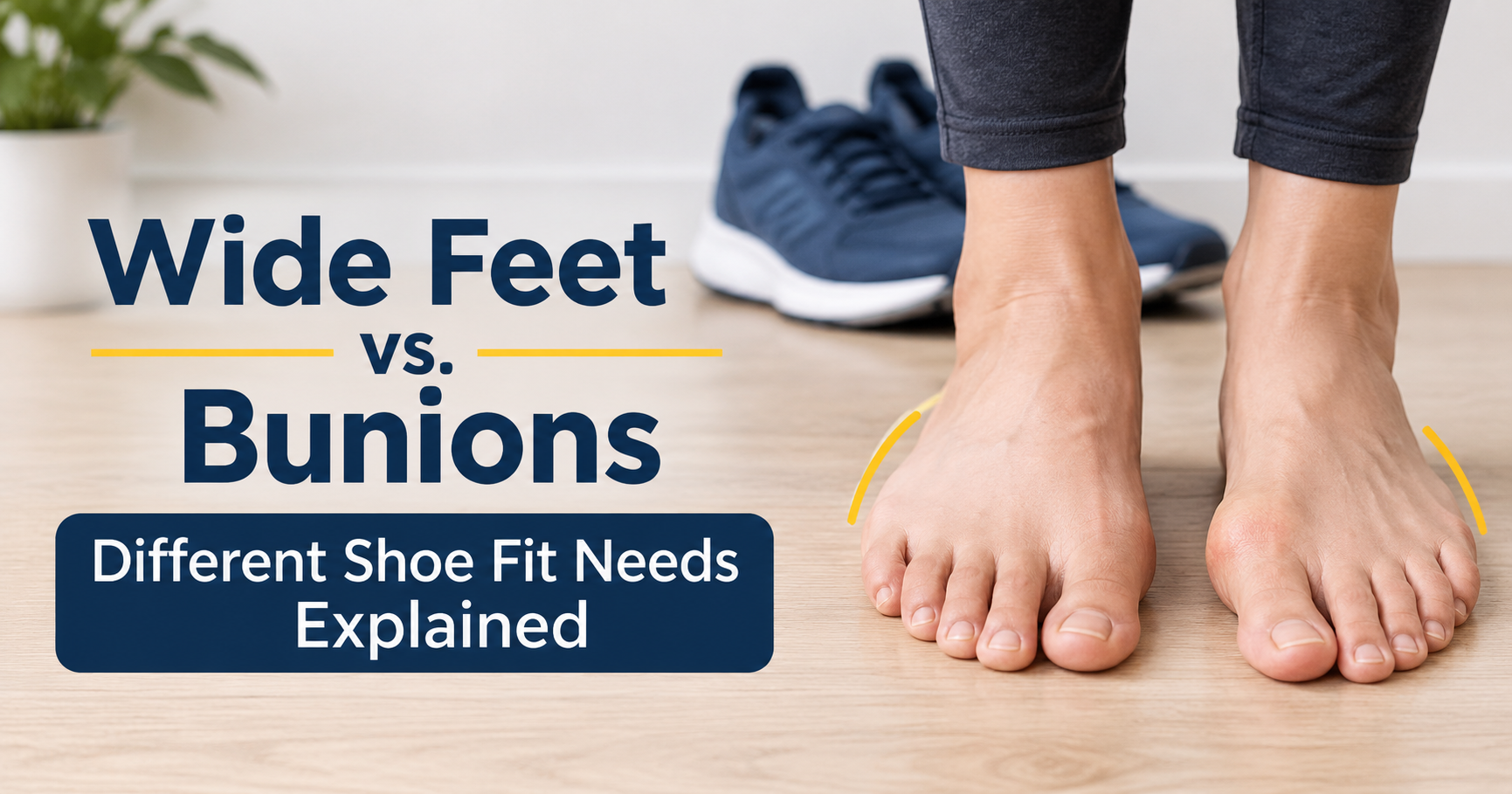
Shopping for shoes gets frustrating when your forefoot feels squeezed, no matter which size you choose. Two common reasons are naturally wide feet and bunions. They can feel alike, because both put pressure on the front of the shoe, yet they are different issues and call for slightly different fitting strategies. This guide explains the difference, shows how to measure and test your fit, and helps you pick shoes that stay comfortable all day.
Quick Answer: Wide Feet vs Bunions
Wide feet are a matter of foot shape: the whole forefoot is broader than average. A bunion is a structural change: the big toe angles toward the second toe and a bony bump forms on the inner side of the foot. A person can have wide feet, a bunion, or both at the same time. Wide feet need more room across the width, while bunions need more room and softness exactly at the bump.

What Are Wide Feet?
Wide feet describe a forefoot (the ball of the foot) that measures broader than the standard width for a given length. It is usually inherited and often stays consistent through adulthood, although width can increase with age, weight gain, pregnancy, or long periods of standing.
Common Signs of Wide Feet
- Shoes feel tight across the ball of the foot even when the length is right.
- The sides of your feet bulge over the edge of the insole.
- You often go up a size just for width and then get heel slip or too much length.
- Red pressure marks appear along both sides of the foot after wearing shoes.
- Toes feel pushed together in standard-width footwear.
What Are Bunions?
A bunion (hallux valgus) is a bony bump at the base of the big toe. The big toe drifts toward the smaller toes, and the joint at its base pushes outward. Bunions can run in families, and tight or narrow shoes, flat feet, joint flexibility, and some types of arthritis may contribute to how quickly they develop or how painful they become.
Common Signs of Bunions
- A visible bump on the inner side of the foot at the big toe joint.
- Redness, swelling, or tenderness over that bump, especially after wearing shoes.
- The big toe leaning toward the second toe, sometimes overlapping it.
- Pain or burning in the ball of the foot while walking.
- Calluses or corns where toes rub against each other.
- Stiffness or reduced movement of the big toe.
Wide Feet vs Bunions: Key Differences
| Feature | Wide Feet | Bunions |
|---|---|---|
| What it is | A foot shape that is broader overall | A joint change with a bony bump |
| Main problem | Not enough width across the shoe | Pressure on one specific spot |
| Pain | General tightness or pressure on both sides | Localized soreness at the big toe joint |
| Toe position | Normal alignment | Big toe angled toward the other toes |
| Best shoe features | Wide width sizing, roomy toe box | Soft, stretchy upper and a deep, wide toe box |
| Can progress? | Usually stable | May worsen gradually over time |
Why Standard Shoes Often Fail Both Groups
Most mainstream shoes are built on a narrow-to-medium last, and many styles taper sharply at the toes. When the shoe is narrower than your foot, the forefoot has nowhere to go. With wide feet the pressure spreads along both sides. With bunions the pressure concentrates on the bump, which can lead to rubbing, inflammation, and blisters. Pointed or rigid fashion shoes tend to be the biggest offenders.
How to Measure Your Feet at Home
Accurate measurement is the foundation of good fitting. Follow these steps in the late afternoon or evening, when feet are at their largest.
- Place a sheet of paper on a hard floor against a wall.
- Stand on it with your heel touching the wall and your full weight on the foot.
- Mark the tip of your longest toe and the widest points on both sides of the forefoot.
- Measure the length (heel to longest toe) and the width (between the two side marks).
- Repeat with the other foot and use the larger measurement, since most people have one foot slightly bigger.
Compare your numbers with the size chart of the brand you plan to buy, because width labels such as medium, wide, and extra wide vary between manufacturers.
Shoe Fitting Checklist

- Toe box shape: It should match the natural outline of your foot. Your toes should spread out without touching the sides.
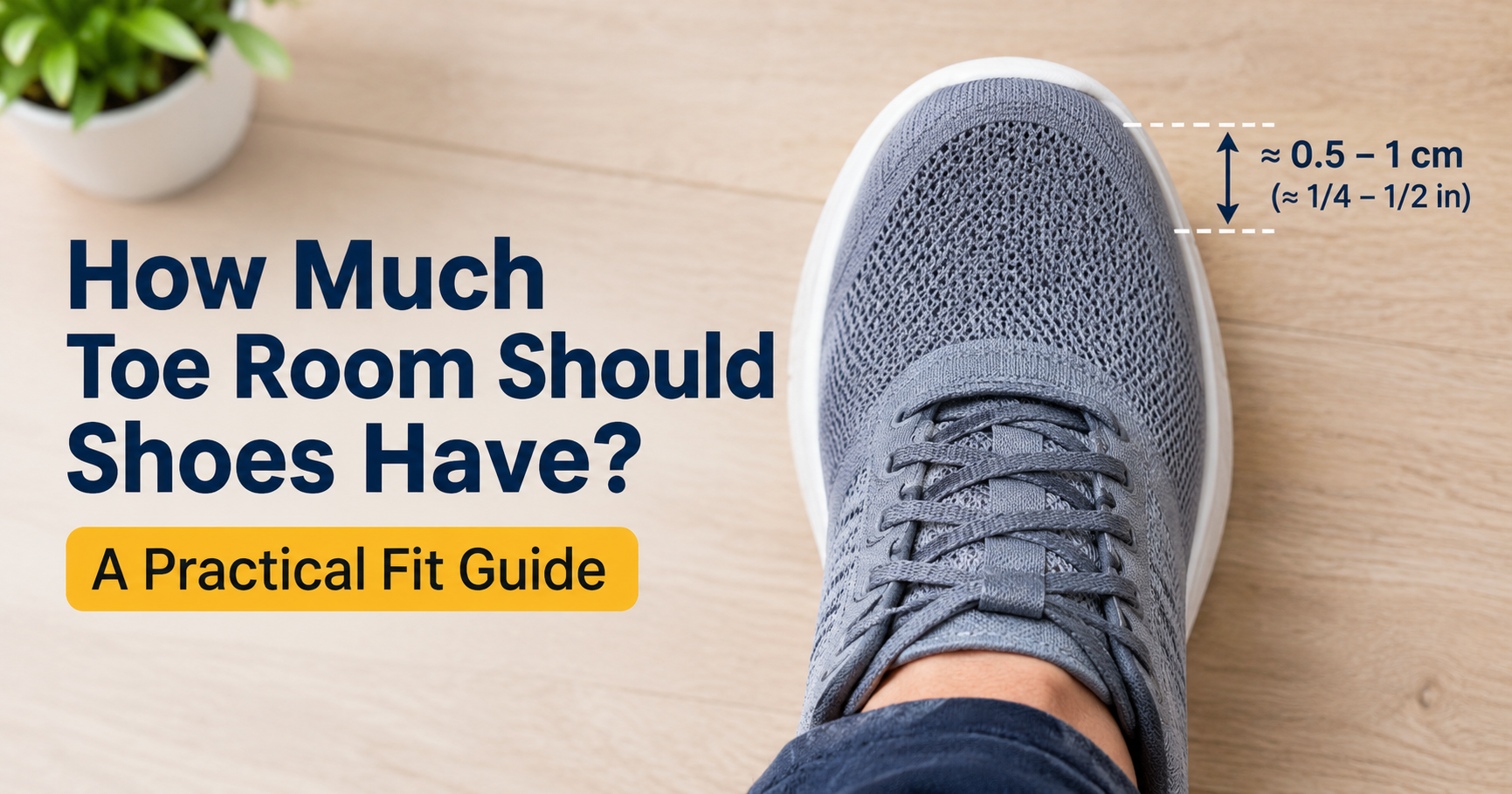
- Length: Leave about a thumb’s width between your longest toe and the end of the shoe.
- Width: The upper should hold your foot gently without bulging or pressing at the sides.
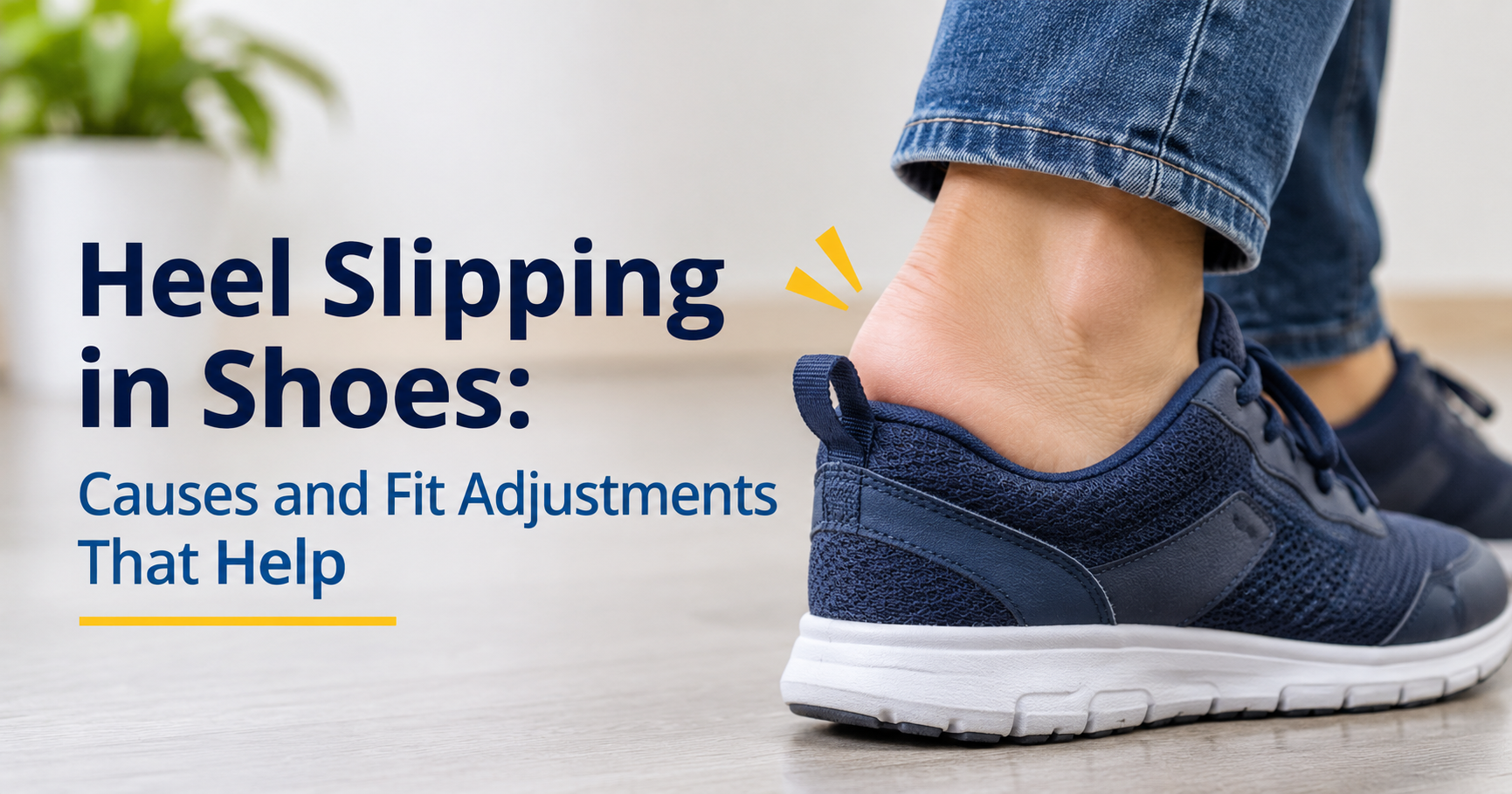
- Heel grip: The heel should feel secure so that your foot does not slide forward and jam into the toe area.
- Flex point: The shoe should bend where your toes bend, not in the middle of the arch.
Best Shoe Features for Wide Feet
- Wide or extra-wide width options: Choosing the proper width is better than simply buying a longer size.
- Rounded or square toe box: Gives the forefoot room to spread naturally.
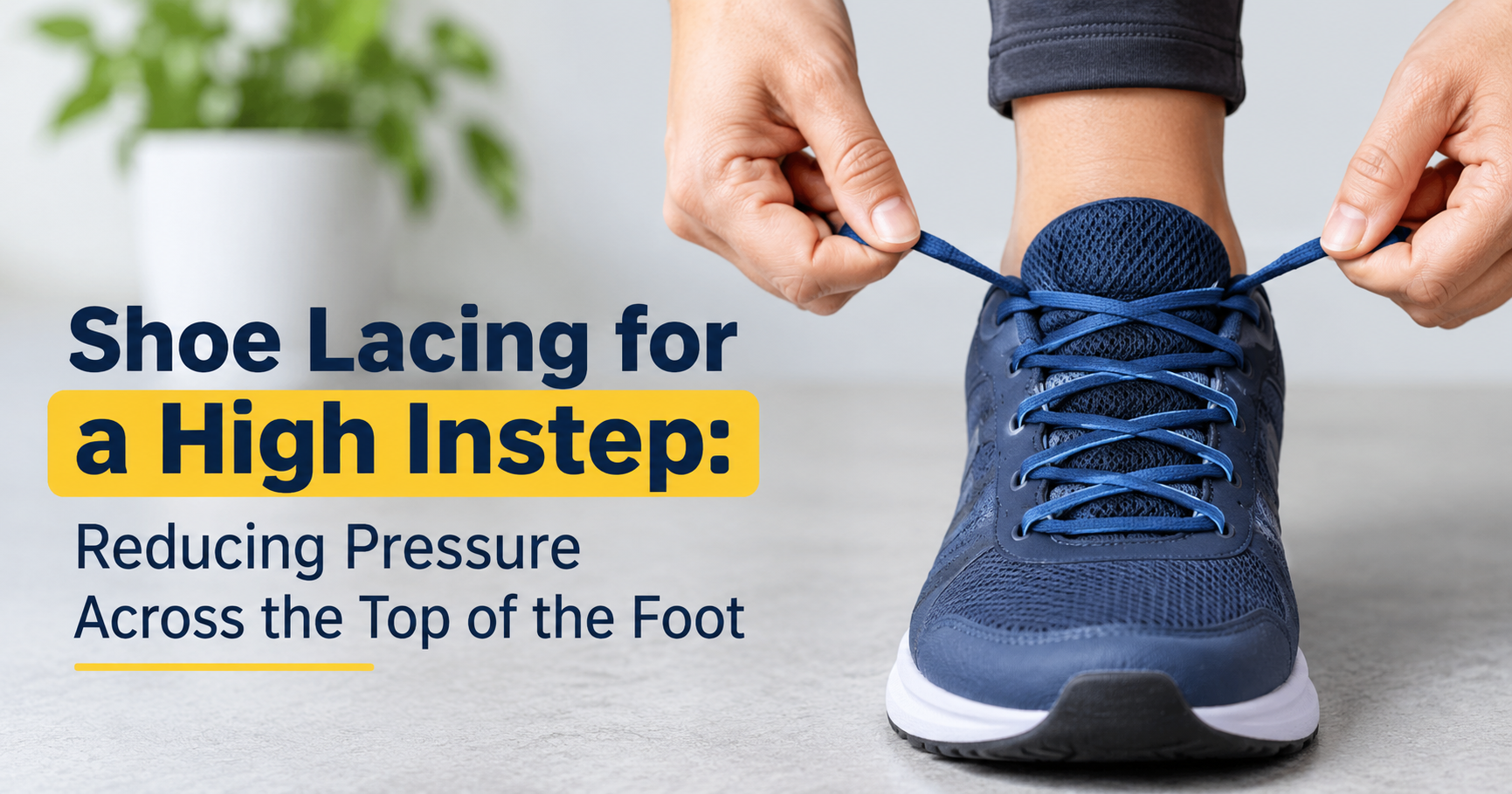
- Adjustable closures: Laces, hook-and-loop straps, or buckles let you fine-tune volume across the instep.
- Removable insoles: Allow you to adjust depth or insert custom support.
- Cushioned midsole: Helps reduce fatigue because wider feet often carry load across a larger surface.
Best Shoe Features for Bunions
- Soft, stretchy upper materials: Knit, mesh, or supple leather reduce friction on the bump.
- Seamless or minimal-seam construction: Avoids stitching that can rub on the sensitive area.
- Deep and wide toe box: Gives space both sideways and vertically.
- Low or no heel: High heels push body weight onto the forefoot and increase pressure.
- Firm, supportive sole with rocker design: Reduces how much the big toe joint has to bend when you walk.
- Stretchable areas: Some shoes can be professionally stretched at the bunion spot for a customized fit.
If You Have Both Wide Feet and Bunions
This is very common. Look for shoes that combine a wide width size with a soft, flexible upper and a generous toe box. Prioritize adjustable fastenings, so you can loosen the forefoot while keeping the midfoot and heel secure.
Shoe Types: What to Choose and What to Avoid
| Shoe Type | Wide Feet | Bunions |
|---|---|---|
| Athletic / walking shoes | Great, if available in wide widths | Great, when the upper is soft and the toe box is roomy |
| Sandals with adjustable straps | Good | Good, if no strap crosses the bump |
| Dress shoes | Choose wide-last styles | Choose soft leather with a rounded toe |
| Boots | Pick wide-calf and wide-width models | Look for stretch panels or a soft lining |
| Pointed-toe heels | Avoid | Avoid |
| Flip-flops | Limited support | Limited support, can aggravate big toe |
Everyday Tips to Make Shoes More Comfortable
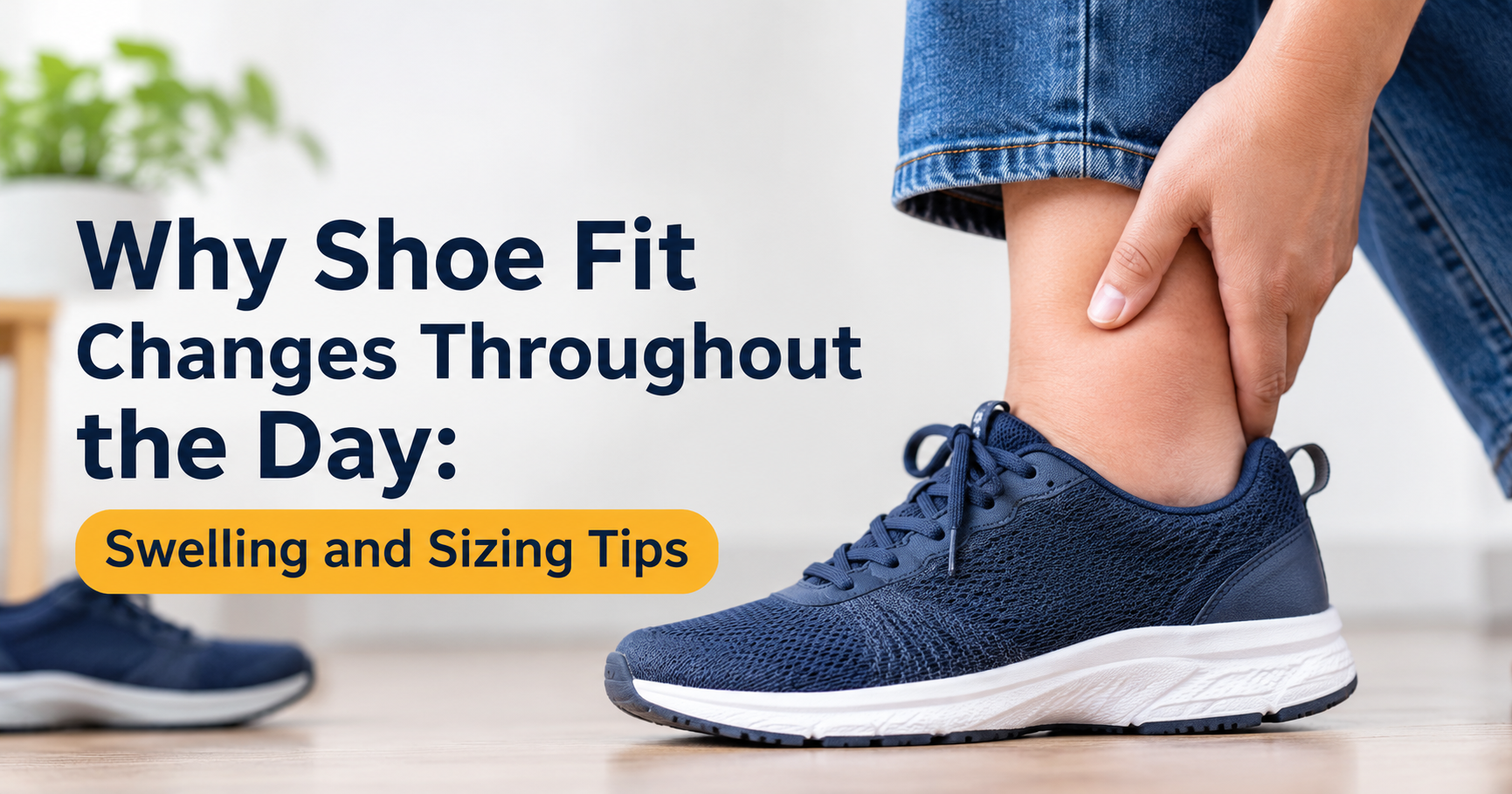
- Try on shoes later in the day when your feet are slightly swollen.
- Wear the socks you plan to use during fitting.
- Walk around the store for several minutes to check for rubbing.
- Use bunion pads or toe spacers only if they fit comfortably without making the shoe tighter.
- Rotate your shoes so pressure points change from day to day.
- Replace worn-out shoes because collapsed cushioning and stretched uppers reduce support.
- Consider professional stretching for leather shoes that fit well except at one spot.
Common Fitting Mistakes to Avoid
- Buying a bigger size instead of a wider size: This adds length, which can cause heel slip and toe-box buckling.
- Expecting a “break-in” period: A good shoe should feel comfortable from the first fitting.
- Choosing by looks only: A narrow, stylish shoe may look right but will cause problems for wide or bunion-affected feet.
- Measuring only one foot: Feet are rarely identical.
- Ignoring changes over time: Re-measure every year or two because foot size and shape can change.
When to See a Professional
Consult a podiatrist, orthopedic specialist, or your doctor if you notice any of the following:
- Persistent pain that does not improve with comfortable shoes.
- A bump that keeps growing or a big toe that continues to shift.
- Difficulty walking or doing daily activities.
- Swelling, redness, or warmth that does not settle.
- Numbness or tingling in the toes.
A professional can assess whether you need custom orthotics, padding, physical therapy, or other treatment options. This article is for general information and is not a substitute for personalized medical advice.
Frequently Asked Questions
Can wide feet cause bunions?
Wide feet do not directly cause bunions, but wearing shoes that are too narrow for a wide foot can add pressure to the big toe joint and may make an existing tendency toward bunions worse.
Should I go up a size if I have a bunion?
Usually not. A larger size adds length rather than width. It is better to choose a shoe with a wider and deeper toe box in your correct length.
Do wide-fit shoes work for bunions?
Often yes, particularly when the upper is soft and flexible. However, a wide width alone does not guarantee comfort, so check the material and seams over the bump.
Can shoes cure a bunion?
No. Well-fitted shoes can reduce pain and slow irritation, but they do not reverse the bone changes. A medical professional can discuss other treatment options.
How do I know if my foot is wide or just my shoe is narrow?
Stand on a sheet of paper, trace your foot, and measure the widest part. Then compare it with the brand’s size chart. If your width is above the medium range, you likely have wide feet.
Are barefoot-style or foot-shaped shoes good for bunions?
Many people find them comfortable because of the broad toe box, but they should still be fitted carefully and introduced gradually if you are used to heavily cushioned shoes.
Final Thoughts
Wide feet and bunions are not the same, but both reward the same smart approach: measure carefully, choose the correct width, prioritize a roomy and soft toe box, and test every pair properly before committing. Fit shoes to your feet, not your feet to your shoes, and your daily comfort, balance, and long-term foot health will thank you.