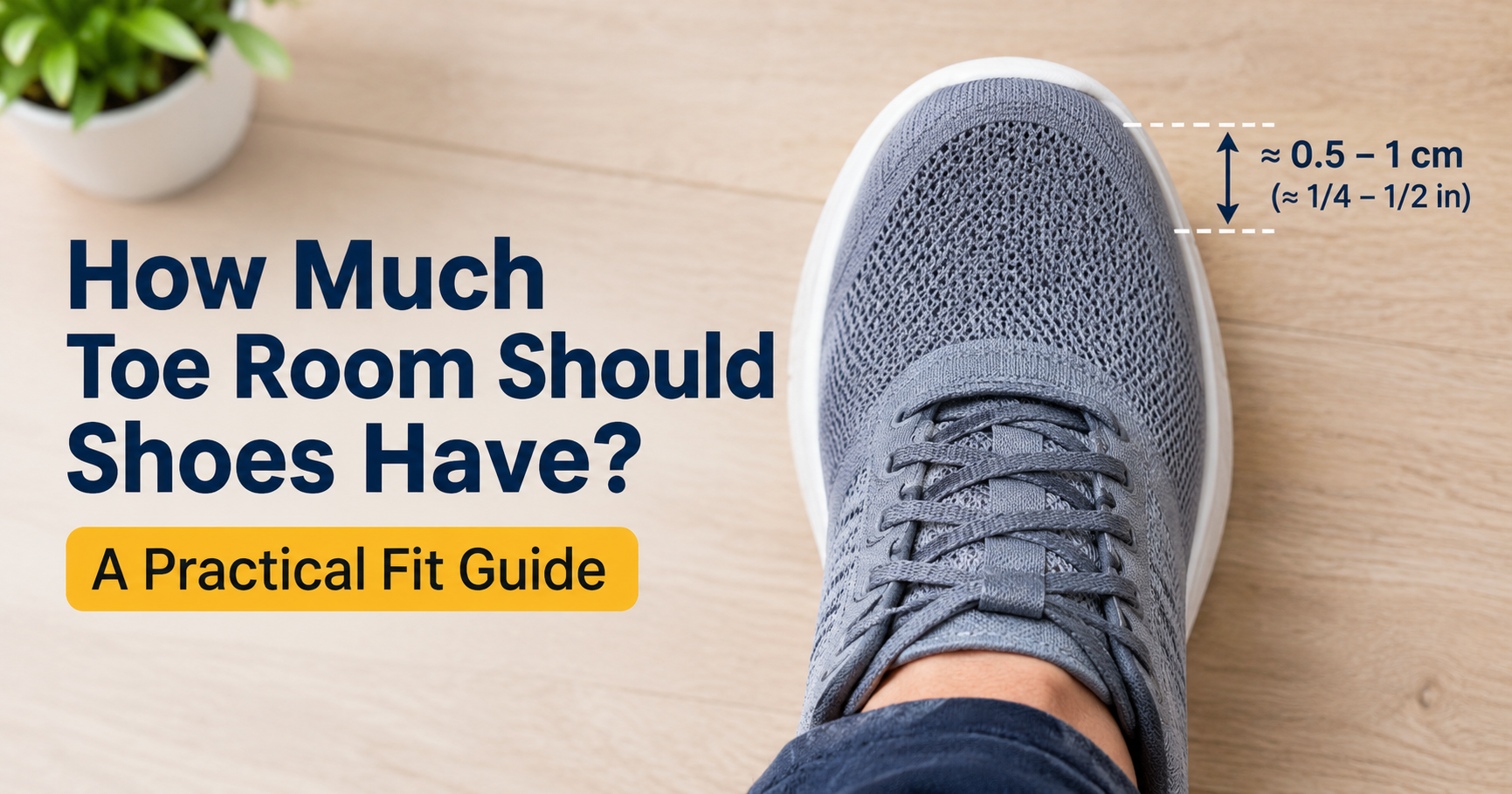
Few things decide whether a pair of shoes feels great or terrible as much as the toe box. Too tight, and you get blisters, black toenails, and numb toes. Too loose, and your foot slides around, your heel slips, and your stride feels unstable. So how much room should be in a toe box? The short answer is simple, but the details change depending on the shoe, the activity, and the shape of your foot. This guide covers all of it.
Quick Answer: How Much Room Should a Toe Box Have?
As a general rule, you should have about 3/8 to 1/2 inch (10 to 13 millimeters) of space between the tip of your longest toe and the end of the shoe. That is roughly the width of your thumb. Your toes should also be able to lift, spread, and wiggle freely without pressing against the sides or the top of the shoe.
- Length: a thumb’s width (3/8 to 1/2 inch) in front of the longest toe.
- Width: the ball of your foot sits comfortably without bulging over the sole, and your toes can spread naturally.
- Height: your toes do not touch the roof of the shoe when you stand or flex.

What Is a Toe Box?
The toe box is the front section of a shoe that surrounds your toes. It is defined by three measurements: its length (how far it extends past your longest toe), its width (how much side-to-side space your toes get), and its height or depth (the vertical space above your toes). A shoe can be long enough but still too narrow or too shallow, which is why checking only the length is a common mistake.
Why Toe Box Room Matters
Your Feet Move and Swell
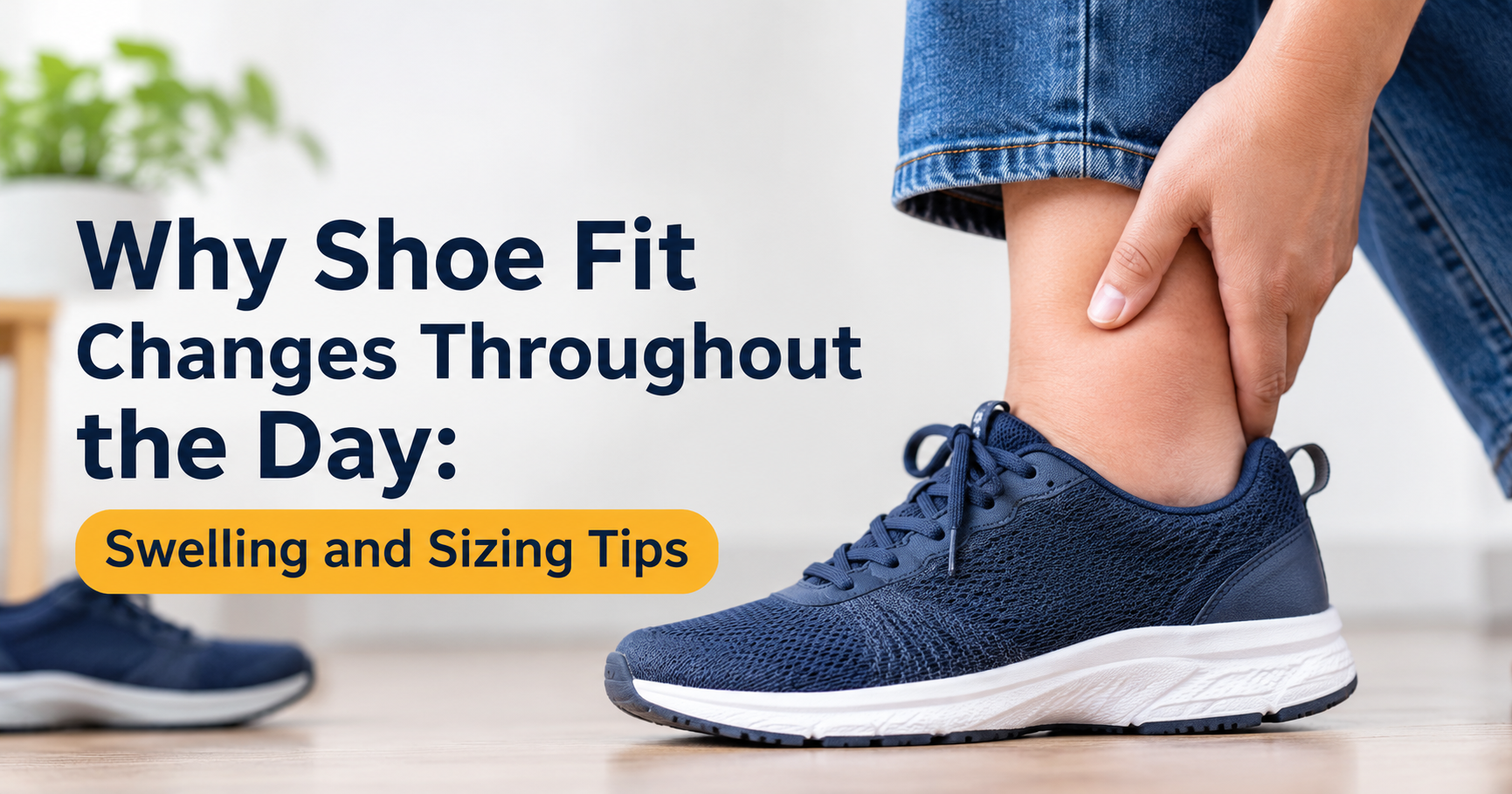
When you walk or run, your foot slides forward slightly with every step, and it flexes and spreads as it pushes off. Without enough space, your toes repeatedly hit the front of the shoe. Your feet also swell during the day and during exercise, often by up to half a shoe size. A shoe that feels perfect in the morning can feel cramped by evening.
Comfort and Foot Health
Persistent pressure on the toes is linked to common problems such as:
- Blisters and calluses on the toes
- Black or bruised toenails, especially in runners
- Ingrown toenails
- Corns between or on top of the toes
- Bunions and hammertoes becoming more painful
- Numbness or burning in the forefoot, sometimes called Morton’s neuroma symptoms
Good toe box room lets your toes splay as they were designed to, which improves balance and push-off power as well as comfort.

How Much Toe Box Room Do Different Shoes Need?
The thumb-width rule works for most shoes, but different activities call for small adjustments.
Running Shoes
Runners should aim for a full thumb’s width (about 1/2 inch) in front of the longest toe. Feet expand during a run and slide forward on downhill sections, so running shoes are often fitted a half size to a full size larger than casual shoes. A wider toe box also reduces the risk of black toenails on long runs.
Walking and Everyday Shoes
For daily wear, about 3/8 to 1/2 inch works well. Pay extra attention to width, since walking shoes are often worn for hours on hard surfaces and tight forefoot pressure builds up quickly.
Hiking Boots and Trail Shoes
Hikers need enough space to stop their toes from slamming into the front on descents, which means roughly a thumb’s width or slightly more. Wear your hiking socks when you test the fit, and make sure your heel stays locked down so your foot does not slide forward.
Dress Shoes and Work Shoes
Dress shoes are usually fitted a little closer, around 3/8 inch, because a snug heel and midfoot are needed to keep the shoe in place. Pointed designs are the main problem here. If the toe box tapers sharply, size up in width or choose a rounder or squarer shape rather than forcing your toes together.
Kids’ Shoes
Children’s feet grow quickly, but buying shoes far too big can cause tripping and poor support. A thumb’s width (about 1/2 inch) of room is the usual guideline. Check the fit often, since a child may not complain even when shoes are already too small.
Athletic and Gym Shoes
For training, court sports, and gym workouts, you need space for quick direction changes. Look for a secure midfoot and heel with a forefoot that is roomy enough for your toes to spread under load.
Toe Box Width and Height: The Parts People Forget
Length gets all the attention, but width and height are just as important.
- Width: when you stand, the widest part of your foot (the ball) should sit at the widest part of the shoe. If your foot spills over the edge of the sole or the upper looks stretched, the shoe is too narrow.
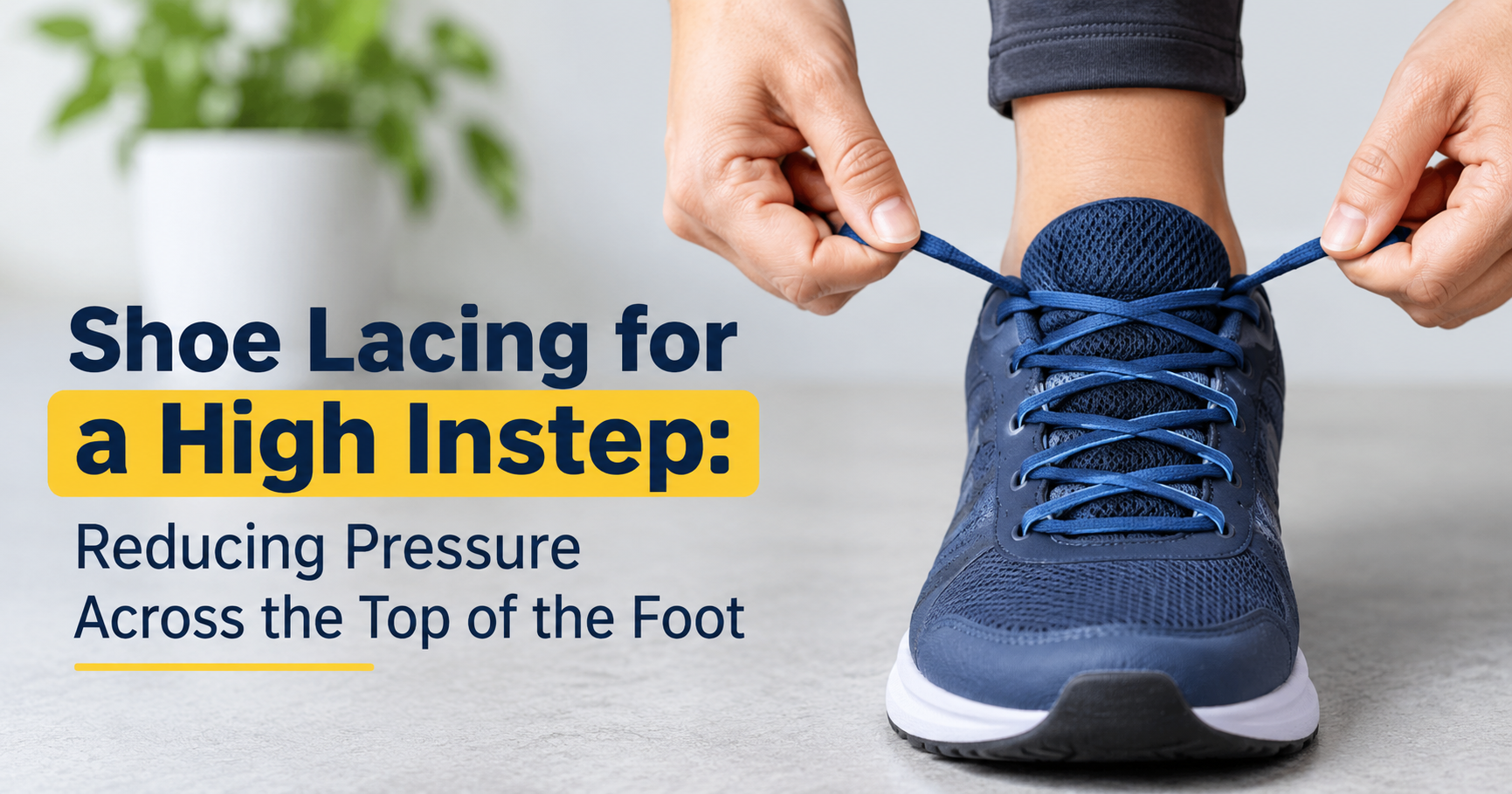
- Height: you should be able to wiggle your toes up and down without them brushing the top of the shoe. People with hammertoes, claw toes, or high-arched feet often need a deeper toe box.
- Shape: the toe box should follow the natural shape of your forefoot. Many shoes taper to a point, while your toes are widest at the tips. Anatomical or “foot-shaped” toe boxes are designed to match this.
How to Test Toe Box Room at Home or in a Store
- Shop later in the day. Feet are at their largest in the afternoon or evening.
- Wear the right socks. Use the same type and thickness you plan to wear with the shoes.
- Stand up and lace the shoes properly. Fit while standing, because your foot lengthens and widens under body weight.
- Do the thumb test. Press down on the front of the shoe, or have someone do it, and check for about a thumb’s width beyond your longest toe. Remember that your second toe can be longer than your big toe.
- Wiggle your toes. They should move up, down, and sideways without rubbing.
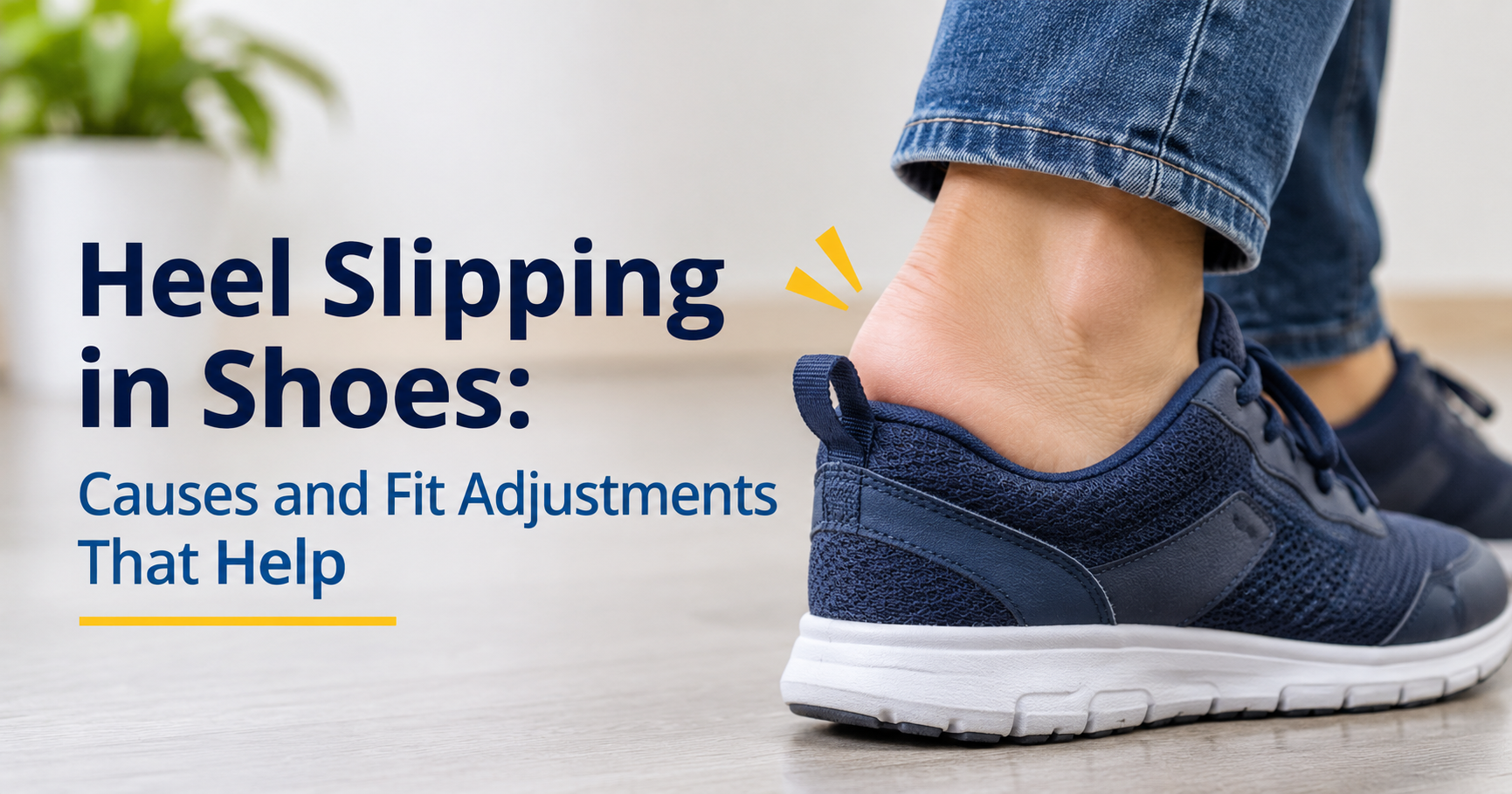
- Check the heel. It should stay put when you walk. A slipping heel means the shoe may be too large, not just roomy in the toe box.
- Walk around. Take at least a few minutes on a hard surface, and try stairs or a ramp if possible. Notice any pressure points.
- Measure both feet. Most people have one foot slightly bigger. Always fit to the larger foot.
Signs Your Toe Box Is Too Small
- Your toes touch the front of the shoe when you stand or walk downhill
- Toes feel squeezed together or overlap
- The sides of your feet bulge over the edge of the sole
- Numbness, tingling, or burning in the toes after wearing the shoes
- Blisters, red marks, or dark toenails
- Pain that gets worse as the day goes on
Signs Your Toe Box Is Too Big
- More than about 3/4 inch of empty space in front of your toes
- Your foot slides forward and back inside the shoe
- Your heel lifts out of the shoe with each step
- Creases form in odd places on the upper because the shoe folds in the wrong spot
- You need to lace very tight to keep the shoe on
Extra space is not harmless. Too much room leads to friction, instability, and fatigue, and it can cause blisters just like a tight fit.
Toe Box Tips for Different Foot Types
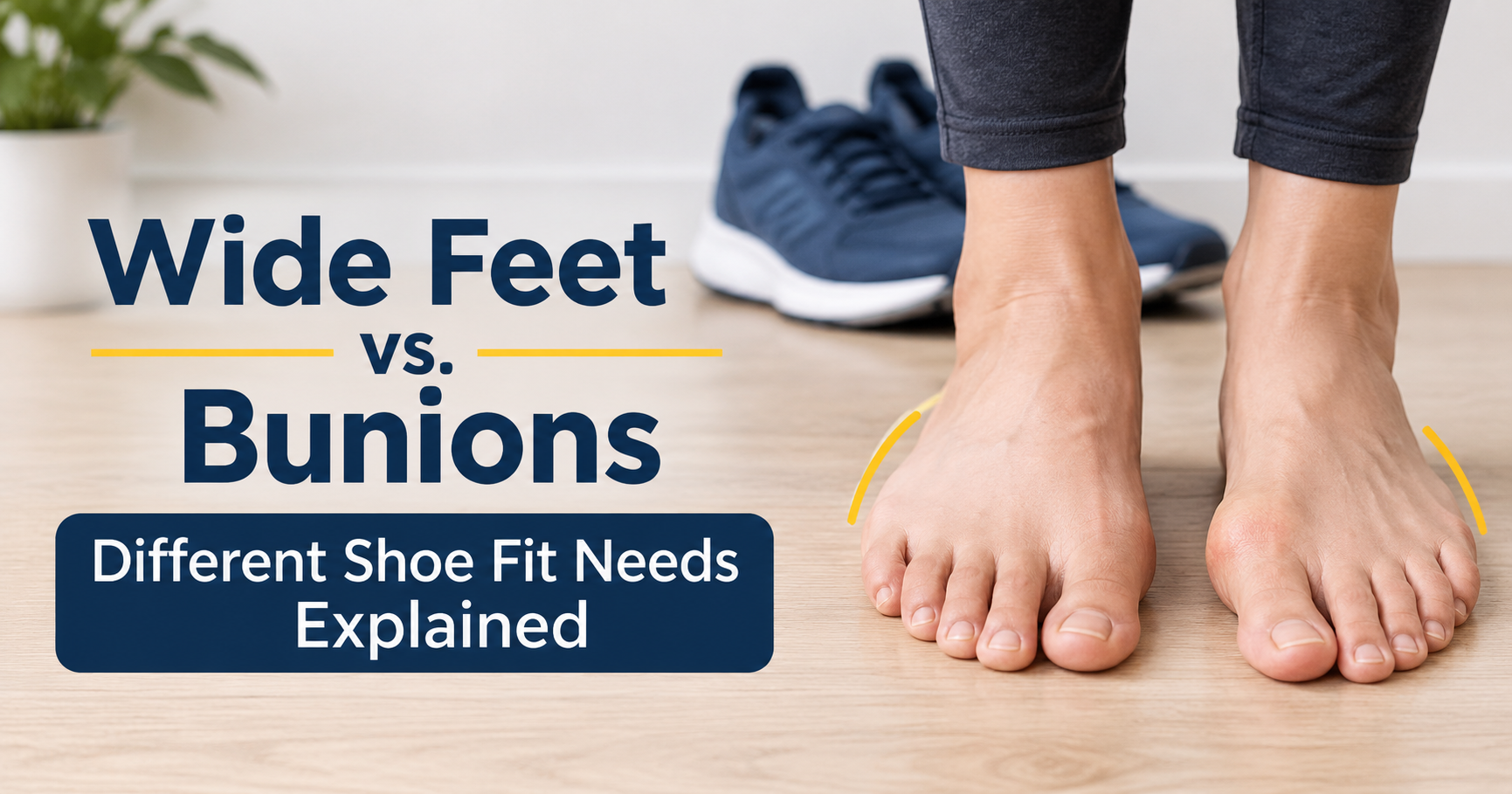
Wide Feet
If shoes always feel tight across the ball of the foot, going up a length will not solve it. Look for shoes sold in wide or extra-wide widths, or brands known for roomy forefoot designs.
Bunions, Hammertoes, and Other Foot Conditions
If you have a bunion, hammertoe, or similar condition, choose shoes with a deep, wide, rounded toe box made of soft, flexible material. Avoid pointed styles and seams that press on sore areas. A podiatrist can give advice specific to your feet.
Long Second Toe
Some people have a second toe longer than the big toe. Measure the space from the longest toe, not automatically from the big toe, so you do not buy shoes that are too short.
Swelling or Diabetes
People with swollen feet, poor circulation, or diabetes should be especially careful, because pressure can cause sores that heal slowly. Choose shoes with extra depth and a soft toe box, and consult a healthcare professional about suitable footwear.
Common Toe Box Fitting Mistakes
- Relying on the size number alone. Sizing varies between brands and even between models. Always judge by how the shoe fits, not by the label.
- Expecting shoes to “break in” painfully. A good shoe should feel comfortable immediately. Materials may soften slightly, but a tight toe box rarely becomes comfortable.
- Measuring only one foot, or only while sitting. Always measure both feet while standing.
- Ignoring width. A narrow toe box in the correct length is still a bad fit.
- Using old measurements. Feet change with age, weight, pregnancy, and activity. Re-measure every year or two.
Frequently Asked Questions
Should my toes touch the end of the shoe?
No. Your toes should not touch the front of the shoe when you stand or walk. If they do, the shoe is too short or too narrow in the toe box.
How much space should be in front of my toes in running shoes?
About a thumb’s width, or roughly 1/2 inch. This gives your foot room to expand and slide forward slightly without hitting the front of the shoe.
Is a roomy toe box better?
A roomy toe box is better than a cramped one, but it still needs to be controlled. Your toes should have space to spread and flex while your heel and midfoot stay secure. Excess length or looseness reduces stability.
How do I know if my toe box is too narrow?
If your foot bulges over the edges of the sole, your toes press together, or you feel pinching across the forefoot, the toe box is too narrow.
Do shoes stretch in the toe box?
Leather and some knit uppers may give a little, but you should not count on it. Choose a shoe that fits well from the start instead of hoping it will stretch.
How much toe room should kids have?
Around 1/2 inch, or about a thumb’s width. Recheck frequently because kids outgrow shoes quickly and may not tell you when they feel tight.
Does the ideal toe box room change with socks?
Yes. Thick wool or padded socks take up space, so always try shoes on with the socks you plan to wear.
Final Thoughts
The right toe box room is about 3/8 to 1/2 inch in front of your longest toe, enough width for your toes to spread, and enough height so nothing rubs on top. Fit your shoes later in the day, wear the right socks, test them standing, and pay attention to width and height as well as length. If a shoe pinches, rubs, or numbs your toes in the store, it will not get better at home.
Note: This article is for general information only and is not medical advice. If you have ongoing foot pain, numbness, or a diagnosed foot condition, speak with a podiatrist or another qualified healthcare professional.