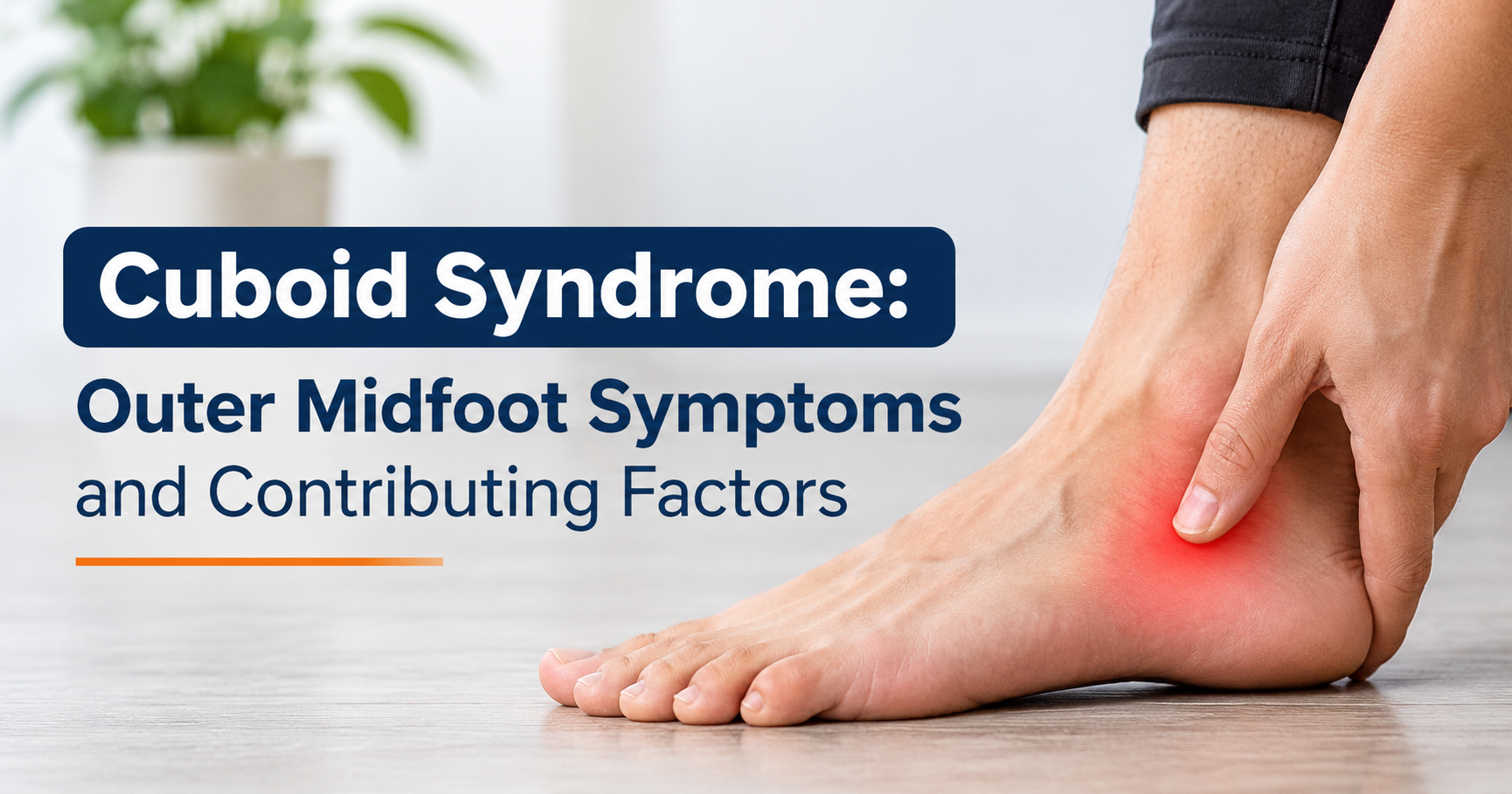
Cuboid syndrome symptoms usually show up as pain on the outer side of the midfoot, often with a limp and discomfort every time you push off the ground. The cuboid is a small, block-shaped bone that helps hold the outer arch of your foot steady. When the joints around it become irritated or slightly out of alignment, even a short walk can start to hurt.
This condition is easy to mistake for an ankle sprain, a tendon problem or a stress fracture, so many people live with it for weeks before they know what it is. In this guide you will learn what the cuboid bone does, the most common symptoms, what causes them, how the problem is diagnosed and what you can do to recover safely.
What Is Cuboid Syndrome?
Cuboid syndrome is a painful condition of the outer midfoot. It is also called cuboid subluxation, locked cuboid, dropped cuboid or lateral plantar syndrome. The names all describe the same idea: the cuboid bone and the joints around it are irritated, stiff or not moving the way they should.
The cuboid sits on the outer edge of the foot, between the heel bone and the bones that lead to the fourth and fifth toes. It also has a groove underneath that guides the peroneus longus tendon, a tendon that helps stabilise the arch and push the foot off the ground. Because so many forces pass through this small bone, it can become sore after an injury or after repeated strain.
Cuboid syndrome is seen most often in athletes, runners and dancers, but it can affect anyone who has had a rolled ankle or who spends long hours on their feet. Much of what is known about it comes from clinical experience and case reports rather than large studies, so treatment advice is based on practical experience more than on strong trial data.

Cuboid Syndrome Symptoms: What to Look For
Symptoms vary from mild to severe, and they can begin suddenly after an injury or build up slowly over weeks. These are the signs people report most often.
1. Pain on the Outer Side of the Midfoot
The hallmark symptom is pain along the outer edge of the foot, roughly halfway between the heel and the little toe. It may feel sharp and pinching, or like a deep ache. Some people describe it as a feeling that something is “out of place” in the foot.
2. Pain When Pushing Off or Standing on Tiptoe
Pain is usually worse when you walk, run, climb stairs or rise onto your toes, because the peroneus longus tendon and the midfoot joints are working hardest at that moment. Resting the foot often brings relief, but the pain returns as soon as you get moving again.
3. Limping
To avoid the sore spot, many people roll their weight toward the inside of the foot or walk on the heel. This is called an antalgic gait. It can strain the knee, hip or lower back if it continues for long.
4. Tenderness When You Press the Area
Gentle pressure over the cuboid, on the outer top or underside of the midfoot, often reproduces the pain. A clinician may use this as one of the main clues during an examination.
5. Mild Swelling, Warmth or Redness
Some people notice slight puffiness or warmth over the outer foot. Swelling is usually mild. Marked swelling or bruising is more typical of a fracture or a significant ligament injury and deserves a medical check.
6. Stiffness, Weakness or Instability
The foot may feel stiff, especially in the morning or after sitting. Some people notice weakness when pushing off, or a feeling that the outer foot will not hold their weight.

Where the Pain Is Usually Felt
The pain is concentrated over the cuboid itself, but it can spread toward the base of the fourth and fifth toes, the outer heel or the underside of the arch. Pain on the big toe side of the foot is not typical and points toward a different problem.

What Causes Cuboid Syndrome?
Cuboid syndrome is usually linked to an injury or to repeated overload of the outer foot. The most common causes include:
- Ankle sprains. Rolling the ankle inward is one of the best-known triggers, because the sudden twist can strain the joints around the cuboid.
- Repetitive stress. Running, jumping and long-distance walking place steady load on the outer midfoot, and the peroneus longus tendon can pull on the cuboid with every step.
- Flat or overly flexible feet. A foot that rolls inward excessively (overpronation) can overload the cuboid and its supporting joints.
- Unsuitable footwear. Tight, narrow or unsupportive shoes can crowd the midfoot, and very thin soles offer little shock absorption.
- Sudden changes in activity. Increasing mileage, switching surfaces or starting a new sport too quickly gives tissues little time to adapt.
- Extra body weight. More weight means more force through the foot with each step.
- Dance and sport demands. Ballet and other activities that rely on pointe or demi-pointe positions place high stress on the midfoot.
How Cuboid Syndrome Is Diagnosed
There is no single test that confirms cuboid syndrome. Diagnosis is usually based on your history, the location of the pain and a hands-on examination. A doctor, physiotherapist or podiatrist will ask how the pain began, what makes it worse and whether you have recently sprained your ankle. They will press on the area and check how the midfoot moves.
X-rays are often normal in cuboid syndrome, but they are still useful because they help rule out a fracture. If a stress fracture or another injury is suspected, an MRI or other imaging may be recommended.
Conditions That Can Look Similar
Several problems cause outer foot pain, so getting a proper assessment matters. Conditions that can be mistaken for cuboid syndrome include:
- Lateral ankle sprain
- Peroneal tendinitis or tendon tear
- Fifth metatarsal fracture or stress fracture
- Cuboid stress fracture
- Arthritis of the midfoot joints
- Sinus tarsi syndrome
Treatment and Recovery
Most people with cuboid syndrome improve with conservative care, and many recover within a few weeks once the cause is addressed. Your recovery time depends on how severe the problem is, how long it has been present and whether the original cause, such as a sprain or poor footwear, has been corrected.
Professional Treatment
A trained clinician may use a gentle manipulation or mobilisation technique to restore movement to the cuboid joints. Many people report quick relief afterward, though the evidence is mostly from case reports and clinical experience. Do not try to manipulate the bone yourself, because doing it incorrectly can make an injury worse or miss a fracture.
Other options a clinician may suggest include taping or strapping to support the outer arch, a cuboid pad or small padded support placed under the bone, and a short course of physiotherapy.
Home Care That Helps
- Relative rest. Reduce running, jumping and long walks until the pain settles, but keep gently moving the foot so it does not stiffen.
- Ice. Apply a cold pack wrapped in a cloth for about 15 minutes at a time, a few times a day, during the first days of an acute flare.
- Elevation. Raising the foot can help reduce mild swelling.
- Supportive shoes. Choose well-cushioned shoes with a firm heel, good arch support and enough room across the midfoot.
- Arch supports and padding. Over-the-counter arch supports or a soft pad can reduce pressure on the outer foot, particularly if you have flat feet.
- Pain relief. Simple over-the-counter pain relievers may help short term. Check the label and ask a pharmacist if you take other medicines or have health conditions.
Strengthening and Return to Activity
Once the pain has settled, gentle exercises help protect the foot from another flare. Common examples include calf stretches, towel scrunches, short-foot exercises for the arch and balance work on a flat surface. Return to sport gradually, increasing time and intensity in small steps, and stop if the pain returns.
When to See a Doctor
Mild symptoms that ease with rest and improve over a few days can often be managed at home. Medical advice is important when the pain is severe or the cause is unclear.

Seek prompt medical care if you cannot put weight on the foot, if the foot looks deformed or heavily bruised, if swelling is severe or increasing, if you feel numbness or tingling, or if you have a fever or pain at night. Also see a clinician if symptoms have not improved after one to two weeks of sensible self-care.
How to Reduce the Risk of Cuboid Syndrome
- Warm up before exercise and build up distance or intensity slowly.
- Replace worn-out shoes and pick a pair that suits your foot shape and activity.
- Treat ankle sprains properly and finish your rehabilitation, not just the pain.
- Strengthen the calf, ankle and foot muscles to support the arch.
- Vary running surfaces and avoid sudden jumps in training load.
- Consider an assessment by a podiatrist if you have flat feet or repeated outer foot pain.
Choosing Supportive Footwear and Foot Care Products
If you are shopping for something to ease outer foot pain, focus on features rather than hype. Look for shoes with a stable heel counter, a midsole that cushions without feeling unstable, a roomy toe box and a sole that does not bend in half at the arch. Cushioned insoles or arch supports can help distribute pressure, and a soft ice pack is useful for flare-ups. Try any new insert for short periods first so your foot can adapt, and ask a clinician before using a product if you have diabetes, poor circulation or reduced sensation in your feet.
Frequently Asked Questions
What does cuboid syndrome feel like?
It typically feels like pain on the outer side of the midfoot that gets worse when you walk, run or push off on your toes. Some people describe a sharp pinch, while others feel a deep ache or a sense that a bone is out of place.
How long does cuboid syndrome last?
Mild cases often settle within days to a few weeks with rest, supportive footwear and appropriate treatment. Longer-standing or repeated cases can take longer, especially when the underlying cause is not corrected.
Can cuboid syndrome go away on its own?
Mild irritation can improve with rest and activity changes, but ongoing pain or repeated flare-ups should be assessed. Ignoring the problem can lead to a long-term limp and strain elsewhere in the body.
Is walking bad for cuboid syndrome?
Short, gentle walks on flat surfaces are usually fine if they do not increase pain. Long walks, hills, uneven ground and high-impact activity often make symptoms worse until the foot has recovered.
Is cuboid syndrome the same as a stress fracture?
No. Cuboid syndrome involves irritation or altered movement of the joints around the cuboid, while a stress fracture is a small crack in the bone. The two can feel alike, which is why a medical assessment and sometimes imaging are important.
What is the best way to treat cuboid syndrome at home?
Relative rest, ice, elevation, supportive shoes and a gradual return to activity are the main home measures. If pain remains after one to two weeks, see a clinician for hands-on treatment.
Final Thoughts
Cuboid syndrome symptoms are easy to overlook because the cuboid is such a small bone, yet the pain it causes can limit walking, running and everyday life. If you notice outer midfoot pain that worsens with push-off, a limp or tenderness over the outer foot, take it seriously, give the foot a break and get it assessed. With the right treatment, supportive footwear and a gradual return to activity, most people get back to their normal routine.
Disclaimer: This article is for general information only and is not a substitute for professional medical advice, diagnosis or treatment. Consult a qualified healthcare professional about any foot pain or injury.