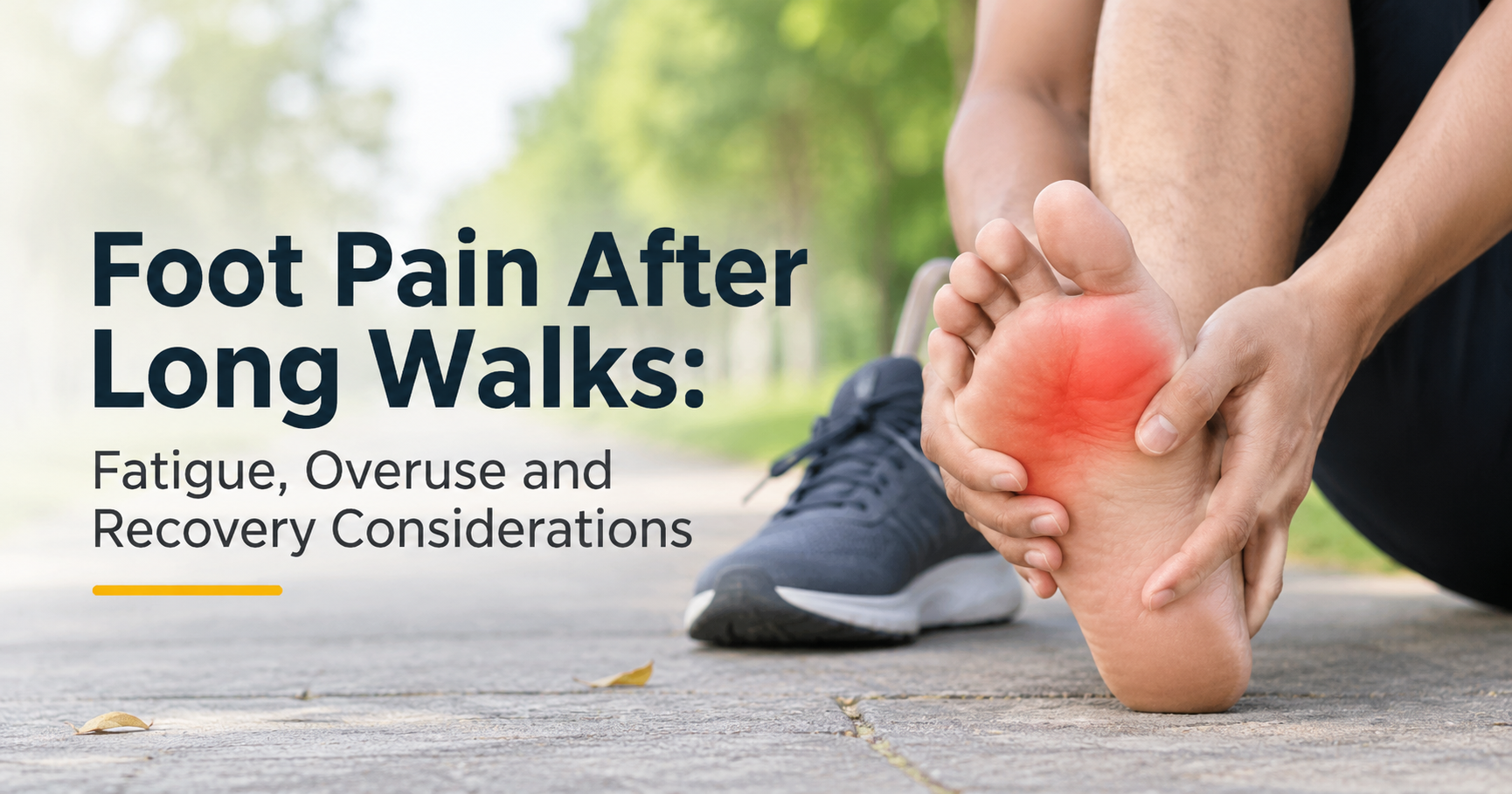
You enjoy a long walk, but by the evening your feet are aching, burning or throbbing. Sound familiar? Foot pain after long walks is one of the most common complaints among walkers, hikers, travelers, shop workers and anyone who spends hours on their feet. The good news is that in most cases the cause is simple, and the pain can be reduced or prevented with a few smart changes.
In this complete guide you will learn why your feet hurt after walking, how to read the pain location, what you can do at home tonight, how to choose supportive footwear, and the warning signs that mean it is time to see a professional.
Why Do Your Feet Hurt After Long Walks?
Each step sends a force of roughly one to one-and-a-half times your body weight through your foot. Over a long walk of 10,000 steps or more, that adds up to a lot of repeated stress on 26 bones, more than 30 joints and over 100 muscles, tendons and ligaments. When the load is greater than your feet are conditioned for, tissues become irritated and inflamed, and that is when you feel pain.
Common triggers include:
- Doing too much too soon – a sudden jump in distance, speed or hills.
- Poor footwear – thin soles, no arch support, a narrow toe box or shoes that are simply worn out.
- Foot structure – flat feet, high arches or overpronation (feet rolling inward).
- Tight muscles – stiff calves and Achilles tendons pull on the heel and arch.
- Extra body weight – more load with every step.
- Hard surfaces – concrete and tiles absorb very little shock.
Common Causes of Foot Pain After Walking
Pinpointing where it hurts is the fastest way to understand what is going on.

1. Plantar Fasciitis (Heel and Arch Pain)
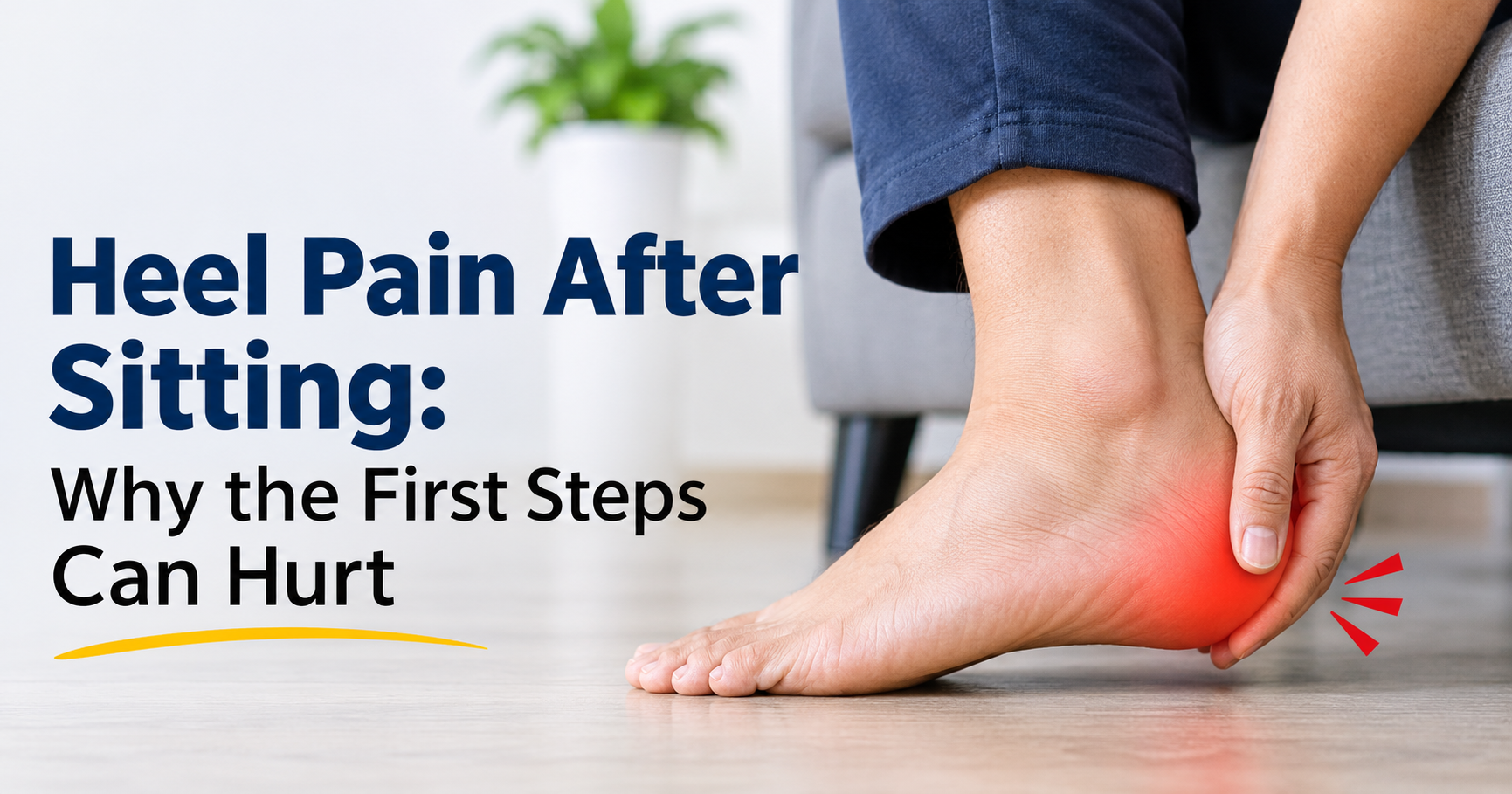
The plantar fascia is a thick band of tissue running from your heel to your toes. When it is overloaded it becomes inflamed, causing a stabbing pain in the heel that is often worst with the first steps in the morning or after sitting for a while. It is the most common cause of heel pain in walkers.
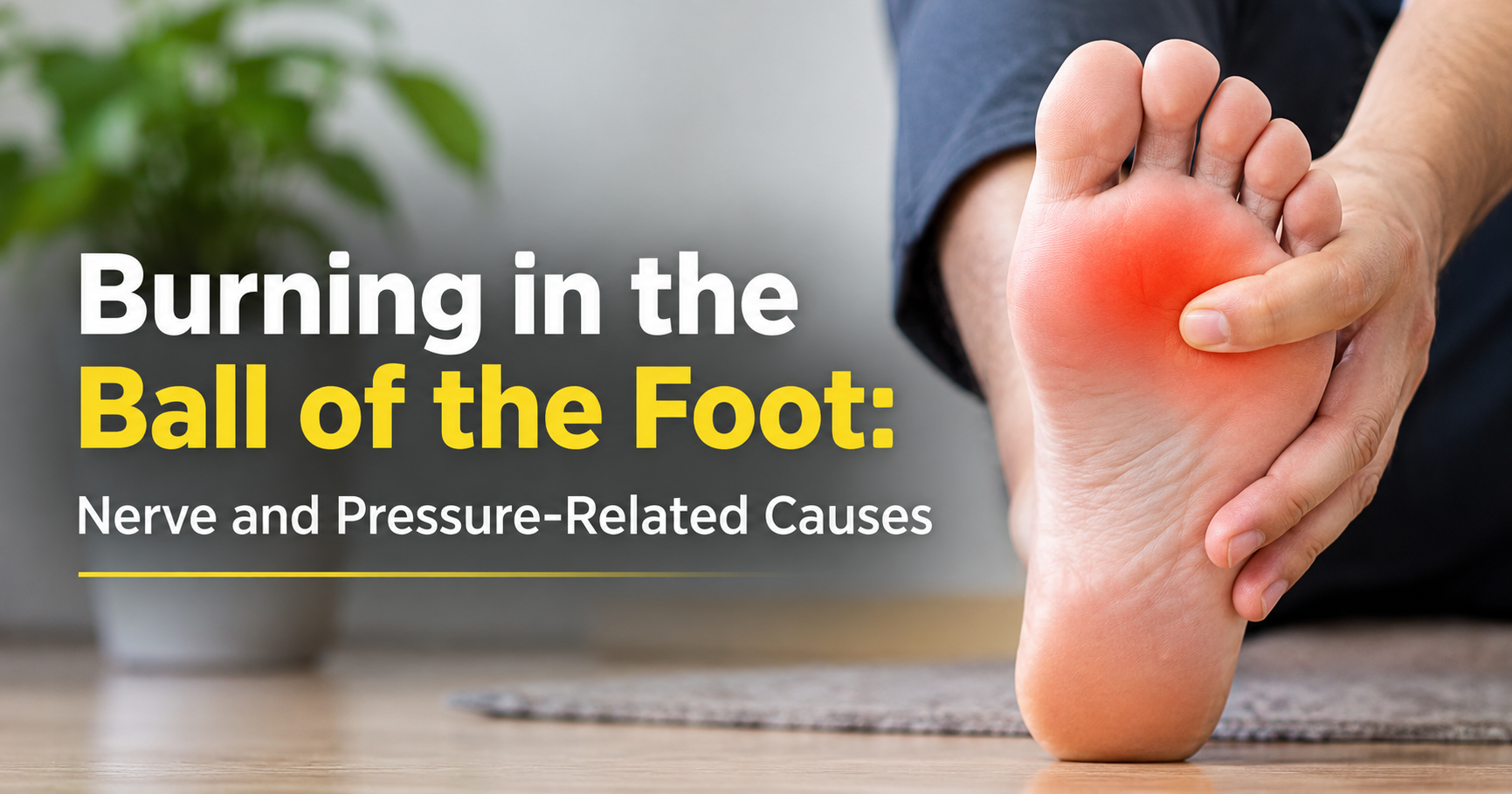
2. Metatarsalgia (Pain in the Ball of the Foot)
This is an aching, burning or bruised feeling under the ball of the foot, often made worse by thin-soled shoes, high heels or long walks on hard ground. It can feel like walking on a pebble.
3. Flat Feet or Fallen Arches
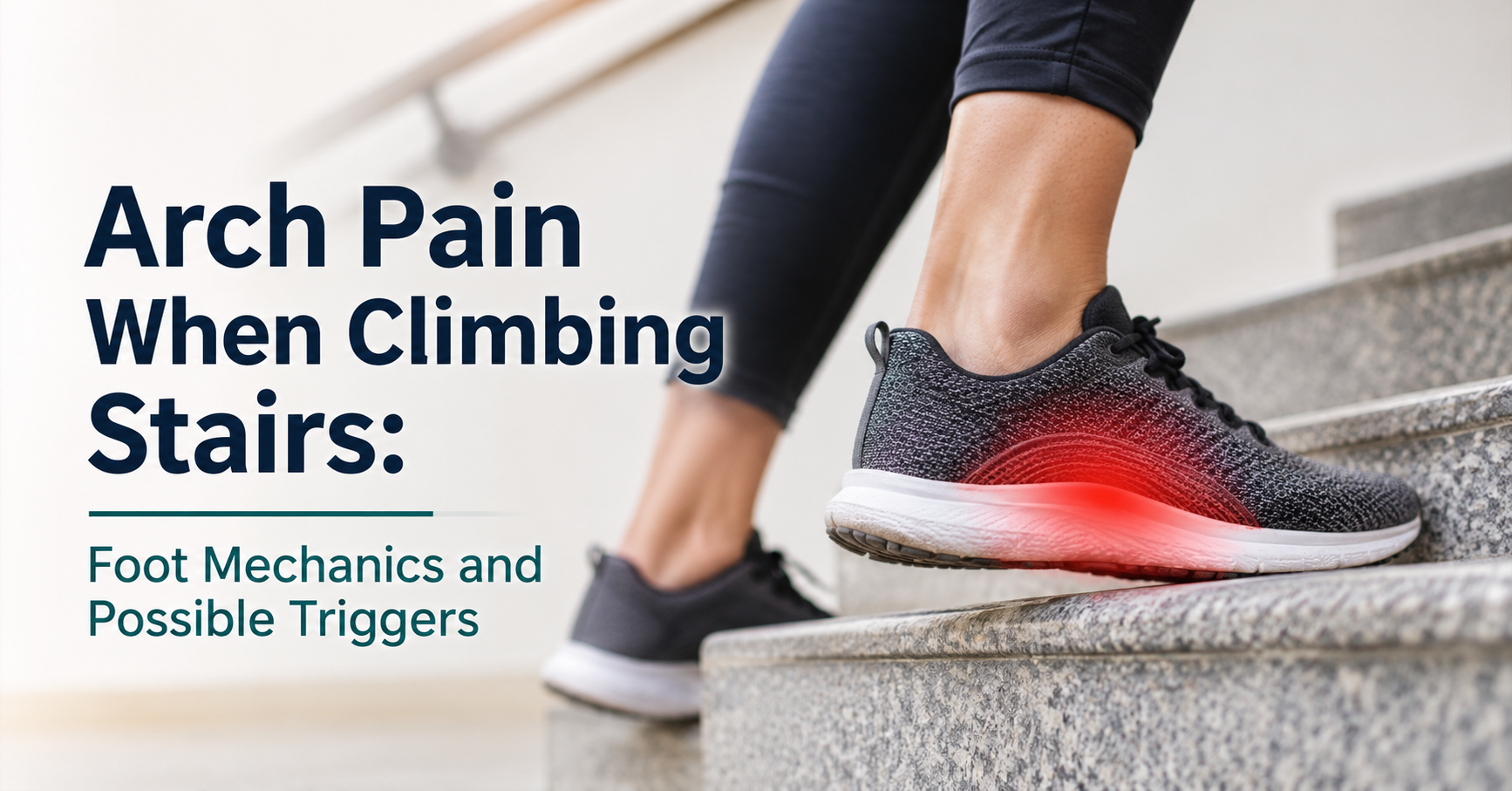
When the arch collapses, the foot rolls inward and strains ligaments and muscles. This causes an aching arch, tired feet and sometimes shin or knee discomfort.
4. Achilles Tendinitis
Pain and stiffness at the back of the heel or just above it, usually after increasing distance or walking uphill. The area may feel tender or slightly swollen.
5. Morton’s Neuroma
A thickening of nerve tissue between the toes, most often between the third and fourth. It feels like burning, tingling, numbness or a sensation of a folded sock under the toes.
6. Stress Reaction or Stress Fracture
Tiny cracks in a bone caused by repeated impact. Pain that gets steadily worse, is focused on one spot and hurts even at rest needs medical attention.
7. Blisters, Swelling and Tired Muscles
Friction from ill-fitting shoes or damp socks causes blisters, while long hours of activity can cause mild swelling and general fatigue. These are minor but can ruin a walk.
Quick Reference Table
| Pain Location | Likely Cause | Typical Feeling |
|---|---|---|
| Bottom of heel | Plantar fasciitis, heel spur | Sharp, stabbing, worst after rest |
| Back of heel | Achilles tendinitis | Tight, sore, stiff |
| Arch | Flat feet, ligament strain | Dull ache, fatigue |
| Ball of foot | Metatarsalgia | Burning, bruised, “pebble” feeling |
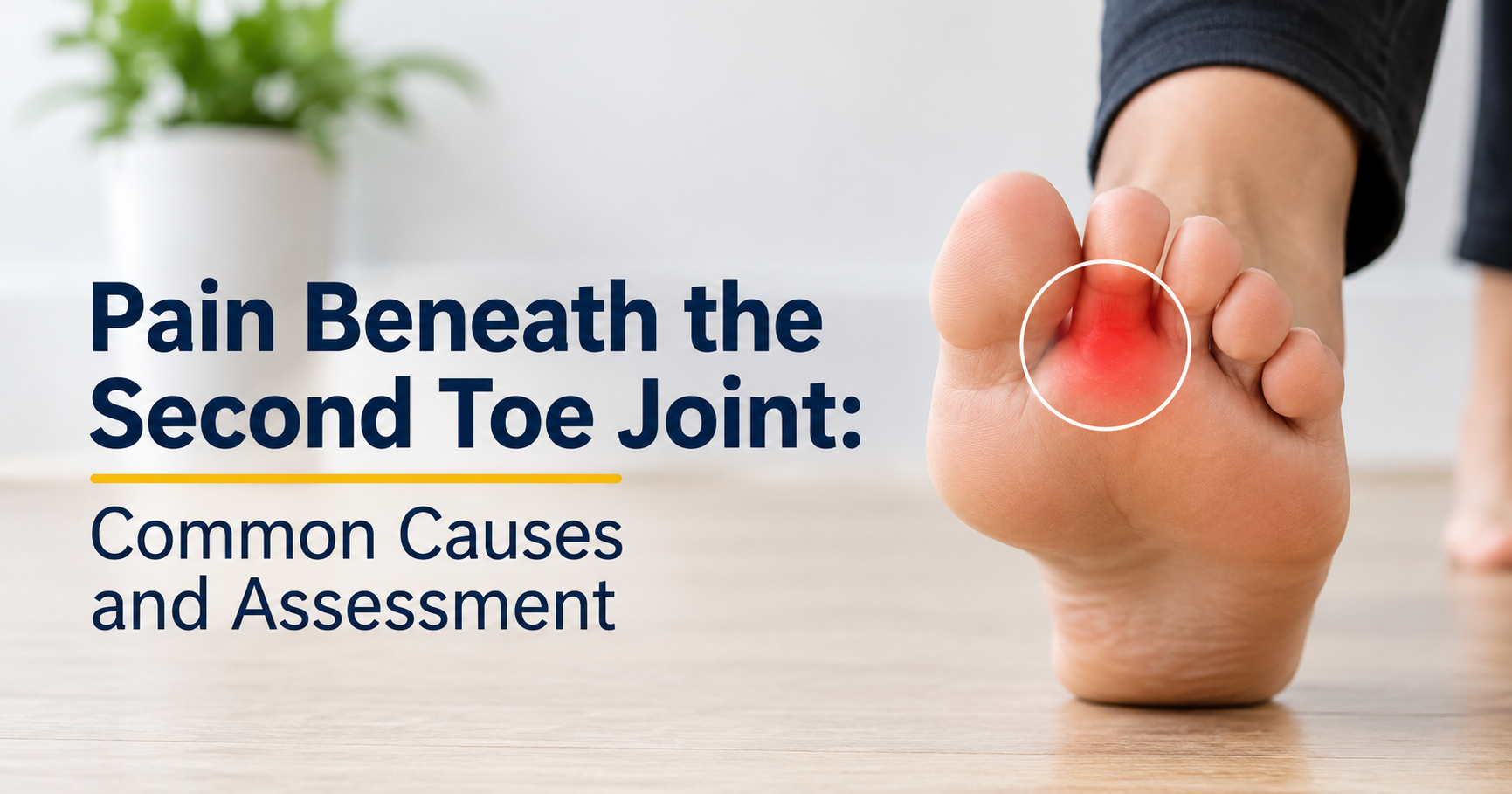
| Between toes | Morton’s neuroma | Tingling, numbness, burning |
| One precise bony spot | Stress fracture | Increasing pain, hurts at rest |
How to Relieve Foot Pain After a Long Walk
If your feet are sore right now, this evening routine can calm the pain and speed up recovery.

- Rest and unload. Sit down and take the weight off your feet for 20–30 minutes.
- Ice the sore area. Apply a cold pack wrapped in a thin cloth for about 15 minutes. This helps reduce inflammation, especially for heel and arch pain.
- Stretch gently. Stretch your calves and the bottom of your foot (details below). Never force a painful stretch.
- Roll the arch. Roll a tennis ball, massage ball or frozen water bottle under your foot for 2–5 minutes.
- Elevate. Lie down and raise your feet above heart level for 10–15 minutes to ease swelling.
Other helpful options: a warm foot soak with Epsom salt can relax tired muscles; a gentle self-massage from the toes toward the heel improves circulation; and, if you have no medical reason to avoid them, over-the-counter pain relievers may help short-term. Always follow the package directions or ask a pharmacist.
Best Stretches and Exercises for Walkers’ Feet
- Calf wall stretch: Place your hands on a wall, step one foot back with the heel down, and lean forward. Hold 30 seconds, repeat 3 times per leg.
- Plantar fascia stretch: Sit, cross one ankle over the opposite knee, pull your toes back toward your shin and hold 20–30 seconds.
- Towel scrunches: Place a towel on the floor and pull it toward you using only your toes. Do 2 sets of 15.
- Marble pick-up: Pick up small objects with your toes to strengthen the small foot muscles.
- Heel raises: Rise onto your toes slowly and lower for 3 seconds. Do 2–3 sets of 12 to strengthen calves and the Achilles.
- Toe spreads: Spread your toes wide, hold 5 seconds and relax. This improves foot control and balance.
How to Prevent Foot Pain When Walking Long Distances
Choose the Right Walking Shoes
Footwear is the single biggest factor. Shop in the afternoon when your feet are slightly swollen, wear the socks you usually walk in, and make sure there is about a thumb’s width of space in front of your longest toe. Replace walking shoes every 500–800 km (300–500 miles), or sooner if the cushioning feels flat.

Use Supportive Insoles
Quality arch-support insoles help distribute pressure, support the plantar fascia and reduce strain on the heel and ball of the foot. People with flat feet or high arches often notice the biggest difference. Choose an insole that matches your arch height rather than the thickest one available.
Wear Good Socks
Moisture-wicking, cushioned socks reduce friction and blisters. Avoid 100% cotton for long walks, since it holds sweat. Compression socks can ease swelling and leg fatigue if you walk or stand for many hours.
Build Up Gradually
Follow the “10% rule”: increase your weekly walking distance by no more than about 10%. Add hills and speed later, and alternate hard days with easy days.
Warm Up, Cool Down and Stay Consistent
Five minutes of ankle circles, calf stretches and easy walking prepares your feet, and a short cool-down stretch afterward helps prevent next-day stiffness.
Pick Better Surfaces and Manage Weight
Whenever possible walk on grass, dirt tracks or rubberized paths instead of concrete. Maintaining a healthy weight lowers the repeated load on your feet and joints.
Foot Care Products Worth Considering
The right gear will not replace stretching and rest, but it can make long walks far more comfortable. Here is what to look for in each category:
- Cushioned walking shoes: Look for a roomy toe box, good heel support, moderate cushioning and a flexible forefoot. Lightweight breathable uppers keep feet cool.
- Orthotic or arch-support insoles: Choose firm-but-cushioned designs with a deep heel cup. Gel-only insoles feel soft but may offer less structure.
- Compression socks: Graduated compression of 15–20 mmHg is common for everyday walking and travel.
- Plantar fasciitis night splints or arch sleeves: Useful if your first steps in the morning are painful.
- Foot massagers and massage balls: Electric shiatsu massagers or simple spiky balls help relax tight muscles after a long day.
- Toe separators and metatarsal pads: Helpful for ball-of-foot pain and toe crowding.
- Reusable hot and cold gel packs: Handy for both icing and soothing sore feet.
- Anti-blister products: Blister plasters and anti-chafe balm for longer hikes.
Lifestyle Habits That Help Your Feet
- Drink enough water to reduce cramps and swelling.
- Eat foods rich in calcium, vitamin D and magnesium for bone and muscle health.
- Avoid walking barefoot on hard floors for long periods if you have heel pain.
- Trim toenails straight across to avoid pressure and ingrown nails.
- Rotate between two pairs of walking shoes so cushioning can recover.
- Get adequate sleep, because tissue repair happens during rest.
When to See a Doctor
- Severe pain, or pain that does not improve after 1–2 weeks of home care
- Pain at rest or at night, or pain concentrated in one bony spot
- Visible swelling, bruising, redness or warmth
- Numbness, tingling or burning that keeps returning
- Difficulty putting weight on your foot
- Foot pain together with diabetes, poor circulation or a wound that heals slowly
A podiatrist or orthopedic specialist can examine your gait, take imaging if needed and recommend custom orthotics, physiotherapy or other treatments. This article is for general information and is not a substitute for professional medical advice.
Frequently Asked Questions
Why do my feet hurt after walking for a long time?
Mostly because of repeated stress on tissues that are not conditioned for the distance, combined with unsupportive shoes, tight calves or foot structure issues such as flat feet.
How long does foot pain after walking last?
Simple muscle tiredness fades within a day or two. Conditions such as plantar fasciitis can take several weeks to months to settle, especially if you keep overloading the foot.
Is it normal for feet to hurt after walking 10,000 steps?
Mild tiredness can be normal if you are new to it, but sharp, burning or persistent pain is not. It signals that your shoes, technique or training load should be reviewed.
Can walking shoes cause foot pain?
Yes. Shoes that are too tight, too flat, too old or the wrong shape for your foot are among the top causes of pain.
Should I stop walking if my feet hurt?
Reduce your distance and intensity rather than quitting completely, unless the pain is sharp or getting worse. Swap in low-impact activities like swimming or cycling while you recover.
Are insoles really worth it?
For many people with arch or heel pain they are. A well-fitted insole adds support and shock absorption, though it works best alongside stretching and good shoes.
Final Thoughts
Foot pain after long walks does not mean you have to give up the activity you love. Pay attention to where it hurts, give your feet proper recovery, stretch and strengthen regularly, and invest in shoes and insoles that fit your foot type. Increase your distance gradually, and see a professional if the pain is severe or persistent. With the right care, your feet can carry you comfortably for many miles to come.