

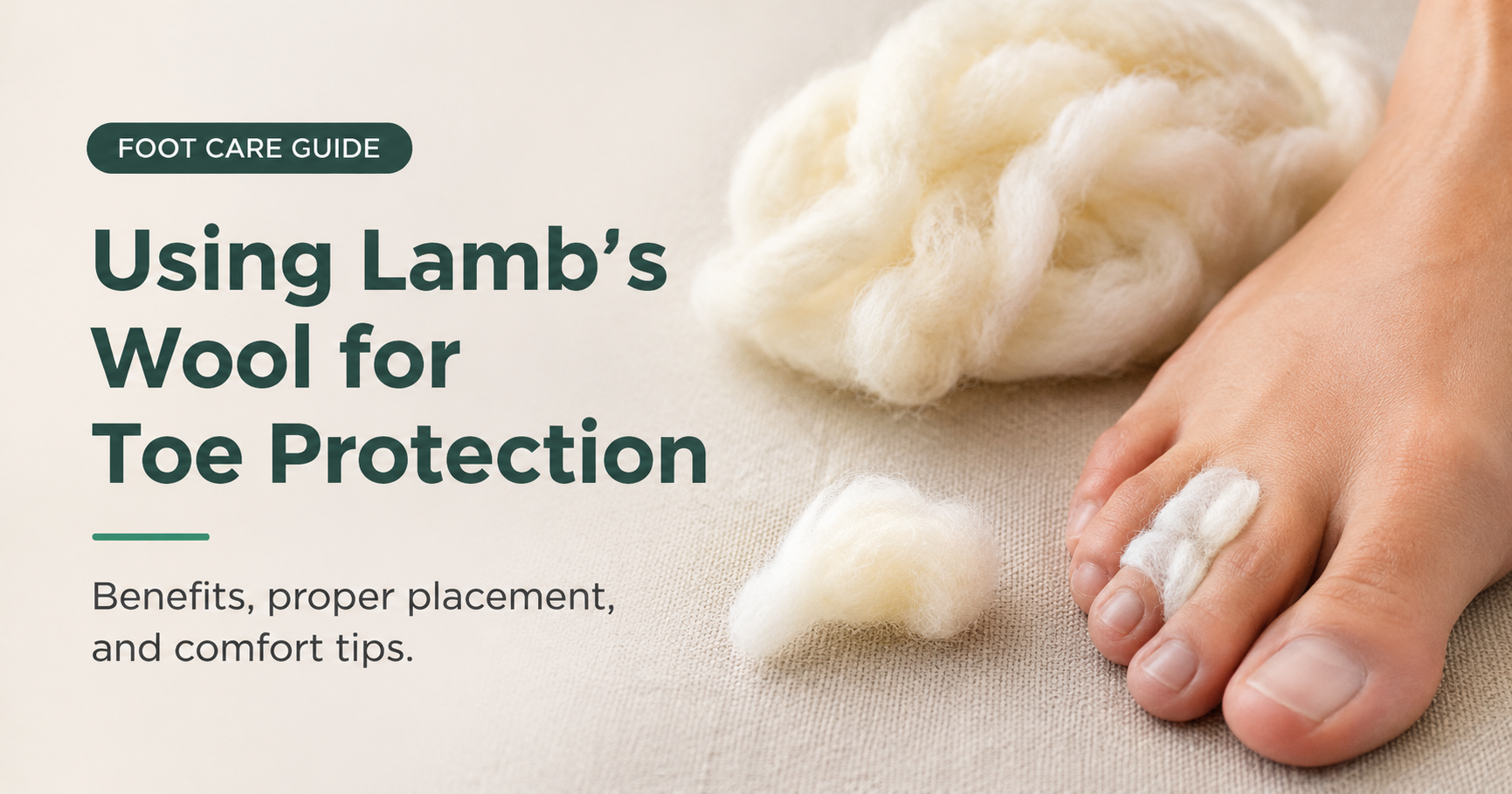

If your toes rub, blister or ache inside your shoes, you do not always need a special device to get relief. Lamb’s wool is a soft, breathable, natural fiber that has been used for generations by hikers, runners, dancers and everyday walkers to cushion sensitive toes. It is inexpensive, easy to find, and simple to shape into exactly the amount of padding you need.
This guide explains how to use lamb’s wool for toe protection and comfort step by step: what it is, where it helps most, how to apply it safely, how to fix common problems, and when to choose something else.
Key Takeaways
- Lamb’s wool is a loose, fluffy wool fiber that can be pulled, teased and shaped into thin wisps, loose wraps or soft cushion pads.
- It reduces friction, absorbs a little moisture and adds gentle padding without the stickiness of tape or the stiffness of some foam products.
- Use a small amount. Padding that is too thick can crowd your toes and increase pressure instead of relieving it.
- Replace it every day, or sooner if it becomes damp or flattened.
- People with diabetes, numb feet, poor circulation, open wounds or a wool or lanolin sensitivity should speak with a healthcare professional before using it.
What Is Lamb’s Wool?
Lamb’s wool is wool fiber taken from young sheep. It is soft and slightly springy, and it is often sold in small bags or tubes in the foot care section of pharmacies and shoe shops. For toe care, the fiber is usually cleaned and carded so it comes as a loose, airy tuft that you can pull apart with your fingers.
Several natural properties make it useful for feet:
- Soft cushioning: The crimped fibers trap air, which creates a springy layer between skin and shoe.
- Breathability: Wool lets air move around the skin better than many plastic or rubber-based pads.
- Moisture handling: Wool can take up a noticeable amount of moisture vapor before it feels wet, which helps the skin stay more comfortable.
- Easy shaping: You control the thickness, size and position, so it adapts to small toes, large toes, overlapping toes and uneven joints.
- Natural lanolin: Some products keep a little of the sheep’s natural wax, which gives the fiber a smooth, slightly conditioning feel.
Why Toes Need Protection
Toes are small, they sit at the very front of the foot, and they are pushed against the inside of the shoe thousands of times a day. Friction, pressure and trapped moisture are the main causes of discomfort. Over time they can lead to:
- Blisters from repeated rubbing, especially in new shoes, on long walks or during sport.
- Corns and calluses, which are thickened skin that forms in response to pressure.
- Soft corns between the toes, where skin stays damp and presses against bone.
- Irritation over bent toes such as hammertoes, where the top of the joint rubs on the shoe.
- Pressure at the toe tip when the toe box is short or shallow.
- Black or bruised toenails from repeated impact, common in running and hiking.

Where Lamb’s Wool Helps Most
1. The tip of the toe
If your toe touches the front of the shoe, a small, fluffy pad of wool can absorb some of the impact. This is useful for people who walk downhill, run long distances or wear shoes with a shallow toe box.
2. Over the top of a bent toe or corn
A hammertoe, claw toe or hard corn creates a raised spot that rubs on the upper part of the shoe. A soft layer of wool placed over the joint spreads the pressure over a wider area and reduces friction.
3. Between the toes
Soft corns and irritation between the toes are made worse by moisture and pressure. A thin, flat wisp of wool can separate the skin surfaces and give a gentle cushion. It should be very thin so it does not squeeze the toes together.
4. The side of the little toe
The outer edge of the fifth toe often rubs against the shoe wall. A light wrap of wool around the toe, or a small pad placed on the side, can reduce blistering.
5. Near a bunion or a prominent joint
Wool can add a little softness around the inner joint of the big toe, but it will not change the shape of the foot. If a bunion is painful, wider shoes are usually the most effective first step.
6. Sports and special footwear
Dancers have long used lamb’s wool inside pointe shoes, and hikers and runners often use it to prevent hot spots on long outings. In these cases the wool is placed on known trouble areas before the activity begins.
What You Need
- A small bundle of clean, pure lamb’s wool
- Clean, dry feet
- Clean hands
- Well-fitting socks, ideally seamless or thin
- Footwear with enough room in the toe box
- Small scissors if you need to trim the pad (optional)

Step-by-Step: How to Use Lamb’s Wool on Your Toes
Step 1: Find the problem spot
Notice exactly where you feel rubbing or pressure. Look for redness, a warm spot, or a shiny patch of skin. Placing the wool exactly on the friction point is more effective than covering a large area.
Step 2: Clean and dry your feet
Wash your feet with mild soap and dry them thoroughly, especially between the toes. Wool will not stay in place well on damp or oily skin, and moisture trapped against the skin can make irritation worse.
Step 3: Pull off a small tuft
Gently pull a small piece from the bundle. Start smaller than you think you need, roughly the size of a pea for a single toe and a little larger for a pad. You can always add more, but it is hard to fix a pad that is too bulky.
Step 4: Tease and fluff the fibers
Use your fingertips to loosen the fibers until the wool looks light, airy and even. Remove any dense lumps. Lumpy wool can create new pressure points. For a thin layer, pull the tuft apart sideways until it looks almost see-through.
Step 5: Shape it for the job
- Toe tip: Roll the wool lightly into a small, soft oval and place it over the end of the toe.
- Top of a joint: Flatten the wool into a cushion about 3 to 5 mm thick and lay it over the spot.
- Between toes: Use a very thin, flat wisp and tuck it in gently. It should never feel tight.
- Around a toe: Wrap one or two loose turns around the toe, leaving the nail and tip comfortable.

Step 6: Put on your sock and shoe
Pull your sock on carefully so the wool does not shift. A thin sock over the wool helps hold it in place. Then put on your shoe and check that your toes still have room to move.
Step 7: Walk and adjust
Walk around for a few minutes. If the shoe feels tighter, remove some wool. If you still feel rubbing, reposition the pad slightly. The right amount should feel almost unnoticeable.
Step 8: Replace it daily
Throw the used wool away at the end of the day, or earlier if it becomes damp, flat or dirty. Do not reuse it, because compressed, damp wool loses its cushioning and can hold bacteria.
Lamb’s Wool Compared With Other Toe Protection Options
| Option | Best for | Strengths | Limitations |
|---|---|---|---|
| Lamb’s wool | Tips, joints, between toes, blister prevention | Breathable, adjustable, inexpensive, soft | Single day use, can shift or flatten |
| Gel toe caps and sleeves | Corns, tips, repeated friction | Washable, reusable, stay in place | Can feel warm and add bulk in tight shoes |
| Moleskin or padded tape | Flat areas, hot spots | Thin and sticks to skin | Adhesive can irritate skin and traps moisture |
| Foam pads | Stable corns and joint pressure | Firm, consistent cushioning | Less breathable and can be stiff |
| Toe spacers | Overlapping or crowded toes | Keeps toes apart, reusable | Needs enough toe box room |
Lamb’s wool is a good first choice when you want something light, adjustable and breathable. Many people keep a small bundle in a bag or drawer for the days they need extra help, and use a reusable option such as a gel sleeve for daily protection.
Tips for Better Results
- Less is more. A thin, even layer protects better than a big wad.
- Check your shoe fit first. Shoes should have about a thumb’s width of space beyond your longest toe and a toe box that is wide enough. Wool cannot fix shoes that are simply too small.
- Wear moisture-friendly socks. Wool or technical blend socks that move moisture away from the skin pair well with lamb’s wool.
- Prepare before activity. Apply wool before a long walk, hike or run, not after the blister has already formed.
- Keep a small pack with you. A tiny amount in a zip bag is easy to carry for emergency use on the trail or at work.
- Store it dry. Keep the bundle in a sealed container away from damp and pests so it stays clean and fluffy.
Common Problems and Simple Fixes
- The wool keeps shifting. Use a thinner sock over it, or tuck the pad under the toe slightly so the sock holds it in place.
- The wool bunches into a ball. Tease the fibers more before applying and avoid very tight wraps.
- The shoe feels too tight. Use less wool or remove it. Try a thinner pad, a wider shoe, or a different type of protection.
- The area stays damp. Change socks and wool during the day, and dry your feet well before reapplying.
- You feel itching or irritation. Remove the wool right away and wash the skin. You may be sensitive to wool or lanolin.
Who Should Be Careful
Lamb’s wool is gentle for most people, but some situations call for extra caution:
- Diabetes, neuropathy or reduced feeling in the feet: You may not notice a pad that is too tight or rubbing. Check with your doctor or podiatrist first, and inspect your feet daily.
- Poor circulation: Wraps that are too snug can reduce blood flow to the toes. Avoid wrapping tightly.
- Open sores, infected skin or deep cracks: Do not place loose fibers directly on broken skin. Seek care for the wound.
- Wool or lanolin allergy: Choose a non-wool alternative such as a gel or foam product.
- Ingrown toenails: Do not push wool under a painful or infected nail yourself. A podiatrist can advise on safe care.
When to See a Foot Specialist
Lamb’s wool is meant for comfort and friction control. It does not treat the underlying cause of toe problems. Book an appointment with a podiatrist or doctor if you notice:
- Pain that continues or gets worse despite padding and better shoes
- Redness, swelling, warmth, pus or a bad smell
- A corn or callus that keeps coming back or bleeds
- A toe that is stiff, deformed or becoming more crooked
- Numbness, tingling or color changes in the toes
- Any foot wound if you have diabetes
Frequently Asked Questions
Is lamb’s wool safe to use every day?
For most healthy adults, yes, as long as the skin is intact, the pad is thin, and you replace it daily. Take a day off if you notice irritation and look at the skin each evening.
Can lamb’s wool prevent blisters?
It can help reduce the friction that causes blisters when it is placed on a known hot spot before activity. It works best together with well-fitting shoes and good socks.
How much lamb’s wool should I use on one toe?
Start with a tuft about the size of a pea and tease it out until it is light and even. For a cushion pad, aim for roughly 3 to 5 mm thick once it is in the shoe.
Can I use lamb’s wool for corns?
It can cushion a corn and reduce rubbing, which often makes it more comfortable. It will not remove the corn. Reducing the pressure with better shoes and, if needed, professional care is what helps it go away.
Should I wear lamb’s wool under or over my sock?
It is usually placed directly on the toe, then covered by a thin sock. For blister prevention on the foot’s surface, some people place it over a thin liner sock instead. Use whichever keeps it in place without adding bulk.
Can lamb’s wool be washed and reused?
It is designed for single use. Once it is compressed or damp it loses its springiness, so a fresh tuft each day gives the best comfort and hygiene.
Does lamb’s wool help with sweaty toes?
It can take up a little moisture and feels less clammy than some synthetic pads, but it is not a treatment for heavy sweating. Change socks and wool during the day if your feet get damp.
Final Thoughts
Lamb’s wool is a simple, natural way to protect sensitive toes. A small, well-placed tuft can cushion a tender tip, soften pressure over a bent joint, separate crowded toes and reduce the friction that leads to blisters. The best results come from using a small amount, applying it to clean dry skin, checking that your shoes have enough room, and replacing the wool every day.
If pain, skin changes or deformity continue, treat the wool as a short-term comfort aid and have your feet examined by a professional so the cause can be addressed.
Disclaimer: This article is for general information and does not replace advice from a doctor or podiatrist. If you have diabetes, circulation problems, numbness or a foot wound, speak with a healthcare professional before using any padding product.