

Guide to Using Compression Wraps for Ankle Swelling

Puffy, heavy, tight-feeling ankles are one of the most common complaints people bring to pharmacists, physical therapists and doctors. Whether the swelling comes from a twisted ankle, a long day on your feet, a flight, or a chronic circulation issue, an ankle compression wrap is one of the simplest and most widely used tools for managing it at home.
But compression wraps are not one-size-fits-all. Wrapping too loosely does little, and wrapping too tightly can cause real problems. This guide explains how compression works, which type of wrap suits your situation, how to apply it step by step, how long to wear it, and when you should talk to a healthcare professional before using one.
Table of Contents
- What Causes Ankle Swelling?
- How Compression Wraps Reduce Swelling
- Types of Compression Wraps for the Ankle
- How to Choose the Right Compression Wrap
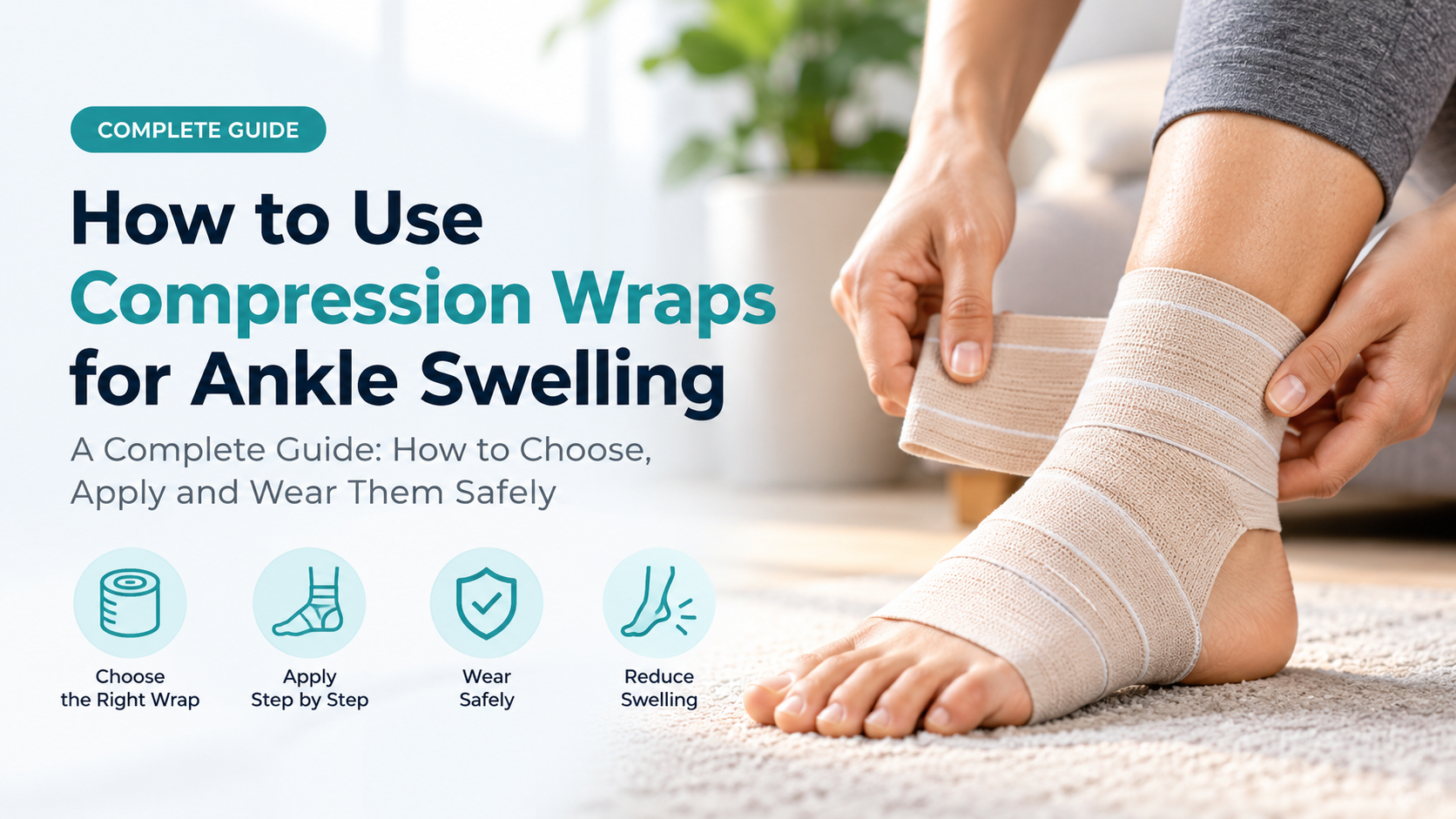
- Step-by-Step: How to Apply an Elastic Compression Wrap
- How Long Should You Wear a Compression Wrap?
- Combining Compression with Other Swelling Relief Methods
- Who Should Not Use Compression Wraps Without Medical Advice
- Warning Signs: When to See a Doctor
- Caring for Your Compression Wrap
- Common Mistakes to Avoid
- Frequently Asked Questions
- Final Thoughts
What Causes Ankle Swelling?
Ankle swelling, medically called peripheral edema (or localized edema when it follows an injury), happens when excess fluid collects in the tissues around the ankle joint. Understanding the cause helps you decide whether a compression wrap is appropriate.

- Sprains and strains: When ligaments or muscles are injured, the body sends extra fluid and inflammatory cells to the area, causing swelling, warmth and bruising.
- Prolonged standing or sitting: Gravity pulls fluid downward. Without calf muscle movement to push it back toward the heart, fluid pools around the ankles.
- Chronic venous insufficiency: When the valves inside leg veins weaken, blood flows backward and collects in the lower leg.
- Pregnancy and hot weather: Fluid retention increases, and swelling often worsens toward the end of the day.
- Arthritis and overuse: Inflamed joints and tendons can look and feel puffy.
- Medications: Some blood pressure drugs, steroids, hormonal medicines and anti-inflammatories can cause fluid retention.
- Underlying medical conditions: Heart, kidney or liver problems can cause swelling in both legs and need medical evaluation.
How Compression Wraps Reduce Swelling
A compression wrap applies gentle, controlled pressure to the ankle and lower leg. This pressure works in several ways:
- Limits fluid buildup: External pressure makes it harder for fluid to leak out of small blood vessels into surrounding tissue.
- Supports fluid return: Pressure helps veins and lymphatic vessels move fluid back toward the heart.
- Provides joint support: A wrap gives light stability to the ankle, which many people find reassuring after a minor injury.
- Reduces the heavy, achy feeling: Many users report that their legs feel lighter and less fatigued by the end of the day.
Compression is measured in millimeters of mercury (mmHg). Pressure is usually highest at the ankle and gradually decreases up the leg, which encourages fluid to move upward.
Types of Compression Wraps for the Ankle
| Type | Best For | Things to Note |
|---|---|---|
| Elastic (ACE-style) bandage | Fresh sprains, adjustable wrapping, short-term use | Pressure depends on your technique; can loosen with movement |
| Self-adhesive (cohesive) wrap | Active use, staying in place without clips | Sticks to itself, not to skin; easy to over-tighten |
| Adjustable wrap with hook-and-loop straps | Daily swelling, people who want easy on and off | Pressure is easy to adjust and reapply consistently |
| Compression sleeve or ankle sock | Mild, all-day swelling and travel | Needs correct sizing; less adjustable |
| Gel or cold-pack compression wrap | Short sessions after activity or minor injury | Protect the skin from direct cold; limit session time |
How to Choose the Right Compression Wrap
When comparing products, look at these key factors rather than relying on marketing claims alone:
1. Compression Level
Mild compression (roughly 15 to 20 mmHg) is often used for tired legs and light swelling. Moderate compression (roughly 20 to 30 mmHg) is commonly used for more noticeable swelling. Firmer levels should generally be used only under medical guidance. If you are unsure, start at the lighter end and ask a healthcare professional for advice.
2. Material and Breathability
Look for blends of cotton, nylon and spandex that stretch evenly and let the skin breathe. Moisture-wicking fabric helps if you plan to wear the wrap for several hours. If you have sensitive skin, choose latex-free options.
3. Size and Fit
For sleeves and stockings, measure your ankle circumference (and sometimes calf) following the sizing chart for that specific product. For bandages, a width of about 3 to 4 inches (7.5 to 10 cm) is common for the ankle and foot.
4. Adjustability
If your swelling changes during the day, an adjustable wrap with straps lets you fine-tune the pressure as the ankle size changes.
5. Ease of Use
If you have limited hand strength or flexibility, simple hook-and-loop closures or pull-on sleeves are usually easier than a long bandage.
6. Durability and Washability
Elastic loses its stretch over time. Products that hold their shape after repeated washing give better value and more consistent results.
Step-by-Step: How to Apply an Elastic Compression Wrap
Proper technique matters more than the brand. Follow these steps for a standard elastic bandage:

- Prepare: Sit comfortably with your knee slightly bent and your foot supported, with the foot held at a right angle to the leg. Make sure the skin is clean and dry. The best time to wrap is in the morning, before swelling builds up.
- Start at the base of the toes: Place the end of the bandage at the ball of the foot, leaving the toes uncovered so you can check color and warmth. Make two loose anchor turns.
- Spiral toward the heel: Wrap upward across the arch, overlapping each turn by about half the width of the bandage. Keep an even, moderate stretch of roughly half the bandage’s full stretch.
- Make a figure-8 around the ankle: Bring the bandage around the back of the ankle, across the top of the foot, under the arch and back around the ankle. Repeat once or twice so the heel and ankle joint are supported.
- Continue above the ankle: Spiral up the lower leg, keeping the pressure slightly lower as you move upward. Stop a few inches above the ankle bone, well below the knee.
- Secure the end: Fasten with the clips provided or medical tape, never with a safety pin that might scratch the skin.
- Check circulation: Wiggle your toes. They should stay warm and pink. Loosen the wrap right away if you feel numbness, tingling, throbbing, coldness or if the toes turn pale, blue or darker.
Pro tip: The wrap should feel snug and supportive, like a firm hug, not like it is cutting off circulation. Pain is a signal to unwrap and start again.
How Long Should You Wear a Compression Wrap?
- For a minor sprain or injury: Many people use a wrap during the first several days while swelling is most active. Follow the advice of your healthcare provider for your specific injury.
- For daily swelling from standing or travel: Put the wrap on in the morning and remove it before bed, unless a clinician has told you otherwise.
- Overnight: Most elastic wraps should be taken off at night, because lying down reduces the pull of gravity and tight wraps can restrict circulation during sleep.
- Re-wrap if it slips: A bunched or loose wrap can create uneven pressure. Remove it and re-apply it smoothly.
If swelling continues for more than a few days despite compression and rest, or keeps coming back, get it checked rather than relying on a wrap alone.
Combining Compression with Other Swelling Relief Methods
Compression works best as part of a broader plan:
- Elevation: Raise your foot above heart level for 15 to 30 minutes several times a day, resting it on pillows while lying down.
- Rest and protection: After an injury, reduce activities that stress the ankle during the first days.
- Cold therapy: For fresh injuries, a cold pack wrapped in a thin cloth for about 10 to 15 minutes at a time can help. Never apply ice directly to the skin.
- Gentle movement: Ankle circles, foot pumps and calf raises activate the calf muscle pump, which moves fluid out of the lower leg.
- Regular walking breaks: If you sit or stand for long periods, change position and move every 30 to 60 minutes.
- Hydration and balanced salt intake: Very salty meals can worsen fluid retention in some people.
- Comfortable footwear: Supportive shoes with enough room avoid adding extra pressure on swollen ankles.
Who Should Not Use Compression Wraps Without Medical Advice
Compression is safe for many people, but it can be harmful in certain situations. Talk to a doctor before using a wrap if you have any of the following:
- Known or suspected peripheral artery disease or poor blood flow to the legs
- A suspected or confirmed blood clot (deep vein thrombosis)
- Heart failure or other serious heart conditions
- Diabetes with reduced feeling in the feet (neuropathy)
- Skin infection, open wounds, weeping skin or severe skin conditions on the leg
- Known allergies to latex or wrap materials

Warning Signs: When to See a Doctor
Seek medical help promptly if you notice any of these:
- Sudden swelling in one leg with pain, warmth or redness
- Swelling together with chest pain, shortness of breath or dizziness (seek emergency care)
- Severe pain, an inability to bear weight, or an obviously deformed ankle after an injury
- Swelling that does not improve after several days or keeps getting worse
- Skin that looks shiny, tight, discolored or has sores
- Numbness, tingling, coldness or color changes in the toes while wearing a wrap
Caring for Your Compression Wrap
- Wash according to the manufacturer’s instructions, usually by hand or on a gentle cycle with mild detergent.
- Avoid fabric softener and bleach, which can damage the elastic fibers.
- Air dry away from direct heat or sunlight.
- Keep a spare so you can rotate wraps while one is drying.
- Replace wraps when they stop snapping back, look overstretched or become frayed. Many last around three to six months with regular use.
Common Mistakes to Avoid
- Wrapping too tight: More pressure is not better. Excess pressure can limit circulation and damage nerves or skin.
- Uneven wrapping: Gaps, wrinkles and bunched areas cause pressure points.
- Wrapping only the ankle: Starting right at the joint can trap swelling in the foot. Begin at the base of the toes.
- Sleeping in a tight wrap: Remove it at night unless instructed otherwise.
- Ignoring pain or numbness: These are warning signs, not something to push through.
- Using compression as the only fix: Persistent swelling needs the underlying cause identified.
- Choosing the wrong size: Always measure rather than guess.
Frequently Asked Questions
Do compression wraps really help ankle swelling?
For many types of swelling, such as after a minor sprain or a long day of standing, compression is a well-established way to limit fluid buildup and improve comfort. It does not treat every underlying cause, so ongoing swelling should still be assessed.
How tight should an ankle compression wrap be?
Snug and supportive but comfortable. You should be able to slide a fingertip under the edge, and your toes should remain warm and a normal color.
Can I wear a compression wrap all day?
Many people wear one during waking hours for daytime swelling and remove it at night. Follow the advice of your healthcare provider if you have a medical condition.
Is it better to use a bandage or a compression sleeve?
Bandages are adjustable and suit fresh injuries. Sleeves and adjustable strap wraps are more convenient for daily use because they give more consistent pressure with less effort.
Should I use a wrap together with ice?
After a fresh injury, short sessions of cold therapy combined with compression and elevation are commonly recommended. Always keep a layer of cloth between ice and skin.
Can compression wraps help swelling during pregnancy or flights?
Many people use compression for travel-related or pregnancy-related swelling, but it is wise to confirm with a doctor or midwife first, especially if swelling is sudden or severe.
How do I know if my wrap is too tight?
Numbness, tingling, throbbing, cold toes, pale or bluish skin, or increased pain are all signs the wrap is too tight. Remove it and re-apply it more loosely.
Final Thoughts
Compression wraps are a practical, affordable and low-risk way to manage many cases of ankle swelling when they are chosen and applied correctly. The essentials are simple: pick the right type and size, wrap from the toes upward with even pressure, remove the wrap at night, pair it with elevation and gentle movement, and pay attention to your body’s warning signs.
Most importantly, remember that swelling is a symptom, not a diagnosis. If it is sudden, one-sided, painful, or keeps returning, talk to a healthcare professional so the underlying cause can be addressed.
Disclaimer: This article is for general informational purposes only and is not a substitute for professional medical advice, diagnosis or treatment. Always consult a qualified healthcare provider about your specific condition before using compression products.