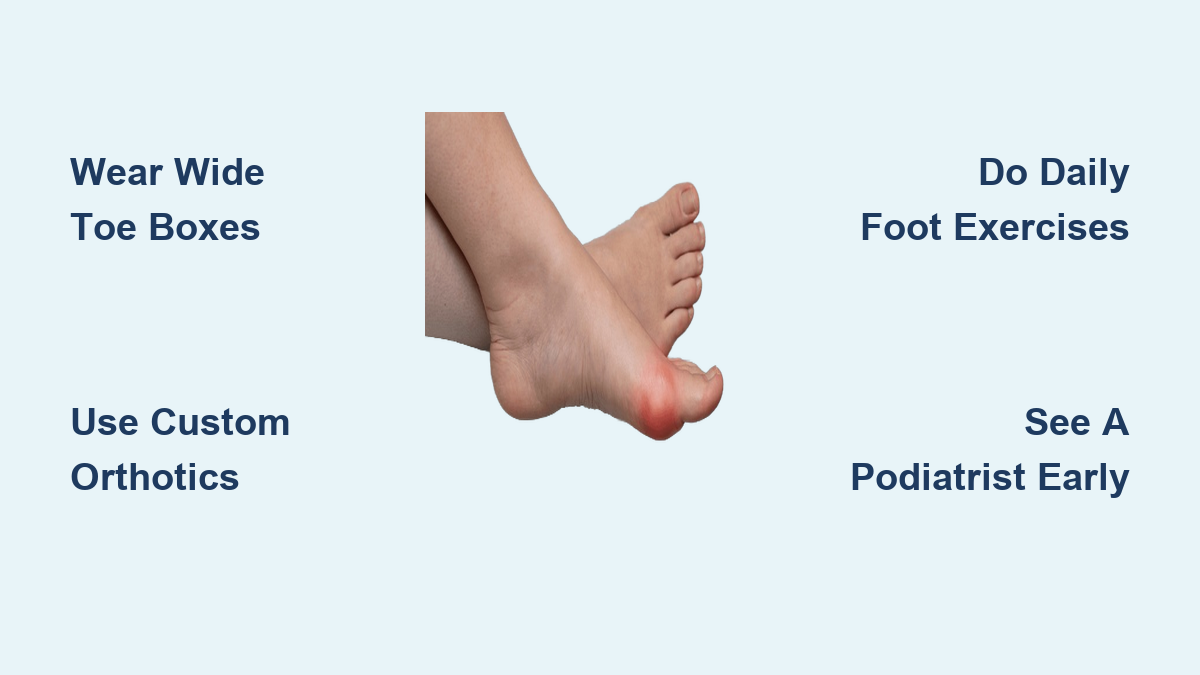
If you’ve noticed a hard bump forming at the base of your big toe, you’re likely dealing with a bunion, medically known as hallux valgus. This progressive foot deformity occurs when the metatarsophalangeal (MTP) joint shifts out of alignment, causing the big toe to drift toward the second toe while the metatarsal bone pushes outward. Over time, this misalignment worsens—unless you take action.
While genetics can predispose you to bunions, daily habits and footwear choices are major drivers of progression. The good news? You don’t have to resign yourself to worsening pain or surgery. By adopting targeted, science-backed strategies early, you can stop bunions from getting worse and preserve your foot function. This guide reveals how to protect your feet through proper shoes, orthotics, exercises, and professional care—so you stay active, pain-free, and mobile for years.
Wear Bunion-Friendly Shoes to Reduce Toe Pressure
The most powerful step to prevent bunion progression is choosing the right footwear. Shoes that squeeze your toes force the big toe into an unnatural angle, accelerating joint misalignment over time.
Choose Wide Toe Box Designs for Natural Toe Splay
A wide toe box allows your toes to lie flat and spread naturally, reducing pressure on the MTP joint. Look for shoes with both width and depth in the forefoot so your bunion doesn’t rub against stiff upper materials.
What to look for:
– Visible space (about a thumb’s width) in front of your longest toe when standing
– Soft, flexible uppers like leather, mesh, or stretch fabric
– Round or square toe shapes—never pointed
– Roomy midfoot and ball-of-foot areas
Recommended brands:
Altra, Hoka, New Balance, Brooks, and Propet design models with wide forefeet and strong support—ideal for bunion management. These shoes mimic barefoot foot positioning, helping maintain natural alignment.
Avoid High Heels and Tight Footwear That Push the Toe Joint
Heels over 1–2 inches shift your body weight forward, increasing pressure on the ball of the foot and forcing the big toe inward. Combine this with narrow toe boxes—common in pumps, stilettos, or ballet flats—and you create the perfect environment for bunion worsening.
Avoid:
– Pointed-toe dress shoes
– Slip-on loafers or flats with no adjustability
– Shoes with no arch support or heel counter
Pro tip: Shop for shoes in the evening, when feet are naturally more swollen, to ensure a true fit. Always try shoes on while standing and walking to test comfort.
Prioritize Arch Support and Adjustable Fit
Flat feet or overpronation destabilize the MTP joint, increasing bunion risk. Shoes with built-in arch support help realign your foot and reduce strain.
Key features:
– Firm heel counters for rearfoot stability
– Laces, straps, or Velcro closures to customize fit
– Removable insoles—so you can insert custom orthotics
Studies show wearing supportive, properly fitted shoes daily can reduce pressure on the big toe joint by up to 30%, slowing structural changes.
Use Custom Orthotics to Correct Foot Mechanics

Over-the-counter insoles may cushion your feet, but only custom orthotics can correct the biomechanical imbalances that drive bunion progression.
Fix Overpronation and Abnormal Gait Patterns
Overpronation—when your foot rolls excessively inward during walking—places uneven stress on the MTP joint. Custom orthotics are molded to your foot’s exact shape and designed to restore neutral alignment, redistribute weight, and reduce torsional forces on the big toe.
These devices:
– Prevent excessive inward rolling
– Improve shock absorption
– Support arches and stabilize the midfoot
Patients with flat feet or joint hypermobility benefit the most, as their foot structure is prone to instability.
Custom Orthotics vs. Store-Bought Inserts: What Works?
While drugstore insoles offer padding, they don’t address root causes.
| Feature | Custom Orthotics | Over-the-Counter Inserts |
|---|---|---|
| Personal fit | ✅ Molded to your foot | ❌ One-size-fits-all |
| Corrects alignment | ✅ Targets biomechanics | ❌ Only cushions symptoms |
| Long-term impact | ✅ Slows bunion progression | ❌ Minimal effect on joint shift |
Research shows combining custom orthotics with toe spacers can improve big toe alignment and reduce pain by 40–60% over six months.
Get Fitted by a Podiatrist for Maximum Effectiveness
A podiatrist uses 3D scanning or foam casting to create orthotics tailored to your foot. The process includes:
– Gait analysis
– Foot structure assessment
– Weight-bearing X-rays (if needed)
Many insurance plans cover custom orthotics when prescribed for diagnosed conditions like bunions or flat feet.
Do Daily Foot Exercises to Strengthen Supporting Muscles
Weak intrinsic foot muscles contribute to joint instability. Daily exercises strengthen the muscles that support the MTP joint, helping counteract the forces that pull the big toe out of alignment.
Build Strength with Towel Scrunches
This simple exercise targets the small muscles under your foot.
How to do it:
1. Place a towel on the floor.
2. Stand barefoot with heels slightly off the edge.
3. Use your toes to scrunch the towel toward you.
4. Repeat 10–15 times per foot, daily.
Tip: Add a coin or small weight to the towel to increase resistance over time.
Maintain Flexibility with Big Toe Stretches
Stiffness in the big toe joint speeds up bunion progression. Gentle stretching preserves range of motion.
Stretch routine:
1. Sit barefoot with legs extended.
2. Gently pull the big toe away from the second toe.
3. Hold for 10–15 seconds, repeat 5 times.
4. Perform 2–3 times daily.
Never force the stretch—discomfort is a warning sign.
Improve Toe Control with Marble Pickups
This exercise enhances dexterity and strength.
Steps:
1. Place 10–20 marbles on the floor.
2. Use your toes to pick them up and drop them into a cup.
3. Do 2 sets per foot daily.
Alternative: Use crumpled paper or foam balls if marbles are too slippery.
Use Toe Separators and Pads for Immediate Relief and Support

These tools provide both comfort and structural benefits when used consistently.
Wear Toe Separators at Night to Maintain Alignment
Silicone or gel toe spacers worn between the big and second toe help prevent crowding and reduce pressure.
Benefits:
– Reduce friction and overlap
– May improve alignment over time
– Provide passive stretching
Best for: Wearing at home or while sleeping (with open-toe socks or sandals).
Pro tip: Start with 30 minutes daily and gradually increase to several hours to avoid skin irritation.
Apply Bunion Pads Before Wearing Shoes
Gel, foam, or felt pads cushion the bony bump and reduce shoe friction.
Types:
– Adhesive shields (stick directly to skin)
– Wrap-around sleeves (stay in place better)
– Donut-shaped pads (relieve pressure on the bump)
Replace pads regularly—they wear out and can harbor bacteria. When combined with wide shoes, they can reduce pain by up to 70%.
Manage Inflammation to Prevent Joint Damage

Ignoring swelling accelerates joint deterioration. Early intervention prevents chronic inflammation from worsening the deformity.
Ice the Bunion After Activity
Cold therapy reduces swelling and numbs pain.
How to ice properly:
– Use an ice pack or frozen peas wrapped in a thin towel
– Apply for 15 minutes, 2–3 times daily
– Never apply ice directly to skin
Best times to ice: After walking, standing, or wearing less-than-ideal shoes.
Use Warm Soaks for Stiffness and Circulation
If the joint feels stiff or achy (but not inflamed), warm water soaks can help.
Method:
– Fill a basin with warm (not hot) water
– Soak feet for 15–20 minutes
– Add Epsom salts for soothing effect
Avoid heat if the joint is red or swollen—it can worsen acute inflammation.
Use NSAIDs for Short-Term Pain Relief
Ibuprofen or naproxen can reduce pain and swelling, especially if arthritis is involved.
Guidelines:
– Take with food to protect your stomach
– Use only for short-term relief (a few days)
– Consult your doctor before long-term use
Remember: NSAIDs treat symptoms, not the cause. Use them to manage flare-ups while applying structural corrections.
See a Podiatrist Early to Preserve Treatment Options
Delaying professional care is the leading reason bunions progress to surgery. Early diagnosis opens the door to non-invasive solutions.
Why Early Diagnosis Is Critical
Bunions are progressive—they won’t heal on their own. But when caught early, conservative treatments can halt or significantly slow joint deviation.
A podiatrist can:
– Confirm diagnosis with X-rays
– Measure the hallux valgus angle
– Identify gait abnormalities
– Rule out arthritis or nerve issues
Imaging reveals the true extent of misalignment, guiding effective treatment.
When to Schedule a Podiatrist Visit
Don’t wait for severe pain. See a specialist if:
– You have a visible bump at the big toe base
– Shoes cause regular discomfort
– You struggle to find comfortable footwear
– You have a family history of bunion surgery
– You feel numbness or burning in the toe
Early treatment = more options. The longer you wait, the fewer non-surgical solutions work.
Build a Personalized Treatment Plan
A podiatrist creates a custom strategy based on your foot structure, activity level, and goals.
Your plan may include:
– Prescription orthotics
– Physical therapy referrals
– Night splints or taping
– Minimally invasive procedures
– Surgical consultation (only if necessary)
Patients who follow a structured plan report 50% less pain and better shoe fit within 3–6 months.
Final Note: You can stop bunions from getting worse—but only if you act early and consistently. The key is combining supportive footwear, custom orthotics, daily exercises, and professional care. Avoid common mistakes like ignoring early pain or relying only on painkillers. With the right approach, you can preserve foot function, avoid surgery, and stay active for life. Start today—your feet will thank you.